Internal Bandgap Voltage Error Reduction in High Gradient Layouts
Internal bandgap voltage errors in high gradient layouts are reduced by common-centroid matching, thermal isolation trenching, and package stress mitigation.

Internal bandgap voltage errors in high gradient layouts are reduced by common-centroid matching, thermal isolation trenching, and package stress mitigation.

Isothermal precision reference layouts eliminate microvolt thermal EMFs and mechanical strain by balancing copper symmetry, milling strain-relief cuts, and decoupling heat flow.

Active differential thermopile feedback loops suppress transient ambient gradient baseline drift by driving real-time substrate thermal equalization.

Dynamic trajectory matrix drift under extreme heat is suppressed by pairing vacuum-melted low-ferrite alloys with dual-frequency phase-compensated sensing.

Hierarchical I2C switches isolate bus capacitance and expand address space while adding measurable transaction delays and timing limits that firmware state machines govern.

Vacuum pull-down removes polarizable gas from capacitive pressure cells, causing a dielectric zero shift calculated via gas polarizability and gap geometry.

High frequency FMCW radar transducers in narrow vessels mitigate thermal drift by combining low-loss thermal isolation mounts with dynamic real-time DSP phase subtraction.

Managing sensor harness parasitics demands fluoropolymer dielectrics, matched line termination, active buffer acceleration, and strict shield grounding topology.

Evaluating submersible oceanographic calibration certificates requires verifying ISO 17025 scopes, polynomial fit residuals, and expanded uncertainty budgets.
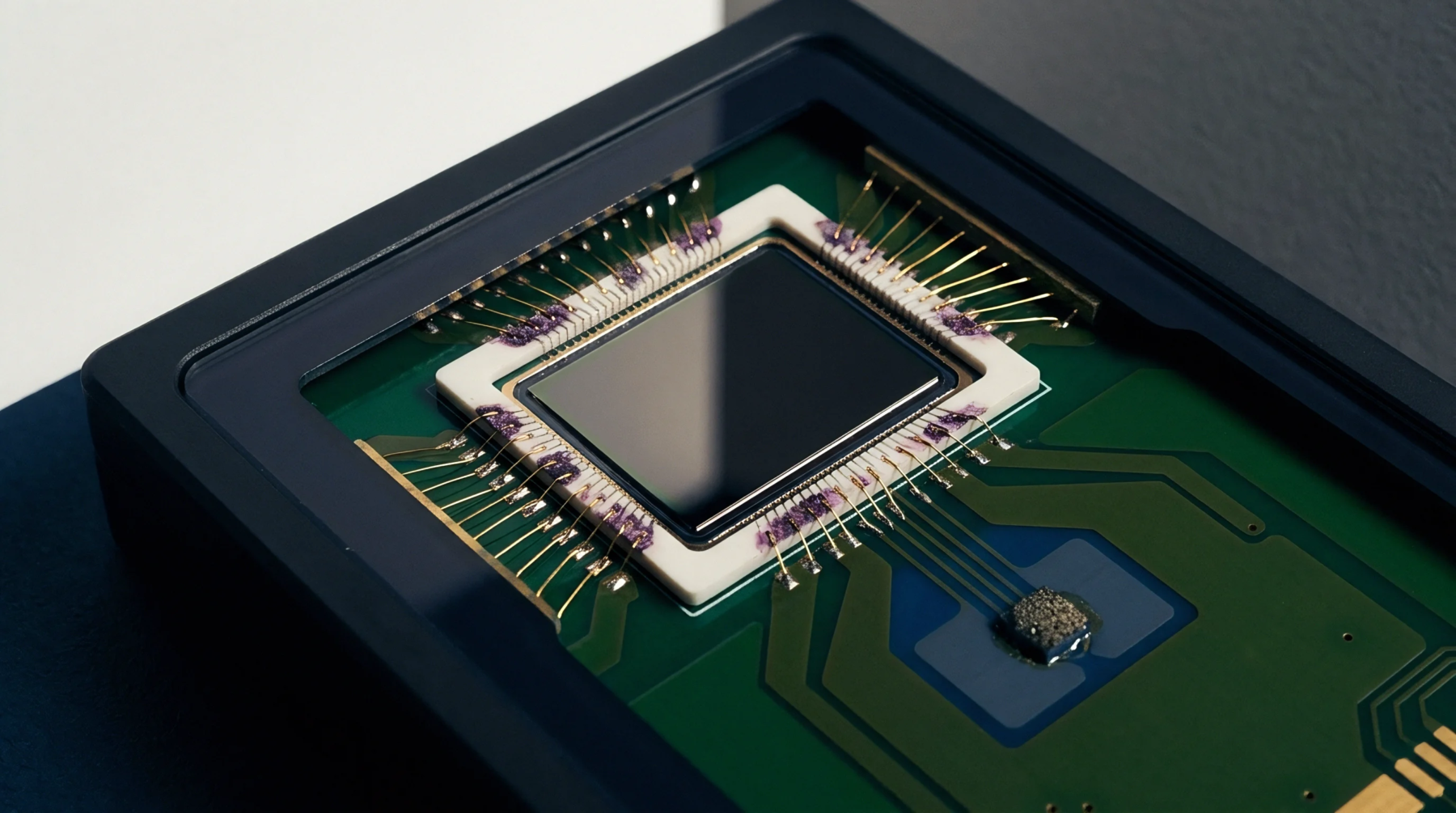
Polymeric potting stress relaxation causes time-dependent zero drift in precision transducers, requiring thermal seasoning to stabilize output baseline.

Sub-microsecond IMU line timing synchronization requires bypass of internal ASIC decimation filters and direct FPGA timestamping of differential trigger pulses.

Anand viscoplastic strain modeling requires accredited nine-parameter empirical calibration to accurately calculate fatigue life in metallic die attach layers.

Packaging stress decay in silicon sensor dies causes continuous zero-point drift that requires thermal preconditioning bakes to stabilize long-term offset accuracy.
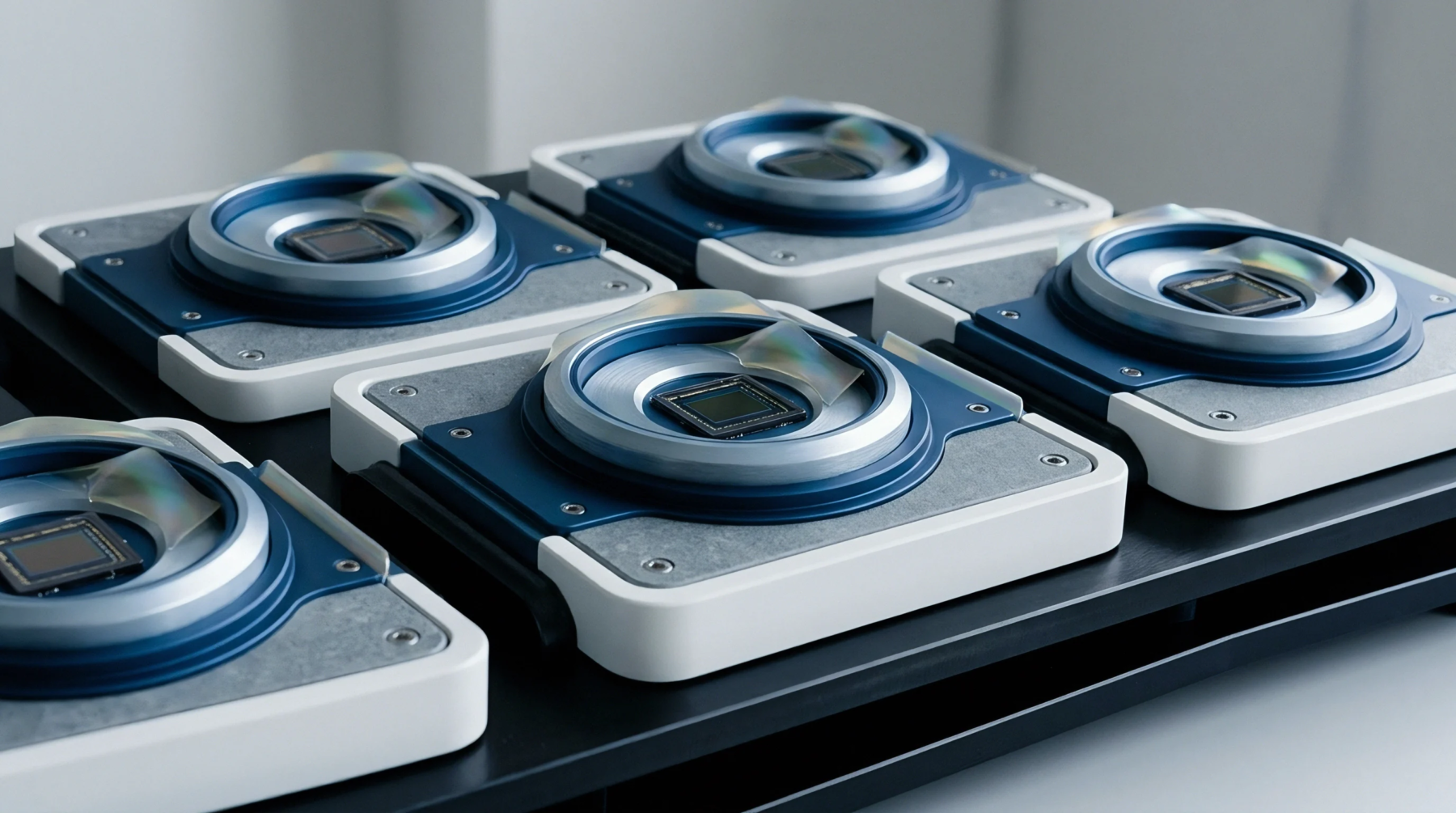
Polymeric die attach viscoelastic creep drives time-dependent sensor offset drift; matching glass transition temperature and controlling bondline shear lag minimizes zero wander.

Selecting WLCSP over DFN reduces board footprint by 70 percent but introduces strict HDI stackup costs and SMT process controls required to protect yield.

Dual-implant boron-phosphorus profiles achieve zero-crossing TCR at 3.5e19 cm^-3, suppressing piezoresistive thermal drift to 12 ppm/K.
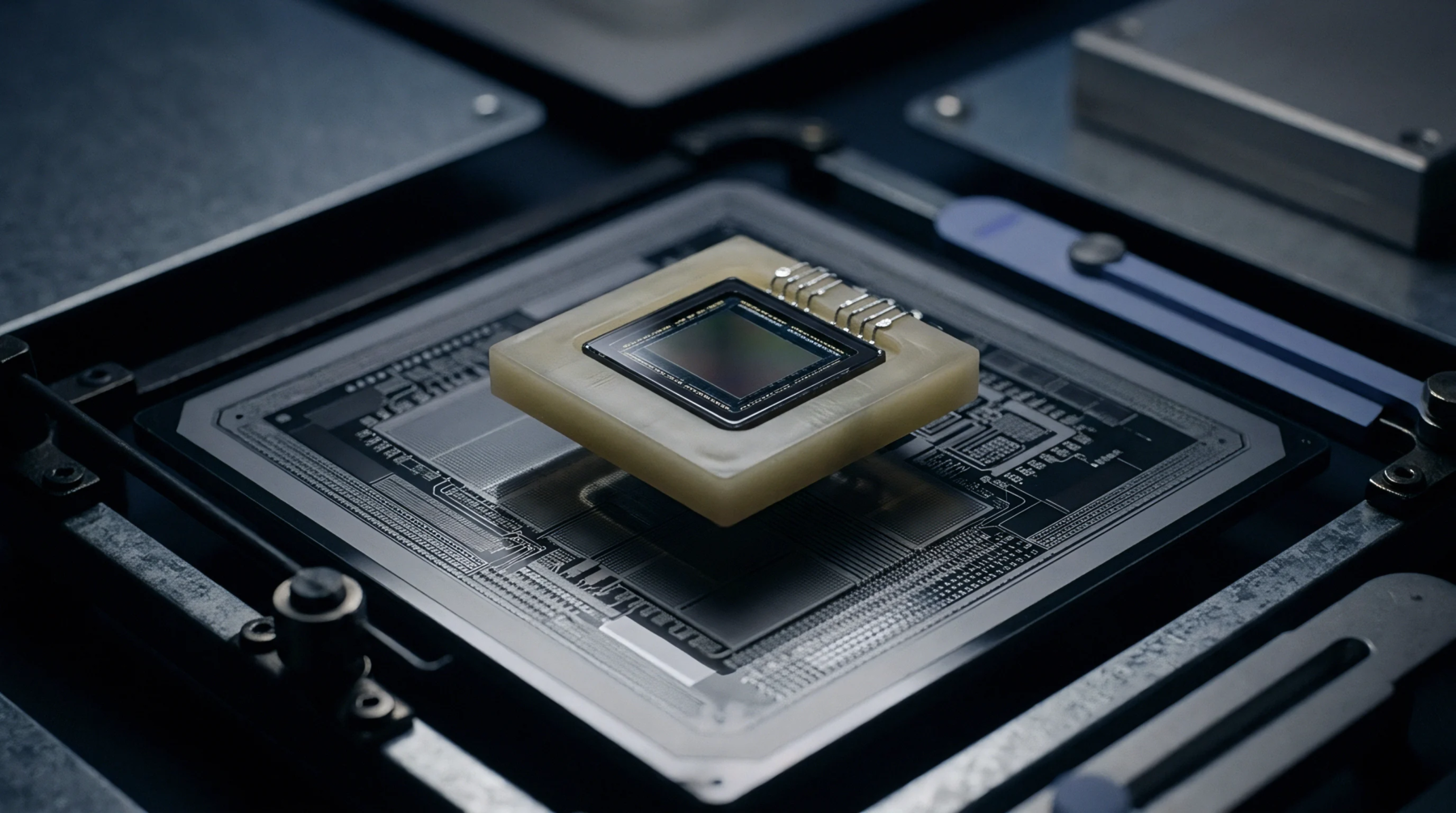
Mechanical strain alters piezoresistive die Wheatstone bridge resistance, producing analog offset voltages that propagate through gain stages into digital register counts.
Differential fluxgate long-term offset drift stems from stress-relaxation in soft cores and remanence shift under stray fields, requiring matched CTEs.

Encapsulated piezoresistive sensor zero drift under cyclic humidity stems from encapsulant swelling strain and viscoelastic creep, requiring Parylene passivation or oil isolation to hold long-term accuracy.

Reconfiguring signal chains between capacitive and piezoresistive transducers requires matching input impedance, excitation sources, and thermal compensation math.

Board level thermal gradients shift internal bandgap voltages by inducing transistor temperature differentials and piezoresistive package stress.
Thermal soak accelerates die attach viscoelastic micro-strain relaxation, reducing shear stress while driving physical aging, interface delamination, and Rth growth.

Precision bandgap layout demands common-centroid transistor symmetry, localized thermal guard isolation, and PCB stress slots to achieve sub-5 ppm/°C drift.

Asymmetric output load dissipation creates substrate thermal gradients across monolithic reference dies, inducing microvolt baseline offsets in precision data converters.

Polymer moisture swelling and viscoelastic stress relaxation drive micro-g accelerometer bias drift by distorting silicon flexure anchor points over time.

Dynamic environmental transfer artifact drift verification requires non-linear hysteresis modeling to maintain absolute calibration uncertainty within 0.05% of full scale across thermal cycles.
Polymer die attach selection governs MEMS IMU bias drift by balancing storage modulus, glass transition temperature, and long-term viscoelastic stress relaxation.
Epoxy molding compounds absorb moisture according to temperature-dependent diffusion rules, requiring strict MSL floor life management to avoid popcorning during reflow.

Silicon substrate thermal expansion alters MEMS structural spacing and compliance, requiring isolated single-point anchors and 3rd-order ASIC polynomial correction.

Root-mean-square noise equals spectral density multiplied by the square root of equivalent noise bandwidth, adjusted for flicker corner frequency integration.
Expertise is a utility, not a secret. sentiention™ publishes its working knowledge as open reference: intelligence layer covering the materials it sources, the markets it enters, and the reference that serves both.