Interfacing Multi Channel Sensors over Standard Two Wire Buses
Multi-channel sensor integration on standard two-wire buses demands balancing parasitic bus capacitance, address resolution, layout geometry, and landed unit cost.
Multi-channel sensor integration on standard two-wire buses demands balancing parasitic bus capacitance, address resolution, layout geometry, and landed unit cost.

Active buffers isolate bus capacitance beyond 400 picofarads by segmenting traces and using static voltage offsets or edge accelerators to meet timing limits.

CMOS image sensor row readout delay dictates rolling shutter temporal skew, determined by physical word line RC delays and column ADC settling times.
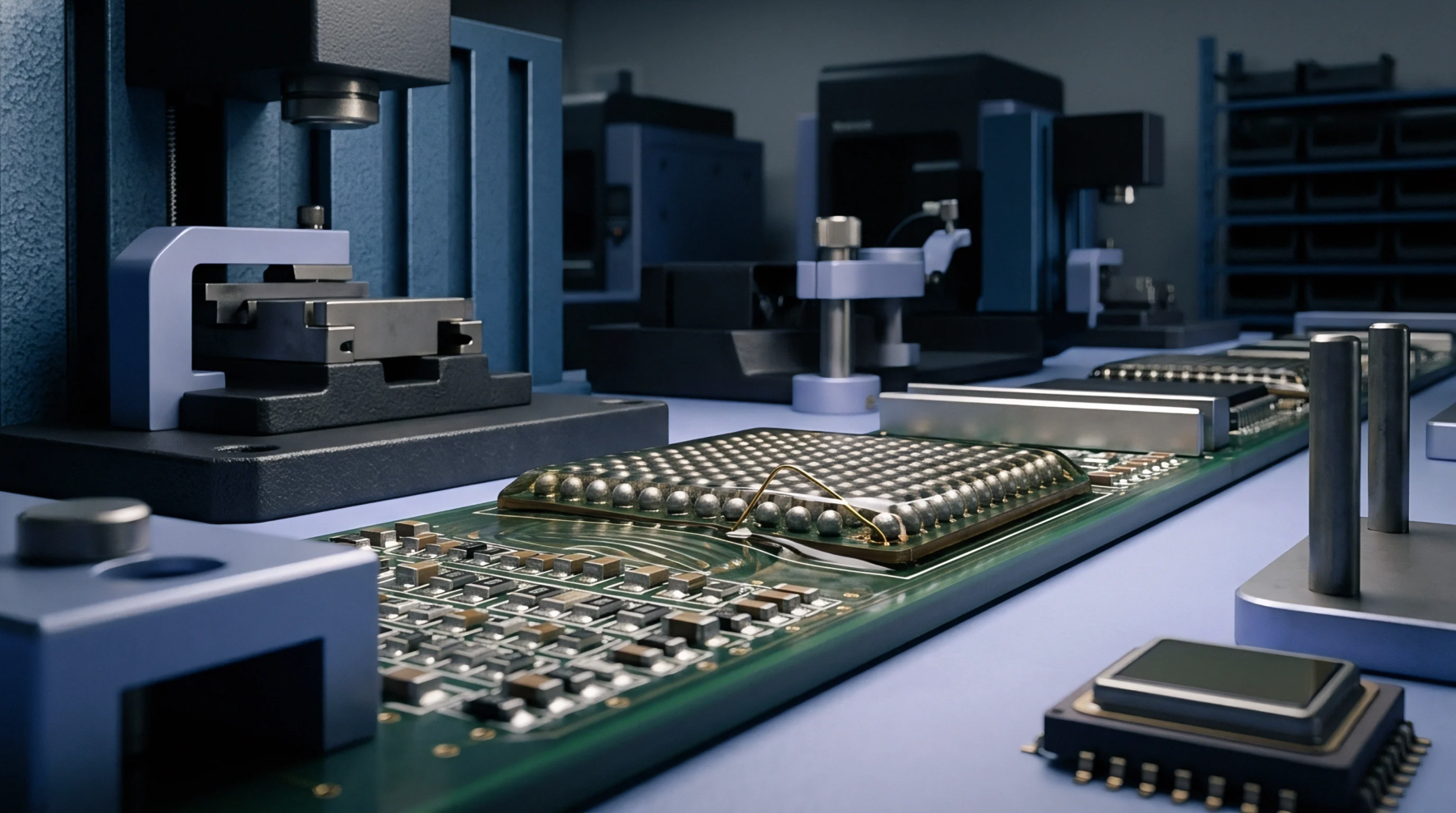
Calculated land pattern dimensions matching IPC-7351 guidelines balance solder fillet volume and placement tolerance to prevent joint stress and yield loss.
Active guard architectures require closed loop phase alignment below 0.05 degrees to eliminate moisture induced stray capacitive leakage currents.
Hierarchical I2C switches isolate bus capacitance and expand address space while adding measurable transaction delays and timing limits that firmware state machines govern.

Dual sourcing low tier commercial sensors demands matching ASIC DSP group delays and thermal offset drift profiles to prevent host control loop instability.
Expertise is a utility, not a secret. sentiention™ publishes its working knowledge as open reference: intelligence layer covering the materials it sources, the markets it enters, and the reference that serves both.