Localised Temperature
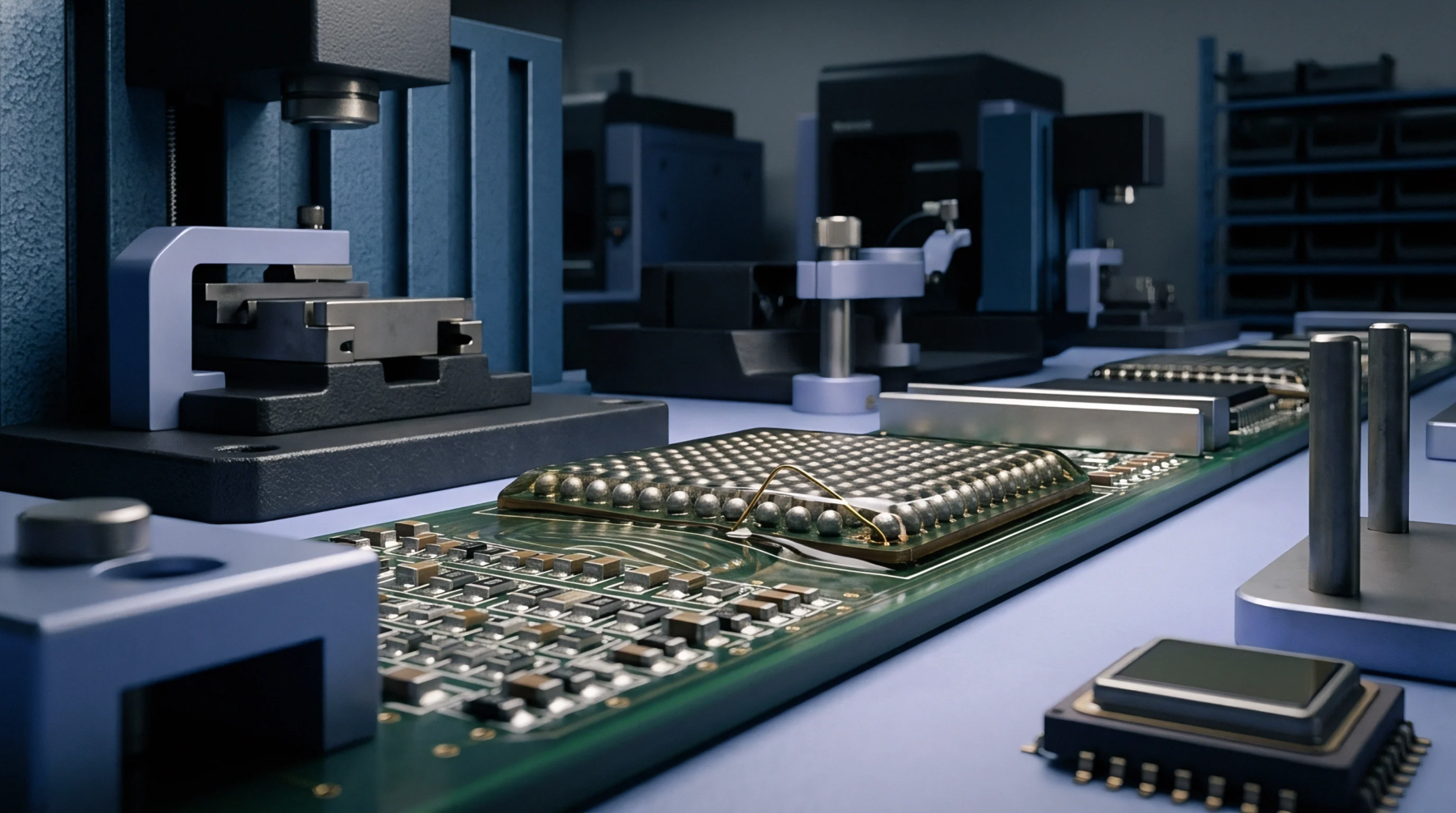
A concentration of elevated heat values develops within a specific electronic circuit board region due to inefficient cooling or high power density components. A thermal island prevents stable performance by creating inconsistent expansion rates across adjacent substrate areas. This phenomenon creates localized stress points that degrade solder joints over repeated heating cycles.
Measurements taken with infrared thermography reveal these zones as hotspots that deviate from the intended operating temperature profile of the assembly.
Heat Dissipation
Efficient removal of energy depends on the path between the heat source and the cooling medium. When this path contains high impedance materials or restricted airflow, a thermal island traps energy locally. Engineers calculate the resistance to heat transfer to determine if a design will permit such accumulation.
Low thermal conductivity in board materials forces designers to include copper pours or thermal vias to provide a lower resistance path away from the component.
Calibration Accuracy
The accuracy of sensors relies on a stable environment that mirrors the reference conditions set by the manufacturer. If a thermal island surrounds a sensing component, the measured value becomes biased relative to the actual ambient temperature of the system. Calibration routines often fail to account for this gradient because standard reference chambers maintain uniform temperature across the device under test.
Sensor bias occurs when the package absorbs radiation from an adjacent high power device, leading to a discrepancy between the target measurement and the output data.
Structural Integrity
Mechanical failure follows long term exposure to cyclic temperature gradients. A thermal island forces the board material to undergo differential expansion compared to the cooler sections of the substrate. This displacement exerts mechanical load on plated through holes and surface mount pads.
Fatigue in these connections accelerates as the internal stress cycles correspond to power duty cycles of the underlying electronics. Permanent deformation of the circuit board structure reduces the reliability of high density packaging.