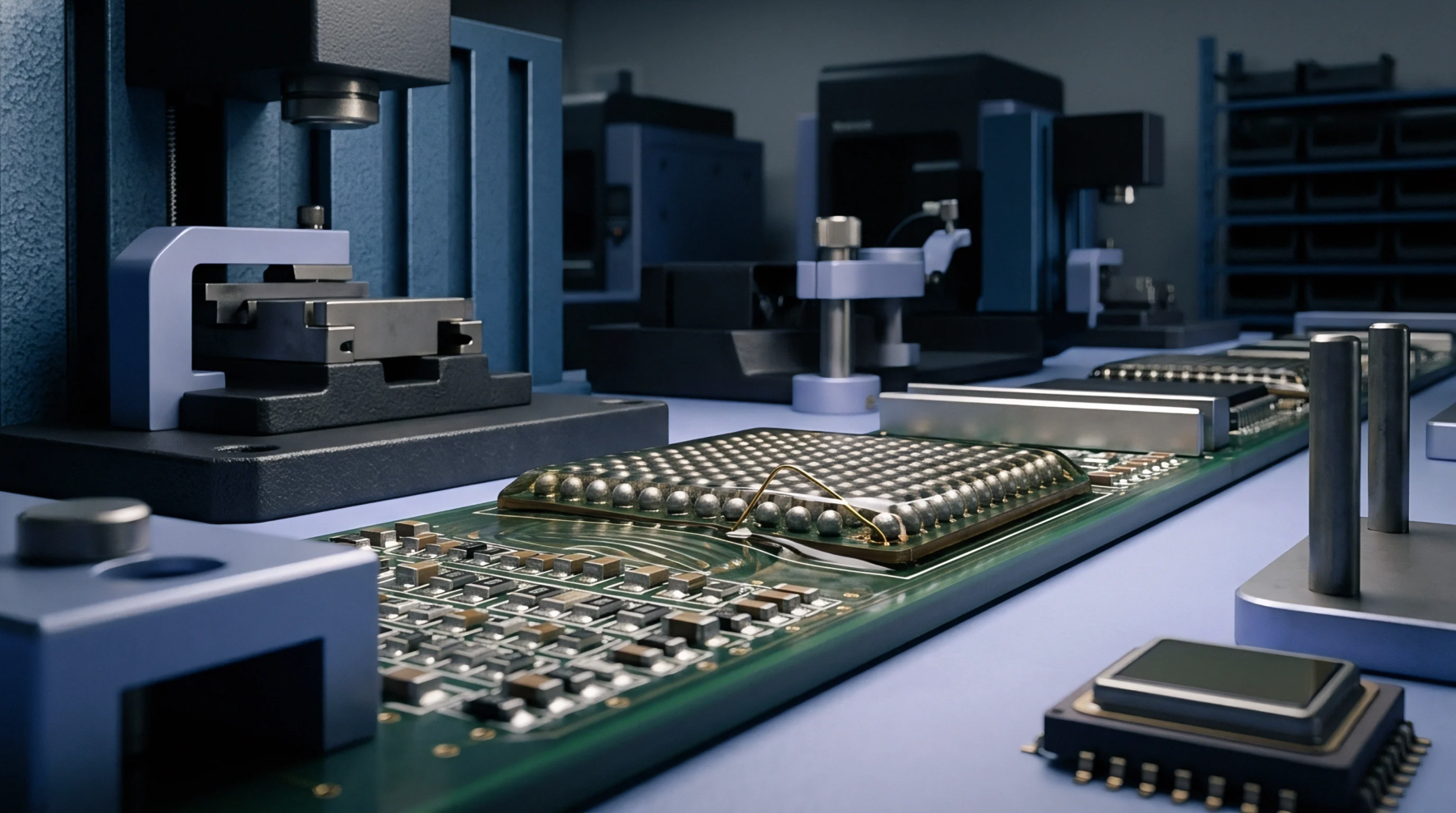
Thermal Deviation
Thermal variance within a printed circuit assembly describes the displacement of solder joint geometries resulting from the heating and cooling profiles applied during furnace processing. This reflow output shift occurs when substrate expansion coefficients conflict with component terminations, creating microscopic movement in the molten state. Such positional changes affect final connection integrity by altering the intended fillet alignment on pad layouts.
Heating Dynamics
Convection ovens induce these physical adjustments through air velocity variations and localized zone temperature gradients. Rapid heating rates force the substrate to reach higher peak temperatures than the mounted parts, generating a differential in expansion that pulls the component away from its primary coordinates. Precise oven zoning mitigates this by allowing a gradual equalization of heat across the entire assembly surface.
Monitoring equipment typically verifies these parameters against JEDEC standards for profile repeatability and component tolerances.
Alignment Accuracy
Metrological verification centers on measuring the offset between the solder mask edge and the solidified fillet location after thermal exposure. Optical comparators track these coordinates across multiple boards to calculate the mean vector of movement for diverse package sizes. High pad density designs often exhibit increased vulnerability due to the proximity of neighboring connections and restricted flow channels.
Calibration of the sensor array in the assembly line ensures that baseline coordinates remain consistent throughout the production cycle regardless of board thickness or thermal mass.
Joint Stability
Mechanical stability depends upon the magnitude of the displacement remaining within the limits defined by industry interconnect requirements. Excessive motion leads to open circuits or weak wetting when the solder cannot bridge the gap left by the shifting component. Consistent thermal management remains the primary method for maintaining positional control in high volume surface mount manufacturing.