
Evaluating Measurement Uncertainty Budgets in Microelectronic Sourcing Contracts
Uncertainty budgets convert datasheet accuracy claims into legally binding contract specifications by accounting for test fixture bias, thermal drift, and guardbanding.
Uncertainty budgets convert datasheet accuracy claims into legally binding contract specifications by accounting for test fixture bias, thermal drift, and guardbanding.

Validating ratiometric transducers requires synchronous excitation referencing, four-wire lead compensation, thermal equilibrium control, and ground loop isolation.

Incomplete sensor thermal soak cycles produce unmodeled exponential decay residuals that degrade calibration accuracy beyond published steady-state tolerances.

Dynamic slope verification replaces arbitrary soak timers during sensor compensation, preventing severe polynomial fit distortion and reducing cycle overhead.

Correlated resistance drift and turnover shift in Evanohm alloys stem from K-state vacancy migration, linking positive resistance crawl to falling turnover points.

Quantifying elastomer seal permeation establishes reference cavity pressure rise to predict multi-year zero drift and set defensible recalibration intervals.

Cyclic hydraulic pressure drives long-term zero drift and span loss in gel-isolated sensors through irreversible viscoelastic strain accumulation and chain fatigue.

Guardbanding tolerance limits by expanded measurement uncertainty restricts consumer risk below two point five percent under ILAC G8 decision rules.

Evaluating piezoresistive humidity cross-sensitivity requires isothermal stepped chamber dwells that decouple packaging swelling strain from bridge thermal drift.

Evaluating substrate stress relaxation requires continuous four-terminal monitoring to isolate solder viscoplastic creep from chemical film aging mechanisms.

Thermal hysteresis drift is quantified by measuring unrecoverable zero return offset at ambient reference after standardized thermal cycling under IEC 61298-2.

Oxide growth above 1000°C shrinks conductive film thickness and traps carriers, demanding multi-layer dielectric stacks to prevent fatal gauge factor decay.
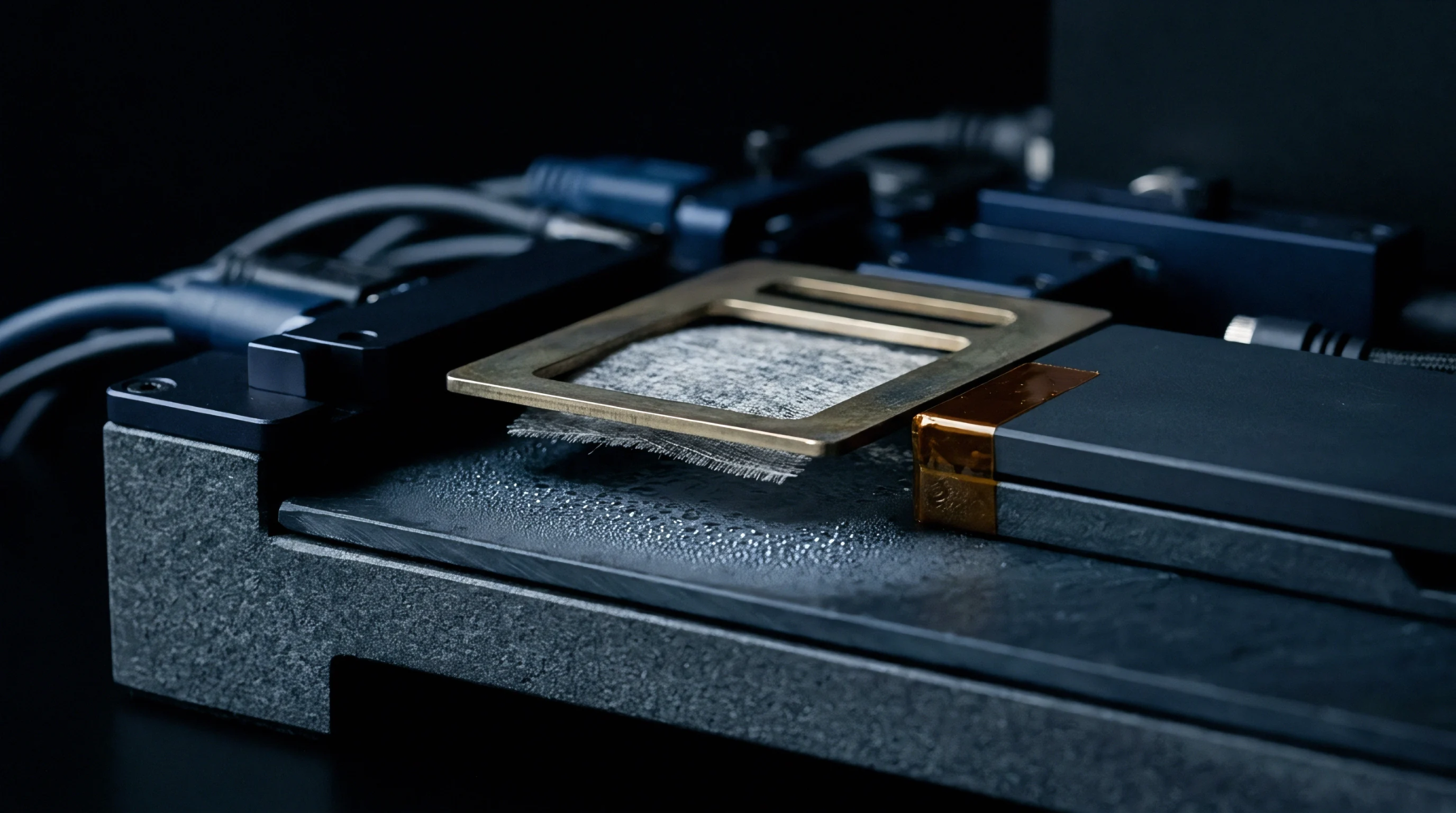
Implement quadratic drift modeling to dynamically project multi-parameter sonde recalibration thresholds, preventing regulatory data invalidation.

Optimizing thermal curvature parameters requires orthogonal polynomial regression across symmetrical bath temperatures to eliminate parameter covariance errors.

Quantifying thermal soak delays requires isolating sheath resistance and fill conductivity to offset dynamic tracking errors in automated process control loops.

Guard banded acceptance limits calculated from expanded measurement uncertainty resolve inter-laboratory sensor disputes and control consumer risk.
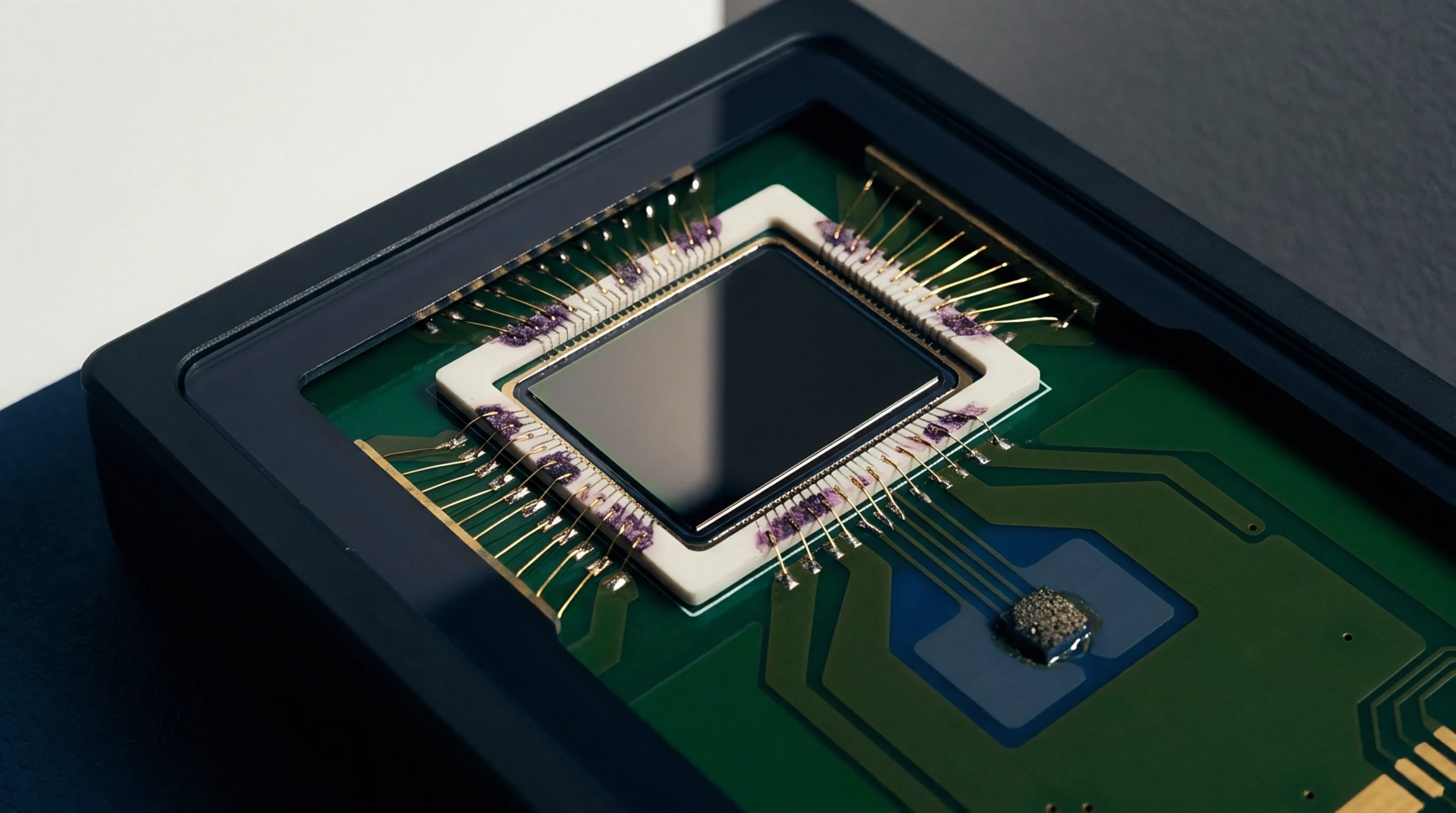
Polymeric potting stress relaxation causes time-dependent zero drift in precision transducers, requiring thermal seasoning to stabilize output baseline.

Generalized Maxwell models under cryogenic thermal ramps require Arrhenius shift functions and thermal lag compensation to accurately predict stress relaxation bounds.

Evaluating sensor certificates requires auditing expanded uncertainty, coverage factors, and environmental test bounds to ensure data defensibility.
Expertise is a utility, not a secret. sentiention™ publishes its working knowledge as open reference: intelligence layer covering the materials it sources, the markets it enters, and the reference that serves both.