
Silicon Pressure Sensor Encapsulation Media Tradeoffs and Calibrations
Sensor media isolation dictates lifecycle drift, requiring matched fill fluid volume and multi-point thermal calibration to hold industrial accuracy.

Sensor media isolation dictates lifecycle drift, requiring matched fill fluid volume and multi-point thermal calibration to hold industrial accuracy.

Plastic sub-bandgap references shift up to 300 ppm across thermal cycling due to mold compound viscoelastic creep, requiring mechanical keep-outs or ceramic forms.

Minimizing reference drift requires non-solder-mask-defined pads, compliant gull-wing packages, and perimeter routed slots to isolate circuit board strain.

Boron-doped silicon piezoresistors lose sensitivity and gain resistance under displacement radiation via Watkins replacement carrier removal and band-shift loss.

Bandgap output voltage temperature coefficients balance complementary and proportional silicon junctions, shifting under package stress and thermal hysteresis.

Sanitary seal hydrolytic cross-link degradation drives mechanical stress relaxation, altering transducer pre-load and inducing unbudgeted sensor zero-point drift.

Nonlinear hydrothermal coupling drives delamination through 4.7 MPa vapor pressure, depressed resin Tg, and CTE mismatch, causing permanent sensor offset drift.

Dual stage Carter Kibler diffusion modeling predicts bound moisture retention and prevents catastrophic package popcorning during high temperature surface reflow.

A four-node Cauer RC matrix tracks transient internal gradients, eliminating thermal substrate offset drift in sub-millisecond optical pyrometry.

Modulating thermopiles past their thermal corner frequency attenuates Seebeck output by over twenty decibels per decade, demanding low-conductance cavity gases.

Membrane heat capacity and enclosure gas conductivity set the upper modulation frequency limit and optical power output of pulsed infrared emitters in NDIR sensors.
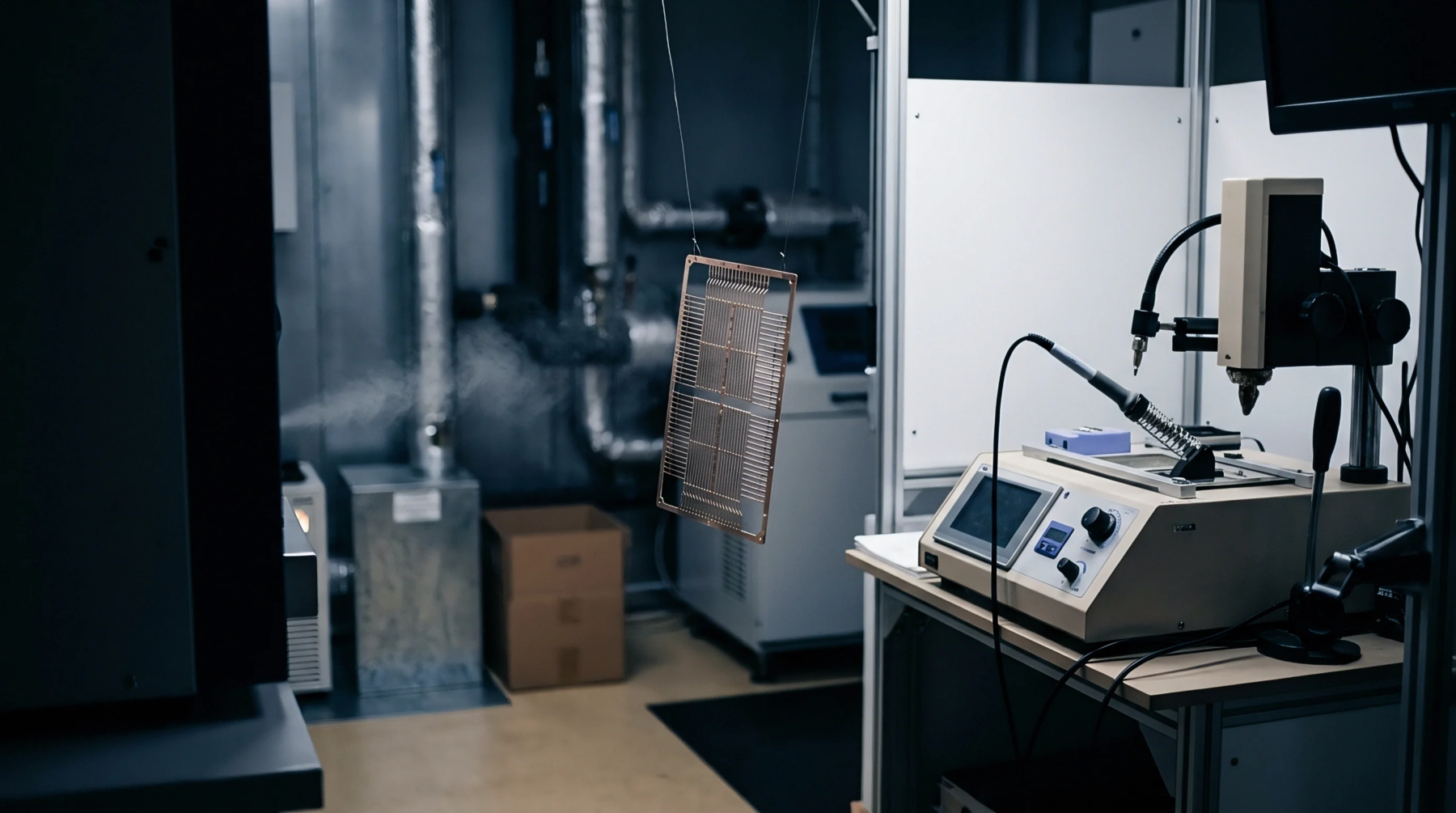
Dynamic steam permeation testing verifies elastomer seal mass transport under cyclic SIP conditions to prevent moisture-induced sensor drift and cavity failure.

Peroxide-cured EPDM and specialized FFKM elastomers provide optimal resistance to steam degradation when evaluated via ISO 23936-2 compression set metrics.

Predict seal pore expansion by combining Flory-Rehner swelling kinetics with continuous ISO 3384 counterforce logging across minimum thermal cycle troughs.

Hydrostatic ingress occurs when external head plus internal thermal vacuum exceeds Young-Laplace capillary breakthrough pressure governed by throat radius.

Translating helium leakage to water exclusion requires calculating equivalent pore radius via Hagen-Poiseuille equations and balancing capillary entry pressure.
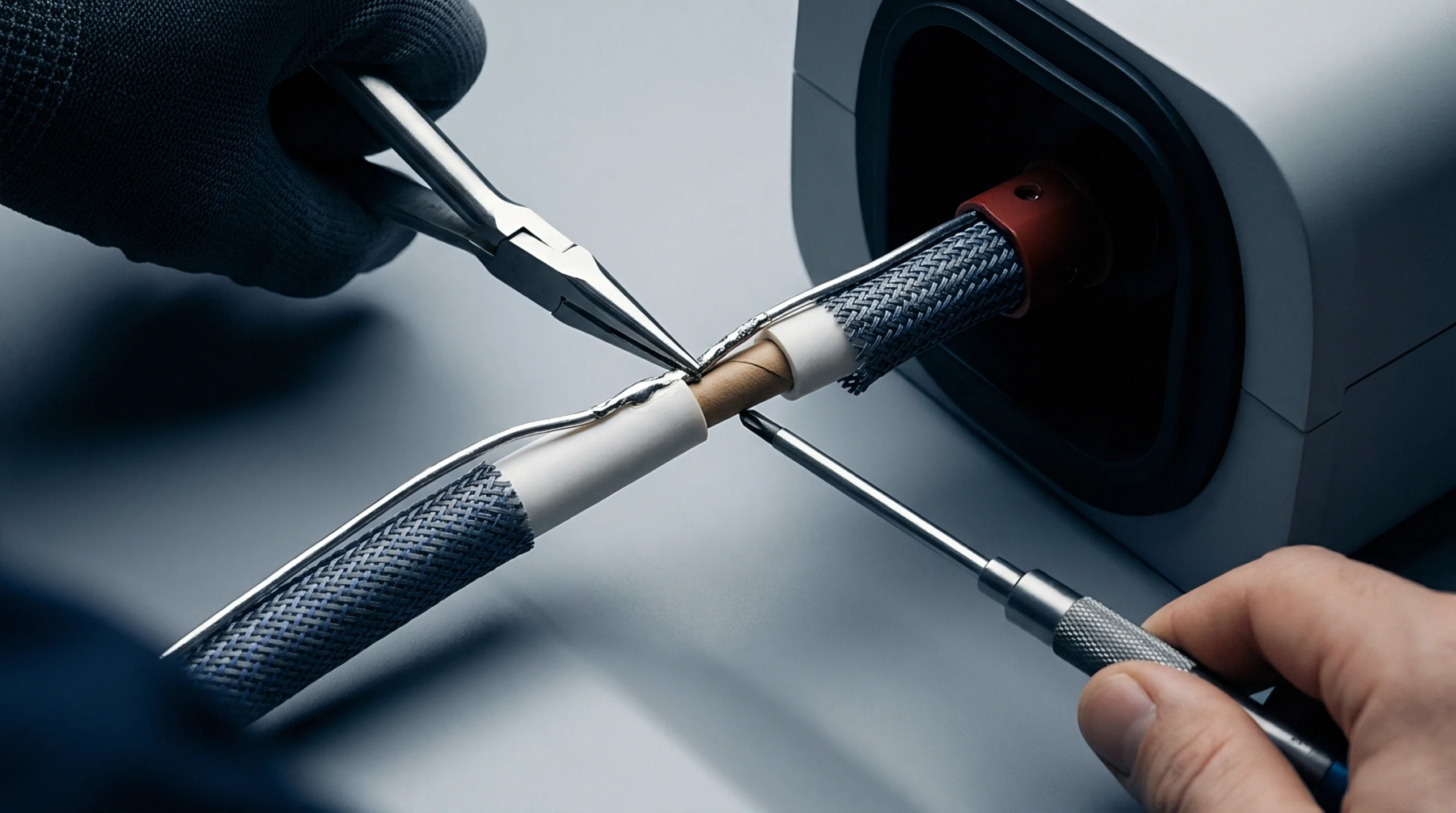
Non-Fickian moisture sorption causes delayed polymer relaxation, elevating trapped internal water mass and triggering catastrophic reflow delamination.
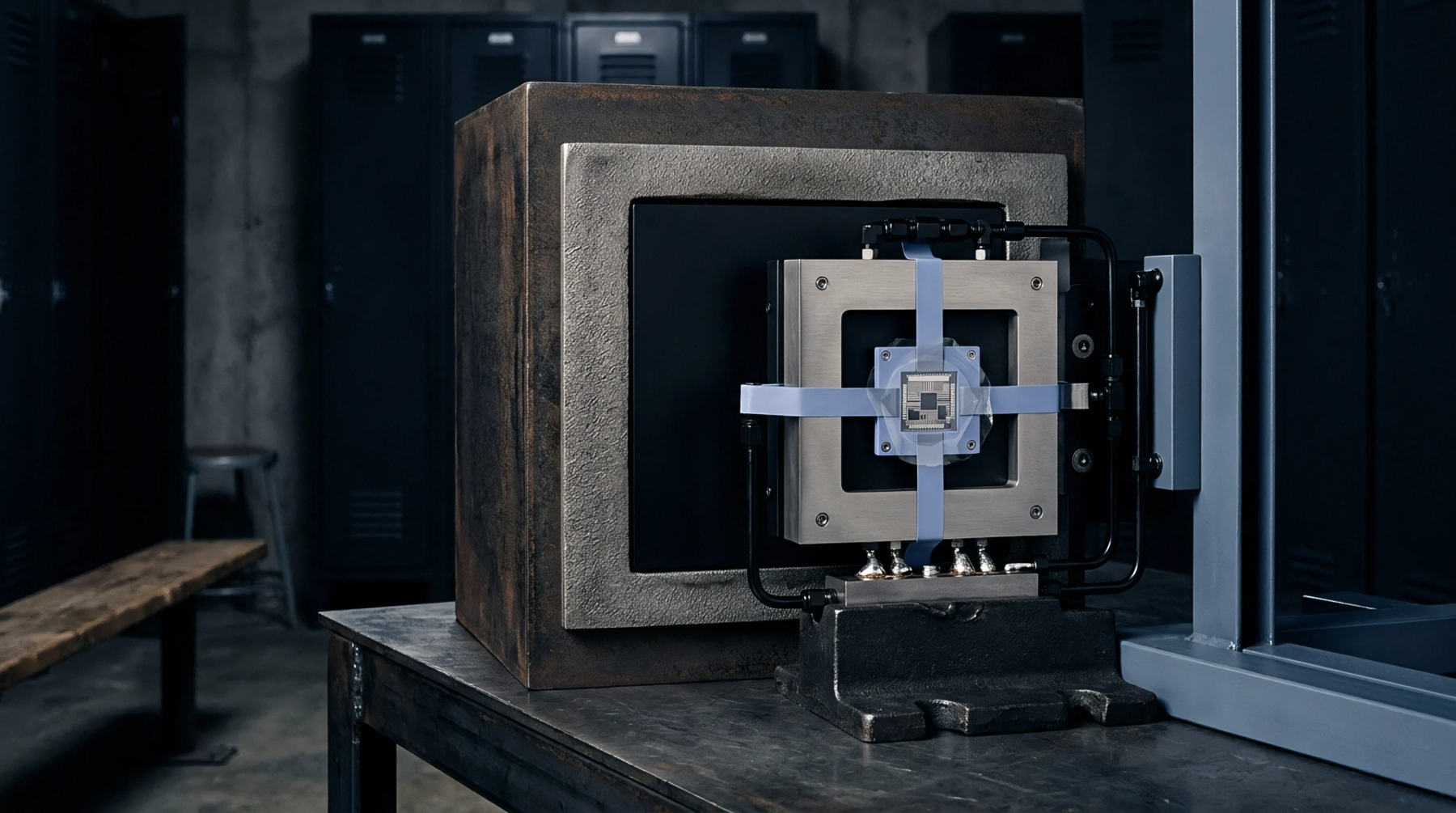
Production helium leak rates model long-term ingress only when corrected for fluid flow regimes, molecular adsorption, and field thermal pumping dynamics.

Hygrothermal interfacial stress calculation requires superimposing thermal mismatch stresses, moisture expansion swelling forces, and internal vapor pressure.

Dynamic differential pressure from thermal cycling draws water past static IP67 seals, demanding breathable ePTFE vents and verified gas leak testing below 10⁻⁴ sccm.

Enclosure ingress testing requires Category 1 vacuum extraction for dust and calibrated kinetic water jet delivery backed by ISO 17025 test dossiers.

Transient moisture gradients create reflow vapor pressure spikes at leadframe boundaries, driving interfacial delamination unless controlled by strict MSL storage profiles.

Encapsulant moisture saturation lowers matrix glass transition temperatures and generates destructive internal vapor pressures exceeding four megapascals at reflow.

Dynamic non-linear state space matrices require Polynomial Chaos Expansion or copulas to propagate bounded Type B uncertainties without distorting tail bounds.
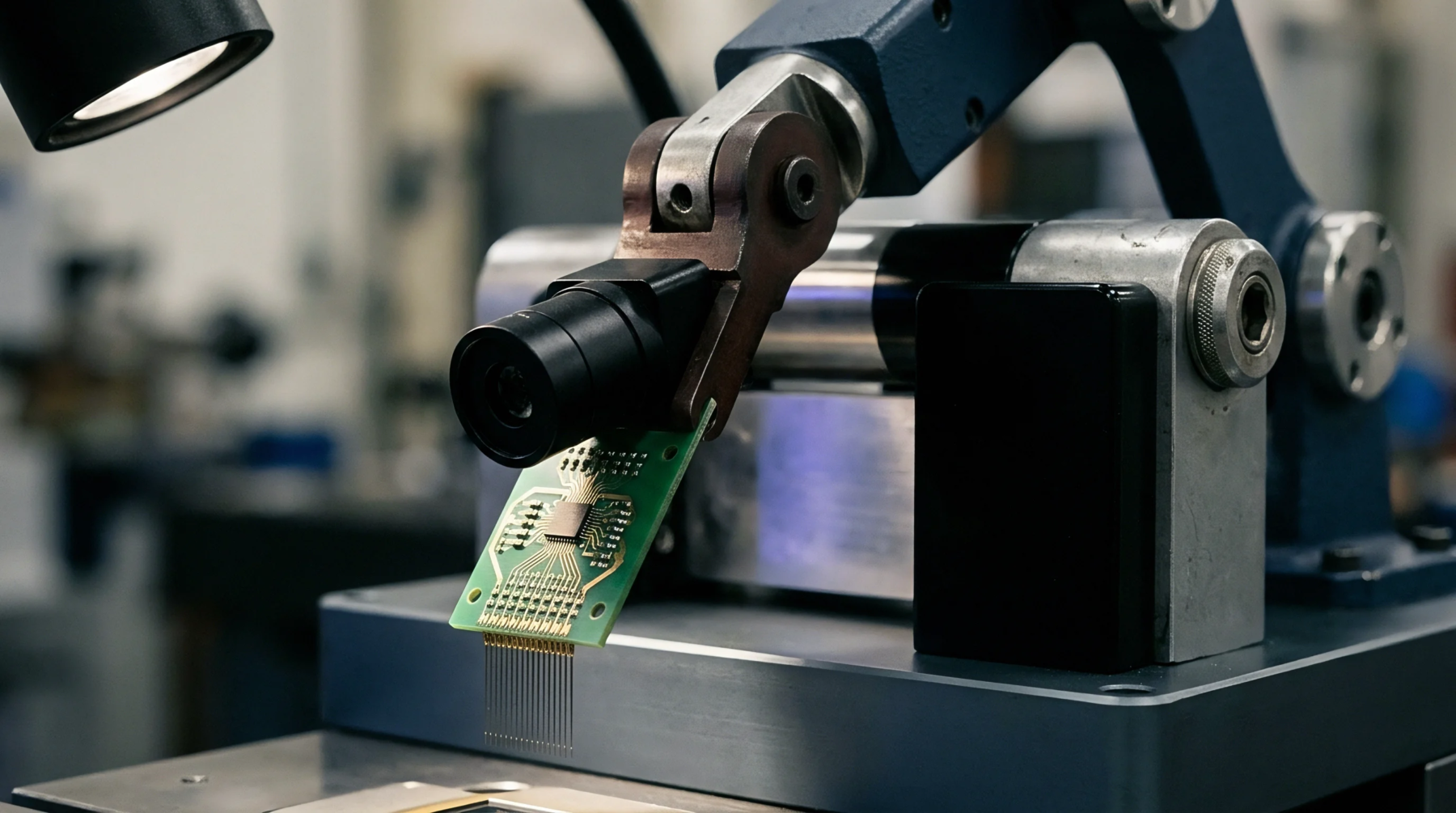
Dual-stage sorption causes unmodeled moisture retention at reflow, requiring dry-pack verification and register offset trim to prevent delamination and drift.

Off-diagonal covariance terms map shared reference drift and physical cross-talk into derived multichannel uncertainty matrices via Jacobian sensitivity products.

Ambient moisture absorption into plastic packaging drives mechanical swelling strain, inducing uncalibrated offset drift and sensitivity shifts in MEMS dies.

Longitudinal hydroxyl poisoning on tungsten trioxide films is governed by logarithmic Elovich kinetics, reversible only via thermal pulsing above 380 degrees Celsius.

Dynamic thermal modulation extracts orthogonal kinetic descriptors from polycrystalline sensing arrays, enabling regularized inversion of cross-sensitivity.

Oxygen ionosorption establishes an intergranular depletion barrier in metal oxide films, producing exponential baseline shifts from thermal and ambient moisture variations.
Expertise is a utility, not a secret. sentiention™ publishes its working knowledge as open reference: intelligence layer covering the materials it sources, the markets it enters, and the reference that serves both.