
Evaluating SMT Yield Loss and Calibration Cost in Discrete Transducer Assembly
Discrete transducer SMT yield loss and calibration costs depend on pad symmetry, post-reflow strain aging, and test cell chamber dwell times.
Discrete transducer SMT yield loss and calibration costs depend on pad symmetry, post-reflow strain aging, and test cell chamber dwell times.
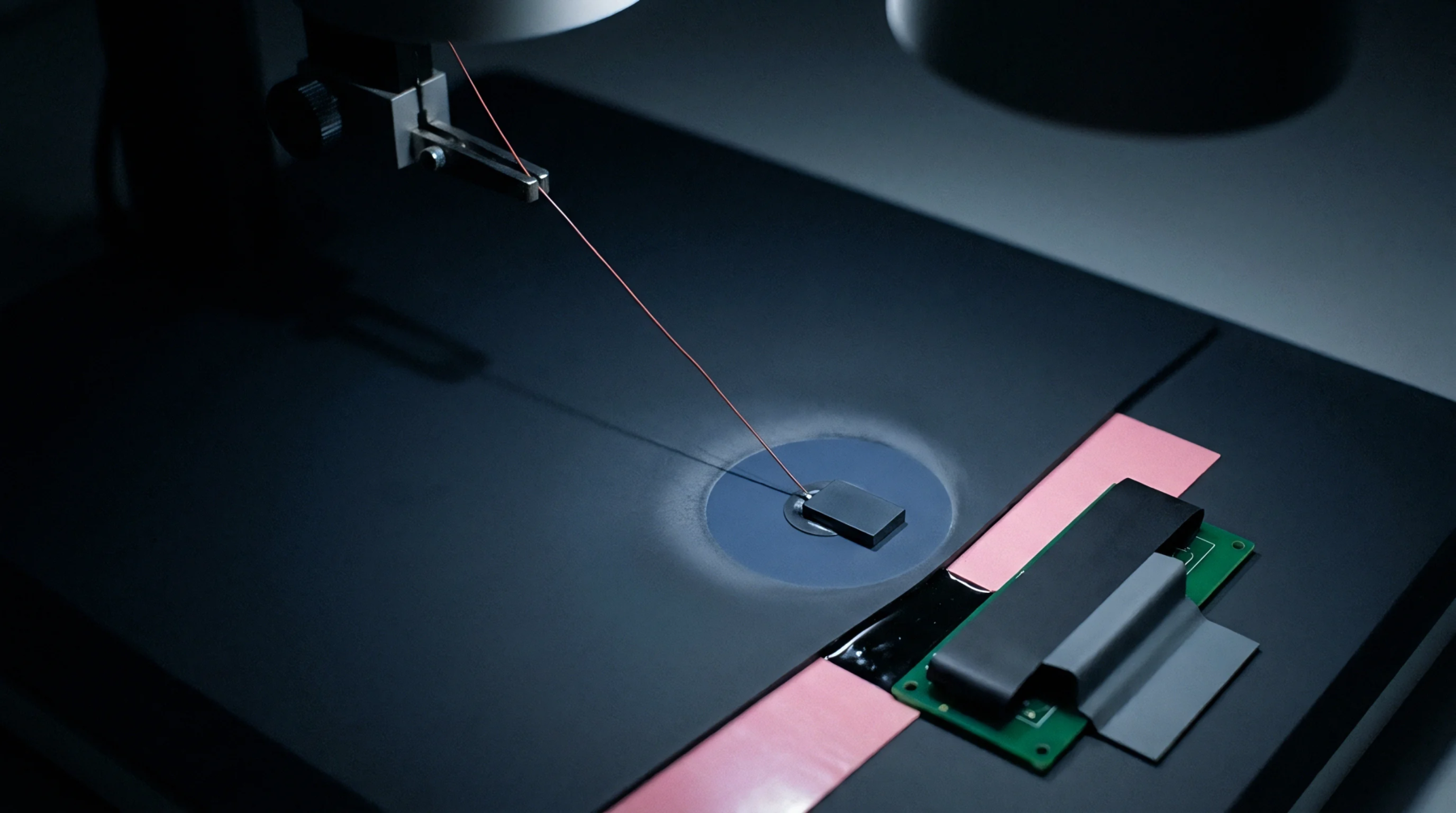
Quantifying test uncertainty and parametric drift through guardbanding and thermal acceleration equations prevents field returns and secures accurate component tolerances.
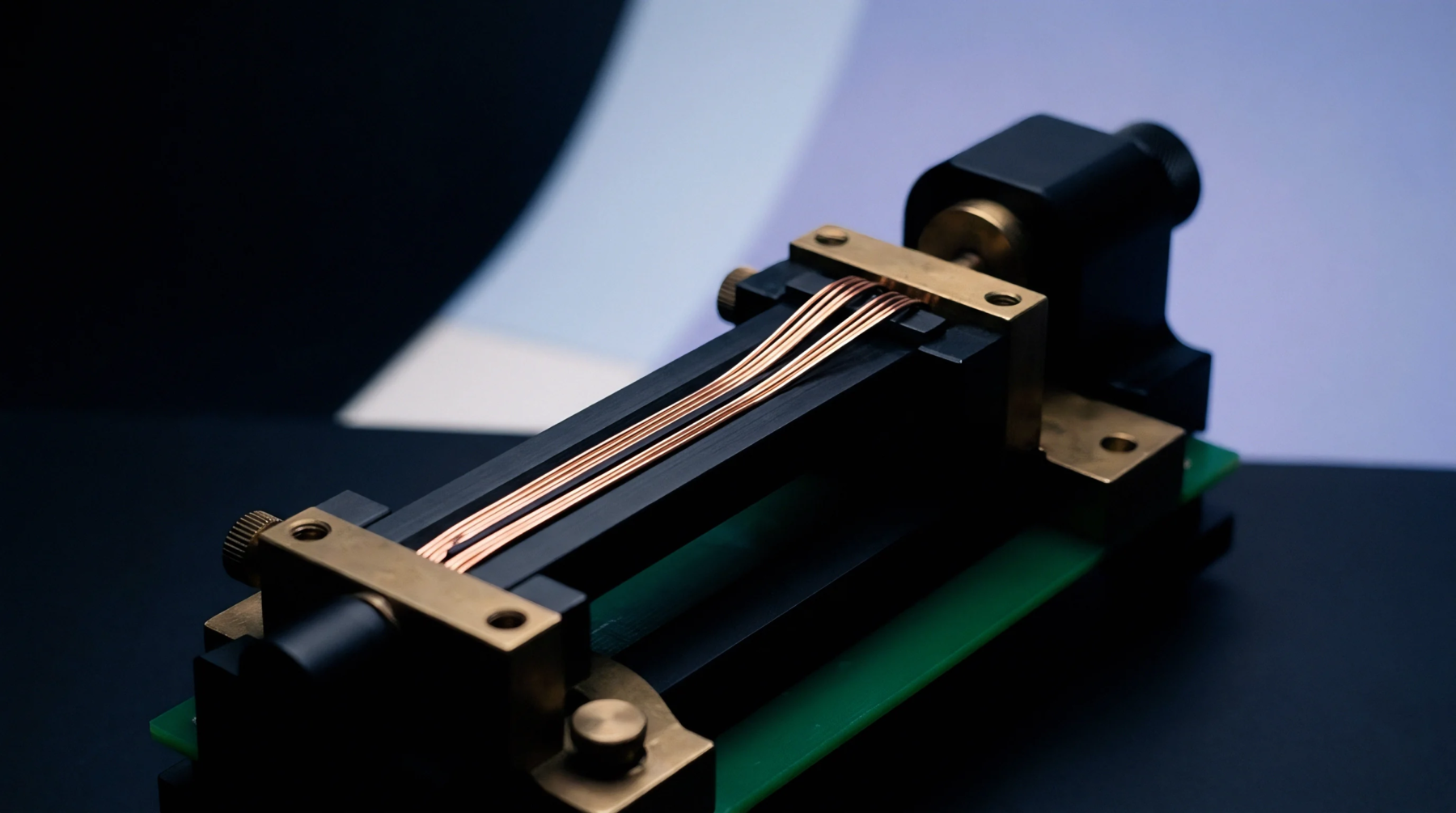
Sputtered titanium and nickel-chromium interlayers under cyclic strain alter oxygen ingress kinetics from parabolic to linear regimes, shortening sensor calibration stability.

Interfacial package creep modeling requires viscoplastic constitutive equations and temperature-dependent stress mapping to prevent long-term field drift.

High temperature oxygen diffusion across sensor passivations triggers interfacial void nucleation, driving sensor zero-point drift past operational limits.

Metrological verification of high-temperature piezoresistors requires quantified drift kinetics, four-wire thermal testing, and guardbanded uncertainty budgets.

Ambient thermal calibration demands fitting parabolic alloy coefficients and correcting thermoelectric offsets to bound resistance drift under operational swings.

Borosilicate hermetic capacitive sensors exhibit non-Fickian hydration drift and mechanical swelling offsets that require kinetics modeling to hold tolerances.
Automated thermal burn-in exhausts initial die-attach stresses while acoustic microscopy weeds out sub-surface voids to halt piezoresistive field drift.

Moisture ingress causes polymer swelling that transfers mechanical strain to piezoresistive diaphragms, inducing uncompensated zero drift in non-hermetic sensors.

Substrate CTE mismatch drives interfacial shear strain into current shunt alloys, causing piezoresistive thermal hysteresis that requires post-cure thermal cycling to stabilize.

Room-temperature sensor calibrations omit outdoor thermal drift coefficients, expanding real field uncertainty far beyond published baseline claims.

Guard banded acceptance limits calculated from expanded measurement uncertainty resolve inter-laboratory sensor disputes and control consumer risk.

Calculating normalized error scores isolates facility bias from measurement noise by evaluating raw offsets against combined expanded uncertainties.

Master supply agreements must separate initial trim accuracy from multi-year operational drift, backing rejection triggers with accredited 4:1 TUR testing.

Managing sputtered interlayer stress prevents sensor delamination and holds zero-point strain gauge drift below zero point five percent at nine hundred degrees Celsius.

Viscoelastic stress relaxation in sensor potting creates non-linear strain hysteresis, requiring generalized Maxwell modeling to prevent zero-point calibration drift.

Cross-border supply disputes resolve only when contracts define referee laboratory selection, expanded uncertainty budgets, and guard-banding rules under ISO 14253-1.
Expertise is a utility, not a secret. sentiention™ publishes its working knowledge as open reference: intelligence layer covering the materials it sources, the markets it enters, and the reference that serves both.