Ingress Protection Test Requirements for Industrial Enclosures
Enclosure ingress testing requires Category 1 vacuum extraction for dust and calibrated kinetic water jet delivery backed by ISO 17025 test dossiers.


Boundary
A standard factory enclosure stamped with an IP66 label frequently fails on an outdoor pad when sudden rain cools the metal housing, generates internal vacuum, and pulls moisture across an untested cable gland. The stamped letters indicate that a laboratory sample resisted water jets and particulate entry under stabilized factory temperatures. Those digits do not confirm that an operational assembly retains seal integrity across five years of daily solar heating and rapid convective cooling.
Specifying ingress protection for industrial sensor enclosures requires separating laboratory test conditions from field boundary dynamics.
IEC 60529 serves as the baseline reference across Europe and Asia, whereas ISO 20653 adds road vehicle washdown rigors, and NEMA 250 governs North American industrial installations. IEC 60529 divides protection into two primary numerals: the first digit spans 0 through 6 for solid foreign objects, while the second spans 0 through 9 for liquid ingress. NEMA 250 incorporates environmental variables excluded from basic IEC metrics, including oil immersion, corrosion resistance, internal icing, and gasket aging.
A direct cross-reference table cannot provide an exact substitution between standards because the testing mechanics diverge at the physical boundary.
Distinctions between Standard Ratings
Physical test configurations govern the mechanical severity applied to the enclosure shell. A NEMA Type 4X rating demands a 25 mm hose nozzle delivering 240 liters per minute of water at 69 kPa from a distance of three meters for five minutes, accompanied by a 200-hour salt spray corrosion test. IEC 60529 IP66 applies a smaller 12.5 mm nozzle delivering 100 liters per minute at 100 kPa from three meters for three minutes, omitting corrosion exposure entirely.
Buyers assuming an IP66 enclosure automatically meets NEMA 4X discover that the enclosure latches rust and allow gasket displacement within six months of marine installation.
| Standard Designation | Solid Particulate Barrier | Water Delivery Mechanism | Flow Rate and Pressure | Applied Mechanical Duration |
|---|---|---|---|---|
| IEC 60529 IP65 | Talcum powder, 2 kPa depression | 6.3 mm nozzle jet at 2.5 to 3.0 m | 12.5 L/min at 30 kPa | 1 min/m², 3 min minimum |
| IEC 60529 IP66 | Talcum powder, 2 kPa depression | 12.5 mm nozzle jet at 2.5 to 3.0 m | 100 L/min at 100 kPa | 1 min/m², 3 min minimum |
| ISO 20653 IP69K | Arizona dust, 2 kPa depression | Fan jet angles: 0, 30, 60, 90 deg | 14 to 16 L/min at 8,000 to 10,000 kPa | 30 s per angle, 80 °C stream |
| NEMA 250 Type 4X | Circulating dust and windblown grit | 25 mm nozzle hose delivery | 240 L/min at 69 kPa | 5 min duration, 200 h salt fog |
Test engineers categorise industrial enclosures under two distinct functional classes during particulate evaluations. Category 1 enclosures maintain internal air pressure below the external atmospheric ambient during normal duty cycles, induced by thermal cycling of internal electronic transmitters. Category 2 enclosures experience no internal depression, remaining at ambient pressure throughout operation.
The qualification protocol for Category 1 units demands active vacuum extraction during the entire chamber exposure, accelerating particulate transfer across every mechanical joint.
IEC 60529 Clause 13.4 mandates that Category 1 enclosures undergo differential pressure depression testing at 2.0 kPa below ambient atmosphere for a duration calculated from volume extraction, changing the test from a passive exterior wash to an active structural draw.
Dust
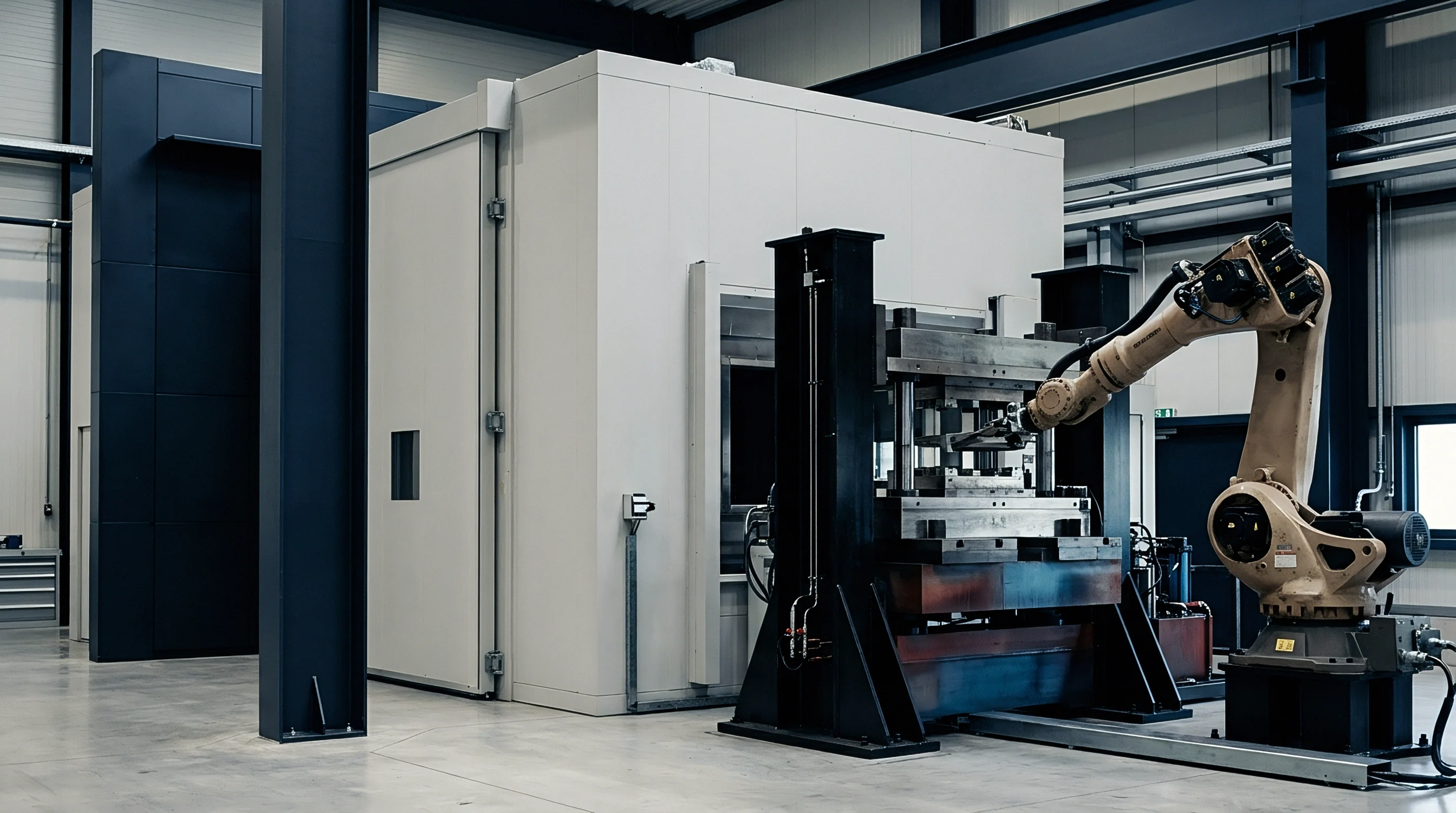
Particulate test chambers suspend fine talcum powder through mechanical blowers to evaluate seal containment. The test medium specified under IEC 60529 consists of pure talcum powder passing through a nominal wire mesh diameter of 75 micrometers, using a wire diameter of 50 micrometers. The concentration maintained inside the test vessel equals 2 kilograms of powder per cubic meter of chamber volume.
Unscreened industrial air contains abrasive silica particles of wider diameter distributions, yet this uniform talcum grade acts as a penetrative lubricant that slips through microscopic elastomer voids.

Depression Calculation and Extraction Dynamics
Thermal cooling of operating instrumentation generates internal vacuum. When an enclosed sensor housing consumes power, internal dissipation warms the sealed air cavity. Upon shutdown in cold conditions, the volume contracts according to the ideal gas law.
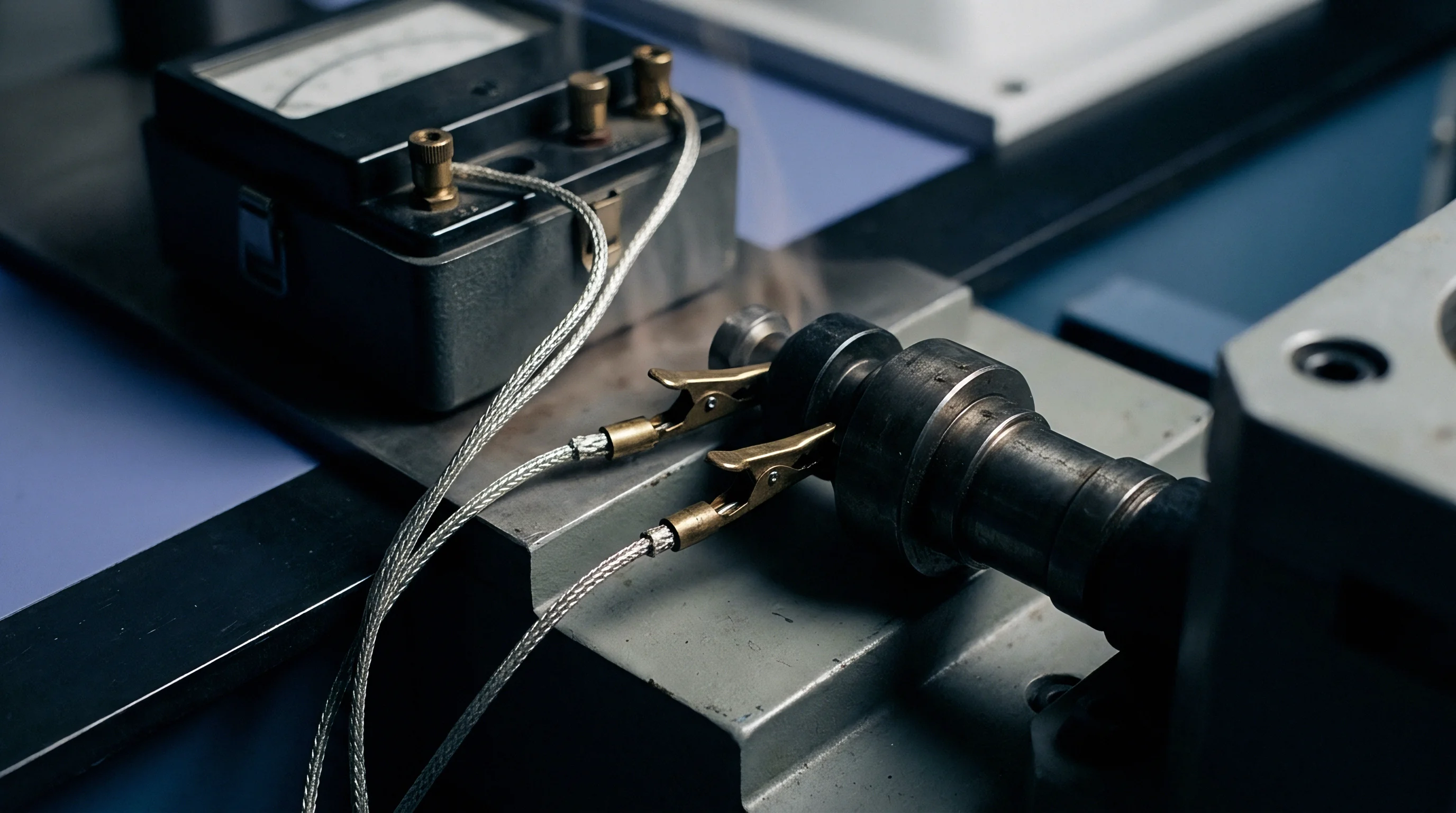
Standard verification procedures simulate this behavior by attaching a vacuum line directly to the enclosure wall while the unit rests inside the circulating dust chamber.
The standard establishes the test duration through air extraction volume rather than fixed timers. A worked calculation demonstrates the extraction demand for an industrial control enclosure. Assume an internal air volume of 80 liters after subtracting internal electronics, sensor brackets, and terminal strips.
Clause 13.4 specifies an extraction rate not exceeding 60 volume exchanges per hour, with a cumulative target of 80 total volume exchanges. The total volume to extract equals 80 times 80 liters, yielding 6,400 liters of dry air. Running a vacuum pump at a calibrated rate of 40 liters per minute achieves the extraction requirement over 160 minutes, within the eight-hour maximum window allowed by the standard.
Vacuum extraction maintains a maximum differential depression of 2.0 kPa relative to ambient laboratory barometric pressure. If the enclosure seal leaks excessively, the extraction rate reaches the allowable limit without generating the 2.0 kPa differential. The test operator logs this condition as a structural seal inadequacy before the dust cycle concludes.
The standard requires a continuous differential draw of 2.0 kPa while circulating 2 kilograms of talcum powder per cubic meter for eighty enclosure volume exchanges.
Chamber operation involves specific mechanical parameters that must remain controlled throughout the qualification period:
- Suspension airflow velocity remains calibrated between 1.5 and 2.5 meters per second to prevent particulate compaction against enclosure walls while preventing premature powder settling.
- Chamber relative humidity stays strictly below 35 percent to prevent talcum powder agglomeration into larger particle clusters that artificially fail to penetrate micro-gaps.
- Vacuum extraction tubing connects to the enclosure at the lowest natural drainage point, preventing gravitational particle fall from falsely indicating seal passage.
- Powder replacement schedules occur every twenty test cycles because talcum grains fracture into sub-micron fractions under continuous blower impeller shear, altering penetration physics.
Post-exposure inspection determines qualification success or failure. The test engineer wipes the outer surfaces clean, disassembles the housing fasteners in a cleanroom hood, and inspects the internal cavity. For an IP6X rating, zero visible dust deposits may appear inside the housing.
For an IP5X rating, dust ingress is permitted provided the quantity and location do not interfere with correct operation or electrical creepage and clearance distances across live terminals. Inspection of optical sensor faces, precision potentiometer tracks, and high-voltage circuit traces requires microscopic examination under ten-power magnification.
A supplier often claims that settled powder around the inner lip of a gasket merely represents cosmetic displacement during opening rather than through-joint penetration.
Spray
Liquid testing subjects sealed assemblies to directed hydro-mechanical impingement. Water volume alone does not cause seal failure. Dynamic kinetic pressure from the liquid velocity deflects thin enclosure panels, compresses elastomeric gaskets unevenly, and strips away unvulcanized adhesive layers.
Can High Pressure Water Penetrate Static Seals?
Fluid streams delivered at high velocities generate localized shear forces along seal boundaries. For IPX5 testing, a calibrated 6.3 mm internal diameter nozzle delivers 12.5 liters per minute at a core pressure of 30 kPa, positioned between 2.5 and 3.0 meters from the enclosure envelope. The IPX6 protocol increases kinetic energy by deploying a 12.5 mm nozzle delivering 100 liters per minute at 100 kPa.
The water stream exerts direct impact force capable of displacing silicone door seals that lack mechanical retaining channels.
ISO 20653 and IEC 60529 define the IPX9K washdown test for food processing and mobile machinery. Water heated to 80 degrees Celsius exits a fan jet nozzle at pressures between 8,000 and 10,000 kPa, positioned 100 to 150 mm from the test item. The table turns at five revolutions per minute while nozzles strike the test surface at angles of 0, 30, 60, and 90 degrees.
Thermal expansion of the outer housing occurring simultaneously with high-velocity water delivery introduces transient seal separation that standard room-temperature tests never produce.
| Ingress Level | Delivery Tool | Test Distance | Dynamic Water Delivery | Pass Evaluation Criteria |
|---|---|---|---|---|
| IPX5 | 6.3 mm nozzle | 2.5 to 3.0 m | 12.5 L/min ± 5%, 30 kPa | Zero water on insulation or live components |
| IPX6 | 12.5 mm nozzle | 2.5 to 3.0 m | 100 L/min ± 5%, 100 kPa | No harmful water accumulation internally |
| IPX7 | Immersion tank | 1.0 m to base | Static head pressure, 30 min | Zero moisture entering internal housing volume |
| IPX8 | Pressure vessel | Specified depth | Continuous submersion under pressure | Zero water ingress over contract duration |
| IPX9K | Flat fan nozzle | 100 to 150 mm | 14 to 16 L/min, 80 °C, 10 MPa | Zero water accumulation inside sensitive volume |
Immersion evaluations under IPX7 and IPX8 represent static hydraulic head testing. IPX7 immerses the lowest point of the enclosure 1,000 mm below the water surface for 30 minutes, producing an external hydrostatic pressure of approximately 9.8 kPa. IPX8 requires continuous submersion under conditions negotiated between buyer and manufacturer, commonly simulating 20 to 50 meters of hydrostatic head over several weeks.
A unit that passes IPX7 static immersion can fail an IPX6 dynamic spray test because static hydrostatic head presses seals more firmly into their machined seats, whereas high-velocity nozzle spray peels exposed gasket lips upward.
Contract specifications omitting exact submersion depth and test duration for IPX8 leave acceptance entirely to supplier discretion under IEC 60529 Clause 14.2.8.
Marine subsea assemblies mirror this pressure paradox during deep immersion trials. Hydrostatic compression at depth seals machined titanium flanges tightly, yet the same joint leaks during surface deck washdown when unpressurized seals experience turbulent, low-pressure transverse sprays.
Execution of accredited liquid ingress testing follows a sequential progression across the enclosure surface:
- Fixture alignment establishes target nozzle distance and elevation using calibrated laser positioning guides to maintain normal spray angles.
- Flow rate stabilization measures discharge volume into a calibrated catch vessel for sixty seconds prior to directing the water stream onto the enclosure.
- Rotational timing control engages the motorized turntable at five revolutions per minute, verifying that all weld seams and cable entries receive proportional fluid exposure.
- Enclosure drying sequences remove standing exterior liquid using filtered compressed air before technicians loosen any housing fastener.
- Moisture balance checks weigh internal desiccant bags against tare masses to detect sub-milligram vapor migration across the sealing perimeter.
Published test lab data indicates that an IPX6 water jet exerts approximately 180 Newtons of localized impact force across a 100-millimeter diameter contact circle, a figure resting on flat rigid plate calibrations. This impact force moves downward by thirty percent when striking curved or flexible polymer sensor covers, dampening the shock while transferring bending strain directly to adjacent mounting screws.
Water ingress follows pressure differentials. When water penetrates an internal electronics compartment, electrical failure occurs through corrosion of copper conductor tracks, dendrite growth across printed circuit board traces, and galvanic breakdown of connector pins.
Gasket
Polymer seals provide the physical barrier separating industrial atmospheres from electronic subassemblies. Elastomeric compounds do not behave as rigid solids. They exhibit viscoelastic flow, stress relaxation, and compression set over operational lifetimes.
A gasket that seals effectively during laboratory qualification can fail six months later due to polymer chain relaxation under bolt preload.
How Does Thermal Cycling Accelerate Ingress?
Field installations subject sensor housings to wide diurnal thermal swings. An enclosure mounted on an outdoor tank reaches 65 degrees Celsius under solar load and drops to minus 20 degrees during clear winter nights. The aluminum enclosure shell expands and contracts at a coefficient of thermal expansion near 23 parts per million per degree Kelvin, while a 316 stainless steel housing expands at 16 parts per million.
Polyurethane and silicone gaskets expand at rates exceeding 150 parts per million per degree Kelvin.
This expansion mismatch produces lateral sliding along the gasket gland. With each thermal excursion, the elastomer abrades against the metal surface finish. Thermal contraction pulls fluid past seals.
When internal air drops in temperature, the resulting depression pulls moisture droplets sitting in the exterior gasket recess inward through capillary voids.
Soft elastomers with high compression set lose their sealing force faster than denser compounds under constant fastener compression.
Material selection governs seal longevity across industrial operating conditions:
- Ethylene propylene diene monomer resists outdoor ozone exposure and steam washdown effectively, but disintegrates when exposed to lubricating hydrocarbon oils.
- Fluoroelastomer formulations withstand aggressive solvent sprays and oil immersion up to 200 degrees Celsius, exhibiting minimal compression set over extended operating years.
- Liquid silicone rubber provides elastic memory down to minus 50 degrees Celsius, though it exhibits high moisture vapor transmission rates compared to organic rubbers.
- Closed cell neoprene foam conforms to irregular stamped sheet metal enclosures under low clamping force, but takes permanent compression set after repeated door opening cycles.
Compressing an O-ring or flat profile gasket between 25 and 30 percent of its uncompressed cross-sectional height provides adequate contact stress without inducing tensile shear rupture. Exceeding 40 percent compression accelerates polymer relaxation and produces micro-cracking at the outer radii. Insufficient compression below 15 percent leaves surface roughness peaks unflattened, creating micro-channels that allow capillary moisture draw under low differential pressures.
Enclosure designers often integrate expanded polytetrafluoroethylene breather vents to mitigate vacuum-induced ingress. These membrane vents allow gas molecules to equalize internal and external atmospheric pressure while repelling liquid droplets with high surface tension. A breather vent with a water intrusion rating of 60 kPa preserves enclosure seals by venting thermal pressure spikes before they deflect gasket interfaces.
Accelerated aging models predict that fluoroelastomer seals retain adequate sealing elasticity for fifteen years at 70 degrees Celsius, based on 1,000-hour laboratory baking trials. This projection shifts downward to four years if intermittent ozone exposure or aggressive washdown detergents attack the cross-linked polymer backbone during daily operations.
Bolts tightened without calibrated torque sequences crush gasket corners while leaving mid-span flange sections open to capillary water travel.
Dossier
A datasheet declaration claiming IP67 protection carries no legal or functional weight without an accredited qualification report. Sourcing teams reviewing industrial enclosures must separate self-certified marketing assertions from test reports issued by ISO/IEC 17025 accredited laboratories. Self-declaration certificates frequently rely on computer simulations or unpressurized prototype splash checks that omit standard enclosure depression extraction, nozzle kinetic impact, and thermal cycling conditioning.
Laboratory Reports versus Supplier Declarations
An ISO/IEC 17025 accredited laboratory operates under third-party oversight confirming equipment calibration traceability. When a certified test house evaluates an enclosure, the resulting document specifies every physical parameter: dust concentration, extraction duration, differential depression, water temperature, nozzle serial numbers, and pre-test conditioning profiles. The report includes photographic documentation of the enclosure interior immediately following opening in a controlled inspection area.
| Document Classification | Testing Authority | Laboratory Accreditation | Traceability of Test Equipment | Procurement Risk Exposure |
|---|---|---|---|---|
| Declaration of Conformity | Internal manufacturer staff | None required | Unverified factory gauges | High commercial and field failure liability |
| Independent Test Certificate | Third-party commercial lab | Unaccredited facility | Internal calibration records | Moderate risk, gaps in legal dispute protection |
| Accredited Test Report | ISO/IEC 17025 test laboratory | ILAC signatory accreditation | National metrology institutes | Low risk, full legal and technical defensibility |
Obtaining an accredited test report costs significant capital. Tooling adjustments, test fixture machining, laboratory booking fees, and sample destruction total between 5,000 and 15,000 dollars per enclosure configuration. Suppliers producing low-volume customized sensor housings avoid these qualification expenditures by issuing generic self-declarations.
When sourcing enclosures for harsh process plants, buyers eliminate this exposure by requiring the accredited laboratory report number, the laboratory accreditation scope document, and the exact dimensional drawing corresponding to the tested sample.
A laboratory certificate loses validity when production switches to a different gasket vendor or alters bolt center-to-center distances.
Procurement teams face uncertainty regarding how many physical samples represent a production lot. Standard laboratory ingress testing evaluates a sample size of one or two pristine enclosures built under prototype supervision. Real production introduces dimensional stamping tolerances, surface finish variations, powder coat thickness irregularities, and manual gasket installation errors.
Statistical confidence across high-volume production requires implementing continuous destructive sample testing or non-destructive helium leak checks on incoming assembly lots.
Can automated air decay leak testing on the factory assembly line reliably predict whether an elastomeric joint resists water ingress under high-velocity dynamic jet washdown?