Modeling Hydrolytic Cross Link Degradation and Viscoelastic Stress Relaxation in Multi Chemical Washdown Environments
Sanitary seal hydrolytic cross-link degradation drives mechanical stress relaxation, altering transducer pre-load and inducing unbudgeted sensor zero-point drift.

Scission
Polymer networks in sanitary process lines face continuous chemical cleavage when exposed to elevated temperatures and active washdown reagents. Elastomeric seal integrity depends on the density of covalent cross-links holding the macromolecular structure intact under static compression. During high-temperature clean-in-place cycles, reactive chemical species penetrate the elastomer matrix, targeting vulnerable chemical bonds within the polymer backbone and the cross-linking bridges.
Hydrolytic cleavage occurs when water molecules, catalyzed by alkaline or acidic washdown solutions, attack ester, amide, or ether linkages in the polymer chains. Chemical attack breaks cross-links.
Chemical Degradation Dynamics in Elastomeric Networks
Covalent bonds holding synthetic rubbers together break under thermodynamic attack by hydroxyl radicals and acid species. The overall cross-link density, denoted as the concentration of active network chains per unit volume, drops continuously as washdown exposure proceeds. In peroxide-cured ethylene propylene diene monomer elastomers, carbon-carbon cross-links demonstrate superior hydrolytic resistance compared to the sulfur-sulfur or sulfur-carbon bridges found in sulfur-cured variants.
Bisphenol-cured fluorocarbon elastomers undergo nucleophilic attack by caustic sodium hydroxide solutions, resulting in dehydrofluorination and subsequent network cross-linking degradation. Perfluoroelastomers resist chemical scission due to high carbon-fluorine bond energy, though high-temperature steam introduces slow hydrolytic degradation in specific ester-based curing structures.
The rate of cross-link cleavage follows an Arrhenius relationship modulated by chemical concentration and strain state. Mechanical deformation accelerates chemical scission by lowering the activation energy barrier for bond breaking. A compressed O-ring experiences higher localized bond scission rates than an unstrained polymer sample exposed to the same washdown fluid.
Temperature accelerates bond cleavage rates.
Chemical cross-link cleavage dominates early stress decay while physical entanglements govern long-term structural recovery.
Main Chain Scission versus Cross Link Cleavage
Structural failure takes two distinct molecular paths depending on whether reactive agents break the primary backbone or target sulfur and peroxide bridges. Main chain scission reduces polymer molecular weight, leading to material softening, surface tacky degradation, and loss of tensile strength. Cross-link scission alters the three-dimensional network structure, decreasing cross-link density while preserving individual polymer chain length.
Dual-network theory accounts for concurrent scission and cross-linking processes occurring under mechanical load.
When cross-links cleave under compression, the relaxed polymer chains reform cross-links in the deformed state. This secondary network formation locks in permanent set, preventing full elastic recovery when compression forces release during thermal shutdown. Continuous washdown exposure shifts the ratio of main-chain scission to cross-link cleavage based on reagent concentration, temperature, and specific elastomer formulation.
- Peroxide Bridge Hydrolysis occurs when hot aqueous acids cleave ester-containing cross-linking agents, causing rapid elasticity loss in low-grade fluoroelastomer compounds.
- Nucleophilic Dehydrofluorination drives chain scission in fluorocarbon materials subjected to caustic sodium hydroxide solutions above eighty degrees Celsius.
- Oxidative Chain Cleavage breaks main-carbon backbones during high-concentration peracetic acid exposure, reducing ultimate tensile strain capacity.
- Sulfur Bridge Revulcanization occurs when unreacted sulfur species recombine under thermal exposure, creating localized embrittlement and surface micro-cracking.
Quantifying the precise ratio between main-chain degradation and cross-link scission under simultaneous multi-chemical attack remains an open analytical challenge, as current physical testing methods cannot isolate individual bond-breaking kinetics in real time without destructive wet-chemistry extraction.

Strain
Time-dependent mechanical stress decay in compressed seals follows complex viscoelastic relaxation curves under constant deformation. Physical stress relaxation originates from molecular chain disentanglement and localized micro-conformational reorientation within the polymer network. When chemical washdown environments induce hydrolytic cross-link scission, physical viscoelastic relaxation couples with chemical relaxation, forming a combined chemorheological decay profile.
Stress decays exponentially over time.
Constitutive Equations for Chemorheological Decay
Mathematical representations of physical force loss combine Maxwell fluid elements with chemical degradation rate constants. The total relaxation modulus over time is described by a multi-mode Prony series coupled with a continuous chemical decay function. Continuous relaxation spectrum modeling incorporates discrete relaxation times ranging from fractional seconds to several months.
Tobolsky’s chemorheological formulation establishes that total stress decay equals the product of physical relaxation function and chemical network preservation ratio.
Physical viscoelasticity accounts for initial rapid force loss during the first hours of compression. Chemical scission dictates long-term linear force decay on logarithmic time scales. High activation energy reduces degradation.
A ten degree Celsius elevation in thermal washdown temperature doubles the bond cleavage rate of fluorocarbon networks under continuous peracetic acid exposure.

Multi Mode Prony Series Calibration
Fitting discrete stress relaxation data over broad time domains relies on discrete relaxation spectra with multiple characteristic time constants. Bench testing measures sealing force retention over extended thermal and chemical cycles. Nonlinear regression algorithms extract Prony series coefficients, identifying physical relaxation modes associated with segment motion, chain reptation, and cross-link rearrangement.
| Elastomer Grade | Cure System | Activation Energy (kJ/mol) | Initial Relaxation Modulus (MPa) | Equilibrium Modulus at 1000h (MPa) | Hydrolytic Scission Rate (1/h) |
|---|---|---|---|---|---|
| EPDM E703 | Peroxide | 88.4 | 6.2 | 4.1 | 1.2e-5 |
| EPDM S701 | Sulfur | 64.1 | 5.8 | 2.3 | 8.7e-5 |
| FKM V802 | Bisphenol | 102.3 | 8.5 | 5.2 | 4.3e-5 |
| FKM P805 | Peroxide | 115.8 | 8.1 | 6.4 | 8.1e-6 |
| FFKM K901 | Peroxide | 138.2 | 11.4 | 9.8 | 4.5e-7 |
Uncontrolled relaxation introduces offset errors. Higher equilibrium modulus values directly correlate with sustained sealing force and prolonged operational service life under dynamic washdown regimes.
Longer characteristic relaxation times indicate greater structural resistance to long-term creep and permanent mechanical deformation under continuous clamping loads.

Acid
Sanitation routines in food and pharmaceutical manufacturing subject housing gaskets to aggressive pH swings. Automated clean-in-place systems cycle sequentially through hot caustic sodium hydroxide solutions, intermediate water rinses, concentrated nitric or phosphoric acid descalers, and sanitizing solutions containing peracetic acid or quaternary ammonium compounds. Sanitary washdowns alter seal geometry.
These cycling washdown environments create complex multi-chemical exposure profiles where individual chemical attack mechanisms superimpose.

Synergistic Chemical Degradation Dynamics
Alternating exposure between sodium hydroxide cleansers and peracetic acid sanitizers accelerates physical breakdown compared to single-reagent exposure. Caustic washes remove protective surface additives, fillers, and plasticizers through saponification and leaching. Subsequent acid cycles penetrate the unshielded elastomer matrix, attacking exposed polymer chains directly.
Peracetic acid acts as a strong oxidizing agent, generating free radicals that attack double bonds and residual cross-linking agents.
Thermal shocks during clean-in-place routines compound chemical exposure. Rapid temperature transitions from eighty-five degrees Celsius washdown fluid to fifteen degrees Celsius rinse water induce severe transient thermal gradients. Differential thermal expansion between metal sensor housings and elastomeric seals creates dynamic mechanical strain spikes, accelerating fluid absorption and localized chemical scission.
Accelerated aging trials under dry heat systematically underestimate seal creep when caustic CIP cycles are omitted from the bench procedure.

Permeation and Matrix Swelling under Washdown Cycles
Low-molecular-weight fluids enter polymer networks, expanding the macromolecular grid and lowering effective mechanical modulus. Volumetric expansion lowers tensile modulus. Swelling pressure destabilizes internal cross-linking nodes, lowering the energy required for mechanical shear failure.
When chemical washdown solutions dry, absorbed solvent evaporates, leaving behind void micro-porosity and concentrated chemical salts within the elastomer matrix.
| Reagent Chemistry | Concentration (%) | Temperature (°C) | EPDM Volumetric Swell (%) | FKM Volumetric Swell (%) | FFKM Volumetric Swell (%) |
|---|---|---|---|---|---|
| Sodium Hydroxide | 3.0 | 85 | +1.2 | +8.4 | +0.3 |
| Nitric Acid | 2.0 | 65 | +2.1 | +0.6 | +0.1 |
| Peracetic Acid | 0.5 | 50 | +4.8 | +1.9 | +0.2 |
| Steam (CIP Cycle) | 100 (Sat.) | 121 | +3.1 | +14.2 | +0.8 |
Repeated swelling and deswelling cycles produce micro-fissuring along high-stress seal edges. Mechanical compression forces drop significantly during swelling phases due to plasticization, then fail to recover during dry cycles due to accumulated hydrolytic chain cleavage.
- Chemical Compatibility Mapping defines maximum concentration limits and peak temperature bounds for every cleaning compound used across the facility.
- Thermal Transient Minimization restricts temperature ramp rates during clean-in-place transition phases to limit localized dynamic strain spikes.
- Extractable Residual Audit measures non-crosslinked polymer fragments and plasticizer mass loss following prolonged multi-chemical exposure testing.
- Dynamic Sealing Pre Load Standard specifies initial installation mechanical torque margins to absorb physical relaxation caused by solvent plasticization.
Component manufacturers often claim complete chemical inertness based on standardized immersion tests, yet technical service departments privately concede that cyclic exposure to alternating pH extremes combined with thermal shock significantly shortens real-world seal life compared to single-chemical static testing.

Drift
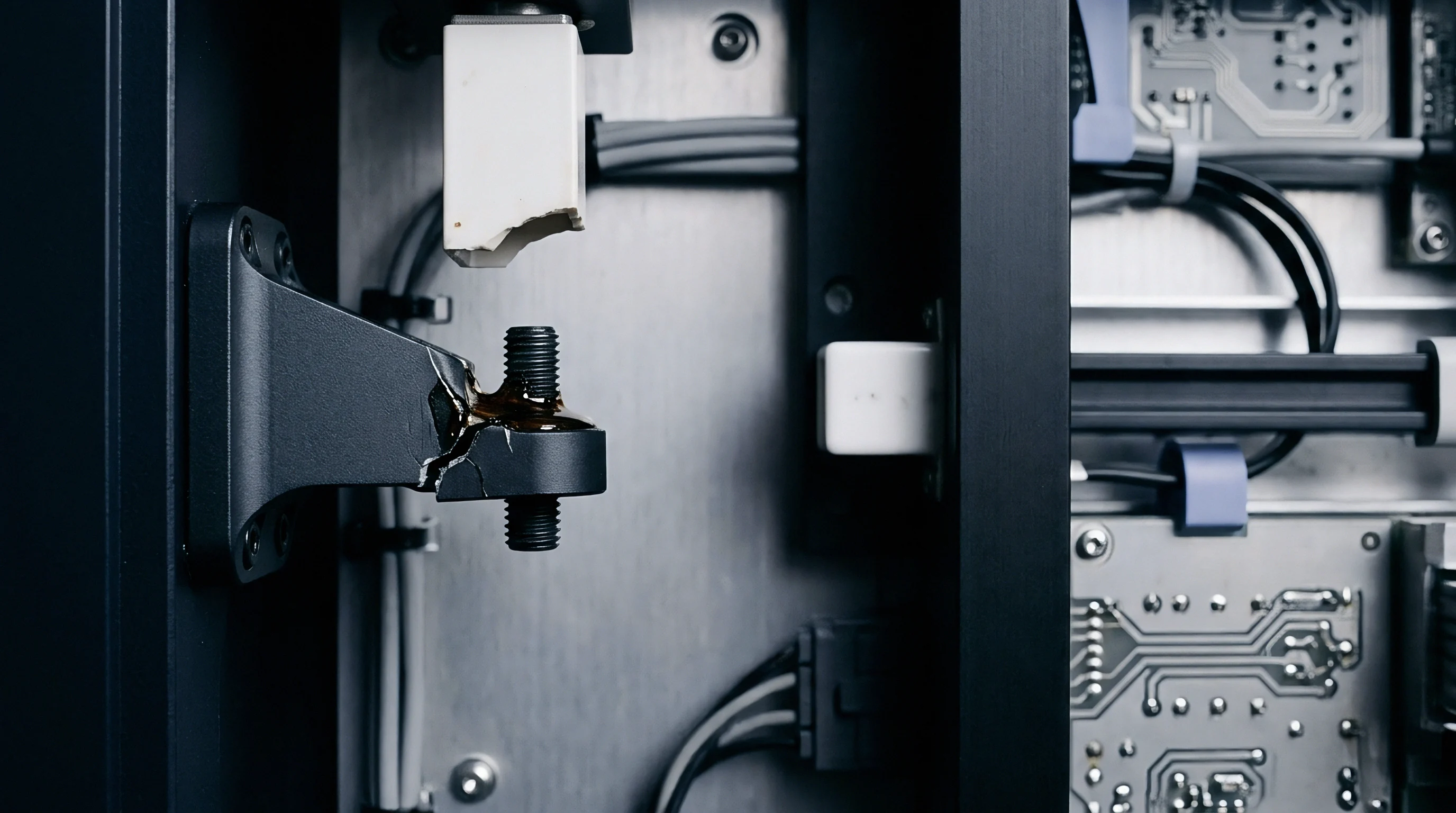
When sealing pressure decays behind a pressure transducer diaphragm, zero-point baseline shifts occur immediately. Sanitary sensor designs employ elastomeric O-rings and hygienic gaskets to seal process interfaces while isolating delicate piezoresistive or capacitive sensing elements from aggressive washdown fluids. Mechanical force loss in the sealing element changes internal strain distribution across the sensor housing, transferring parasitic mechanical loads onto the measurement diaphragm.
Zero shift invalidates factory calibration.
Diaphragm Pre Load Loss and Zero Point Shift
Sanitary pressure sensors rely on stable mechanical clamping to isolate sensitive piezoresistive components from process fluids. Compression loss in internal elastomeric gaskets reduces diaphragm boundary clamping force over time. As sealing force drops, structural boundary conditions shift, causing small micro-meter dimensional displacements in the sensing core.
A diaphragm displacement of less than fifty nanometers shifts sensor zero-point output by up to zero point four percent of full-scale span.
Thermal cycling during washdown compounds calibration drift. When sanitary lines heat up, seal thermal expansion generates temporary over-compression, increasing stress relaxation rates. Upon cooling, relaxed seals exert less force than before the cycle, resulting in step-change zero drifts after every sanitization event.
Compliance with ISO 3384 Method A dictates continuous stress measurement to capture early mechanical relaxation before fluid equilibrium occurs.

When Does Seal Relaxation Induce Measurement Drift?
Sealing force drops below the hydraulic line pressure, permitting microscopic fluid ingress or internal strain relief across the sensor body. Force loss alters housing rigidity, causing sensor zero-point and span calibration curves to wander beyond stated accuracy limits. Standard O-rings yield under pressure.
- Parasitic Housing Strain translates sealing gasket relaxation into mechanical diaphragm deflection, shifting baseline zero-point electronic output.
- Capillary Fluid Penetration allows washdown reagents to bypass relaxed secondary seals, altering internal dielectric properties and grounding reference circuits.
- Asymmetric Creep Vectoring creates non-uniform clamping forces across hygienic tri-clamp interfaces, introducing angular tilt to pressure diaphragms.
- Thermal Hysteresis Accumulation prevents sensor housings from returning to original geometry following extreme washdown temperature excursions.
Failure to model chemomechanical relaxation in sanitary sensor seals results in unpredicted measurement drift, premature recalibration cycles, unrecorded batch volume errors, and catastrophic ingress failures that destroy internal measurement electronics.

Bench
Accredited metrology laboratories evaluate elastomer longevity through thermal-chemical exposure rigs operating under controlled compression. Physical bench testing provides raw empirical data required to model hydrolytic scission kinetics and stress relaxation rates under real-world washdown profiles. Material selection dictates recalibration intervals.
Testing procedures require rigorous control over chemical concentration, solution temperature, mechanical strain, and fluid flow velocity to isolate individual degradation mechanics.
Accelerated Life Test Methods and Arrhenius Extrapolation
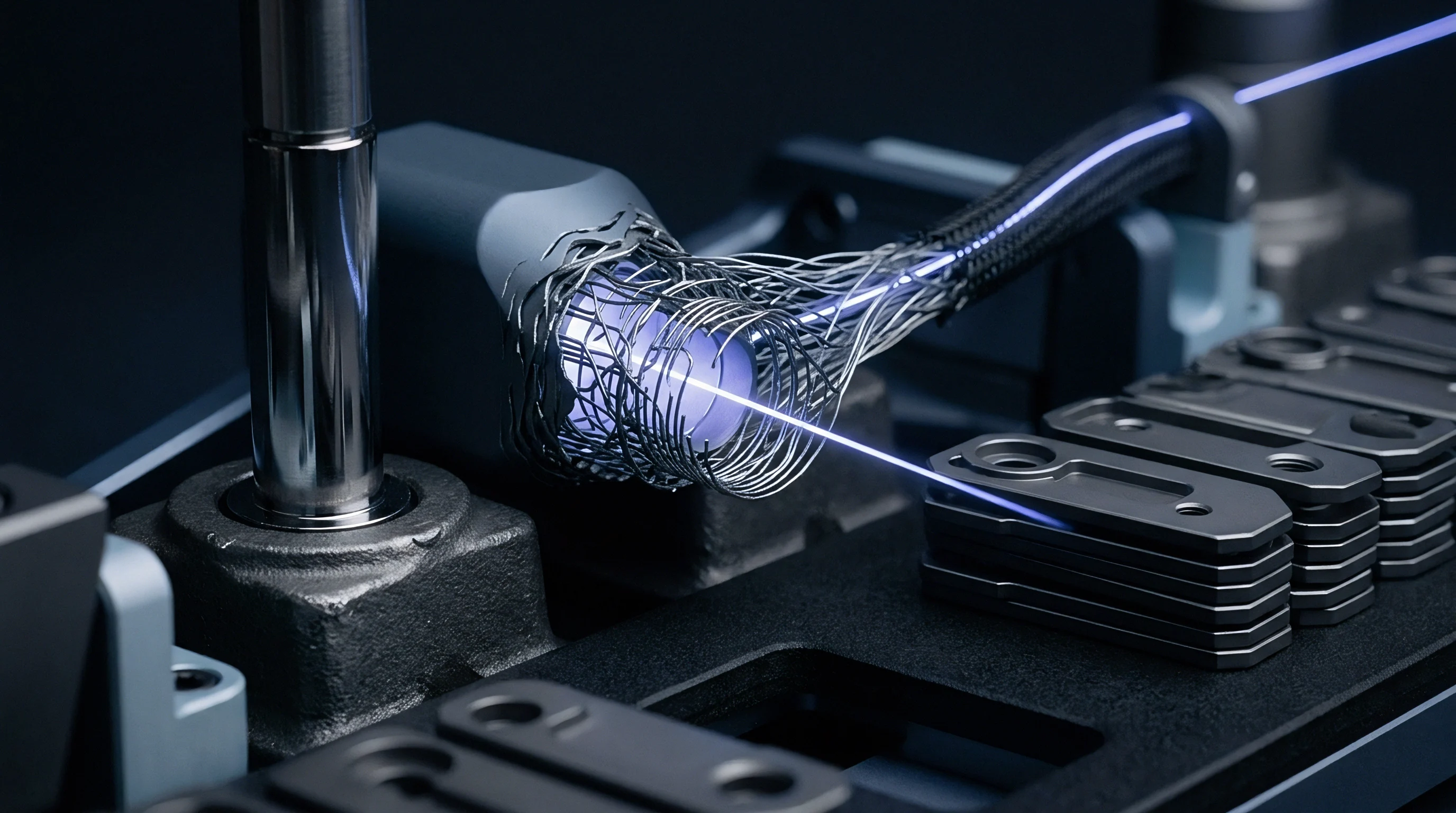
Thermal aging at elevated temperatures projects long-term material survival under baseline operating conditions. Accelerated life testing subjects compressed elastomeric samples to temperatures ten to thirty degrees above peak washdown levels inside pressurized chemical containment cells. Immersion tests establish empirical rates.
Arrhenius extrapolation assumes constant activation energy across the tested temperature band. Chemical mechanisms can shift at elevated temperatures, leading to inaccurate life projections. Fluorocarbon elastomers, for instance, may undergo secondary cross-linking reactions above one hundred and thirty degrees Celsius that do not occur during standard eighty-degree washdown cycles.
Verification protocols require multi-temperature validation across at least four discrete thermal points to confirm Arrhenius linearity.

Execution Steps for Chemomechanical Relaxation Testing
Standardized laboratory procedures measure force retention over five hundred hours inside liquid aging cells.
- Mount clean elastomeric test specimens into specialized stress relaxation rigs equipped with calibrated continuous load cells.
- Compress test specimens to exactly twenty-five percent nominal strain at ambient ambient conditions and record initial peak compression force.
- Allow physical viscoelastic relaxation to stabilize over a three-hour dwell period prior to chemical fluid introduction.
- Submerge compressed fixture assembly into circulating multi-chemical washdown solution maintained at target test temperature.
- Log sealing force retention continuously at high sampling rates to capture rapid early chemorheological decay dynamics.
- Extract test fixtures at pre-determined intervals to record volumetric swell, mass change, and Shore A durometer hardness variations.
| Standard Designation | Primary Test Metric | Temperature Tolerance (°C) | Strain Precision (%) | Expanded Measurement Uncertainty (k=2) |
|---|---|---|---|---|
| ISO 3384-1 Method A | Continuous Stress Relaxation | ±0.5 | ±0.1 | ±1.8% Force Retention |
| ASTM D471 | Fluid Immersion Volumetric Swell | ±1.0 | N/A | ±0.4% Mass Change |
| ISO 815-1 | Ambient Compression Set | ±1.0 | ±0.2 | ±1.2% Permanent Set |
| ISO 11346 | Arrhenius Life Estimation | ±0.5 | ±0.1 | ±8.5% Projected Service Hours |
Subclause 6.2 of ISO 3384-1 mandates continuous force recording during fluid immersion phase, ensuring that transient plasticization effects are separated from permanent chemical cross-link scission.


Margin
Financial losses from uncalculated instrument drift manifest as unbudgeted downtime, premature seal replacement, and batch contamination. Fluorocarbon elastomers resist acidic attack. Sourcing leads and quality managers balance upfront elastomeric material costs against long-term maintenance budgets and calibration recalibration frequencies.
Selecting low-grade seal materials saves initial capital expenditure but creates substantial long-term warranty and operational exposure.
Worked Cost Model for Sanitary Sensor Seals
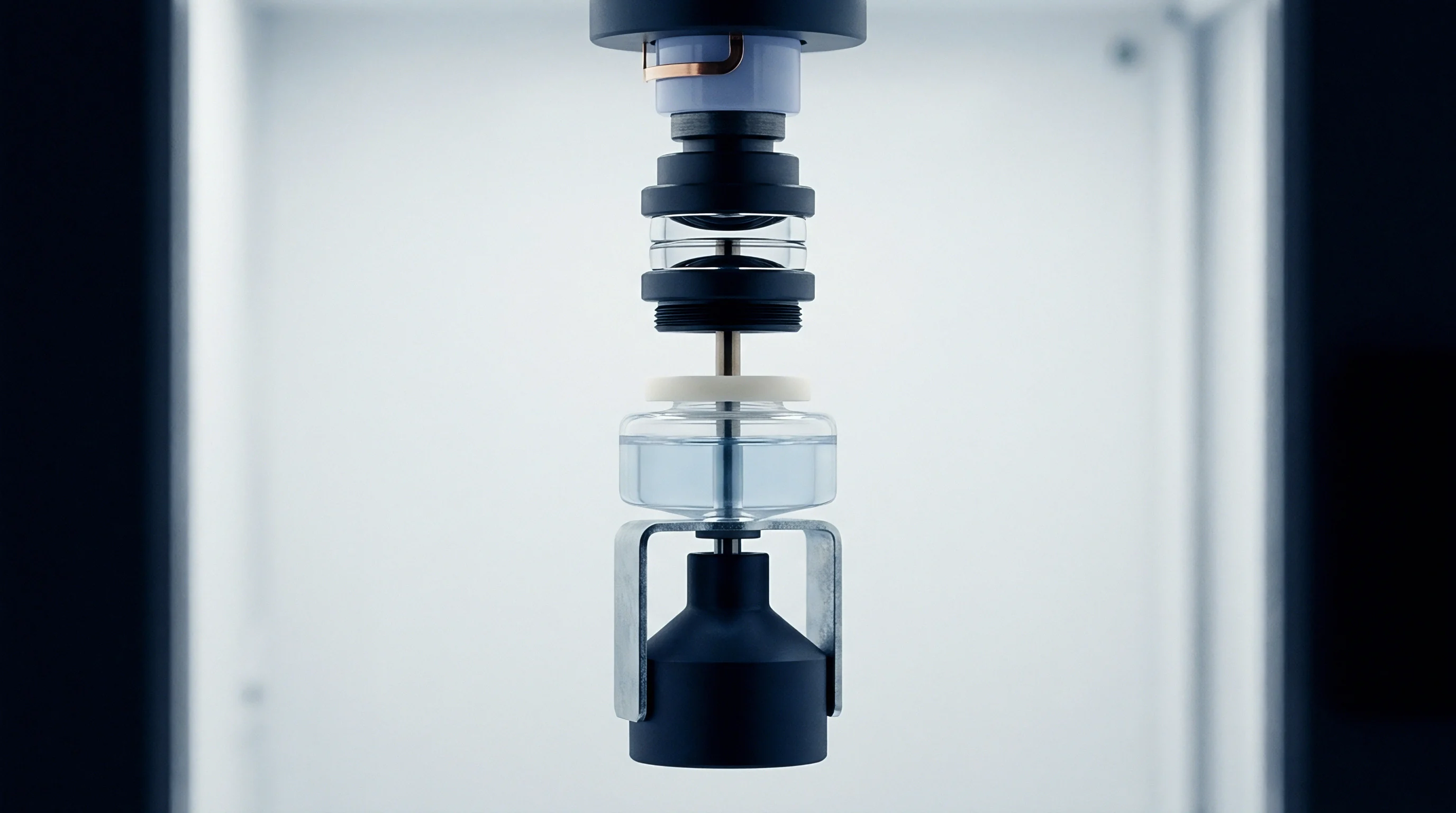
Evaluating total expenditure for a facility operating two hundred hygienic pressure transmitters illustrates the economic difference between sealing compounds. Consider an operational scenario comparing standard bisphenol-cured FKM gaskets against high-tier peroxide-cured FFKM seals across a three-year operating window. Standard FKM seals cost three dollars and fifty cents per unit, whereas peroxide-cured FFKM seals cost forty-eight dollars per unit.
Standard FKM seals undergo rapid stress relaxation in continuous caustic and peracetic acid washdown environments, losing over forty percent of initial compression force within six months. This force loss causes instrument zero-point drift exceeding zero point five percent full-scale span every one hundred and eighty days. Sensor recalibration requires technician labor costing eighty-five dollars per hour, taking one hour per sensor.
Planned seal replacements occur every six months to prevent fluid ingress leaks. Each replacement requires thirty minutes of labor plus ten minutes of line downtime valued at four thousand five hundred dollars per hour across the process module.
Peroxide-cured FFKM seals maintain force retention above eighty percent for over twenty-four months, holding measurement drift within zero point one percent full-scale span per year. Recalibration intervals extend to twelve months, and physical seal replacement moves to a twenty-four-month cycle.
Calculating three-year total ownership costs across two hundred sensor locations reveals significant operational divergence:
Standard FKM seals incur initial component costs of seven hundred dollars. Six seal replacement cycles over three years total four thousand two hundred dollars in material expenses. Labor costs for twelve seal replacements and recalibrations accumulate thirty-four thousand dollars.
Line downtime expenses associated with six planned seal replacement shutdowns sum to forty-five thousand dollars. Total three-year operational expenditure reaches eighty-three thousand nine hundred dollars.
Peroxide-cured FFKM seals require initial component investment of nine thousand six hundred dollars. One mid-term seal replacement cycle at month twenty-four adds nine thousand six hundred dollars in material cost. Technician labor for three recalibration checks and one seal replacement totals ten thousand two hundred dollars.
Line downtime expenses for a single planned replacement cycle equal seven thousand five hundred dollars. Total three-year operational expenditure equals thirty-six thousand nine hundred dollars.
Investing in higher-grade chemomechanically stable elastomers yields a net savings of forty-seven thousand dollars over three years across two hundred sensor nodes, representing a fifty-six percent reduction in total sensor interface maintenance costs.

Tolerance Pricing and Maintenance Intervals
Specifying tighter dimensional tolerances on elastomeric seals increases procurement costs while extending operational recalibration windows. Tight geometric tolerances reduce variation in initial compression strain, ensuring predictable stress relaxation rates across large sensor deployments. When seal compression varies widely due to relaxed manufacturing tolerances, individual sensors show highly inconsistent zero-drift profiles, forcing plant operators to schedule recalibrations based on worst-case performance.
Standardizing seal dimensions to inner diameter tolerances of plus or minus zero point fifteen millimeters and cross-section tolerances of plus or minus zero point zero eight millimeters adds roughly fifteen percent to raw seal purchase costs. This precision reduces initial strain variability from plus or minus five percent down to plus or minus one point two percent. Predictable compression strain narrows the spread of stress relaxation curves, allowing quality leads to safely extend recalibration intervals by four to six months across the entire facility without risking out-of-tolerance measurement events.
Component procurement strategies that evaluate elastomeric seals based solely on purchase price ignore fundamental polymer chemorheology. Chemomechanical stress relaxation and hydrolytic cross-link scission directly drive long-term calibration drift, seal longevity, and overall process accuracy. Engineering specifications that incorporate rigorous chemomechanical relaxation models, validated through accelerated multi-chemical bench testing, establish optimized recalibration schedules and deliver verifiable lower total operating costs across demanding washdown environments.