Longitudinal Surface Hydroxyl Poisoning Kinetics and Reversibility on Nanostructured Tungsten Trioxide Films
Longitudinal hydroxyl poisoning on tungsten trioxide films is governed by logarithmic Elovich kinetics, reversible only via thermal pulsing above 380 degrees Celsius.
Hydration
An unheated tungsten trioxide thin film exposed to 40 percent relative humidity at 25 degrees Celsius drifts upward in electrical resistance across three hundred hours of baseline logging. The phenomenon originates at the gas-solid interface where ambient moisture competes directly with atmospheric oxygen for coordination positions on nanostructured surfaces. In ambient gas detection applications targeting nitrogen dioxide, hydrogen sulfide, or acetone, metal-oxide films rely on ionosorbed oxygen species (O2 minus, O minus, and O 2 minus) to extract electrons from the conduction band.
Water vapor disrupts this extraction mechanism. When ambient humidity reaches the metal-oxide surface, molecular water dissociates across coordinatively unsaturated tungsten sites and bridging oxygen atoms, altering the width of the surface electron depletion layer.
The baseline drifts upward. This resistance escalation is not a temporary physical adsorption artifact that vanishes under dry air purges. Exposure over weeks and months produces a steady, cumulative accumulation of bonded surface species that progressively neutralize active sensing centers.
The terminal tungsten coordination sphere, which ordinarily participates in rapid charge exchange with target oxidizing or reducing gases, becomes passivated by chemisorbed hydroxyl groups. These terminal species alter the surface potential, alter inter-grain boundary heights, and depress sensor sensitivity toward industrial target analytes.
Ambient moisture transforms reactive surface oxygen sites into stable hydroxyl terminations that permanently depress transducer baseline conductivity.

Chemisorption Pathways at Terminal Oxygen Sites
Water molecules in ambient air encounter coordinatively unsaturated tungsten centers. Tungsten trioxide in its monoclinic and orthorhombic crystalline phases presents alternating planes of tungsten and oxygen atoms. Cleaving these crystallites exposes terminal tungsten-oxygen double bonds (W=O) and unsaturated tungsten metal cations with open coordination positions.
When a gaseous water molecule approaches an unsaturated tungsten cation, the unshared electron pair of the oxygen atom forms a dative bond with the empty 5d orbitals of the tungsten atom. This physisorbed state represents an intermediate precursor.
Terminal tungsten bonds cleave readily. Dissociative chemisorption proceeds when a adjacent bridging oxygen atom (W-O-W) accepts a proton from the coordinated water molecule. The dissociation produces two distinct surface hydroxyl forms:
- Terminal hydroxyl groups bind directly to single tungsten cations, behaving as electron donors that inject negative charge back into the conduction band while simultaneously capping the primary active sites for target gas adsorption.
- Bridging hydroxyl groups form upon proton transfer to the shared lattice oxygen, producing localized positive charge centers that alter the electrostatic work function of the film.
- Hydrogen bonded water layers condense on top of the chemisorbed hydroxyl foundation at relative humidity levels exceeding 60 percent, forming Grotthuss proton conduction networks that short-circuit inter-grain resistance.

Electron Trapping along Bridging Oxygen Bonds
Mobile charge carriers in n-type metal oxides drop when protic species bind to bridging oxygen atoms. Although simple terminal hydroxyl formation injects electrons into the tungsten trioxide conduction band, the subsequent polarization and localized charge rearrangement introduce deep donor states. Protons jump between neighboring oxygens.
This hop action induces localized dipoles that modify the band bending across adjacent grains. As hydroxyl groups accumulate, they displace ionosorbed oxygen ions, specifically O minus species that typically dominate the surface between 150 and 300 degrees Celsius.
Charge transfer pins the conductance. The replacement of reactive oxygen ions with chemically inert hydroxyl groups diminishes the modulation amplitude when the film encounters reducing gases like carbon monoxide or oxidizing gases like nitrogen dioxide. The sensor element experiences both a continuous baseline resistance shift and a contracted dynamic range.
Continuous exposure under humid background conditions gradually replaces active chemisorbed oxygen ions with stable surface hydroxyls.
Decay
Longitudinal resistance records from sensors operating between 200 and 350 degrees Celsius document a steady loss in sensitivity. While elevated operating temperatures retard the rate of molecular water condensation, they do not stop dissociative chemisorption. Hydroxyl poisoning on tungsten trioxide progresses across three distinct operational regimes: an initial rapid chemisorption phase spanning the first 48 hours of deployment, a prolonged logarithmic degradation phase extending over thousands of hours, and an eventual saturation plateau where sensor response degrades to less than 20 percent of factory calibration values.
Surface coverage follows Elovich dynamics. The rate of surface poisoning decreases exponentially as the concentration of chemisorbed hydroxyl groups increases. This deceleration occurs because the activation energy for dissociative water chemisorption rises in proportion to the existing surface coverage.
Each newly formed hydroxyl group increases the localized surface potential, imposing an electrostatic barrier against subsequent incoming water molecules. Consequently, sensors deployed in constant relative humidity do not drift linearly; their sensitivity degradation decelerates over time, following logarithmic kinetics that mislead automated calibration routines relying on linear extrapolation.
A 1000-hour exposure to 60 percent relative humidity at 250 degrees Celsius suppresses the baseline response to 10 ppm nitrogen dioxide by 42 percent.
| Operating Temperature | Relative Humidity | Elovich Alpha (10⁻³ /s) | Elovich Beta (eV) | 1000-Hour Resistance Drift | Sensitivity Loss (10 ppm NO2) |
|---|---|---|---|---|---|
| 200 °C | 30 % | 4.12 | 0.38 | +68 % | -54 % |
| 200 °C | 70 % | 8.45 | 0.31 | +142 % | -78 % |
| 275 °C | 30 % | 1.85 | 0.52 | +24 % | -28 % |
| 275 °C | 70 % | 3.90 | 0.44 | +58 % | -46 % |
| 350 °C | 30 % | 0.41 | 0.74 | +8 % | -12 % |
| 350 °C | 70 % | 0.98 | 0.65 | +19 % | -21 % |
| Data acquired via four-point probe DC resistance measurements on 120 nm reactive magnetron sputtered WO3 thin films over continuous 1000-hour synthetic air testing chambers. | |||||
Logarithmic Progression under Elovich Rate Laws
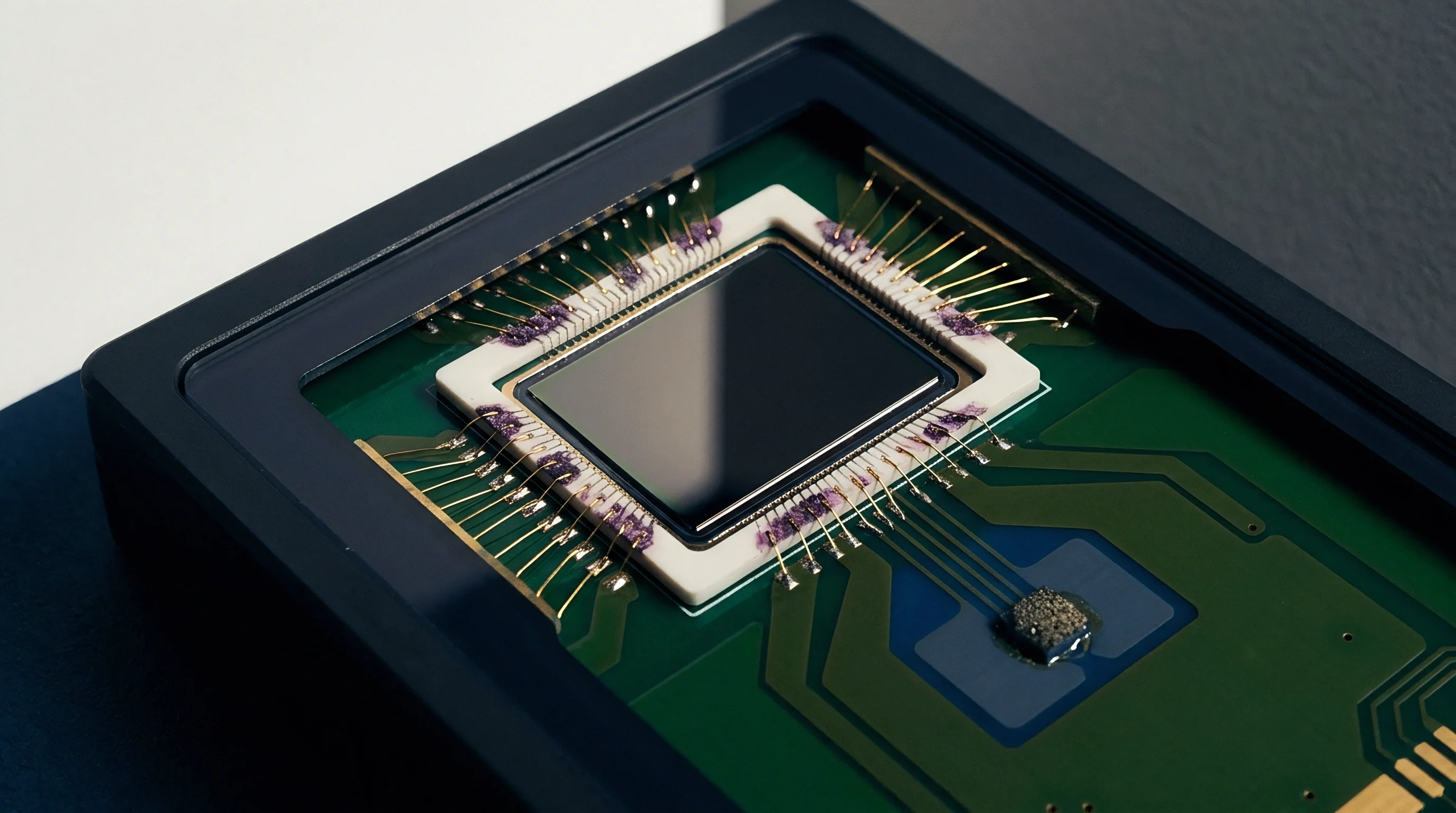
Adsorption velocity drops exponentially as terminal coordination positions fill across operational days. The empirical Elovich equation describes the rate of chemisorption on heterogeneous surfaces where adsorption energy varies with coverage: dq/dt equals alpha multiplied by exp(-beta q), where q represents the surface concentration of poisoned sites, alpha represents the initial adsorption rate, and beta represents the surface deactivation coefficient. On nanostructured tungsten trioxide films, beta ranges between 0.31 and 0.74 electron-volts depending on grain morphology and microheater operating setpoints.
Thinner films suffer faster degradation. When the film thickness approaches the Debye length (typically 5 to 15 nanometers in nanostructured WO3), surface hydroxyl poisoning penetrates the entire cross-section of the conducting channel. For compact films exceeding 100 nanometers in thickness, the conduction path passes through both poisoned surface grains and unpoisoned core regions, damping the observed resistance drift at the expense of gas sensitivity.

Where Do Subsurface Hydroxyl Traps Form?
Lattice vacancies beneath the outer atomic monolayer act as sinks for migrating protons. Although water dissociation initiates exclusively at external surface sites, the concentration gradient of adsorbed hydrogen drives solid-state diffusion of protons into the tungsten trioxide crystallite lattice. Tungsten trioxide exhibits an open perovskite-like ReO3 structure characterized by large interstitial cages.
Protons released during dissociative water adsorption possess tiny ionic radii, enabling them to diffuse through these interstitial pathways at operational temperatures above 250 degrees Celsius.
Bulk oxygen vacancies migrate inward. Protons diffusing into the lattice associate with existing oxygen vacancies, forming stable hydroxyl-vacancy complexes. These interstitial hydroxyl defects alter the optical bandgap of the film, shift the Fermi level, and create deep electron traps that do not participate in surface gas-sensing reactions.
Field failures mount rapidly. Uncompensated baseline drift creates persistent false alarms and forces premature module replacement across deployed field instruments.


Bake
Thermal dehydroxylation restores the pristine conductance of sputtered metal-oxide sensing elements. Desorbing chemically bonded hydroxyl groups requires supplying enough kinetic energy to overcome the desorption activation barrier, which ranges between 1.2 and 1.8 electron-volts for terminal W-OH groups on tungsten trioxide surfaces. Operating standard gas sensors continuously at these elevated regeneration temperatures is impractical; prolonged exposure to temperatures above 400 degrees Celsius causes grain coarsening, micro-crack formation, and thermal degradation of platinum substrate contact metallization.
Thermal pulsing reverses the poisoning. By driving integrated microhotplates with brief, high-temperature thermal cycles, sensor conditioning systems can strip accumulated hydroxyl groups without inducing catastrophic structural degradation in the nanostructured sensing layer. The dehydroxylation process occurs through the recombining of adjacent hydroxyl groups: two surface W-OH groups react to form one volatile H2O molecule and one bridging W-O-W lattice bond, restoring surface stoichiometry and reopening active sites for ambient gas chemisorption.
Baseline restoration efficiency increases nonlinearly once regeneration pulse temperatures exceed the surface dehydroxylation threshold.

Does Microhotplate Annealing Remove Terminal Hydroxyl Species?
Short electrical pulses driving the substrate heater past 400 degrees Celsius strip bonded hydroxyl groups. Standard silicon-based micro-electromechanical systems (MEMS) microhotplates can transition from standard operating temperatures (250 degrees Celsius) to regeneration setpoints (425 degrees Celsius) within tens of milliseconds, consuming modest power while purging the sensing film. The regeneration procedure follows a controlled sequence:
- Pre-heating verification assesses baseline stability and measures current film resistance to establish the starting degree of poisoning.
- Thermal impulse execution drives the platinum microheater to 425 degrees Celsius for a calibrated window between 200 and 500 milliseconds, desorbing terminal OH groups as gaseous water.
- Controlled cooldown returns the film to the baseline operating temperature of 250 degrees Celsius within 80 milliseconds, preventing thermal shock cracking of the suspended dielectric membrane.
- Oxygen re-equilibration admits ambient dry or controlled air to reform the active chemisorbed O minus and O2 minus ion layer across freshly exposed tungsten sites.
Heater power limits field life. Running high-energy thermal pulses repeatedly on MEMS membranes introduces thermomechanical fatigue along the supporting silicon nitride bridge structures. Designers specifying pulsed microhotplate regeneration architectures trade baseline drift correction against the physical operating lifespan of the micro-machined heater stage.
Ultraviolet Photodesorption at Reduced Temperatures
Sub-bandgap photon fluxes generate electron-hole pairs that neutralize terminal hydroxyl radicals without lattice degradation. Tungsten trioxide has an indirect bandgap spanning 2.6 to 3.0 electron-volts, allowing optical excitation via ultraviolet light-emitting diodes emitting at 365 or 385 nanometers. When ultraviolet photons strike the film, photogenerated holes migrate to the surface space-charge layer under the influence of the built-in electric field.
High temperatures cause grain growth. Photogenerated holes react with negatively charged surface species, including chemisorbed hydroxyl ions, releasing them as neutral radicals that desorb at room temperature. This optical cleansing mechanism circumvents the mechanical fatigue associated with thermal microhotplate pulsing, though it demands direct optical line-of-sight and adds discrete emitter components to the sensor enclosure package.
Higher regeneration temperatures accelerate grain sintering before full hydroxyl desorption finishes.


Probe
Electrochemical impedance spectroscopy separates bulk film conduction from grain-boundary barrier modifications. While standard continuous direct-current measurements record only the total lumped resistance of a tungsten trioxide film, alternating-current interrogation over frequencies from 10 millihertz to 10 megahertz resolves the individual contributions of grain cores, grain boundaries, and electrode-film interfaces. Hydroxyl poisoning does not distribute uniformly across these structural domains; it preferentially concentrates at open grain boundaries where lattice defects and dangling bonds accumulate.
Impedance arcs shift downward. In a Nyquist plot (imaginary impedance versus real impedance), nanostructured tungsten trioxide films typically yield two partially overlapping semicircles. The high-frequency semicircle corresponds to bulk intra-grain transport, governed by the intrinsic carrier concentration of stoichiometric WO3.
The intermediate-to-low-frequency semicircle corresponds to grain-boundary resistance and capacitance, which are modulated by chemisorbed surface species, including oxygen ions and passivating hydroxyl groups.
Grain Boundary versus Intra-Grain Impedance Shifts
Equivalent circuit modeling isolates high-frequency bulk transport from the lower-frequency capacitive arcs produced by chemisorbed water. By fitting impedance spectra to an equivalent circuit comprising a bulk resistor (R_bulk) in series with a parallel grain-boundary resistor-capacitor network (R_gb and C_gb), measurement hardware detects the specific signature of hydroxyl poisoning. As hydroxyl coverage increases, R_gb escalates due to the passivation of conduction paths, while C_gb shifts due to the altered dielectric properties of the hydroxylated interface.
Film capacitance tracks hydroxyl coverage. Measuring capacitance variations provides a diagnostic metric that remains insensitive to minor ambient temperature fluctuations. Direct-current methods cannot make this distinction.
Signal-chain instrumentation implementing continuous capacitance tracking can isolate moisture-induced baseline drift from actual target gas exposure events, enabling automated firmware correction algorithms.

Dynamic Pulsed Interrogation Topologies
Intermittent heating sequences replace continuous thermal bias to suppress equilibrium water dissociation. Because dissociative chemisorption of water on tungsten trioxide requires finite activation time, duty-cycling the sensor heater curtails cumulative surface poisoning. Operating the microheater on a 10 percent duty cycle (for instance, 100 milliseconds active at 300 degrees Celsius followed by 900 milliseconds unheated) preserves the sensing layer in an un-equilibrated state where moisture adsorption remains confined to weak physical condensation.
Frequency sweeps reveal trap states. Interrogation circuits reading sensor elements under pulsed temperature regimes must measure resistance during a precisely timed window at the conclusion of the heating pulse, before thermal relaxation alters carrier mobility. Circuits must evaluate several core operational parameters:
- Interrogation pulse duration sets the thermal equilibrium depth within the film, establishing whether gas reaction occurs strictly at the surface or extends into internal pore volumes.
- Sampling aperture delay prevents inductive and capacitive switching transients generated by the heater driver from corrupting the high-impedance analog-to-digital converter input.
- Excitation signal amplitude governs the linear range of the grain-boundary barrier height measurement without inducing localized Joule heating.
Whether high-frequency admittance shifts can differentiate irreversible subsurface hydroxyl trapping from reversible physisorption across multi-year field deployments remains unresolved.


Supply
Commercial procurement datasheets rarely state the long-term drift induced by relative humidity variations. Standard catalog specifications for tungsten trioxide gas sensors cite initial sensitivity, response time (t90), recovery time, and baseline resistance measured exclusively under pristine laboratory conditions: dry synthetic air containing 20.9 percent oxygen and zero percent relative humidity. When these components transition from qualification benches to field deployments in municipal safety networks, industrial flue monitoring, or portable environmental monitors, baseline stability falls short of published specifications.
Sol-gel batches age faster. Sourcing engineers face substantial variance across manufacturing methods. Tungsten trioxide sensing layers produced by sol-gel synthesis exhibit high specific surface areas and superior initial sensitivity, but their open, disordered mesoporous networks contain high initial concentrations of structural hydroxyl groups and oxygen vacancies.
In contrast, films synthesized by reactive radio-frequency magnetron sputtering or atomic layer deposition exhibit dense, crystalline microstructures that resist moisture intrusion at the cost of lower initial raw sensitivity.
Supply contracts that omit humidity-drift limits permit deliveries of sensor lots that pass incoming room-temperature testing but drift out of tolerance within thirty operational days.
| Deposition Technology | Average Grain Size | Pinhole Defect Density | Initial Baseline Drift Rate (60% RH) | Dehydroxylation Temp Threshold | Relative Unit Sourcing Cost |
|---|---|---|---|---|---|
| Atomic Layer Deposition (ALD) | 8 – 15 nm | Extremely Low (<0.1 /cm²) | 0.08 % / day | 380 °C | High (3.2x) |
| Reactive RF Sputtering | 20 – 45 nm | Low (<2.0 /cm²) | 0.19 % / day | 410 °C | Moderate (1.0x) |
| Sol-Gel Spin Coating | 5 – 12 nm (Agglomerated) | High (>50 /cm²) | 0.85 % / day | 450 °C | Low (0.3x) |
| Hydrothermal Nanowires | 30 – 80 nm (Aspect 15:1) | Moderate (<10 /cm²) | 0.34 % / day | 400 °C | High (2.4x) |

Morphology Differences across Deposition Techniques
Atomic layer deposition yields dense films with low defect densities, whereas sol-gel processing leaves open mesoporous networks. Film morphology establishes the density of available terminal tungsten sites and controls the rate of proton migration into subsurface lattice vacancies. Sputtered films offer a commercial middle ground: columnar grain growth produces vertical diffusion channels that facilitate target gas ingress while restricting lateral percolation of hydroxyl poisoning networks.
Drift rates dictate recalibration intervals. Sourcing teams specifying sensors for safety-critical instruments must calculate total cost of ownership by incorporating field maintenance cycles. A low-cost sol-gel sensor requiring bi-weekly manual zero-point calibration quickly incurs service costs that eclipse the initial procurement savings of an atomic layer deposition alternative equipped with integrated microhotplate regeneration circuitry.
Acceptance Standards for Chemiresistive Film Stability
Receiving inspection procedures verify sensor response against standardized gas exposures before approving production lots. Sourcing documentation must mandate environmental preconditioning tests aligned with international standards such as IEC 60068-2-78 (damp heat, steady state). Incoming inspection protocols should require lot-sample testing where sensors operate under 85 percent relative humidity at 85 degrees Celsius for 168 hours, followed by evaluation of baseline resistance recovery and sensitivity retention.
Incoming inspection blocks defective wafers. When suppliers deliver lots that fail these environmental screening boundaries, warranty resolution hinges upon pre-negotiated acceptance test language. Factory sales representatives attribute sensor drift beyond thirty days to uncalibrated user environments rather than baseline film oxidation.