
Silicon Piezoresistive Gauge Thermal Mechanical Basics
Silicon piezoresistors provide gauge factors exceeding one hundred but require mechanical isolation to decouple die stress from intrinsic thermal sensitivity.

Silicon piezoresistors provide gauge factors exceeding one hundred but require mechanical isolation to decouple die stress from intrinsic thermal sensitivity.

Validate I2C revision registers at incoming inspection to detect unannounced stepping changes and package bitfield shifts before boards reach reflow.

Mitigate guard buffer phase lag under reactive loads by using dual-feedback lead networks that decouple heavy shield capacitance from amplifier output poles.

Micro-sensor drift stems from die-attach viscoelastic relaxation and interfacial cracking, requiring constitutive modeling to prevent unrecoverable baseline shifts.

Surface mount sensor stepping verification relies on querying internal silicon revision registers over digital buses during automated board testing.

Active driven shielding neutralizes cable capacitance and fringe fields by holding an intermediate guard conductor at identical instantaneous sensor potential.

Hygrothermal aging drives sensor drift via moisture permeation, hygroscopic swelling, and hydrolytic degradation, requiring verified kinetic acceleration models.

Dynamic rarefaction collapses squeeze-film damping under phase-skewed shock, requiring non-continuum kinetic modeling and high-slew front-end electronics.

Phase-dependent vibration rectification shifts multi-axis MEMS DC bias when orthogonal dynamic displacements intermodulate through non-linear tethers and combs.

Micro-scale squeeze film mechanics govern capacitive sensor bandwidth, damping, and Brownian noise through Knudsen-dependent gas rarefaction and pressure tuning.

Strain transformation collapses high-frequency skin depth by increasing permeability, requiring multi-frequency impedance modeling to decouple phase from defects.
Empirical activation energy for sensor encapsulation polymers requires multi-temperature aging below glass transition to prevent catastrophic field failures.

Optimize inductive transducer repeatability on heat treated targets by isolating distance from permeability via dual-frequency phase demodulation.
Uncertainty expansion in pressure fleets demands root-sum-square combination of annual zero drift, thermal hysteresis, and line pressure stress terms.
Unrecognized subsea sensor drift converts moisture ingress and adhesive creep into artificial structural fatigue, forcing costly unneeded interventions.

Target alloy phase selection governs inductive sensor stability: unstable austenitic grades transform to ferromagnetic martensite under machining, inducing major drift.

Optimizing calibration intervals balances in situ sensor drift history against consumer risk to minimize total plant ownership costs without violating tolerances.

Viscoelastic mold compound relaxation during thermal cycling alters sensor die stress, causing unrecoverable analog drift unless modeled via Prony series.
Uncompensated thermal gradients induce dynamic sensor baseline drift up to 125 ppb; mitigating errors requires dual-point sensing and thermal time-constant matching.

Outdoor field uncertainty budgets require combining ambient temperature shifts, solar gain, static pressure, and annual drift beyond factory datasheet claims.

Post-reflow zero-point drift stems from package-to-board thermal expansion mismatch, demanding compliant leads or post-assembly firmware calibration.

Sub-micron MEMS suspension stiffness degrades under polymer encapsulation via interfacial non-linear viscoelastic relaxation, shifting resonant frequency and phase.

Sensor accuracy claims established at 23°C fail in service unless temperature coefficients, soak durations, and Total Error Bands are budgeted across the operational envelope.
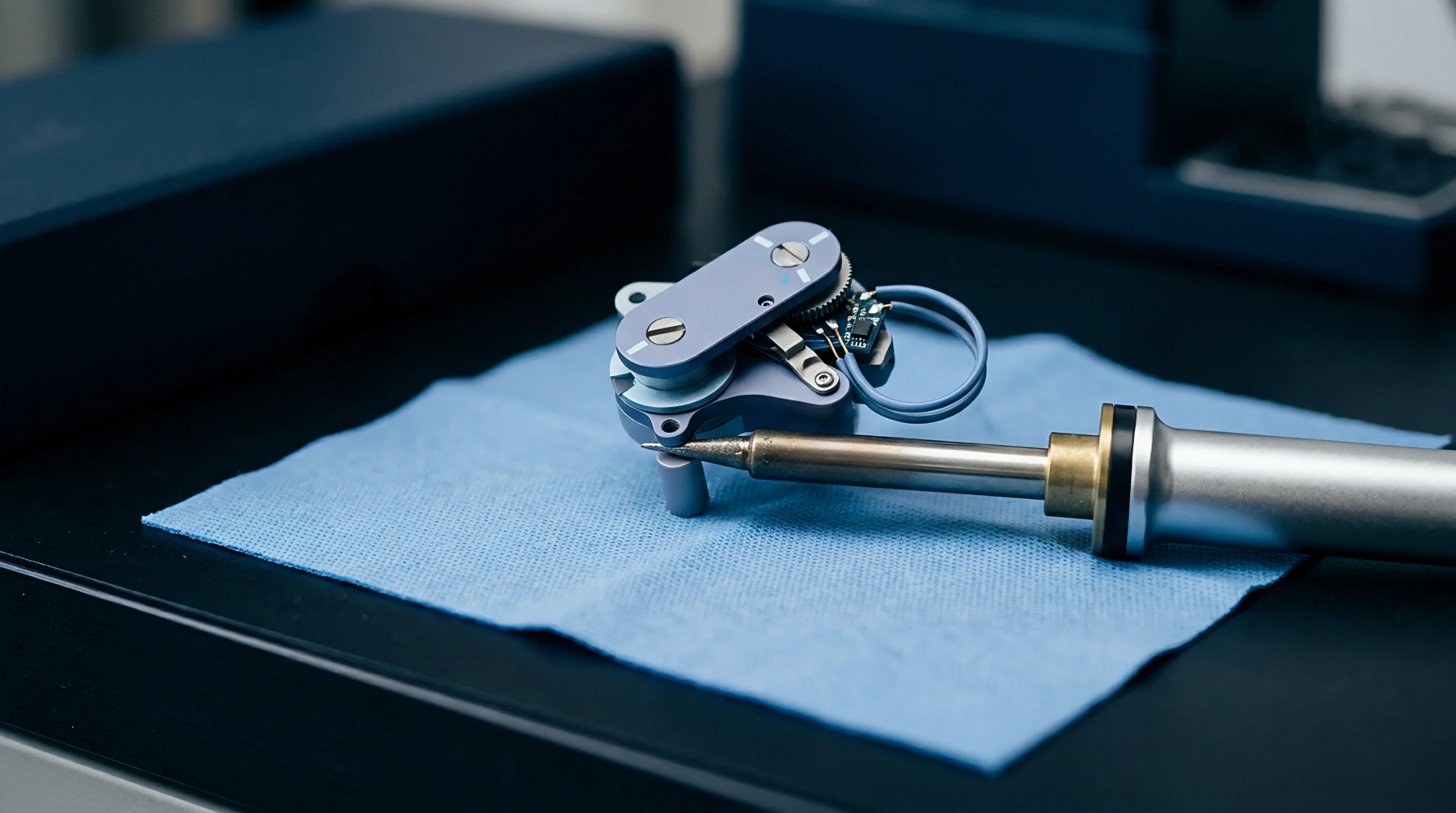
Thermal expansion mismatch in fine-pitch packages concentrates shear strain in outer joints, demanding matched underfill and strict standoff control to survive.

Unpassivated wafer conversion packaging transfers mold compound reflow stresses directly into analog trim circuits, shifting factory register offsets.

Wafer bank conversion bypasses front-end fab cycles but introduces multi-week packaging queues and compounding yield losses that inflate delivered component costs.

Encapsulated sensor thermal shock induces differential polymer shear, causing unrecoverable zero wander that demands decoupled span and offset tolerance clauses.
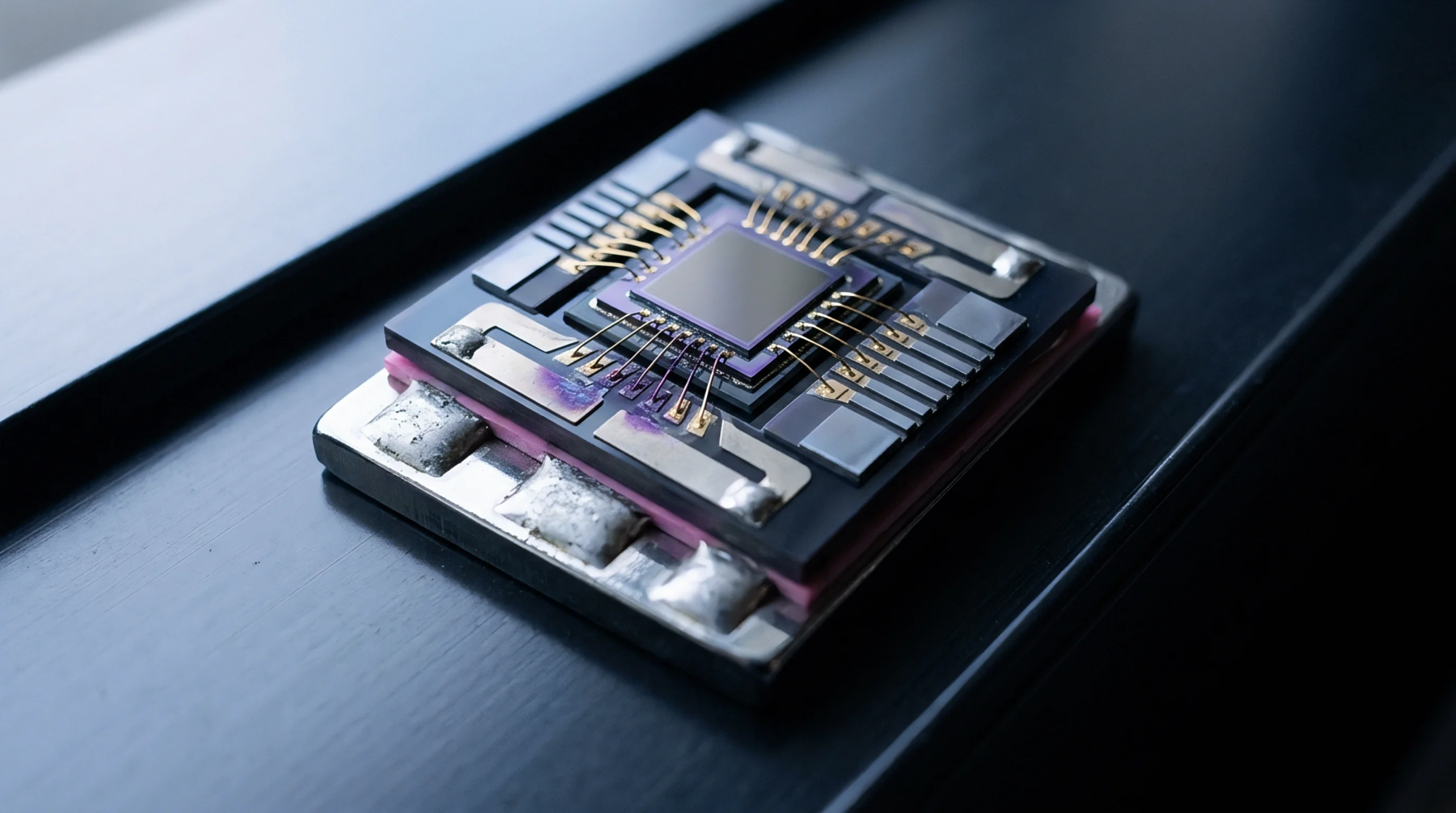
Sensor package selection fixes mechanical strain, driver stability, and break-even volumes before procurement issues purchase orders for alternative parts.

Mitigate high-modulus gel interfacial shear by combining silane-promoted substrate adhesion, laser stress relief trenches, and dual-layer modulus gradients.

Finite element Prony integration isolates viscoelastic die-attach relaxation from thermal gradients, preventing multi-axis sensor array bias drift.
Expertise is a utility, not a secret. sentiention™ publishes its working knowledge as open reference: intelligence layer covering the materials it sources, the markets it enters, and the reference that serves both.