Standard Test
Standardized mechanical force thresholds established by military qualification frameworks determine the minimum acceptable adhesion strength between a semiconductor die and its supporting substrate or header. The mechanical test procedure defined in MIL-STD-883 Method 2019 applies a shearing force perpendicular to die edges to measure attachment integrity in microelectronic assemblies. Testing evaluates epoxy bonding or eutectic die attachment used in high-reliability packages.
The protocol stops applying when die dimensions fall outside specified area limits or when flip-chip bump arrays require tensile pull testing.
Load Mechanism
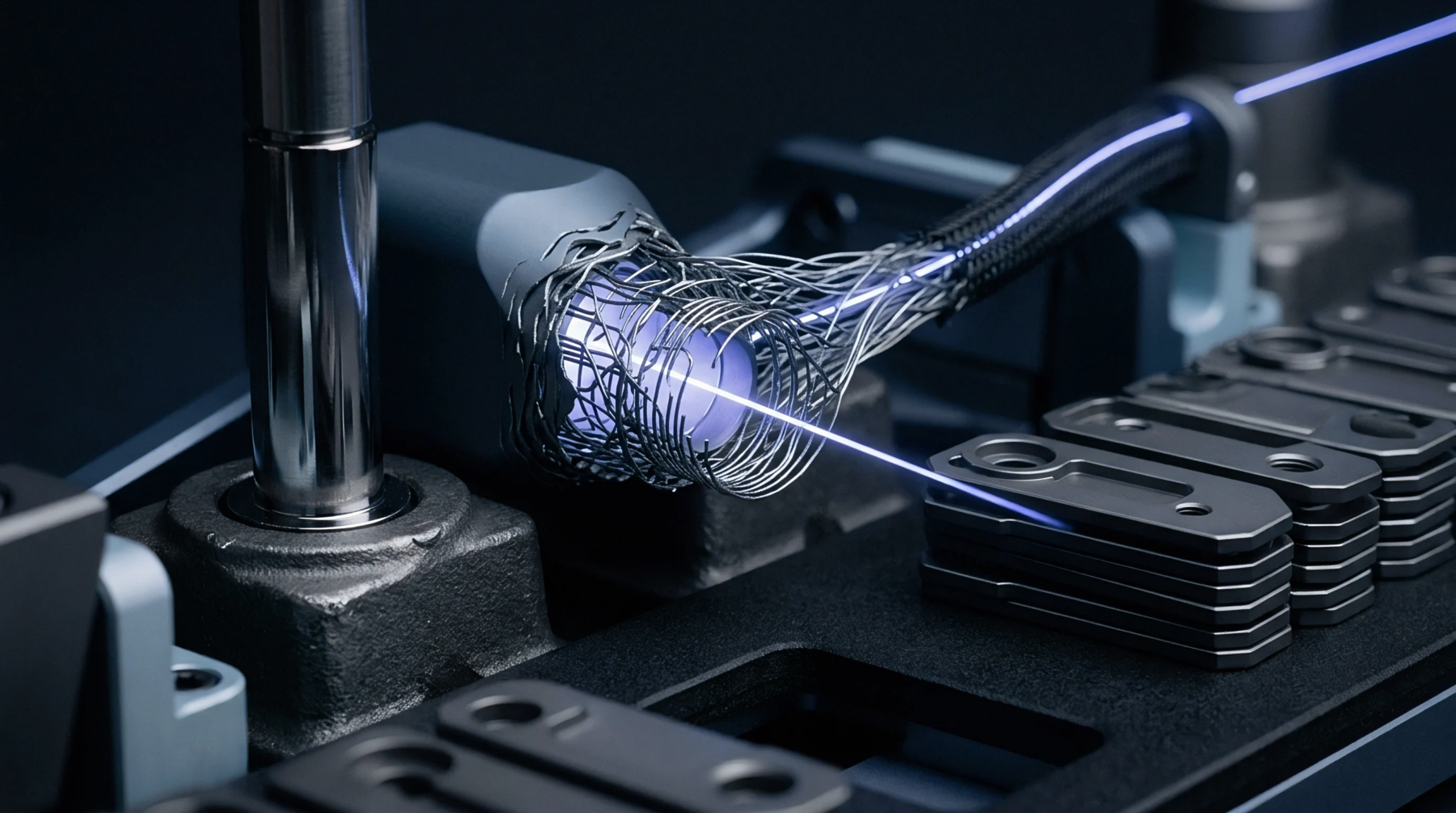
Precision shearing blades positioned adjacent to the die edge apply a steadily increasing force parallel to the substrate contact plane. Direct contact along the die edge prevents tipping moments that introduce peeling stresses rather than pure shear forces. Contact tool alignment, edge roughness and substrate deformation affect force distribution across the bond interface.
Load application rate must remain uniform to prevent impact loading from initiating artificial brittle fractures in eutectic bonds.
Fixture Calibration
Calibration of load cells mounted on shear testing apparatus occurs against certified weights traceable to national standards laboratories. Routine maintenance schedules mandate periodic verification of load cell linearity across operating ranges. Shearing tool angle alignment with respect to substrate surfaces requires optical verification using digital microscopes prior to testing series.
Tool wear changes the contact height, creating bending moments that invalidate test results.
Acceptance Threshold
Minimum force limits scale directly with die surface area according to standard formula tables. Failure mode classification categorizes separation at the die interface or silicon substrate fracturing to confirm structural integrity.