Hygrothermal Accelerated Aging Kinetics and Moisture Ingress in Sensor Encapsulants
Hygrothermal aging drives sensor drift via moisture permeation, hygroscopic swelling, and hydrolytic degradation, requiring verified kinetic acceleration models.
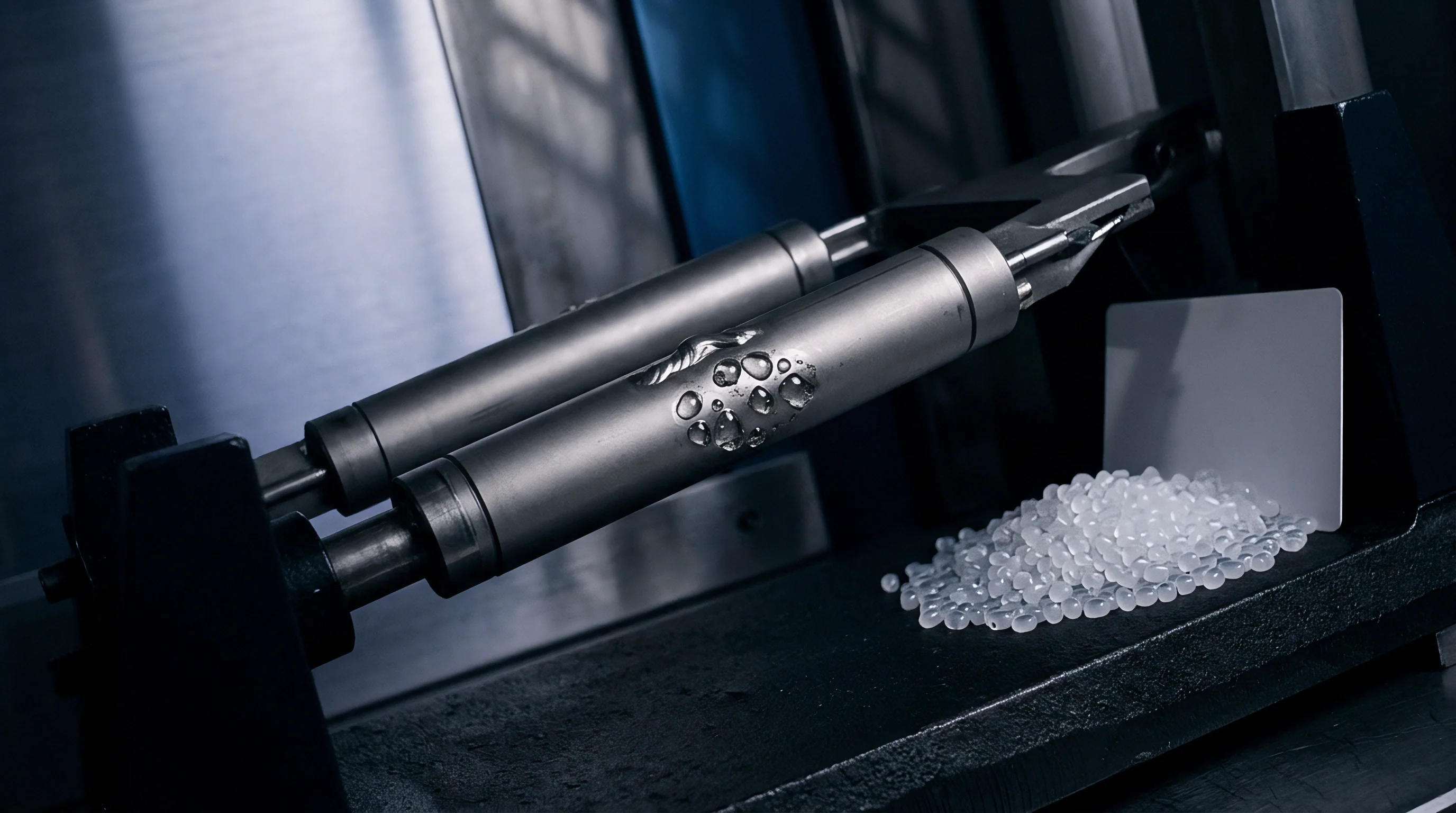

Permeation
A miniature piezoresistive pressure cell sealed with polydimethylsiloxane demonstrates a zero-point shift of 4.2 percent full scale after 168 hours at 85 degrees Celsius and 85 percent relative humidity. The supplier certificate reported an initial calibration uncertainty of 0.05 percent at 23 degrees Celsius in dry nitrogen. That bench figure evaporated the moment ambient water vapor crossed the elastomer boundary and settled onto the passivated die.
Silicones absorb moisture within hours. Water vapor travels through polymeric sensor packaging along three distinct vectors: molecular diffusion through the bulk polymer network, capillary flow through microscopic voids, and preferential wicking along the filler-polymer boundary.
Fickian diffusion governs the initial transport phase where the penetrant does not alter polymer morphology. The one-dimensional flux of water vapor follows Fick’s first law, linking mass transfer rate directly to the concentration gradient across the package thickness. Fick’s second law defines the time-dependent concentration profile throughout the encapsulant wall:
∂C/∂t = D (∂²C/∂x²)
The diffusion coefficient D follows Arrhenius temperature dependence, governed by the apparent activation energy of diffusion. Polymeric encapsulants exhibit activation energies between 35 and 55 kilojoules per mole. Elevated test temperatures accelerate molecular motion, enlarging the transient free volume between polymer chains.
Higher thermal states increase the frequency of diffusive jumps through the matrix.

Will Fickian Diffusion Overestimate Time to Saturation?
Dual-mode sorption describes glassy encapsulants below their glass transition temperature where simple Fickian equations fail. Epoxies behave differently. Water molecules dissolve into the polymer matrix according to Henry’s law, while additional penetrant molecules become immobilized within non-equilibrium excess free volume sites according to Langmuir-type hole filling.
The effective diffusion rate slows during initial stages as internal microvoids trap migrating moisture, then accelerates once these trapping sites achieve local equilibrium.
Relative humidity at 85 percent accelerates water mass uptake fivefold compared to ambient factory storage at 40 percent relative humidity.
Langmuir-type moisture ingress kinetics explain anomalous drift curves in micro-electromechanical systems sensors where zero wander remains undetectable for hundreds of hours before abruptly swinging beyond tolerance limits. Water molecules bound within nanoporous voids create localized chemical reservoirs. These reservoirs sustain elevated internal vapor pressure long after external environmental stress drops, prolonging sensor exposure to internal condensation cycles.
| Encapsulant Formulation | Diffusion Coefficient (cm²/s) | Solubility Coefficient (mg/cm³ bar) | Activation Energy (kJ/mol) | Equilibrium Water Uptake (wt %) |
|---|---|---|---|---|
| Optical Grade Silicone Gel | 1.8 × 10⁻⁶ | 0.42 | 14.2 | 0.12 |
| Bisphenol-A Novolac Epoxy | 3.5 × 10⁻⁸ | 4.10 | 46.8 | 2.85 |
| Anhydride-Cured Polyurethane | 6.2 × 10⁻⁷ | 1.85 | 38.1 | 1.40 |
| Glob-Top Cycloaliphatic Epoxy | 8.4 × 10⁻⁹ | 3.20 | 52.3 | 1.95 |
Solubility scales with relative humidity. The total moisture concentration within the encapsulant at saturation depends on the external water vapor partial pressure and the thermodynamic interaction between the polymer matrix and water dipole moments. High ambient vapor pressure forces moisture into polymer cavities, swelling the polymer backbone and altering mechanical compliance.

Swell
Moisture sorption induces volumetric expansion within crosslinked resins. The Coefficient of Hygroscopic Swelling defines the linear strain produced per unit mass fraction of absorbed water. Piezoresistive sensing bridges, resonant beam sensors, and surface acoustic wave devices experience this expansion as direct mechanical stress transferred to active silicon structures.
A novolac epoxy encapsulant absorbing 2.5 weight percent water exhibits a hygroscopic strain equivalent to a thermal shift of 60 degrees Celsius. Packaging engineers balance the thermal expansion coefficient against silicon while ignoring the hygroscopic coefficient. Moisture drives internal shear.
When humidity cycles between 20 percent and 80 percent, differential hygroscopic expansion between the encapsulant, copper leadframe, and silicon substrate imposes cyclic shear stress along microelectronic wirebonds and adhesive interfaces.
Hygroscopic strain accumulates linearly with moisture mass fraction while interfacial bond strength degrades exponentially.
Moisture accumulation at internal packaging boundaries precipitates structural separation before bulk resin degradation appears. Water molecules condense into microscopic interfacial defects along the boundary between encapsulant and passivation layers, lowering the work of adhesion through competitive thermodynamic adsorption.
- Interfacial delamination initiates along metallic leadframes as condensed liquid breaks coordinate covalent primer bonds, driving mechanical stress concentrations into adjacent wire bonds.
- Piezoresistive offset shifting occurs when non-uniform hygroscopic strain warps the silicon diaphragm, generating phantom pressure readings across temperature extremes.
- Capacitive fringing alteration develops as liquid water with a dielectric constant near 80 displaces cured encapsulant exhibiting a dielectric constant near 3, corrupting electrode capacitance baselines.
- Bond wire detachment accelerates under hygroscopic swelling fatigue, lifting gold stitch bonds off aluminum bond pads without prior electrical symptoms.
Interfacial bonds yield under pressure. Mechanical decoupling gel layers intended to protect silicon dies from stress transfer often convert into moisture transmission conduits. Soft silicone gels transmit hydrostatic pressure generated by water accumulation directly onto sensing diaphragms, introducing persistent span errors into factory-calibrated instruments.
Every packaging boundary contains microvoids that trap water molecules during exposure cycles.
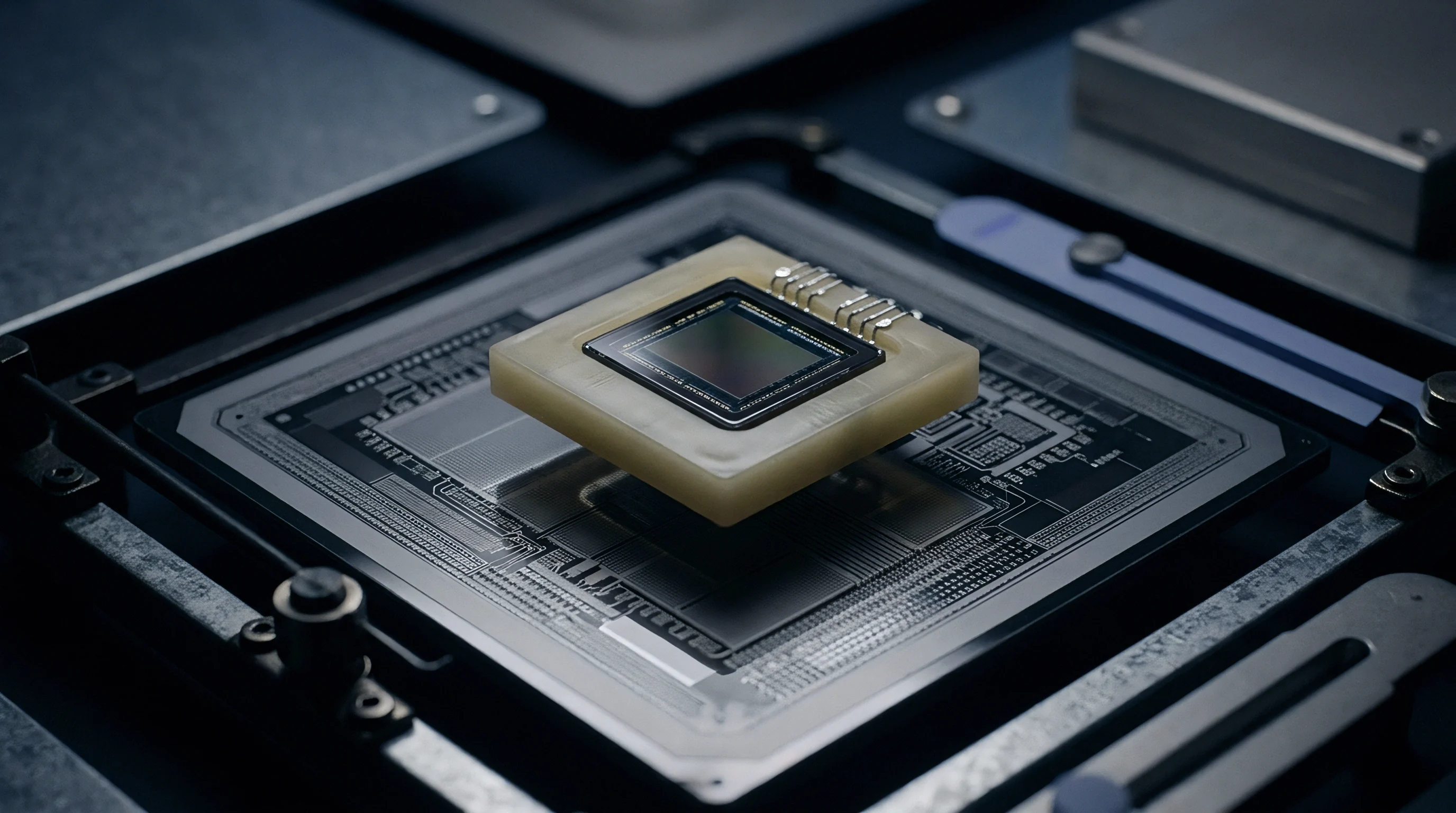

Hydrolysis
Chemical decomposition follows physical permeation when water molecules attack polar bonds within polymer chains. Hydrolysis breaks backbone polymer chains. Ester, anhydride, and amide linkages in sensor encapsulants undergo nucleophilic scission catalyzed by ambient thermal energy, yielding shorter polymer fragments and unbound organic acids.
Chain cleavage decreases crosslink density, shifting mechanical compliance and depressing the glass transition temperature of the packaging matrix. The glass transition temperature drops. A protective epoxy displaying an unaged glass transition of 145 degrees Celsius can degrade to 95 degrees Celsius after 1,000 hours in an 85 degrees Celsius and 85 percent relative humidity chamber.
The encapsulant enters its rubbery state inside operating envelopes where designers assumed rigid glassy protection.
Chain scission within crosslinked anhydride systems produces free dicarboxylic acids that etch passivated aluminum bond pads.
Depolymerization releases mobile hydrolytic byproducts into the bulk material. Organic acid fragments mobilize trace halide impurities remaining from polymer synthesis, generating an electrolytic solution inside what was specified as an electrical insulator. Water carries mobile ionic species.

Is Activation Energy Stable across Glass Transition?
Accelerated aging formulas assume constant activation energy across all test and operational temperatures. That premise fails whenever chamber temperatures exceed the wet glass transition point. Reaction kinetics accelerate abruptly when polymer chains transition from glassy immobility to high molecular mobility, causing standard Arrhenius life projections to overstate real field endurance by orders of magnitude.
- Ester linkage cleavage releases carboxylic acid groups that catalyze further breakdown of adjacent polymer chains in an autocatalytic feedback loop.
- Siloxane bond scission occurs in high-temperature basic environments, depolymerizing protective silicone gels into cyclic oligomers that vent outward, leaving voids.
- Ionic scavenger exhaustion allows residual chloride and bromide ions to migrate freely under sensor bias potentials, generating galvanic corrosion cells.
- Dielectric loss dissipation climbs as polar hydrolytic fragments increase matrix conductance, degrading phase angle margins in high-frequency measurement circuits.
Leakage currents rise exponentially. Insulating encapsulant resistance drops from teraohms to megaohms as hydrolytic breakdown proceeds. High-impedance sensor circuits, including piezoelectric amplifiers and pH electrode bridges, suffer baseline drift and loss of signal integrity long before physical cracking appears.
Suppliers routinely dismiss early damp heat test failures as artifacts of unrealistic laboratory humidity rather than chemical degradation inherent to their resin chemistry.
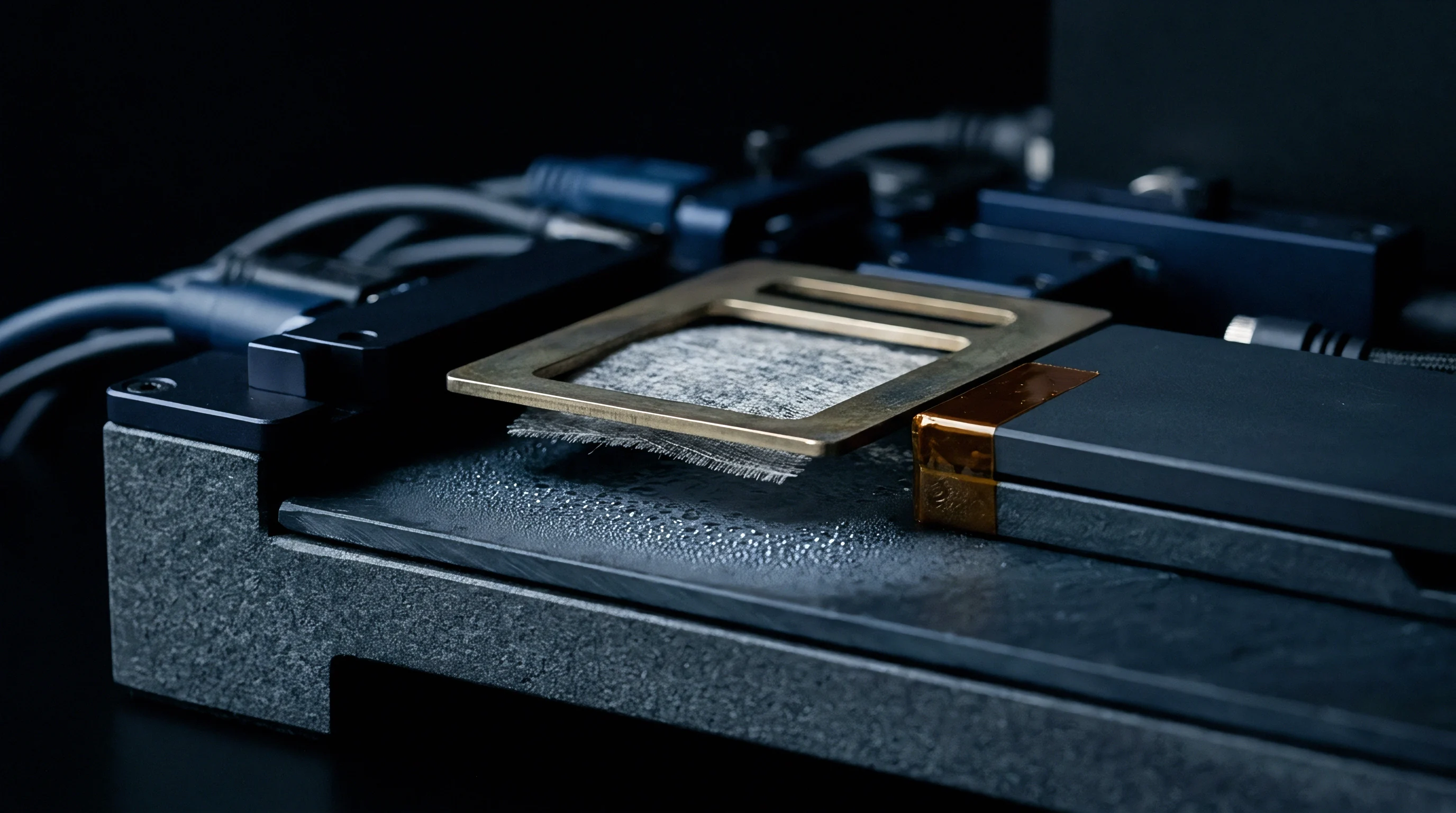
Creep
Viscoelastic drift under hygrothermal stress destroys measurement reproducibility. Cured encapsulants behave as viscoelastic solids, exhibiting time-dependent mechanical deformation under sustained stress and environmental loading. Moisture acts as an efficient internal plasticizer, lowering secondary transition temperatures and accelerating viscous flow under constant packaging strain.
Zero-point instability in MEMS sensors traces directly to encapsulant relaxation kinetics. An unaged pressure sensor die experiences static compressive packaging stress from post-mold curing shrinkage. As ambient moisture permeates the resin and temperatures fluctuate, the packaging resin undergoes viscoelastic relaxation.
Compressive stress relieves over hundreds of operating hours, shifting sensor baseline output independently of applied physical measurands.
Capacitive sensors lose zero stability. Piezoresistive bridges drift positive. The total instrument uncertainty budget must accommodate this irreversible mechanical baseline shift, which cannot be compensated by standard firmware offset curves because relaxation rates depend on historical humidity exposure.
| Encapsulant System | Zero Drift (% Full Scale) | Span Drift (% Reading) | Hysteresis Shift (% Full Scale) | Uncertainty Contribution (% FS, k=2) |
|---|---|---|---|---|
| Standard Filled Epoxy Novolac | +1.85 | -0.45 | +0.62 | 2.10 |
| Low-Stress Anhydride Epoxy | +0.42 | -0.12 | +0.18 | 0.55 |
| Fluorosilicone Gel Barrier | +0.15 | +0.05 | +0.08 | 0.22 |
| Flexible Polyurethane Potting | +3.20 | -1.10 | +1.45 | 3.80 |
Verification protocols must separate reversible moisture uptake from permanent viscoelastic drift through systematic conditioning cycles. Tracking true instrument drift requires a rigorous multi-stage laboratory verification procedure:
- Stabilize reference instruments in dry nitrogen chambers at 23 degrees Celsius to establish initial zero offset and span calibration baselines.
- Subject device lots to 85 degrees Celsius and 85 percent relative humidity exposure inside validated environmental chambers for 500 hours under continuous electrical bias.
- Perform intermediate measurement of zero offset and span sensitivity inside the damp heat chamber to record combined hygroscopic strain and electrical leakage.
- Transfer components to dry nitrogen storage at 85 degrees Celsius for 168 hours to desorb all mobile and unbound moisture from the polymer matrix.
- Re-equilibrate devices at 23 degrees Celsius and 50 percent relative humidity, recording residual unrecoverable drift as true packaging viscoelastic creep.
Field recalibration costs accumulate fast. Sending calibration technicians to remote field installations to trim wandering sensor baselines costs more than the original instrumentation purchase. Test duration dictates thermal risk.
When environmental testing terminates prematurely after 168 hours, inspectors miss long-tail viscoelastic relaxation mechanisms that manifest only after 500 hours of continuous exposure.
The exact threshold separating reversible hygroscopic swelling strain from permanent interfacial bond slippage remains unresolved across heterogeneous sensor packaging stacks.

Settlement
Procurement agreements for industrial sensors frequently specify environmental endurance through simple standard compliance claims. A supplier quoting compliance with IEC 60068-2-78 damp heat steady-state testing demonstrates only that samples survived 96 hours at 40 degrees Celsius and 93 percent relative humidity without complete electrical failure. That standard exposure provides less than one-tenth the aging acceleration required to simulate three years of outdoor operation in tropical environments.
Qualified acceleration models require Peck’s generalized relationship to translate laboratory damp heat hours into equivalent field life:
Acceleration Factor = (RH_stress / RH_use)ⁿ exp
In this equation, RH represents relative humidity, T represents absolute temperature in kelvins, k represents Boltzmann’s constant, E_a represents apparent activation energy, and the humidity exponent n typically ranges between 2.5 and 3.0 for polymeric encapsulants. Inserting an unverified activation energy into Peck’s equation creates profound commercial risk. Assuming an activation energy of 0.8 electron volts when the true hydrolytic mechanism operates at 0.5 electron volts overstates acceleration factors by an order of magnitude, resulting in prematurely qualified sensor fleets that drift out of specification within twelve months of field deployment.
Section 8.2 of ISO 17025 dictates that environmental test certificates document measurement uncertainty contributions alongside raw compliance statements.
Commercial contracts must define sensor tolerance limits as end-of-life figures rather than initial factory acceptance values. When purchase specifications omit environmental drift guardbands, suppliers legally deliver sensors that meet initial 0.1 percent accuracy on day one but wander beyond 2.0 percent accuracy following the first wet season. Buyers protect capital expenditure by mandating post-conditioning drift limits inside master supply agreements, shifting warranty liability for hygrothermal drift back to the packager.
Acceptance clauses incorporating IEC 60721-3-4 environmental class definitions force component manufacturers to warrant measurement uncertainty under combined thermal and humidity exposure over defined service intervals.