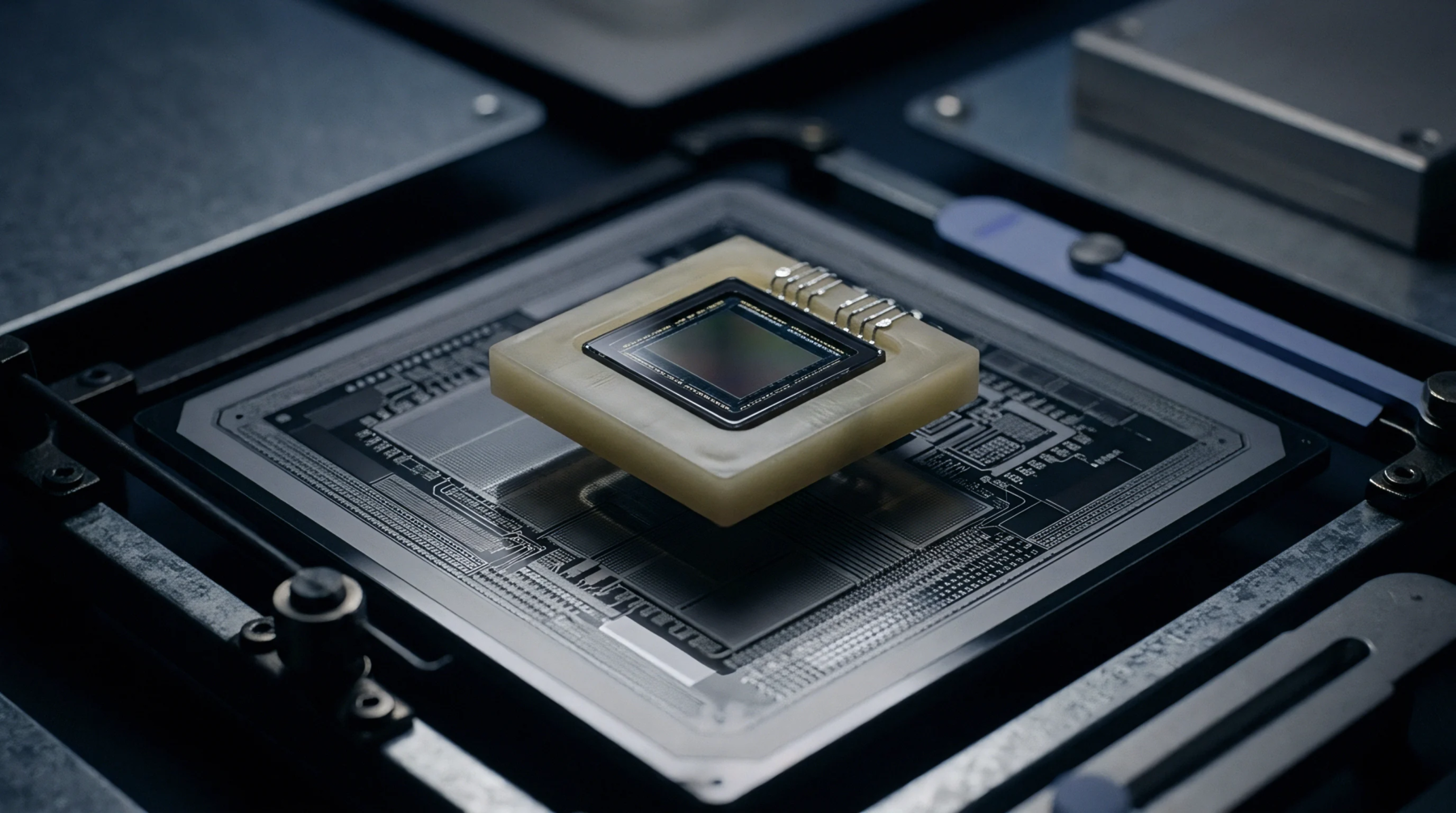
Encapsulation Resin
Thermosetting epoxy resins act as molding compound to provide structural protection and electrical insulation for semiconductor dies. This material arrives as a solid pellet that melts under heat and pressure to fill the cavity of a mold.
Package Protection
Fillers like silica are added to the resin to adjust the thermal expansion and mechanical stiffness. These particles make up a large portion of the total mass and reduce the shrinkage that occurs during cooling. The resulting block protects the delicate bond wires from moisture and physical impact.
Heat escapes from the chip to the environment through this resin layer.
Material Property
Viscosity during the transfer process must be low enough to flow around the die without sweeping the wires. The gel time determines how long the material remains liquid before the cross linking reaction hardens it. Post mold baking ensures that the chemical reaction reaches completion for maximum stability.
Stress Distribution
Variations in the filler concentration can lead to uneven forces on the silicon. Designers optimize the gate location to ensure a balanced flow front. Internal stresses are measured using test chips to verify that the packaging does not shift the electrical parameters of the sensor.