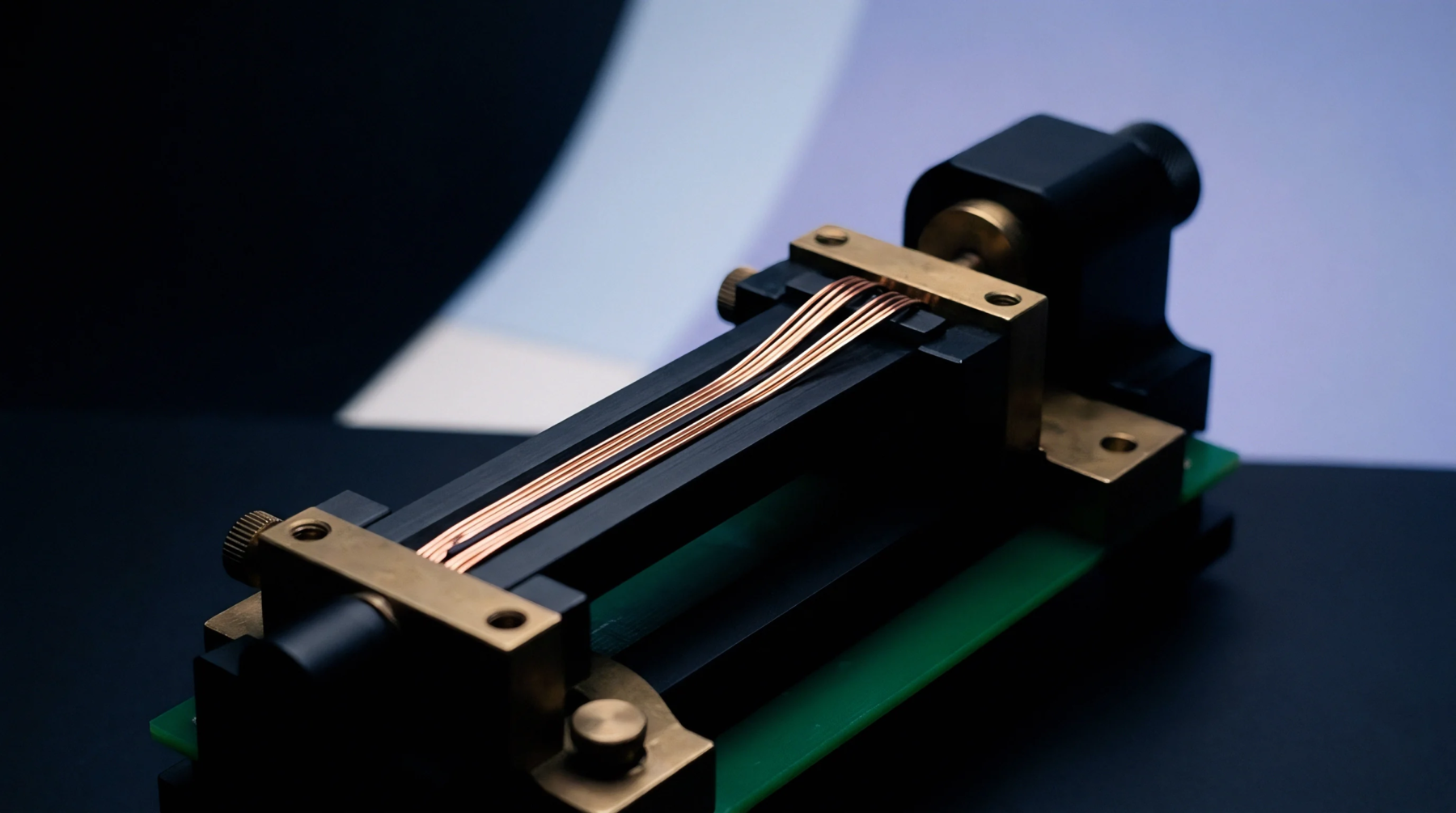
Mechanical Tension
Physical strain develops at the interface of two materials when they expand at different rates during temperature changes. Thermal stress mismatch occurs because the coefficients of thermal expansion for a sensor chip and its package do not align. This difference leads to bending or cracking when the assembly is heated or cooled.
Calculated Gradient
Magnitude of the force is proportional to the temperature difference and the gap between the expansion values. Engineers calculate thermal stress mismatch to determine if the bond between a silicon die and a ceramic substrate will hold. Using materials with closely matched properties reduces the risk of fatigue over the life of the product.
Failure Mode
Repeated cycling through hot and cold environments can cause the solder joints to fail or the thin films to peel away. The thermal stress mismatch creates a constant tugging at the molecular bonds of the interface. In high precision optics, this strain can distort the shape of a lens and introduce measurement errors.
Mitigation Strategy
Selection of compliant adhesives or intermediate buffer layers helps to dissipate the energy before it causes damage. A common approach to managing thermal stress mismatch involves using a submount with an expansion coefficient that sits between the two primary materials. This stepped approach lowers the local strain at each individual boundary.
Testing for these effects involves accelerated life testing where components are subjected to thousands of rapid temperature swings in a specialized chamber.