
Statistical Acceptance Sampling for Incoming Transducer Lot Quality Audits
Variable acceptance sampling under ANSI ASQ Z1.9 reduces sample size by 70 percent while enforcing strict consumer risk bounds on transducer lot audits.
Variable acceptance sampling under ANSI ASQ Z1.9 reduces sample size by 70 percent while enforcing strict consumer risk bounds on transducer lot audits.

Selecting die packaging forms requires matching land pattern mechanical stress, bus wiring distance, and calibration stability against landed unit economics.

Selecting low-modulus die attach adhesives with glass transition temperatures outside operating limits eliminates non-linear MEMS zero-g offset drift.

MEMS silicon pressure sensor zero offset shift originates from package thermomechanical stress, dielectric charge trapping, and gel swelling, requiring thermal burn-in and polynomial ASIC compensation.

Mechanical stress isolation via matched CTE submounts, compliant gels, and silicon micro-machined trenches eliminates parasitic packaging strain to preserve long-term sensor calibration stability.
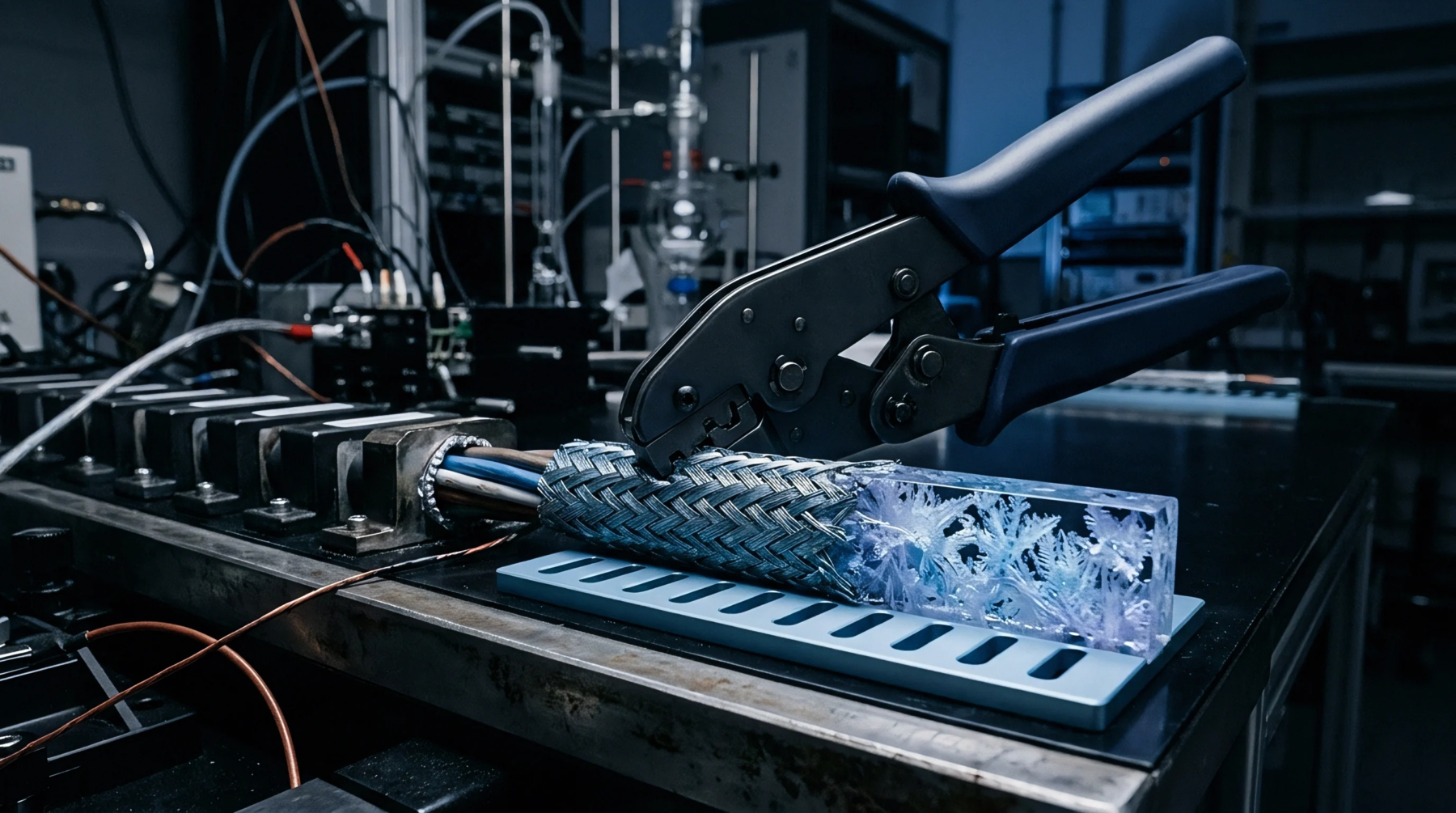
Constitutive modeling of viscoelastic aging in thermoset die attach layers enables precise finite element prediction of lifetime stress and sensor drift.

Sensor accuracy price curves scale exponentially because higher tiers demand longer thermal chuck dwell times, lower silicon yields, and guard-banded calibration.
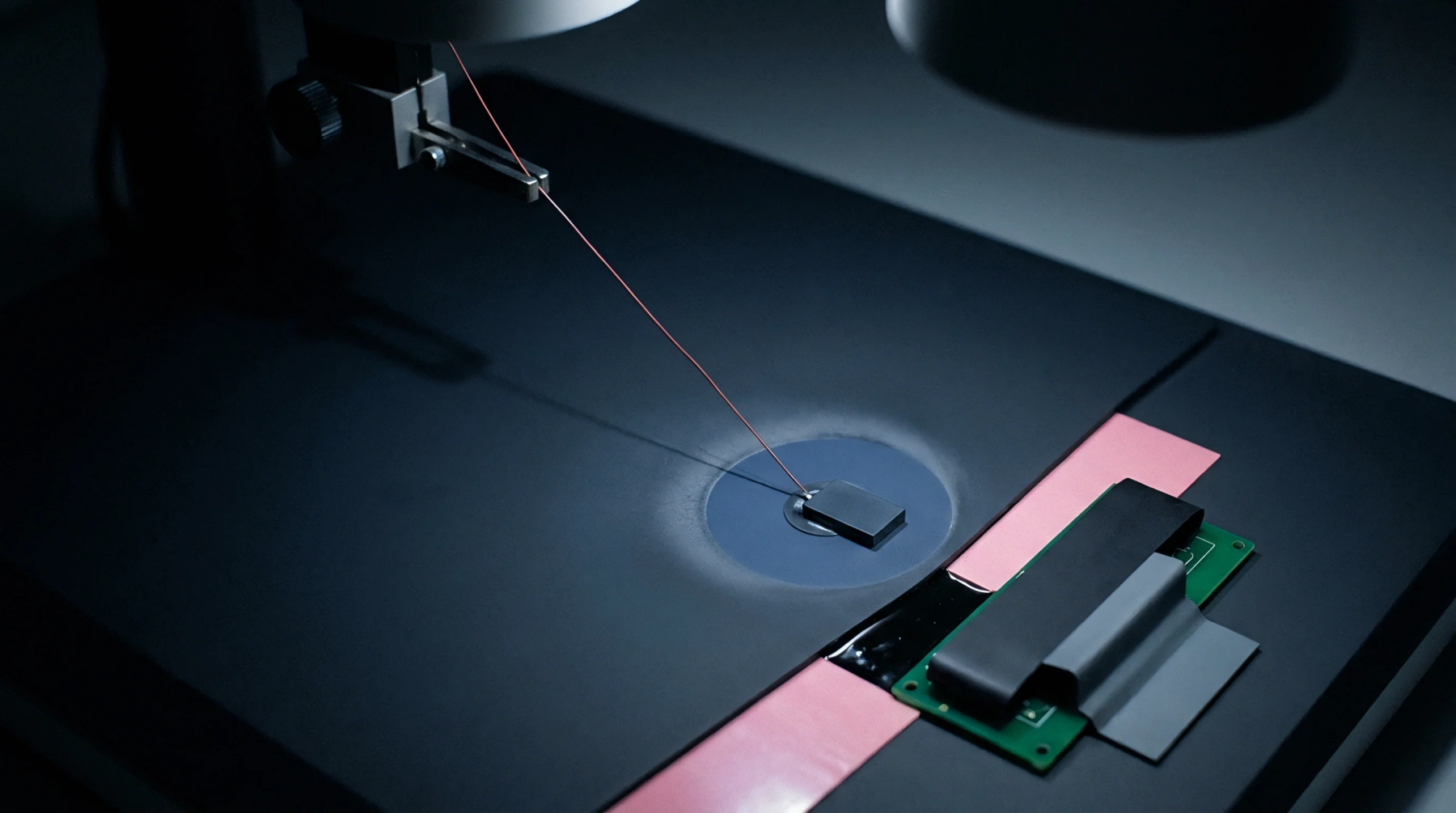
PCB deformation transfers mechanical strain through solder joints into surface-mount sensor dies, causing severe zero drift that requires package isolation or layout slots.

Anodic glass pedestal bonds creep during thermal cycling via sodium-depleted layer relaxation, inducing permanent piezoresistive sensor zero-point drift.

Matrix compensation algorithms correct non-linear thermal piezoresistive drift by mapping raw bridge and temperature counts through fixed-point polynomial surfaces.

Dynamic thermal gradients induce structural strain and bias errors that static calibrations miss, requiring real-time state observer algorithms.

Augmenting transient observer state vectors with nonlinear Maxwell viscoelastic die attach models eliminates sensor drift between 77 Kelvin and 473 Kelvin.

Board strain shifts uncompensated sensor zero points by millivolts, requiring isolation trenches or custom assembly when volumes surpass tooling payback.

Reconfigurable front ends bridge piezoelectric charge and piezoresistive voltage modalities by actively commuting amplifier loops and parasitic switch nodes.

Dynamic thermomechanical algorithms split pressure errors into steady polynomial drift and transient gradient terms, preserving millibar accuracy across fast thermal shocks.

Separating thermal coefficients from mechanical hysteresis requires isothermal mechanical cycling and mathematical Preisach decoupling to isolate packaging lag.

Dynamic thermomechanical decoupling requires real-time state-space inversion of coupled volumetric and shear relaxation histories inside the sensor package.

Dynamic group delay flatness in primary sensor front ends preserves transient signal waveforms and prevents time-domain phase distortion across temperature.

Asymmetric thermal gradients induce localized mechanical strain in silicon MEMS transducers, causing uncompensated sensor drift that defies scalar calibration.

Post-assembly thermo-mechanical drift limits require tracking package CTE mismatch, solder standoff compliance, and viscoelastic mold relaxation across life.

Encapsulated sensor thermal shock induces differential polymer shear, causing unrecoverable zero wander that demands decoupled span and offset tolerance clauses.

Post-reflow zero-point drift stems from package-to-board thermal expansion mismatch, demanding compliant leads or post-assembly firmware calibration.

Interfacial shear stress transfers package thermal mismatch into piezoresistor bridges, requiring glass pedestals to prevent unrecoverable zero-point drift.

Sensor power evaluation requires calculating energy per bit of resolution across the temperature envelope rather than relying on room-temperature active current claims.

Active energy overhead in battery transducer nodes is governed by analog stabilization latency rather than pure conversion clock speed.

Viscoelastic die attach relaxation drives MEMS zero point offset drift, requiring rigid pedestal isolation or pre-trim thermal bakes to secure stability.

Bivariate polynomial surface fitting maps raw piezoresistive bridge ratios and temperatures to true pressure, suppressing thermal and non-linear drift below 0.05% FS.

Hygroscopic swelling in packaging polymers transfers parasitic shear into MEMS diaphragms, causing zero-point drift that demands pedestal isolation.
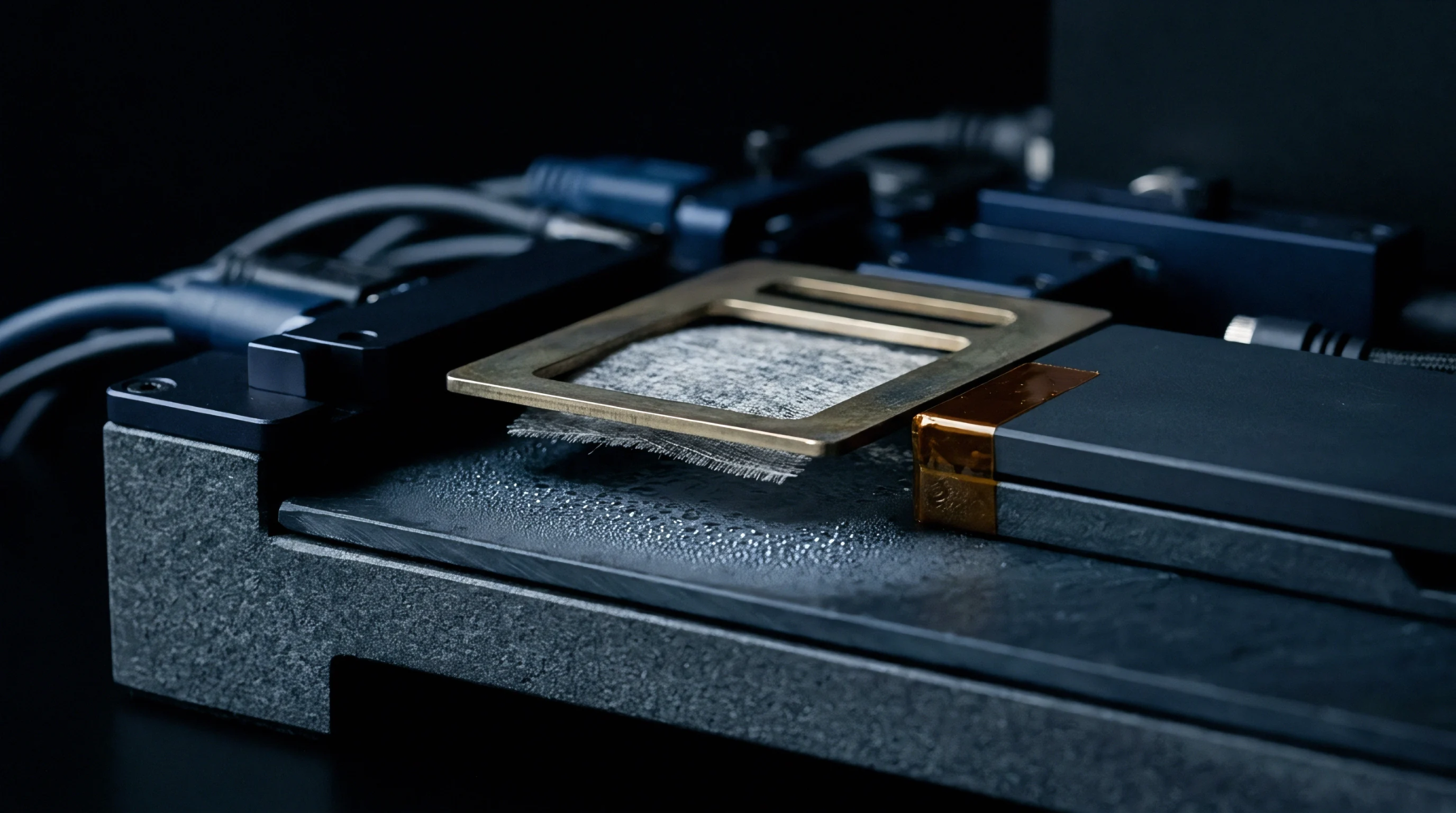
Implementing bivariate polynomial thermal surfaces in firmware requires Horner evaluation of scaled Q1.31 fixed-point coefficients derived from Chebychev nodes.

High-order matrix surfaces cannot eliminate path-dependent thermal hysteresis caused by packaging viscoelasticity, requiring bound-based error budgeting.
Expertise is a utility, not a secret. sentiention™ publishes its working knowledge as open reference: intelligence layer covering the materials it sources, the markets it enters, and the reference that serves both.