Interface Region
The localized region formed at the silicon-glass interface during anodic bonding lacks mobile alkali cations and exhibits a high electric field. This sodium depletion layer develops when sodium ions migrate toward the cathode under a high voltage. The resulting electrostatic forces pull the surfaces into intimate contact to form covalent bonds.
Bonding Mechanism
At temperatures between three hundred and four hundred degrees Celsius, the mobility of sodium ions increases significantly. The applied voltage drives these ions away from the anode, leaving behind bound oxygen anions that generate a strong electrostatic attraction. The formation of the sodium depletion layer is thus the driving force behind the hermetic sealing process.
Stress Generation
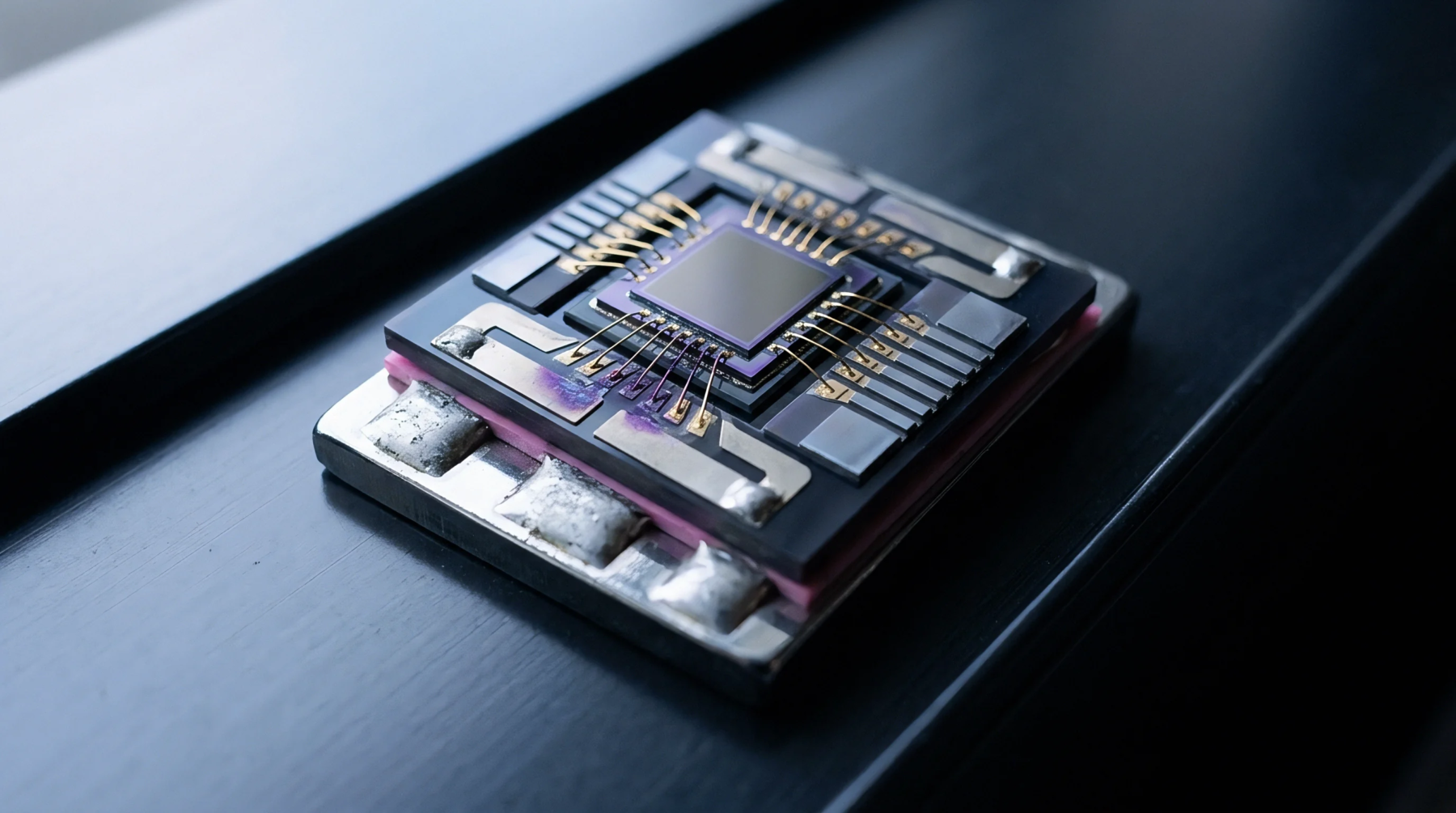
The high voltage and ion migration generate localized electrostatic stress that can cause micro-deformation of the silicon structures. If the sodium depletion layer is non-uniform, it introduces asymmetric stress across the sensor die. This asymmetry shifts the sensor zero-point and creates thermal hysteresis, which degrades the accuracy of sensitive silicon transducers.
Metrological Evaluation
Characterization of the bonded interface is performed using secondary ion mass spectrometry to determine the thickness of the ion-depleted region. This measurement verifies that the sodium depletion layer has formed uniformly across the entire contact area. A uniform layer is necessary to ensure that the sensor package maintains its hermeticity and calibration stability over its operating life, preventing long-term drift caused by slow ion relaxation.
It also validates that the electrical parameters used during the bonding process were correct.