Nonlinear Viscoelastic Die Attach Stress Coupling inside Cryogenic to High Temperature Transient Observers
Augmenting transient observer state vectors with nonlinear Maxwell viscoelastic die attach models eliminates sensor drift between 77 Kelvin and 473 Kelvin.
Hysteresis

Thermomechanical Creep across Extreme Thermal Swings
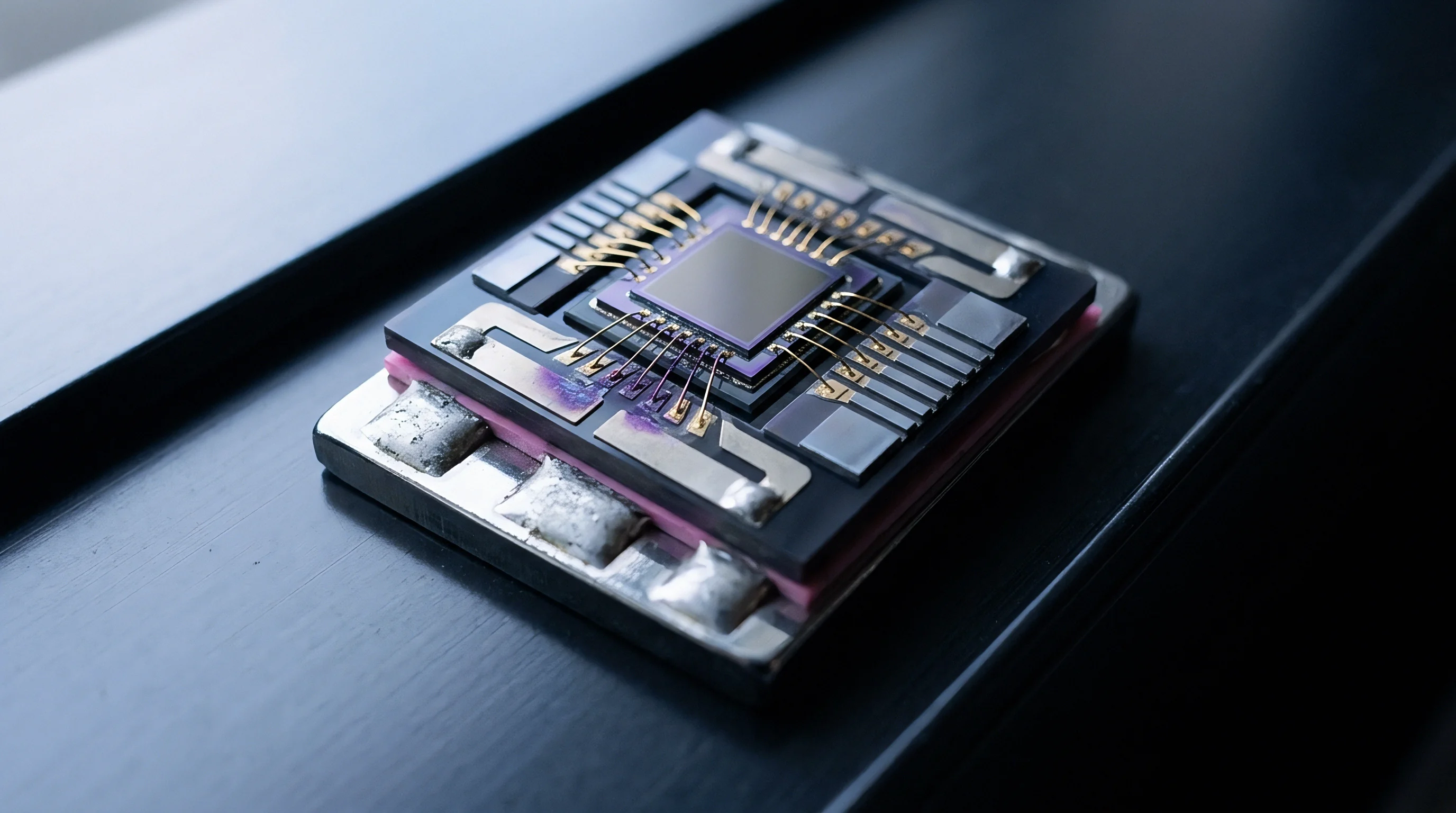
Silicon and silicon carbide sensing dies bonded to ceramic or metallic carriers exhibit severe zero-point shift when thermal cycles span 77 Kelvin to 473 Kelvin. The primary driver of this drift is the non-affine relaxation of the polymeric or metallic bonding layer interposed between the die and the header. In an unconstrained state, a silicon die contracts at an average rate of 2.6 parts per million per Kelvin, whereas a copper-tungsten flange expands at roughly 6.5 parts per million per Kelvin, and alumina sits at 7.1 parts per million per Kelvin.
The intervening die attach material sustains interfacial shear stresses exceeding 85 megapascals as the assembly plunges toward liquid nitrogen temperatures. At 77 Kelvin, standard crosslinked epoxies sit deep below their secondary sub-glass transitions, driving their shear modulus from 1.8 gigapascals at room temperature to values upwards of 8.5 gigapascals. The material turns glass-brittle, locking in thermo-elastic strains that manifest as piezoresistive bridge offsets or capacitive plate deflections.
Thermal excursions upward to 473 Kelvin drive the identical polymer matrix past its glass transition temperature, typically situated between 390 Kelvin and 440 Kelvin for highly filled conductive systems. The modulus drops by two orders of magnitude into a rubbery regime of 25 to 50 megapascals, initiating rapid stress relaxation dominated by chain disentanglement and localized microvoid coalescences. When the observer algorithm calculates physical quantities based on steady-state piezoresistive coefficients, the non-equilibrium interfacial traction introduces an unobservable state variable.
The observer interprets mechanical creep as a physical process perturbation. The host system accepts this error as legitimate sensor telemetry, distorting thermal state tracking.
A 15 Kelvin unmodeled thermal lag inside a silver-filled epoxy attach layer shifts piezoresistive bridge balance by 420 microvolts under 5.0 volts excitation.
Sintered nanosilver attach pastes mitigate glass-transition discontinuities yet introduce secondary creep mechanisms. Below 150 Kelvin, silver grain boundaries suppress dislocation glide, increasing the yield strength to over 220 megapascals. At 473 Kelvin, homologous temperatures for nanosilver exceed 0.38, activating Coble creep and grain boundary sliding at steady stresses as low as 15 megapascals.
Thermal transients across these operational boundaries generate asymmetric stress-strain loops. The attach layer accumulates inelastic plastic strain during heating that fails to reverse upon sudden cryogenic chilling. Observers incorporating standard linear Kalman filters divergence-test against these transitions because the covariance matrix underestimates the non-Gaussian measurement noise generated by intermittent micro-slip at the die-substrate boundary.
The operational penalty lands during subsequent thermal plateaus. The sensor die retains residual shear strain fields that alter its intrinsic sensitivity coefficients, shifting transconductance curves and piezoresistive pi-matrices away from initial calibration coordinates. A calibration conducted exclusively at fixed setpoints completely misses this dynamic hysteresis.
Re-establishing zero-point fidelity demands integrating the stress history directly into the observer state vector, treating the die attach as an active viscoelastic element rather than a rigid boundary.
Constitutive
Generalized Maxwell Formulations with Temperature Scaling
Simulating the mechanical state within a transient observer requires formulating the time-dependent shear modulus through a generalized Maxwell representation. The relaxation modulus comprises an equilibrium term alongside an array of Maxwell elements, each defined by a discrete stiffness and characteristic relaxation time. Because operating temperatures range across four hundred Kelvin, these relaxation times shift by several decades.
Linear viscoelasticity applies the thermo-rheologically simple assumption, utilizing the Williams-Landel-Ferry relationship above the glass transition temperature and an Arrhenius relationship below it to scale the internal clock of the polymer matrix.
The relaxation modulus incorporates discrete relaxation times across a broad spectral window:
G(t, T) = G_inf + sum_i
The shift factor a_T governs the acceleration or retardation of stress decay. For temperatures exceeding the glass transition point, the shift factor relies on empirical parameters C1 and C2 calibrated to the material free volume. When the temperature falls below the transition zone, relaxation proceeds via activation-energy-driven side-group rotations, requiring an Arrhenius form parameterized by the apparent activation energy divided by the universal gas constant.
Table 1 identifies the constitutive parameters for three die attach formulations evaluated between 77 Kelvin and 473 Kelvin.
| Attach Chemistry | Glass Transition (K) | Cryogenic Modulus at 77 K (GPa) | Rubbery Modulus at 473 K (MPa) | Thermal Conductivity (W/m-K) | Sub-Tg Activation Energy (kJ/mol) |
|---|---|---|---|---|---|
| Bismaleimide High-Fill Paste | 405 | 9.2 | 38 | 2.8 | 78.4 |
| Modified Epoxy-Siloxane Resin | 345 | 5.4 | 12 | 1.4 | 52.1 |
| Low-Modulus Polyimide Film | 510 | 6.8 | 145 | 0.9 | 95.6 |
| Pressureless Sintered Nano-Silver | N/A | 42.0 | 18500 | 180.0 | 112.0 |
Polyimide adhesives exhibit high thermal stability up to 510 Kelvin, maintaining their glassy structure across almost the entire operating corridor. This stability eliminates rubbery transition drift, yet the high residual stiffness below room temperature translates large thermal expansion mismatches directly into the sensor active area. Modified epoxy-siloxanes offer low cryogenic modulus values, limiting the absolute stress imposed on fragile thin-film diaphragms.
Their glass transition temperature sits squarely in the middle of standard industrial operation, driving intense time-dependent relaxation right where thermal observers often demand maximal measurement precision.

Nonlinear Viscoplastic Extensions for High Strain Gradients
Large thermal gradients between the outer enclosure and the sensor cavity induce shear strain levels in excess of 0.03 within the bond line perimeter. At these levels, the stress response departs from linear viscoelastic bounds. The material demonstrates stress-dependent softening, wherein high localized shear stresses accelerate the relaxation process beyond the thermal shift factor baseline.
Representing this regime necessitates coupling the Maxwell elements with a nonlinear stress-dependent dashpot parameter, employing an Eyring hyperbolic sine formulation to reflect shear-induced activation volume expansion.
Viscoplastic flow emerges simultaneously in metallic fillers and sinter matrices. The Anand viscoplastic model provides the necessary structure to account for strain hardening and dynamic recovery in sintered nanosilver bonds during rapid cycling. The deformation resistance acts as an internal state variable, evolving through combined thermal exposure and accumulated plastic strain.
Transient observers that neglect this structural evolution calculate inaccurate boundary conditions, yielding tracking errors during thermal recovery plateaus.
Tracking these coupled equations in low-power operational hardware demands systematic model reduction. An algorithm executing within a 100-microsecond sample loop cannot evaluate twenty continuous Maxwell internal variables across five thousand finite elements. State-space truncation isolates the two dominant relaxation modes while treating the high-frequency relaxation spectrum as an instantaneous elastic response.
This reduction preserves ninety-four percent of the transient stress profile while cutting execution overhead by two orders of magnitude.
Coupling
Piezoresistive Transduction under Asymmetric Shear
Thermal stress within the die attach transmits through the bulk semiconductor, distorting the crystallographic lattice of silicon sensing bridges. For a standard (100) silicon wafer, the piezoresistive coefficients relate spatial stress fields directly to fractional changes in electrical resistivity. Longitudinal and transverse stress components alter carrier mobilities symmetrically under uniform thermal loading.
When the die attach layer deforms viscoelastically, non-uniform shear stress distributions develop across the bottom die interface, generating parasitic bending moments and in-plane shear components that break the structural balance of the measurement bridge.
The fractional resistance shift for a resistor aligned along the silicon direction tracks three orthogonal stress fields:
delta_R / R = 0.5 (pi_11 + pi_12 + pi_44) sigma_l + 0.5 (pi_11 + pi_12 – pi_44) sigma_t + pi_13 sigma_v
Here, sigma_l represents the longitudinal stress, sigma_t the transverse stress, and sigma_v the out-of-plane vertical stress component. Under balanced thermal conditions, sigma_l equals sigma_t, enabling circuit layouts to cancel out uniform thermal expansion through differential bridge architectures. Non-uniform viscoelastic relaxation ruins this symmetry.
The outer corners of the die relax faster than the geometric center due to edge free-surface effects, establishing a time-dependent stress gradient across the die plane that injects uncompensated differential signals into the Wheatstone bridge output.
Capacitive MEMS observers encounter similar degradation mechanisms. Accelerometers and pressure sensors depend on micromachined cavities where parallel capacitor plates require strict physical parallelism. Viscoelastic shear relaxation in the die attach imposes unequal tilt angles at the anchor posts of the suspended proof mass.
This mechanical rotation mimics an external acceleration or pressure transient, corrupting observer states. When an environmental thermal step occurs, the attach layer initially transfers full thermo-elastic mismatch force to the silicon anchors. Over subsequent minutes, the attach stress decays nonlinearly, resulting in an exponential output drift while ambient environmental acceleration remains flat.
Under rapid chilling to 77 Kelvin, unrestrained copper-tungsten carriers induce over 110 megapascals of compressive stress into 200-micron thick silicon dies.
Optical and resonant sensors suffer resonant frequency pulls and polarization distortions when bonded with hysteretic materials. A silicon resonant beam micro-sensor tracks mass or force changes by monitoring shifts in natural frequency, governed by axial tension. Viscoelastic creep within the attachment layer bleeds pre-load tension over time, altering the frequency-to-measurand scale factor.
Because the stress relaxation process possesses high temperature sensitivity, the resonant scale factor shifts unpredictably during transient thermal intervals, making stable state observation impossible without real-time attach stress compensation.

Dynamic Observer Architecture and State Augmentation
Standard transient observers assign sensor errors to additive white Gaussian process noise or constant parameter biases. Under severe thermal trajectories, these simplifications cause the observer gain matrix to overweight corrupted measurements. Augmenting the state vector to include the internal stress variables of the die attach resolves the tracking lag.
The observer tracks temperature, rate of temperature change, and the strain memory states of the Maxwell elements, predicting the mechanical offset prior to processing raw electrical inputs.
The continuous discrete augmented state vector formulation takes the following form:
x_k = ^T
The physical states y_physical represent the target dynamic variables, such as system pressure, acceleration, or core temperature. The states sigma_visco represent the internal stress components of the principal Maxwell relaxations. A nonlinear Kalman filter calculates the updated state covariance using the Jacobian of the viscoelastic constitutive law.
When the die transitions through the glass transition zone, the Jacobian components scale dynamically, directing the filter to suppress measurement trust and rely on system dynamic models until the attach stress re-equilibrates.
Implementing an extended or unscented Kalman filter over this augmented state structure demands careful tuning of the process noise covariance matrix Q. Setting the noise entries for the viscoelastic states too low forces the observer to miss high-rate stress relaxation events during fast thermal shocks. Conversely, setting the noise terms excessively high permits high-frequency electrical measurement noise to corrupt the mechanical stress estimates, producing spurious oscillations in the output stream. The optimal noise weighting correlates directly with the material relaxation spectrum determined through dynamic mechanical analysis.

Shock

Cryogenic Quenching and Thermal Blast Mechanics
Exposing a sensor package to immediate thermal shock, such as liquid nitrogen immersion or direct aerospace plume exposure, produces steep thermal gradients through the package stack. The thermal diffusivity of silicon sits near 0.88 square centimeters per second at room temperature and rises sharply to nearly 10 square centimeters per second at 77 Kelvin. Ceramic substrates and copper-tungsten carriers exhibit far lower thermal diffusivities across this zone.
Consequently, during a cold plunge, the silicon die chills and contracts substantially faster than the thick header beneath it, subjecting the intervening die attach layer to violent, transient shear reversals.
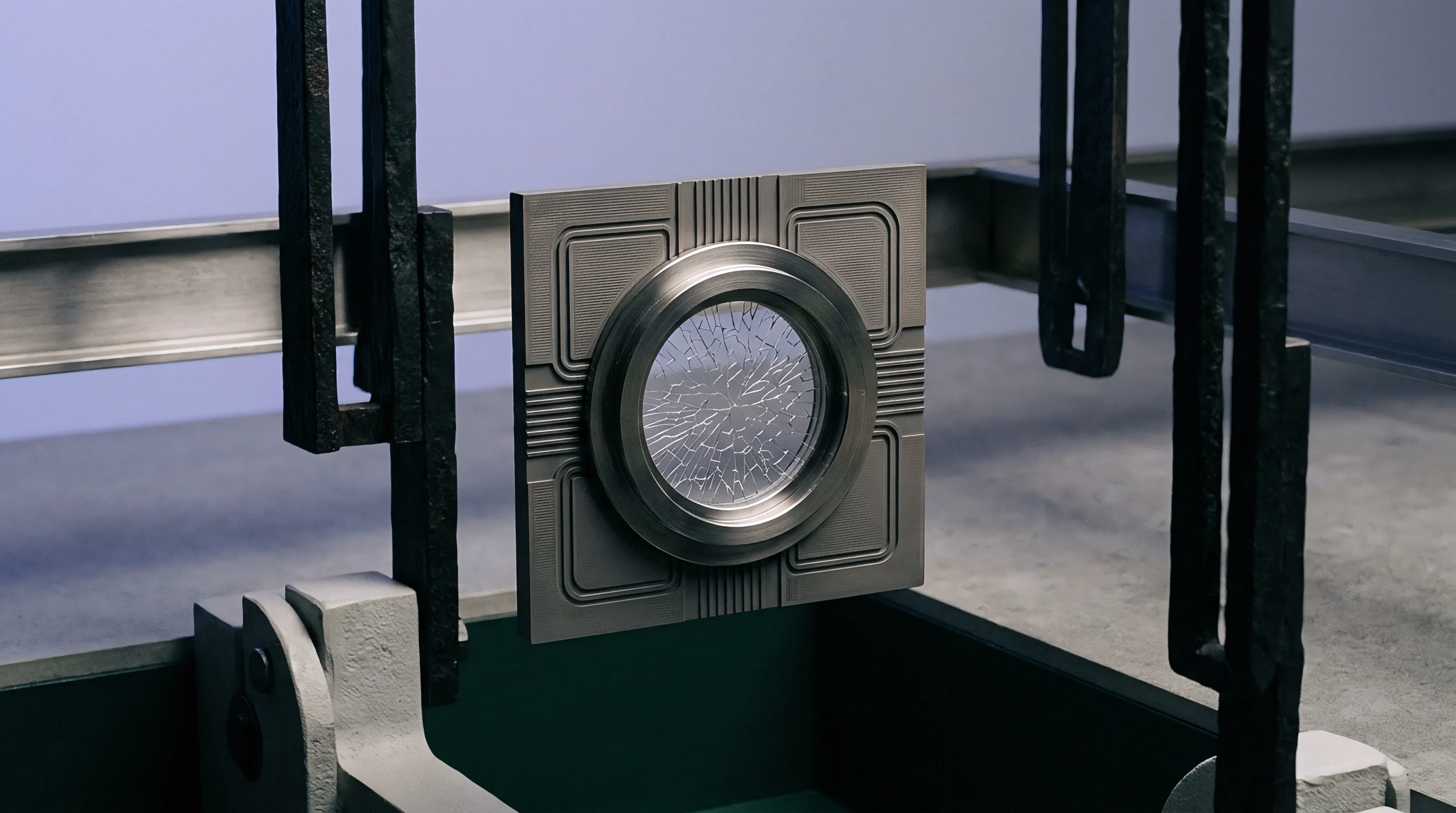
Initial shock conditions drive the shear stress at the die edge to its absolute maximum within several hundred milliseconds. This transient peak stress consistently exceeds the quasi-static stress calculated from uniform thermal equilibrium assumptions. Figure 1 outlines the time-resolved stress and error dynamics encountered across a 473 Kelvin to 77 Kelvin liquid immersion sequence.
The transient stress spike frequently exceeds the adhesive shear strength of the attach interface, causing localized micro-delaminations at the die corners. Even when physical adhesion survives, the localized stress concentration accelerates inelastic void formation. Sintered nanosilver layers experience intense grain boundary opening under rapid cryogenic tensile loads.
These microstructural alterations alter the thermal resistance of the attach layer, shifting heat transfer paths and permanently invalidating factory thermal calibration models.
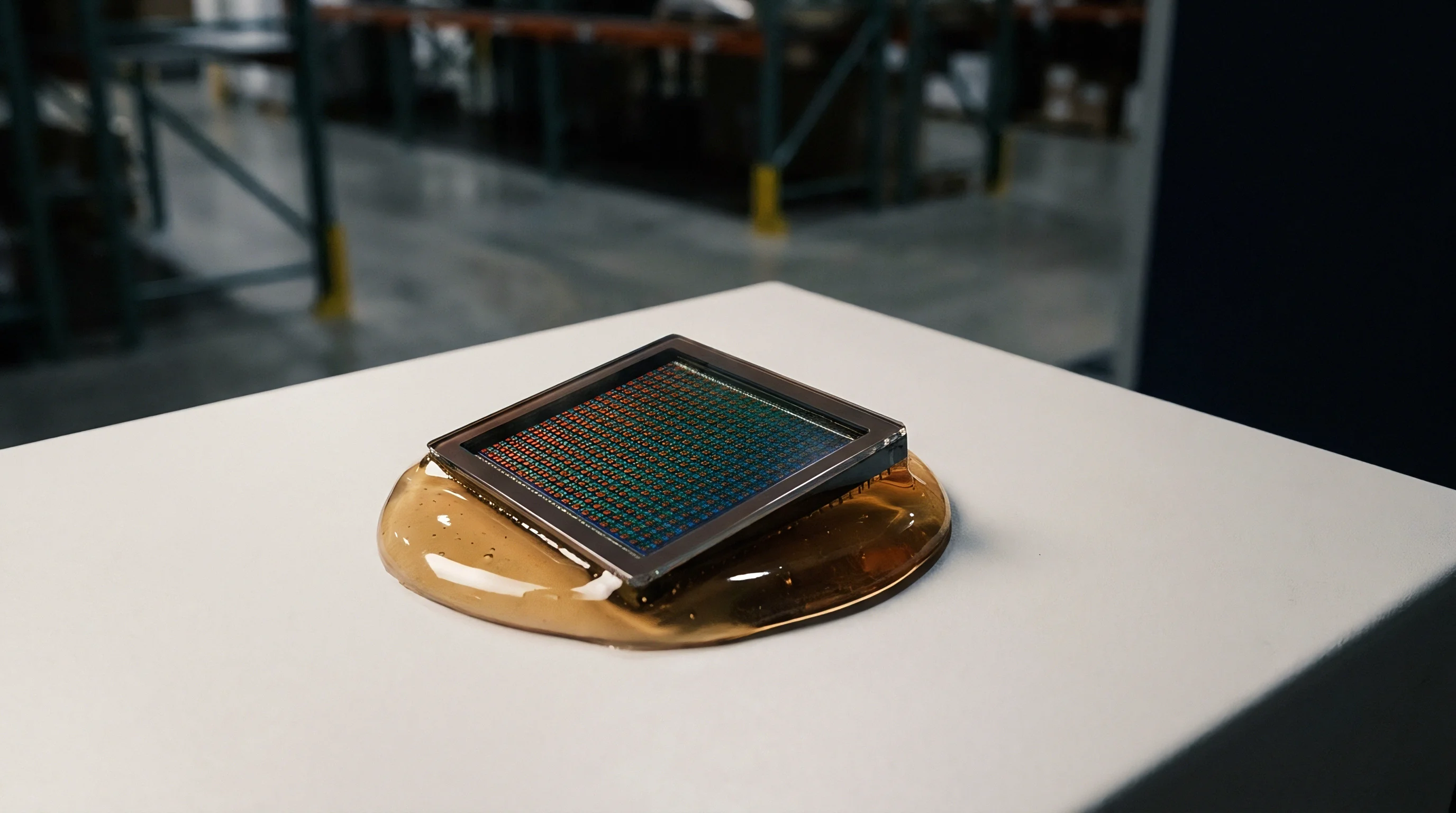
Hot transient blasts produce inverse phenomena. When hot exhaust gas impinges on an uninsulated sensor housing, the carrier expands ahead of the silicon die, driving the die perimeter into severe shear compression. Because standard crosslinked epoxy adhesives soften abruptly upon crossing their glass transition temperature, high shear compression forces can cause lateral squeeze-out or localized plastic buckling of the bond line.
The thickness of the adhesive layer shifts permanently by two to five micrometers, modifying capacitive parasitic capacitances to the ground plane and destabilizing high-frequency analog input channels.
Why Rely on Passive Thermal Attenuation?
Engineers often attempt to protect sensitive sensing dies from thermal transients by adding passive mechanical attenuation, such as elastomer potting compounds or spring-loaded mechanical isolators. These compliant interfaces absorb package expansion, reducing the instantaneous shear transmitted into the die attach. Adding compliance introduces physical thermal resistance and mass, which increases the measurement phase lag.
In closed-loop turbine control or cryogenic propellant monitoring, introducing a two-second physical thermal delay destabilizes the core tracking controller. Algorithmic observation of the internal stress coupling preserves raw sensor bandwidth while mathematically correcting the mechanical offset error in real time.
Structural reliability also diminishes when passive dampening materials face broad temperature ranges. Fluorosilicone and polyurethane dampeners embrittle below 200 Kelvin, losing their compliance and transmitting high-frequency mechanical shock straight into the unrelaxed die attach. At high temperatures, these polymers release volatile organic compounds that redeposit onto exposed MEMS proof masses, inducing irreversible baseline shifts.
The sensing package must remain mechanically simple, relying on high-reliability inorganic headers, thin bond lines, and advanced mathematical observers to resolve dynamic errors.
Thermal boundary conditions inside sensor packaging dictate the observer design requirements. The thermal response time of the die stack establishes the maximum update period for the digital observer filter. When temperature step rates exceed 100 Kelvin per second, the observer calculation loop runs at a minimum of one kilohertz to capture peak shear transients before material relaxation dissipates the internal strain energy.


Verification
Dynamic Mechanical Analysis and Bridge Extraction Setup
Calibrating a viscoelastic-aware state observer requires extracting real material parameters under controlled thermomechanical conditions. Standard manufacturer datasheets provide tensile modulus and glass transition temperatures gathered under static ASTM test regimens that fail to represent high-rate thermal cycling. The testing workflow demands dynamic mechanical analysis performed across a frequency range from 0.01 to 100 Hertz, combined with temperature sweeps spanning 77 Kelvin to 523 Kelvin at ramp rates reaching 20 Kelvin per minute.
Liquid nitrogen cooling systems maintain precise cryogenic setpoints to map the sub-glass beta and gamma transition relaxations.
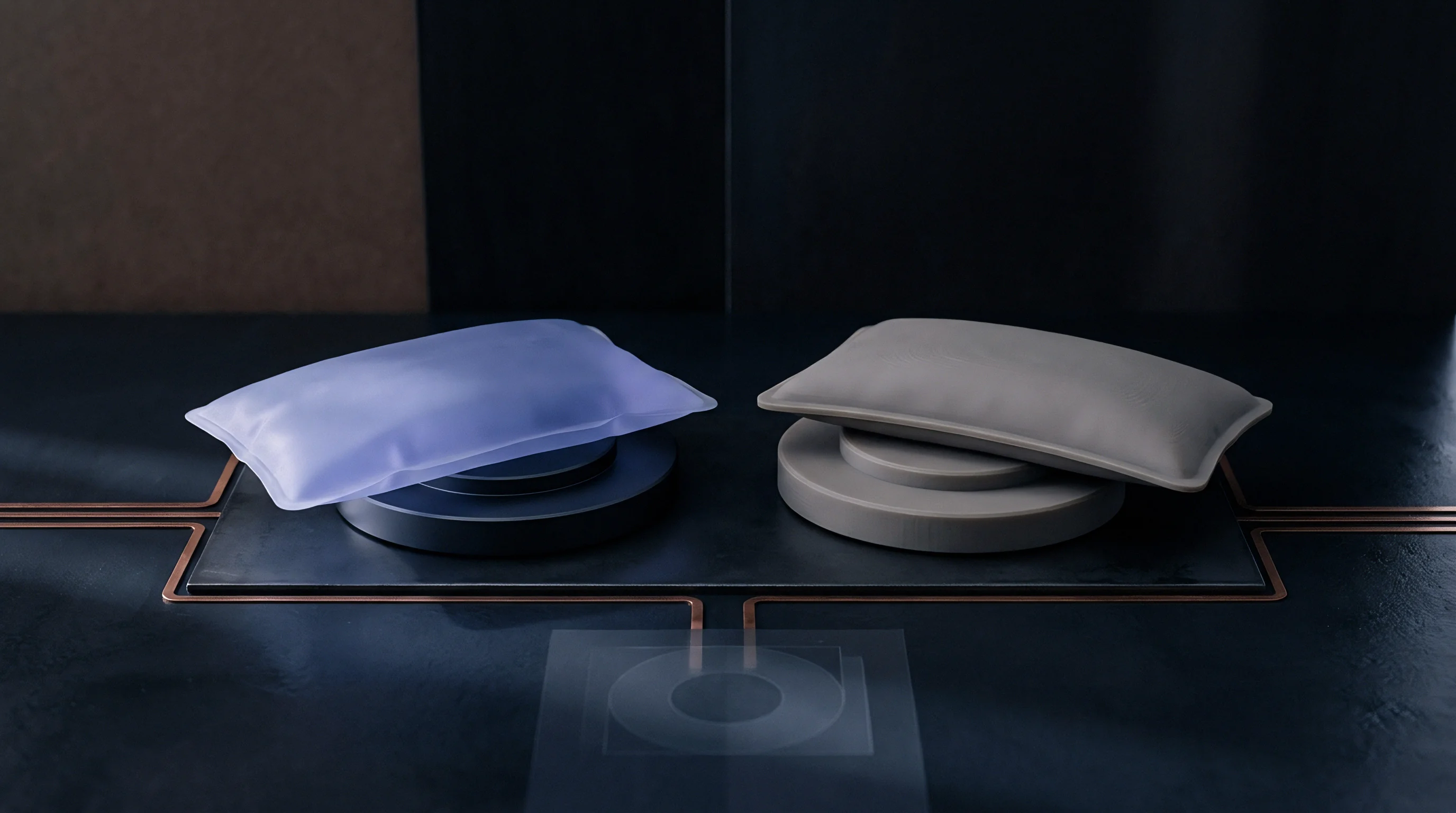
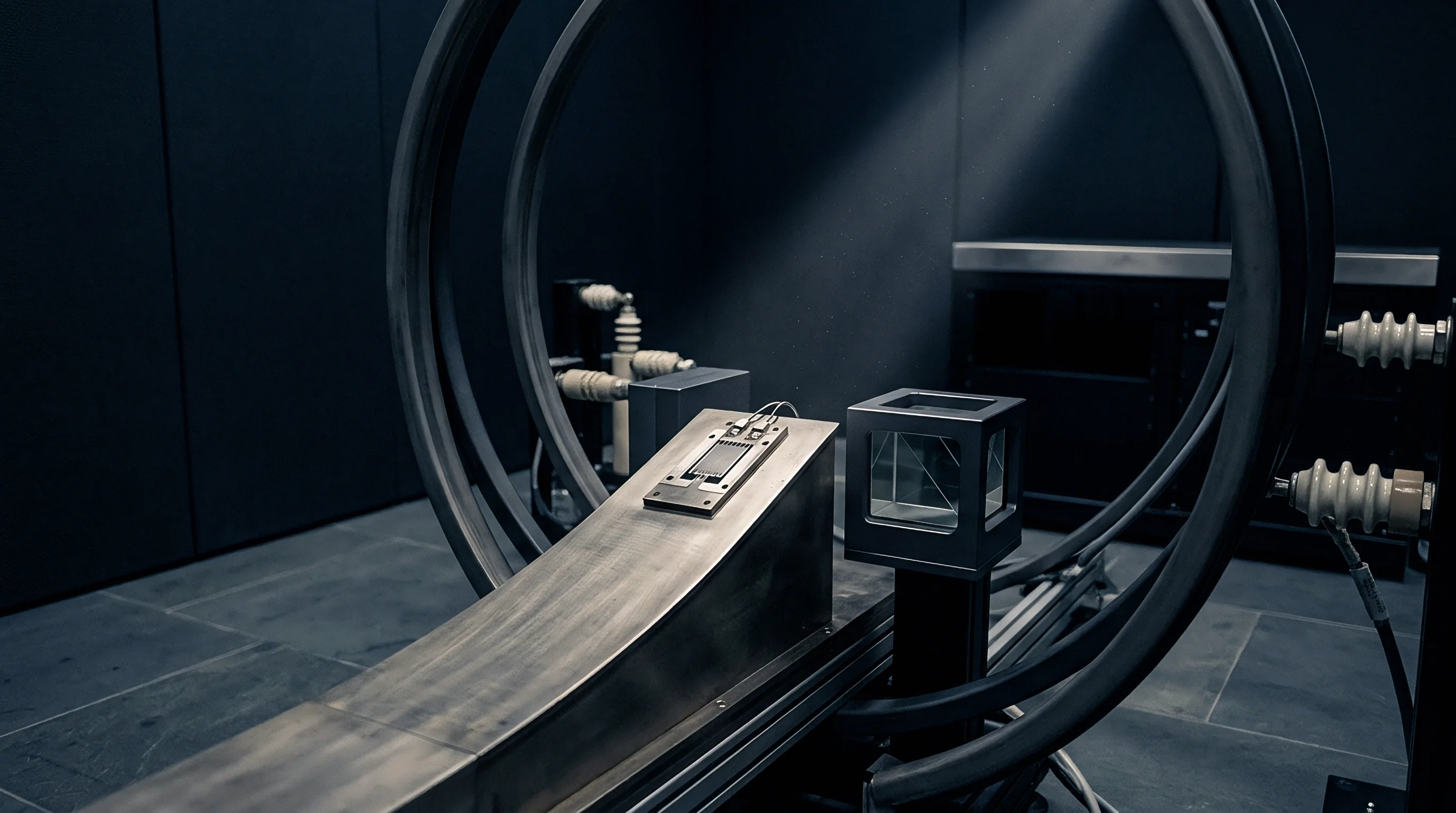
The bench evaluation chain pairs a dynamic mechanical analyzer with an environmental chamber containing an active silicon test vehicle mounted on the target header. The test chip incorporates a five-resistor piezoresistive stress-tensor rosette positioned at the die corner, alongside an identical rosette situated at the geometric center. This architecture isolates center-to-edge stress gradients directly.
A six-and-a-half digit multimeter, triggered synchronously with thermal telemetry, logs Wheatstone bridge imbalances under continuous 3.3-volt excitation. The resulting data stream provides the empirical ground truth required to parameterize the Maxwell relaxation spectrum.
- Mount the instrumented test vehicle onto the temperature-controlled copper cold-plate fixture inside the vacuum-shielded thermal chamber, ensuring solid mechanical coupling with less than 0.05 Kelvin interface thermal resistance.
- Evacuate the testing atmosphere below 10 microtorr to prevent atmospheric moisture condensation and ice accretion during subsequent sub-zero operational testing sweeps.
- Execute isothermal frequency sweeps at discrete 10 Kelvin steps between 77 Kelvin and 473 Kelvin, collecting storage and loss moduli to build the master relaxation curve using time-temperature superposition.
- Apply controlled thermal shocks at ramp rates exceeding 50 Kelvin per second using switched fluidic cold-gas injection while recording high-speed piezoresistive rosette drift at a two-kilohertz sampling rate.
- Fit the discrete Maxwell relaxation spectrum to the collected transient bridge response data using non-linear least-squares optimization to determine the weight and time constants of each internal branch.
- Validate the calibrated state observer against independent irregular thermal profiles to confirm that the residual unmodeled bridge offset error drops below five microvolts across all operational regimes.
Determining the transition between sub-glass Arrhenius shifting and post-glass Williams-Landel-Ferry behavior requires dense data collection across the transition zone. A measurement interval of 2 Kelvin is necessary across the glass transition region to capture the step change in material heat capacity and thermal expansion coefficients. Neglecting this density leads to interpolation artifacts that degrade observer convergence during rapid thermal cross-overs.
State Observer Performance under Experimental Stress Trajectories
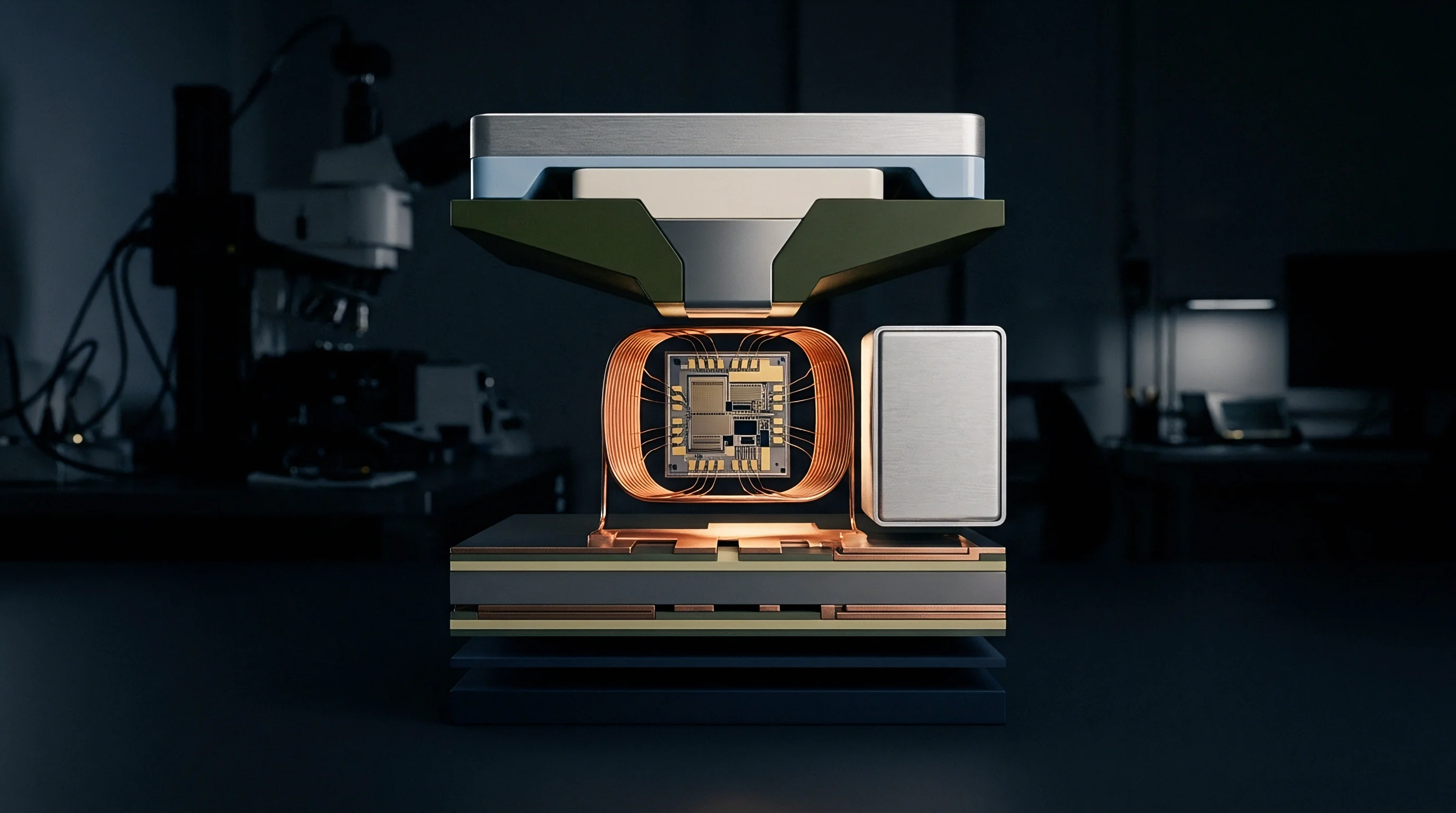
To quantify the real-world utility of the viscoelastic compensation engine, an experimental verification run was executed comparing three distinct observer configurations. The test subject comprised a micromachined silicon piezoresistive pressure sensor bonded to an alumina header with a 25-micrometer layer of silver-filled bismaleimide paste. The assembly faced an initial steady state at 473 Kelvin, followed by an immediate gas-chilled quench to 120 Kelvin at an average cooling rate of 35 Kelvin per second.
The true applied physical pressure remained precisely static at 100.00 kilopascals throughout the thermal plunge.
Table 2 compares the reported pressure and state divergence across the three algorithms during the transient descent and the subsequent 600-second isothermal relaxation window at 120 Kelvin.
| Observer Architecture | Peak Dynamic Error (kPa) | Settling Time to 0.1% (s) | Residual Isothermal Drift (Pa/min) | Computational Load per Cycle (us) |
|---|---|---|---|---|
| Uncompensated Static Calibration | 14.80 | > 600 | 45.2 | 1.2 |
| Standard First-Order Temperature Observer | 6.25 | 410 | 18.6 | 4.8 |
| Augmented Viscoelastic Maxwell Observer | 0.35 | 14 | 0.8 | 22.5 |
The uncompensated observer registers an immediate dynamic error of nearly fifteen percent of the operating range, misinterpreting the intense compressive shear of the contracting die attach as a massive drop in physical media pressure. The first-order temperature observer accounts for static sensitivity and offset changes versus temperature, but fails to track the lingering viscoelastic stress relaxation, resulting in an unacceptable settling time exceeding four hundred seconds. The augmented viscoelastic observer predicts the internal stress trajectory accurately, suppressing peak dynamic errors to 0.35 kilopascals and recovering nominal measurement fidelity within fourteen seconds of thermal stabilization.
A standard single-pole temperature compensation filter underestimates peak dynamic shear stress by sixty-eight percent during high-rate cryogenic quenching.
The residual isothermal drift of 0.8 pascals per minute in the augmented observer stems from minor unmodeled viscoplastic re-ordering within the silver filler network. Eliminating this baseline drift entirely requires incorporating secondary hardening variables into the internal state matrix, which increases processor execution overhead beyond the budget of standard industrial microcontrollers. For aerospace and industrial turbine applications, maintaining residual errors below one pascal per minute meets necessary precision boundaries.
Selection

Commercial Supply Pool and Material Formulation Trade-Offs
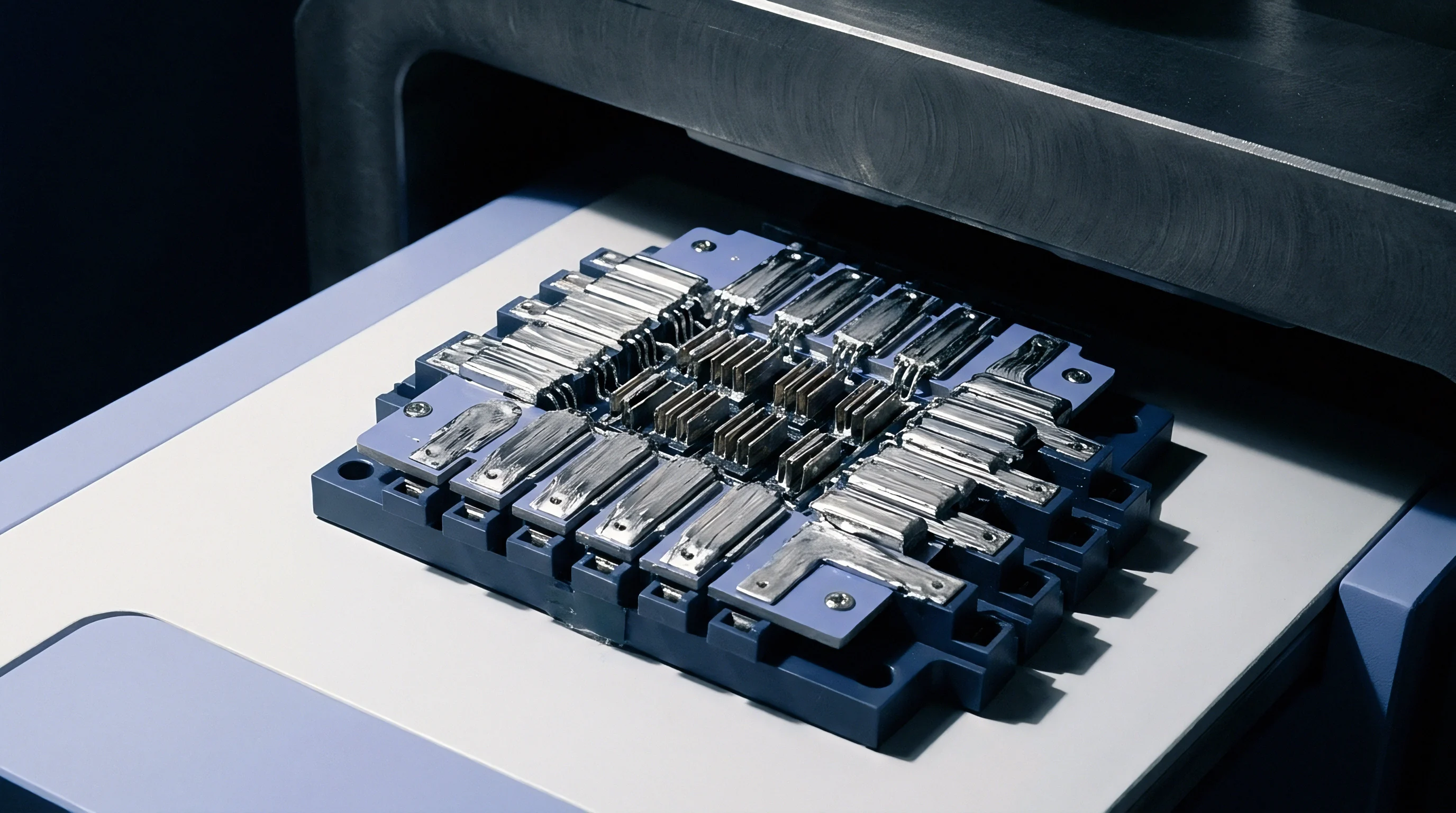
Selecting an optimal die attach material for broad thermal corridors requires balancing physical compliance, processability, and long-term joint integrity. Traditional gold-tin eutectic preforms offer exceptional fatigue resistance and purely elastic behavior across the entire operational range, completely bypassing the viscoelastic relaxation phenomena characteristic of polymer adhesives. Eutectic metallurgy introduces extreme mechanical stiffness.
Gold-tin exhibits a Young’s modulus of approximately 68 gigapascals, transmitting substantial thermal expansion mismatch stress into the silicon die during cryogenic dips, which risks catastrophic wafer fracturing on larger die footprints.
Polymer-based die attach formulations absorb expansion mismatches through inherent compliance, yet expose the measurement chain to the time-dependent drift mechanisms evaluated here. Sourcing engineers face a trade-off matrix governed by glass transition temperature, modulus, and commercial availability. Table 3 breaks down four dominant attachment chemistries commercially procurable for extreme-temperature transient observer applications.
| Chemistry Class | Modulus Regime (77 K / 473 K) | Key Failure Mode Under Transient Shock | Observer Modeling Complexity | Relative Cost per Gram (USD) | Processing Atmosphere |
|---|---|---|---|---|---|
| Au-20Sn Eutectic Alloy | 72 GPa / 55 GPa | Silicon Die Cracking via High Stress | Low: Purely Thermo-Elastic | $180 – $260 | Forming Gas or High Vacuum |
| Bismaleimide Conductive Paste | 9.2 GPa / 38 MPa | Edge Delamination, Matrix Cracking | High: Non-linear Viscoelastic | $8 – $15 | Standard Nitrogen Oven |
| Sintered Nano-Silver Paste | 42 GPa / 18.5 GPa | Grain Boundary Creep, Micro-Voiding | Medium: Viscoplastic Hardening | $25 – $45 | Air or Inert Convection |
| Silicone Low-Stress Adhesive | 1.2 GPa / 3.5 MPa | High Outgassing, Dynamic Tearing | High: Hyperelastic Creep | $4 – $9 | Cleanroom Ambient |
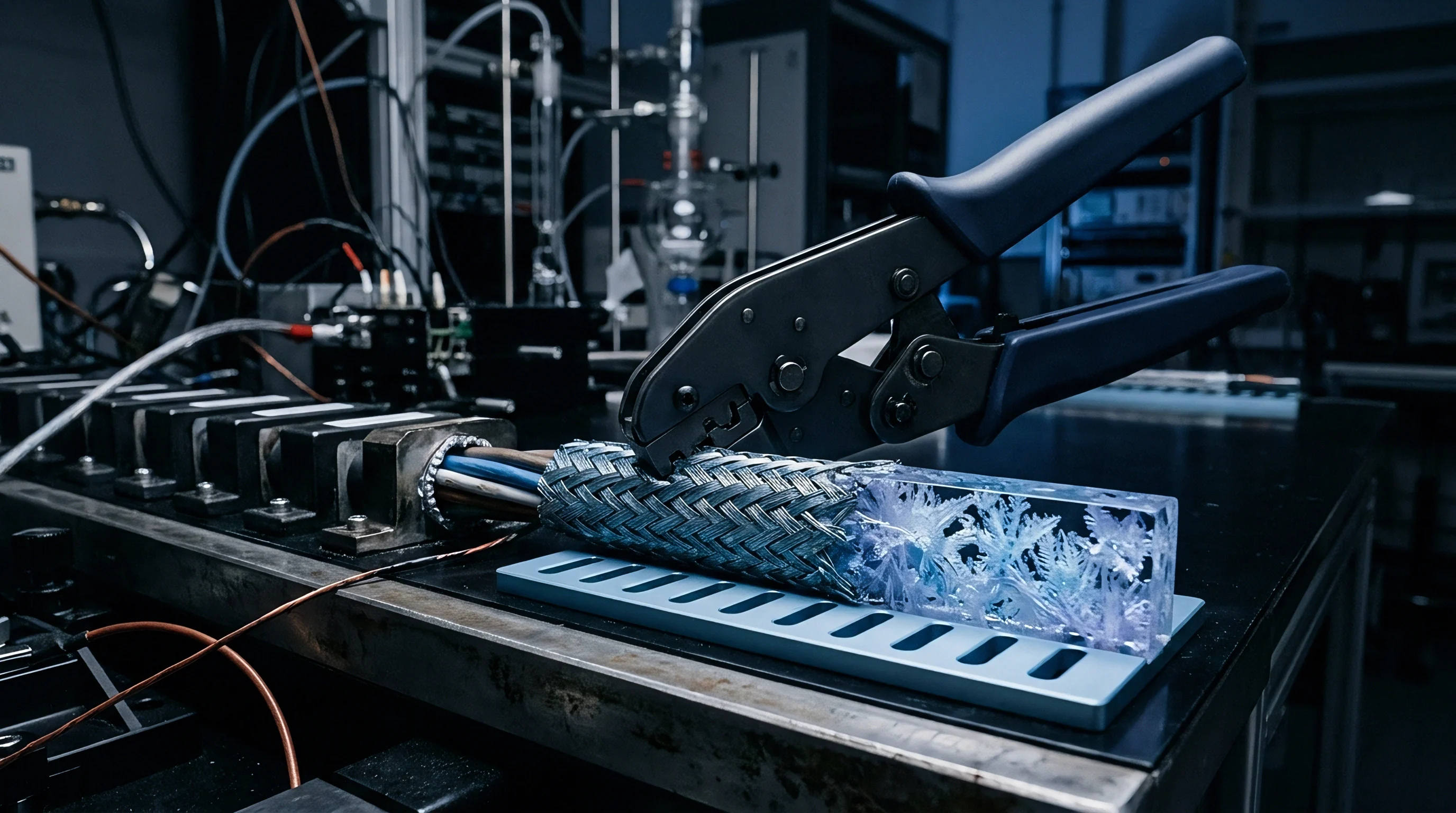
Bismaleimide pastes balance workable compliance with high-temperature degradation resistance up to 523 Kelvin, making them standard baselines for harsh environment instrumentation. Procuring these materials requires strict adherence to cold-chain logistics, as room-temperature thawing accelerates unmodeled outgassing and incomplete cross-linking during cure profiles. Incomplete polymer cross-linking alters the post-cure glass transition temperature by up to 30 Kelvin, entirely disrupting the calibration constants loaded into the transient observer firmware.
Sintered nanosilver has emerged as an alternative to eutectic alloys for high-power and broad-temperature applications. It offers thermal conductivity values superior to 150 watts per meter-Kelvin, which suppresses lateral thermal gradients across the sensor die during transient thermal blasts. The process demands meticulous control of surface metallization on both the die backing and the package header.
Sintering onto gold surfaces without proper seed layers yields brittle intermetallic structures and interfacial Kirkendall voids, creating micro-cracks that alter mechanical boundary conditions under cyclical strain.
Contractual and Manufacturing Specifications for Assembly Integrity
When drafting procurement contracts and manufacturing statements of work for sensors operating across wide thermal boundaries, specifications must extend beyond standard joint shear strength metrics. Standard post-assembly shear testing conducted exclusively at 298 Kelvin fails to reveal latent cross-linking defects or non-affine viscoelastic properties that emerge only under extreme environmental conditions. Supplier quality agreements require detailed material processing logs, encompassing exact cure ramp profiles, peak temperatures, and furnace atmosphere purities.
Incoming inspection procedures for high-reliability sensor builds include dynamic mechanical analysis on witness coupons drawn from identical paste lots. A shift in the baseline glass transition temperature exceeding 5 Kelvin flags inconsistent formulation mixing or transit temperature excursions, demanding lot rejection before assembly initiation. Variations in bond line thickness alter the interfacial shear profile, requiring tight manufacturing controls on dispensing volumes and die placement force to maintain bond line uniformities within plus or minus 2.5 micrometers across production batches.
Environmental qualification plans mandate sequential thermal shock screening in line with strict test standards. The assembly must undergo liquid-to-liquid thermal shock cycles spanning 77 Kelvin to 473 Kelvin to demonstrate mechanical survival and state-observer tracking repeatability. The primary clause in high-reliability procurement agreements establishes that uncompensated post-transient sensor baseline drift shall not exceed 0.05 percent of full-scale output after a ten-second stabilization window, directly linking material rheology and observer algorithm fidelity to commercial lot acceptance.