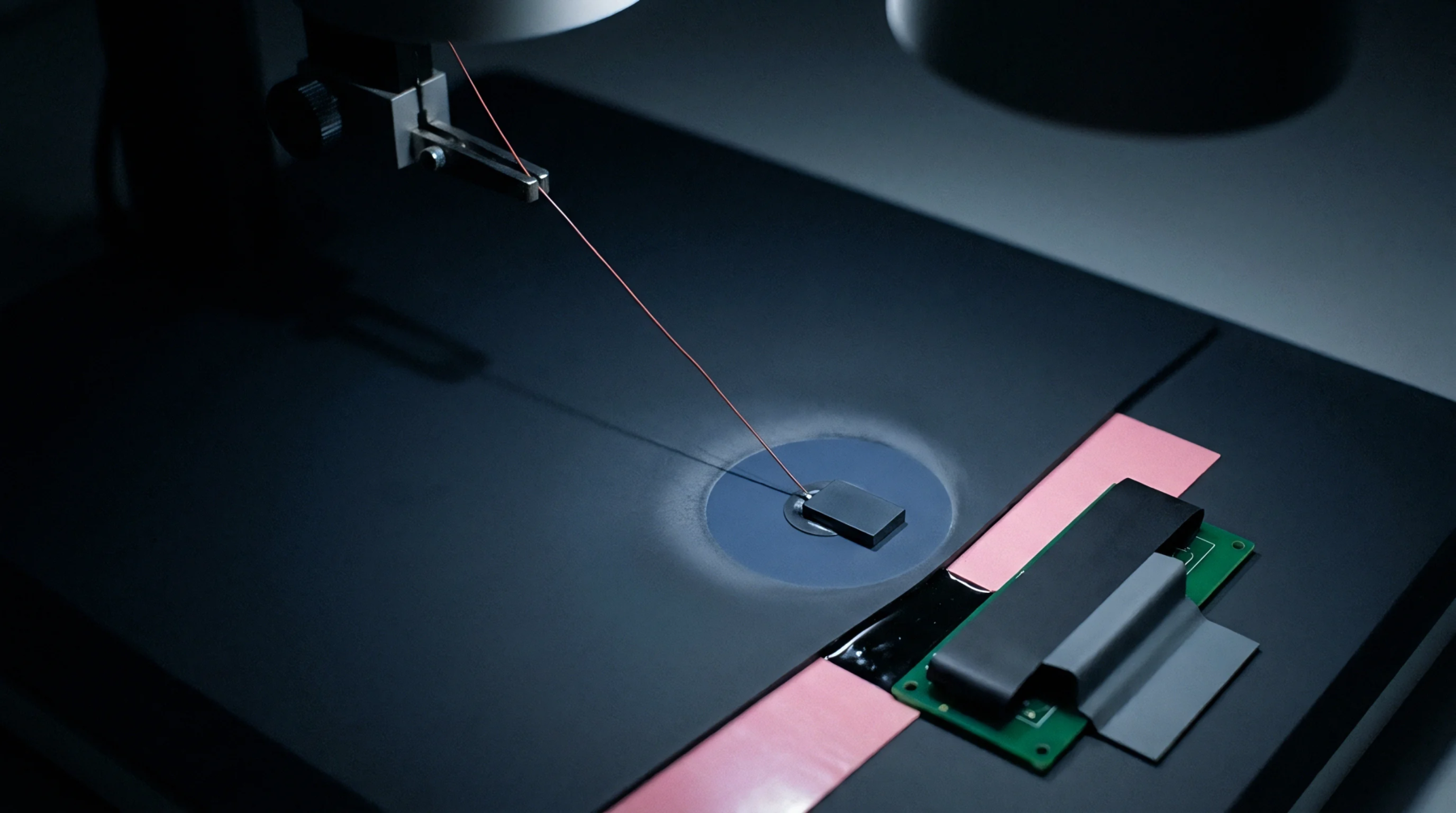
Metallic Composition
This alloy consists of tin combined with three percent silver and five tenths percent copper, formulated as a lead-free joining medium for electronic circuit board assembly. The sac305 solder establishes a permanent electrical and mechanical bond between components and conductive copper pads through a thermal reflow process. Its liquidus temperature reaches approximately two hundred twenty degrees Celsius while the solidus point rests at two hundred seventeen degrees Celsius.
Industry standards define these metallurgical proportions to minimize environmental toxicity while ensuring reliability in harsh thermal cycling conditions. The material stops applying when the required joint strength exceeds the inherent yield limits of tin-based crystalline structures or when service temperatures approach the melting range of the alloy itself.
Reflow Processing
Precise thermal profiles govern the application of sac305 solder during manufacturing cycles to prevent brittle intermetallic compounds from forming at the interface. Equipment monitors the temperature gradient as the paste progresses through preheating, soaking, and peak reflow phases. Rapid cooling rates influence the grain structure size of the solid joint, which affects fatigue resistance under vibration or thermal expansion stress.
Technicians adjust the conveyor speed or infrared zone outputs to match the specific thermal mass of the populated board. Excess dwell time above the liquidus temperature accelerates the growth of copper-tin intermetallic layers that increase electrical resistance and fracture probability. Calibration of the oven sensors ensures the delta between board surface temperature and the actual alloy state remains within defined production limits.
Mechanical Reliability
Thermal fatigue presents a significant challenge for sac305 solder joints because coefficients of thermal expansion differ between component packages and printed wiring boards. Cyclic heating induces strain that causes micro-cracks to develop in the bulk of the joint or at the junction of the copper trace. Metallurgical investigations show that tin-silver-copper alloys possess higher stiffness than traditional tin-lead mixtures, which limits the plastic deformation allowed during temperature excursions.
Design engineers account for this rigidity by sizing solder volume correctly to distribute shear stresses across the entire contact surface. Periodic shear testing verifies the bond integrity against expected force thresholds established by internal quality protocols. Factors such as oxidation of the pad surface or organic contamination interfere with consistent wetting and degrade the long-term structural stability of the final joint.
Metrological Verification
Measurement of the alloy quality requires an evaluation of the surface tension and wetting properties during testing on reference substrates. Instrumentation determines the spread area of a defined mass of sac305 solder under standard flux conditions to quantify the effectiveness of the metallic interaction. Accuracy depends on the repeatability of the heat source and the cleanliness of the testing surface, which prevents impurities from altering the contact angle.
Laboratory personnel use cross-sectional analysis to verify that the thickness of the intermetallic growth remains within the range specified by industry standards. Errors arise from thermal drift in the sensing hardware or uneven heat distribution across the test bench. Traceable calibration of the equipment ensures the consistency of these results across different production batches.
The alloy maintains its intended metallurgical integrity provided that the cooling rate stays within the specified crystalline growth boundaries.