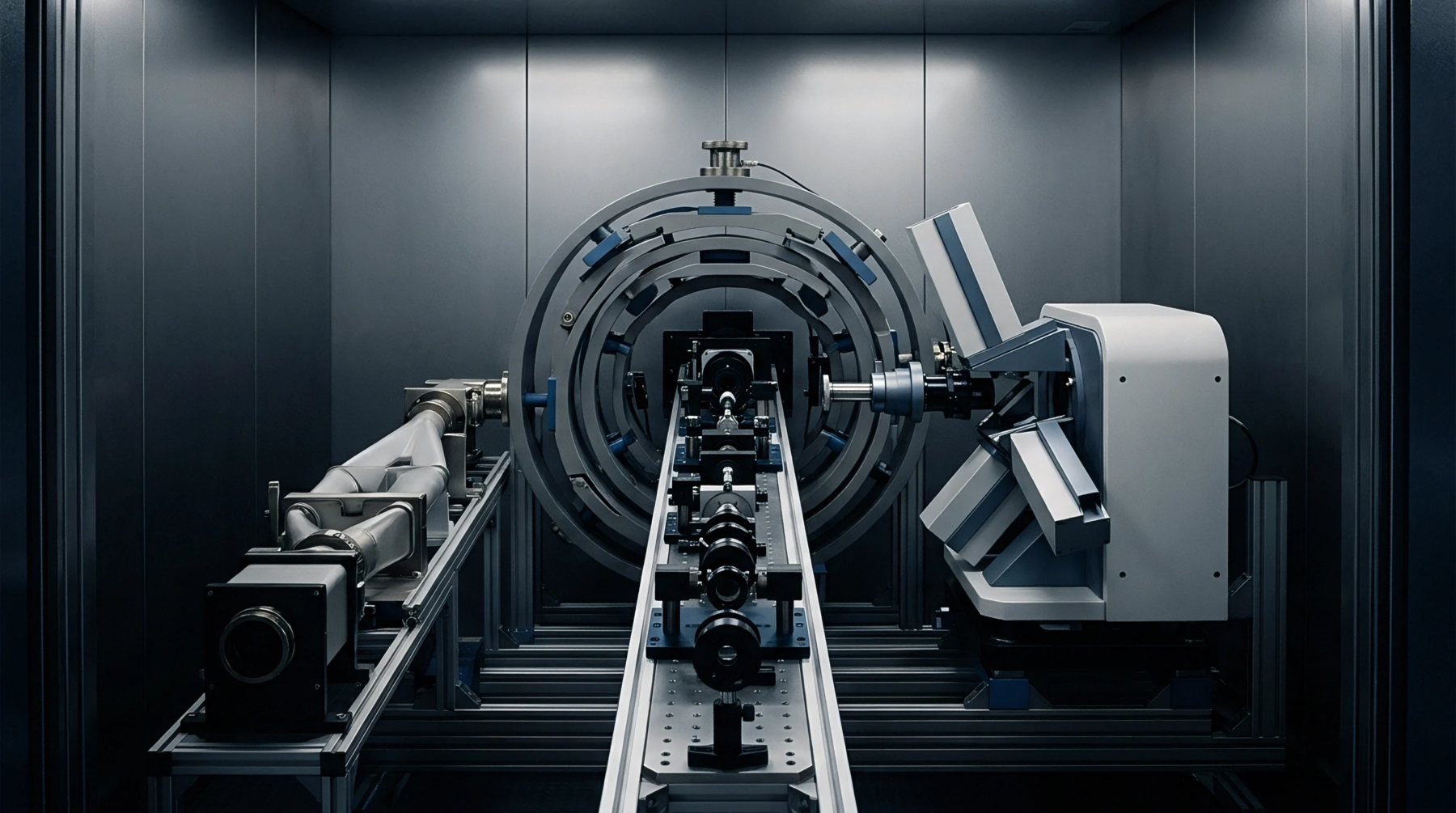
Inertial Measurement Unit Multi Axis Cross Axis Calibration Standard Methods
Decouple multi-axis IMU cross-coupling by combining multi-position static tumbling with dynamic rate table sweeps to populate deterministic nine-term error matrices.
Decouple multi-axis IMU cross-coupling by combining multi-position static tumbling with dynamic rate table sweeps to populate deterministic nine-term error matrices.

Active Peltier cooling introduces dynamic spatial heat flux gradients across MEMS gyroscope suspensions, elevating the long-term Allan variance bias floor.
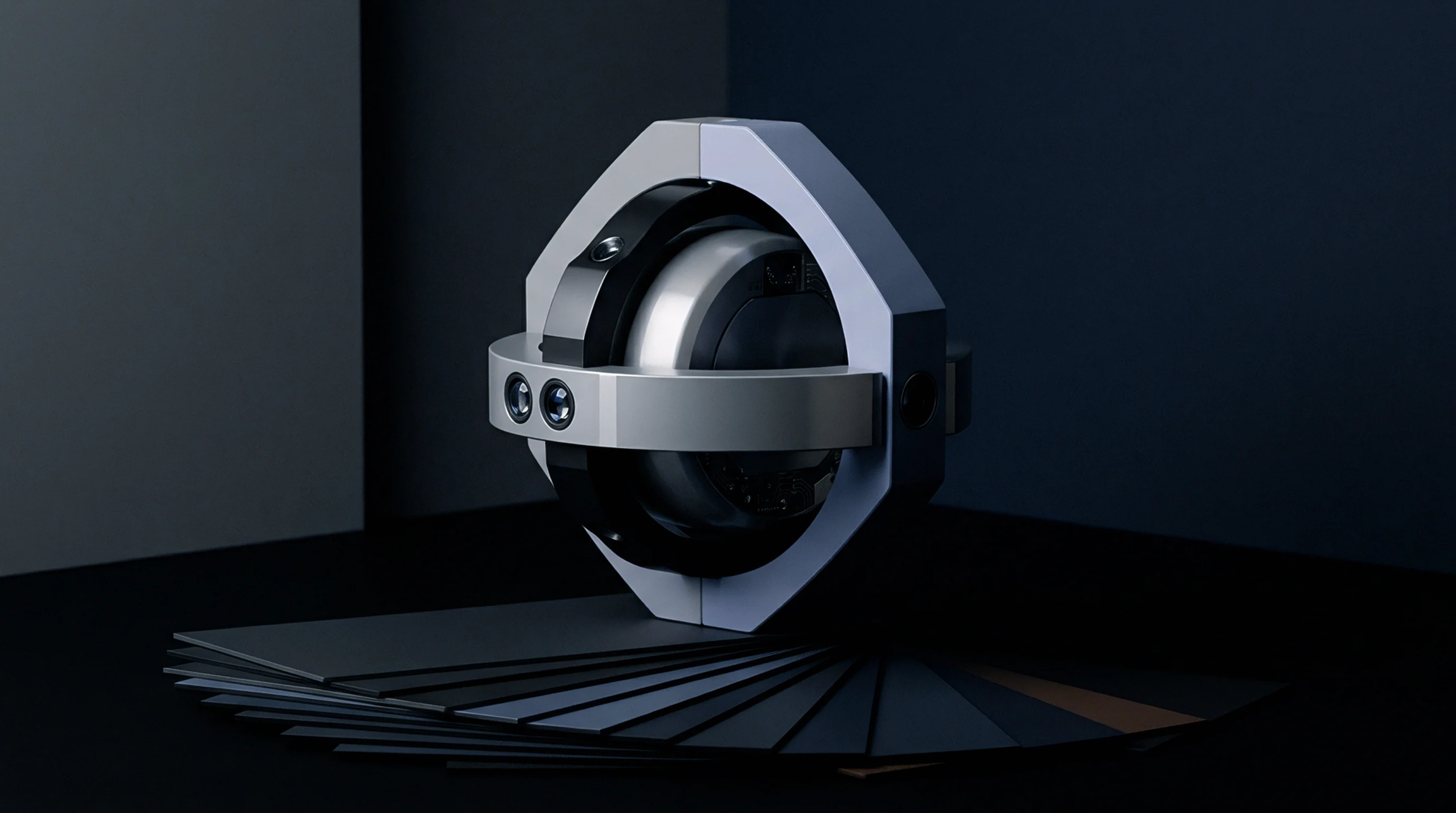
Combining wire-rope isolators micro-perforated baffles and motor notch filtering suppresses thermal chamber fan interference below micro-g noise floors.
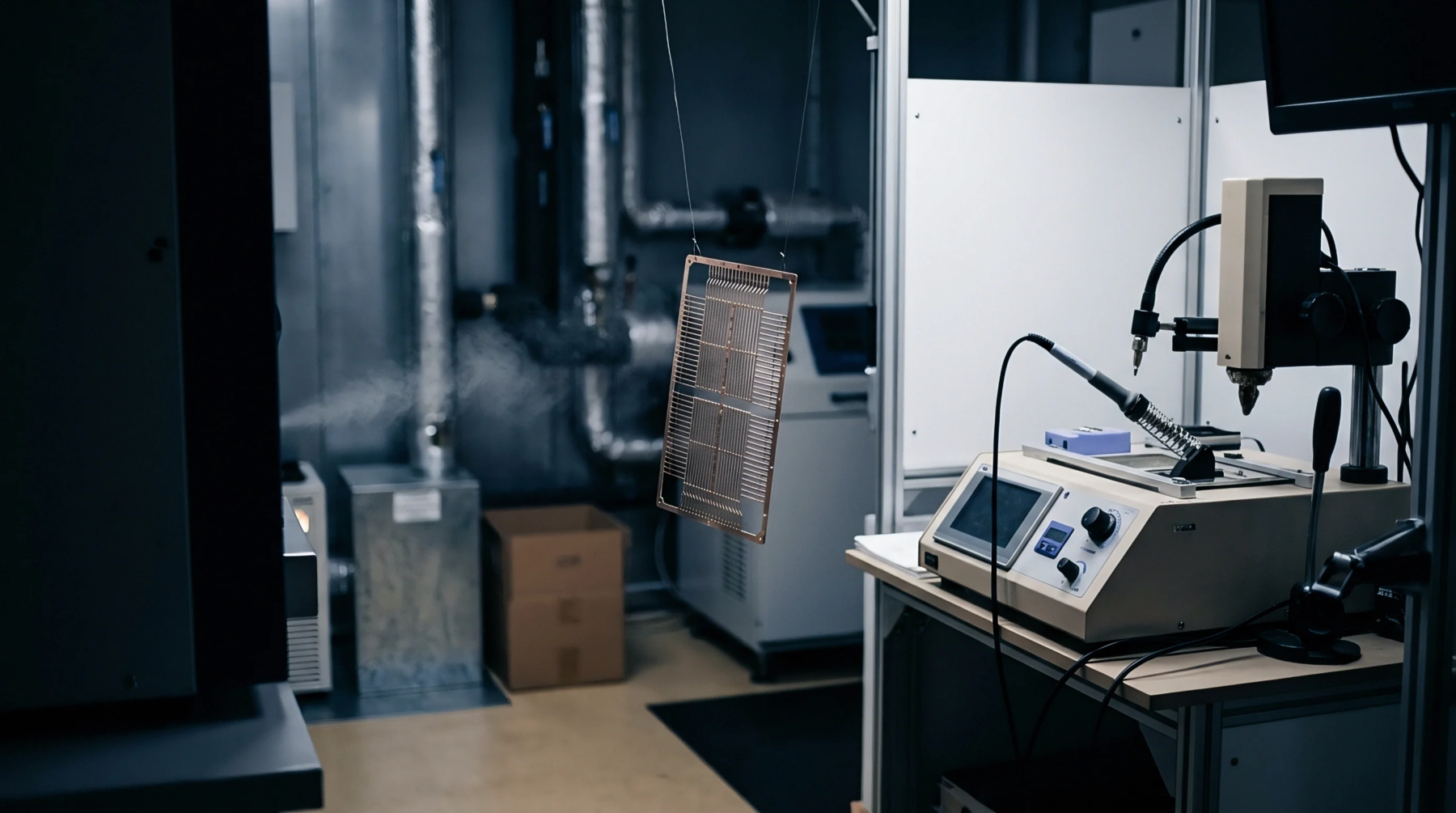
MEMS accelerometer thermal soak testing demands controlled airflow, CTE-matched carrier substrates, low-EMF cabling, and verified steady-state dwell times.

Isolating rate random walk requires thermal model subtraction before Allan variance calculation to prevent temperature ramps from masking stochastic noise slopes.

Overlapping Allan variance reduces bias instability estimation uncertainty in tactical fiber gyroscopes by expanding effective degrees of freedom without extending test time.
Extract quantization noise Q from Allan plots by extending the minus-one log-log slope to root three seconds, isolating digital step limits from sensor rate noise.

Dynamic thermal gradients induce asymmetric flexure stress, driving uncompensated zero-bias drift that requires active thermal balancing and pure wafer quartz.

Shupe effect transient phase errors occur when temporal temperature gradients break optical reciprocity, requiring symmetric winding and thermal modeling.

Dynamic thermal calibration during stationary alignment resolves internal heating gradients using multi-point rate-of-change modeling to secure true north.

Sub-arcminute gyrocompassing under thermal transients demands symmetric fused silica resonators, continuous mode reversal, and differential stem tracking.

Single-axis indexing cancels horizontal MEMS gyroscope bias by periodically inverting the sensing axes, shifting drift errors into uncoupled AC modulation bands.

Ground inertial alignment establishes tactical vehicle attitude and azimuth through static gravity vector resolution, Earth rotation sensing, and Kalman filtering.

Caustic degradation and thermal quench induce seal compression set, pulling washdown fluids into enclosures when internal vacuum drops exceed contact pressure.

Differential vacuum during thermal shock washdown equals dry air thermal contraction plus vapor condensation minus equalizing vent inflow.

IP69K enclosures resist 100-bar jets via rigid 316L bodies, positive elastomer compression stops, and void-free potting that stops thermal vacuum suction.

Continuous high-frequency damped oscillator telemetry uses synchronous demodulation and digital linearization to deliver micron-accurate IO-Link distance data.

Flush sensors confine field lines within ferrite shields for metal embedment, while non-flush units sacrifice embedment to double range and avoid cross-talk.

Non-ferrous metals reduce standard inductive sensor reach by 50 to 75 percent through eddy current cancellation, requiring Factor 1 multi-coil architectures.

Thermal hysteresis in eutectic resonators stabilizes within forty parts per billion when bonding geometry isolates anchor points from seal ring plastic shear.

Micro-anchor decoupling isolates acoustic energy and relieves packaging strain, preserving quality factors over 100,000 and sub-ppm frequency stability.
Degenerate boron doping and electrostatic tuning compensate silicon resonator thermal frequency drift within five parts per million across broad thermal spans.

Dynamic thermal phase skew in multi-coil resonant sensors is mitigated by applying carrier-derived winding resistance extraction and rate-aware calibration.

Inductive proximity performance relies on tuning excitation frequency to target skin depth while compensating LC tank equivalent resistance drift.

Quadrature demodulation preserves inductive distance precision only when phase skew and gain imbalance remain calibrated within 0.05 degrees and 0.08 percent.

Dynamic process noise covariance scaling based on real-time thermo-mechanical dissipation models prevents Kalman filter divergence in tactical MEMS IMUs under broad-band vibration.

Allan variance metrics convert directly to continuous noise spectral densities, which integrate over time step dt to form the discrete process noise covariance matrix Q.

Allan variance isolates sensor white noise, flicker floor, and random walk by evaluating cluster time variances on an isolated seismic bench.

Polar inertial navigation demands empirical multi-axis dynamic calibration to eliminate non-linear size effect and rectification errors that degrade heading alignment.

High-latitude gyrocompassing attenuates the horizontal Earth rate signal by the cosine of latitude, requiring micro-degree bias stability and wander azimuth frames.
Expertise is a utility, not a secret. sentiention™ publishes its working knowledge as open reference: intelligence layer covering the materials it sources, the markets it enters, and the reference that serves both.