Influence Coefficient
Cross axis influence coefficients quantify the reaction of an instrument to linear acceleration applied along any of its three primary axes. The g-sensitivity matrix quantifies how a force in the vertical plane might induce a false signal in the lateral or longitudinal channels of a precision oscillator or gyroscope. This mathematical tool enables the isolation of genuine rotational data from the noise generated by vibration or movement.
Internal Coupling
Imperfections in the mounting or internal structural asymmetries cause the sensing element to deform under the load of gravity or rapid motion. Within the g-sensitivity matrix, the diagonal elements represent the response to acceleration aligned with the sensing axis, while the off diagonal elements capture the cross axis interference. High quality sensors minimize these values through symmetric design and rigid internal packaging.
This coupling is often the primary source of error in high vibration environments.
Compensation Routine
Software filters use the real time output of an auxiliary accelerometer to subtract the calculated errors from the primary data stream. By multiplying the measured acceleration by the g-sensitivity matrix, the system determines the exact magnitude of the induced shift and compensates for it instantaneously. This process is vital for maintaining heading accuracy in high dynamic environments like aerospace or automotive testing.
Derivation Procedure
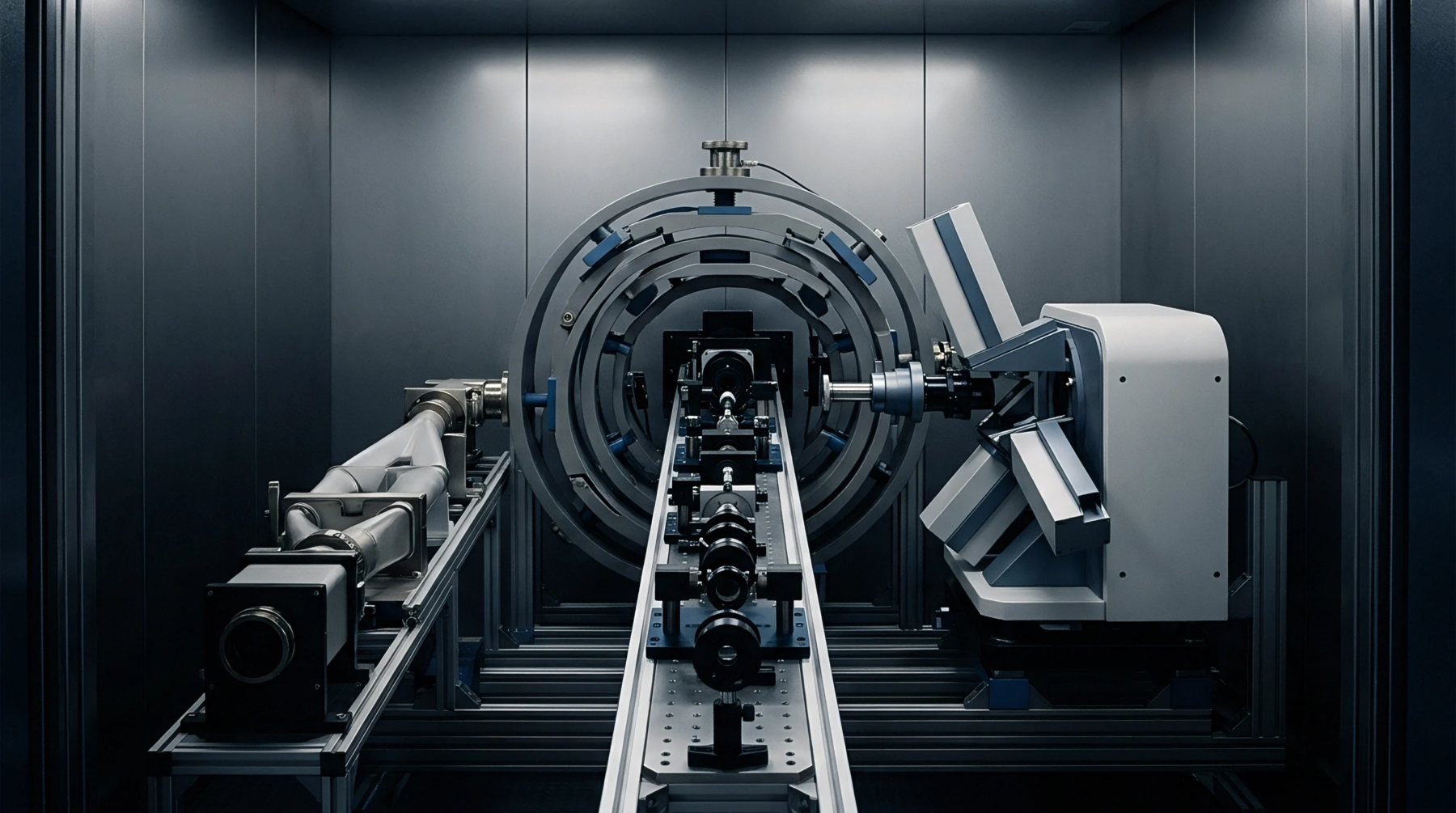
Calibration laboratories determine the coefficients by mounting the device on a centrifuge or a multi axis rate table. Precise movements across a range of gravitational loads allow for the derivation of each matrix element with high resolution.