Decoupling Fan Acoustic Vibration Noise in High Precision Sensor Thermal Chambers
Combining wire-rope isolators micro-perforated baffles and motor notch filtering suppresses thermal chamber fan interference below micro-g noise floors.
Excitation
Forced convection environmental chambers use high-rpm motor blowers to keep temperatures uniform across wide operating ranges. However, these recirculation blowers drive mechanical vibration and sound pressure directly into the test enclosure. Evaluating precision sensors requires a baseline quiet enough that environmental noise stays well below the device’s intrinsic noise floor, making it essential to isolate how these disturbances originate.
Rotordynamic Disturbance Mechanisms
Recirculation blowers generate mechanical disturbance through unbalance forces, bearing surface imperfections, and blade passing pressures. Rotor imbalance scales with speed, producing a discrete sinusoidal force vector at the motor shaft’s fundamental rotation frequency ~ typically between fifteen and sixty Hertz. Higher in the spectrum, bearing defects generate transient shock pulses from two hundred Hertz to two kilohertz as rolling elements hit micro-spalls on the inner and outer races.
Aerodynamic noise comes from blade passing frequencies and turbulent boundary layer shedding. The primary blade pass frequency equals the motor’s rotation speed multiplied by the impeller blade count ~ so a four-blade impeller running at three thousand revolutions per minute produces a concentrated pressure pulse at two hundred Hertz, along with secondary harmonics at integer multiples. Structural resonances further amplify displacement, while stainless steel chamber walls act as sounding boards that couple frame vibration directly into the acoustic cavity modes of the test chamber.
| Disturbance Source | Frequency Spectrum | Transmission Path | Impact on Sensor Output |
|---|---|---|---|
| Motor Rotor Imbalance | 1X Running Speed (15 Hz to 60 Hz) | Chamber frame and fixture conduction | Low-frequency bias shift and false acceleration readings |
| Blade Passing Frequency | N times Running Speed (180 Hz to 1200 Hz) | Airborne acoustic pressure waves | Diaphragm deformation and micro-phonic resonance spikes |
| Bearing Defect Harmonics | Outer and inner race pass (200 Hz to 2.5 kHz) | Structural housing elasticity | High-frequency jitter and increased sensor noise floor |
| Turbulent Vortex Shedding | Broadband noise (50 Hz to 5 kHz) | Acoustic field inside internal cavity | Random walk phase noise in optical and quartz elements |
Transduction Vulnerabilities across Sensor Modalities
Micro-machined capacitive accelerometers with noise floors below five hundred nano-g per root Hertz pick up structural vibration directly through their package leads. When mechanical vibration aligns near the internal resonance frequency of a MEMS proof mass, it causes non-linear offset shifts and phase demodulation errors. Similarly, micro-phonic sensitivity in high-Q quartz pressure transducers converts airborne acoustic fluctuations into pressure jitter that hides genuine barometric drift during temperature sweeps.
Optical sensing topologies face different corruption mechanisms. Fiber optic and ring laser gyroscopes show elevated phase noise when acoustic waves strain the silica fibers and modulate optical path length. Resonant silicon beam sensors undergo parametric excitation when external fan harmonics coincide with internal drive or sense modes.
Disentangling these cross-sensitivities requires separating mechanical vibration from thermal energy transfer inside the enclosure.
Factory vibration specifications frequently apply only to the chamber frame rather than the payload mounting plate.
Mount
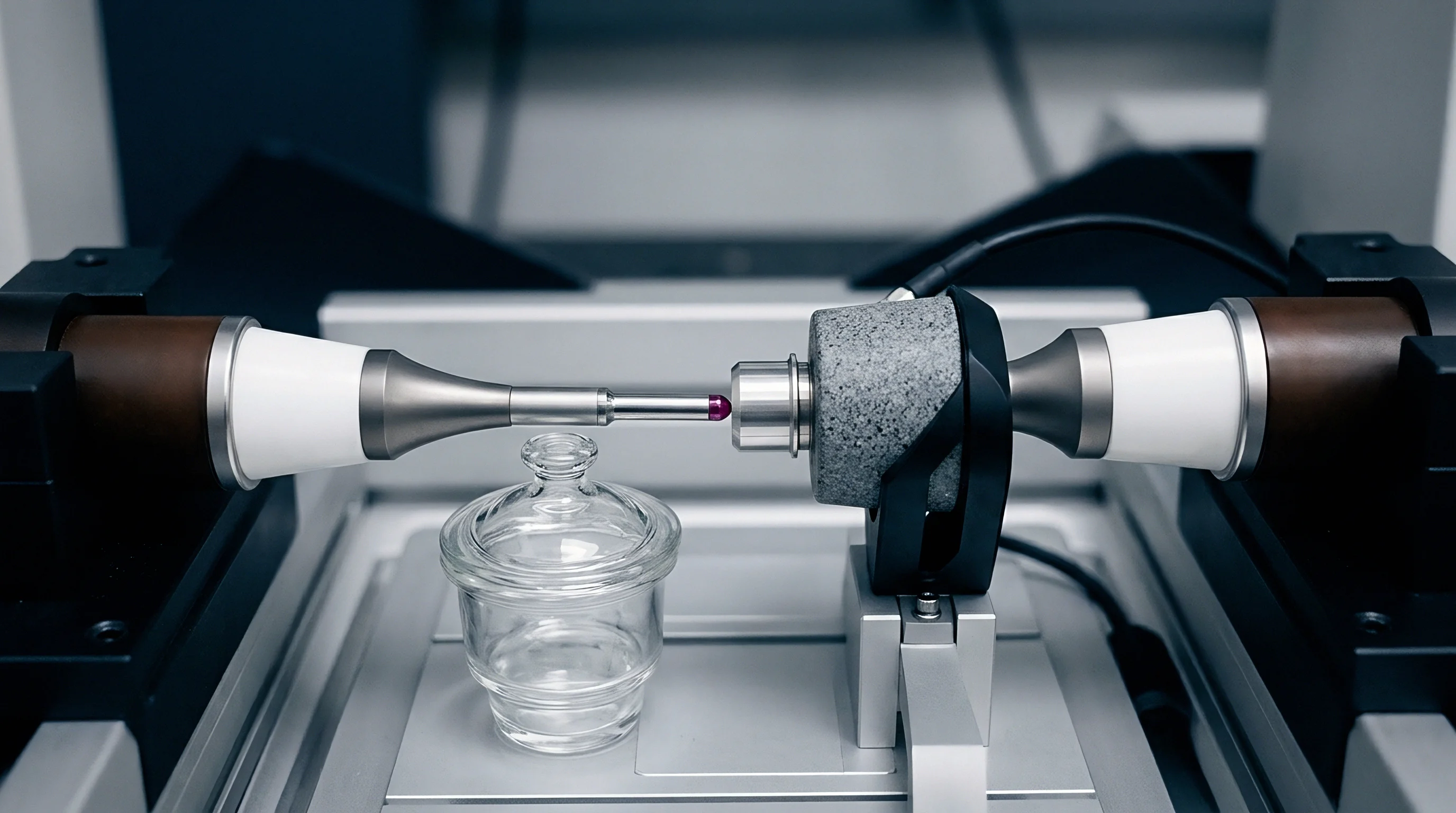
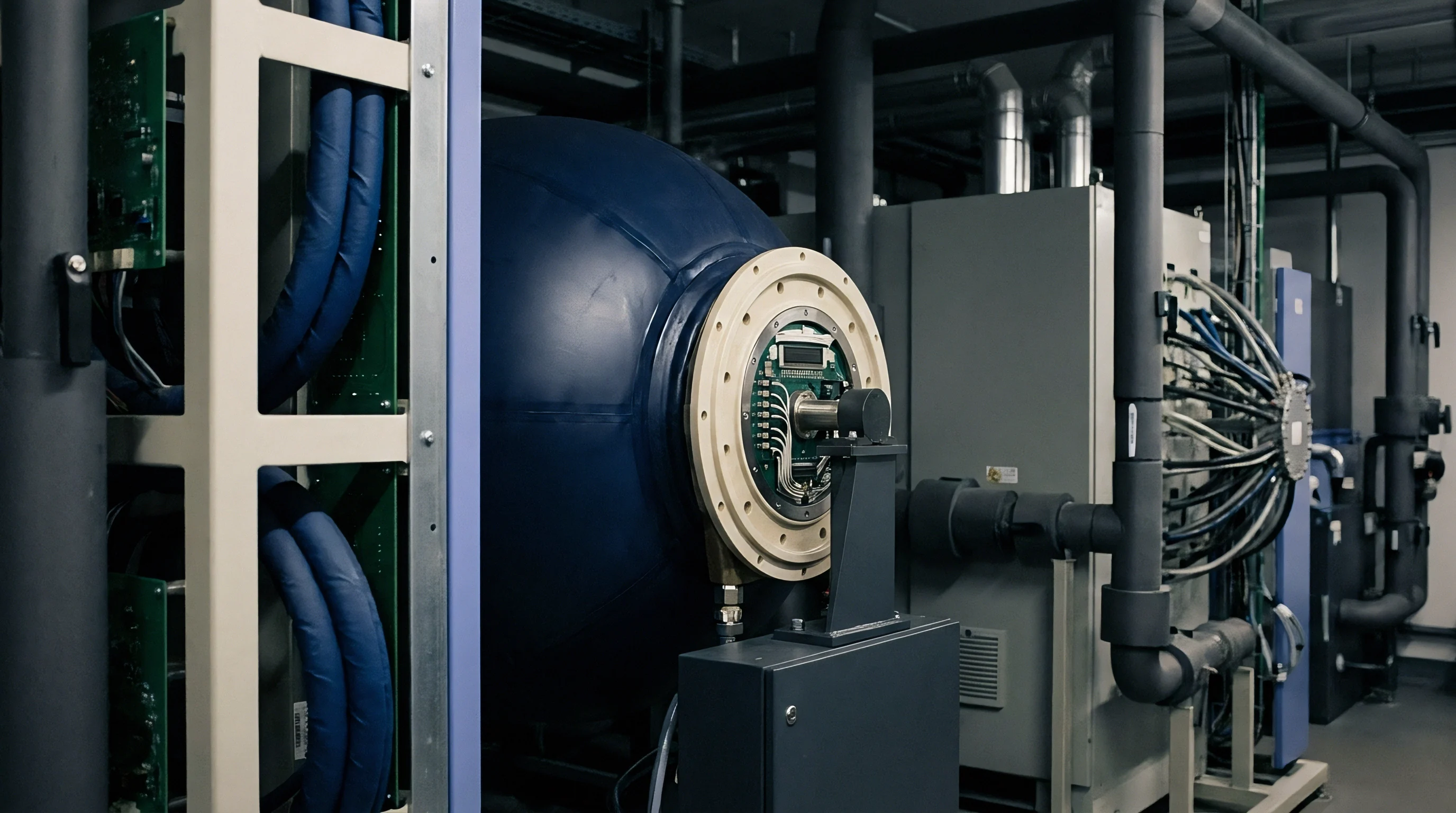
Passive isolation structures placed between the blower assembly and the sensor mounting plate attenuate force transmission above their resonant frequency. To isolate effectively, the mechanical system’s natural frequency must sit well below the fan’s primary disturbance frequencies ~ transmissibility curves show that attenuation only begins once the ratio of disturbance frequency to natural frequency exceeds the square root of two.
Elastomeric Shift across Extreme Temperatures
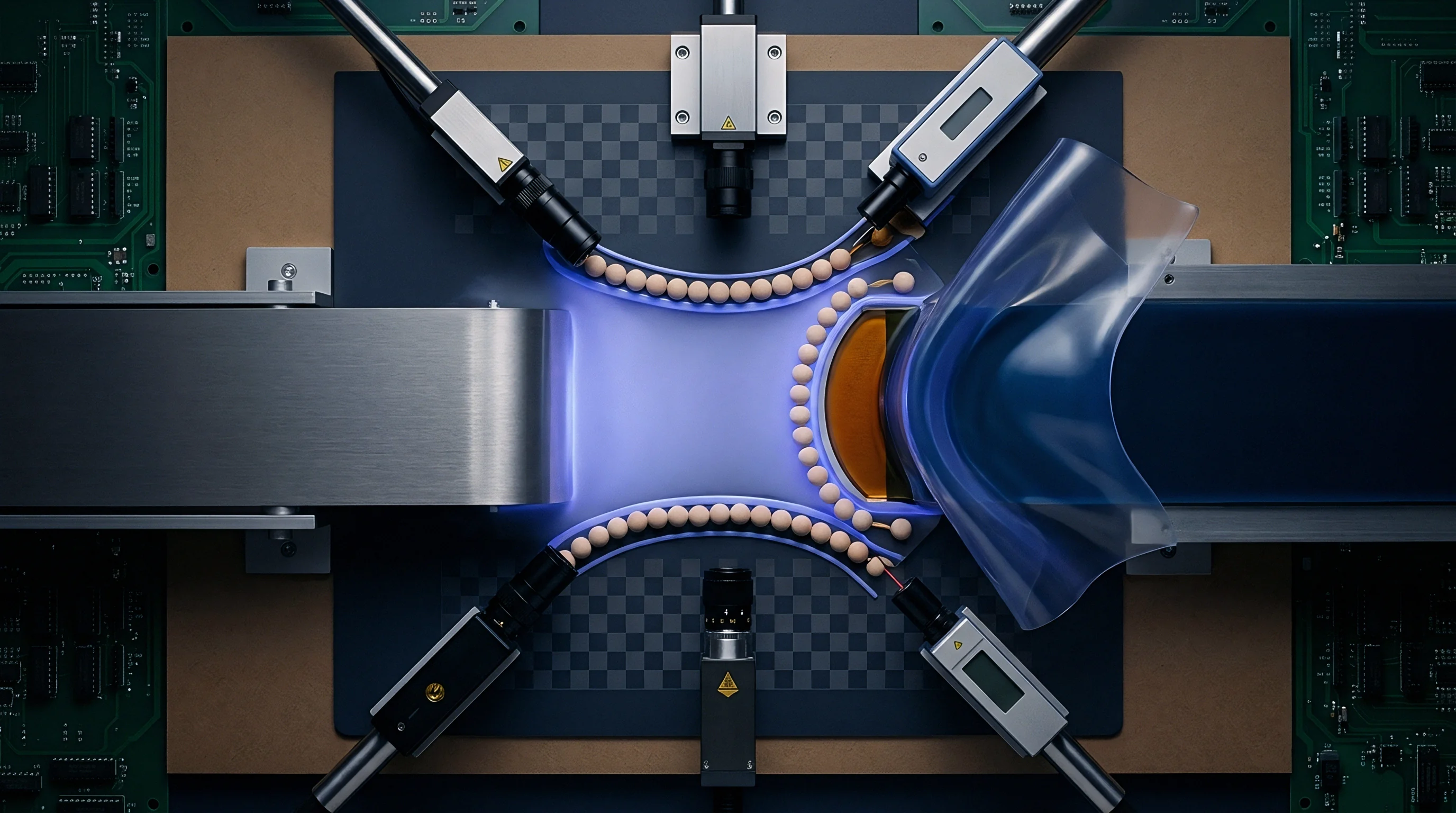
Polymeric damping materials experience sharp changes in dynamic stiffness across thermal testing ranges. Standard fluoroelastomers, silicone, and EPDM feature temperature-dependent storage and loss moduli governed by glass transition. Near minus forty degrees Celsius, elastomeric isolators pass through glass transition: material stiffness increases by up to two orders of magnitude while loss factor drops, shifting the mount’s natural frequency upward and turning a compliant isolator into a rigid path for fan vibration.
An isolation system operating within fifteen percent of the disturbance frequency amplifies mechanical vibration rather than suppressing it.
Conversely, operating near one hundred fifty degrees Celsius lowers the dynamic shear modulus, causing the isolator to soften and sag under static loads. Excessive deflection risks bottoming out against hard stops during motor start-up transients. At the same time, volatile plasticizers outgas at high temperatures, permanently altering damping behavior and risking contamination on optical windows inside sealed enclosures.
- Low-Temperature Stiffening converts soft elastomeric isolators into rigid mechanical bridges when thermal chamber temperatures drop below the material glass transition point.
- High-Temperature Softening decreases isolator load capacity and structural damping, inducing physical bottom-out under transient aerodynamic forces.
- Outgassing Elastomer Creep deposits volatile organic compounds onto precision optical surfaces and vacuum seals inside heated test volumes.
- Resonant Coincidence Drift occurs when temperature-induced modulus shifts align the isolator natural frequency directly with motor running speed harmonics.
Helical Wire Rope Mechanics
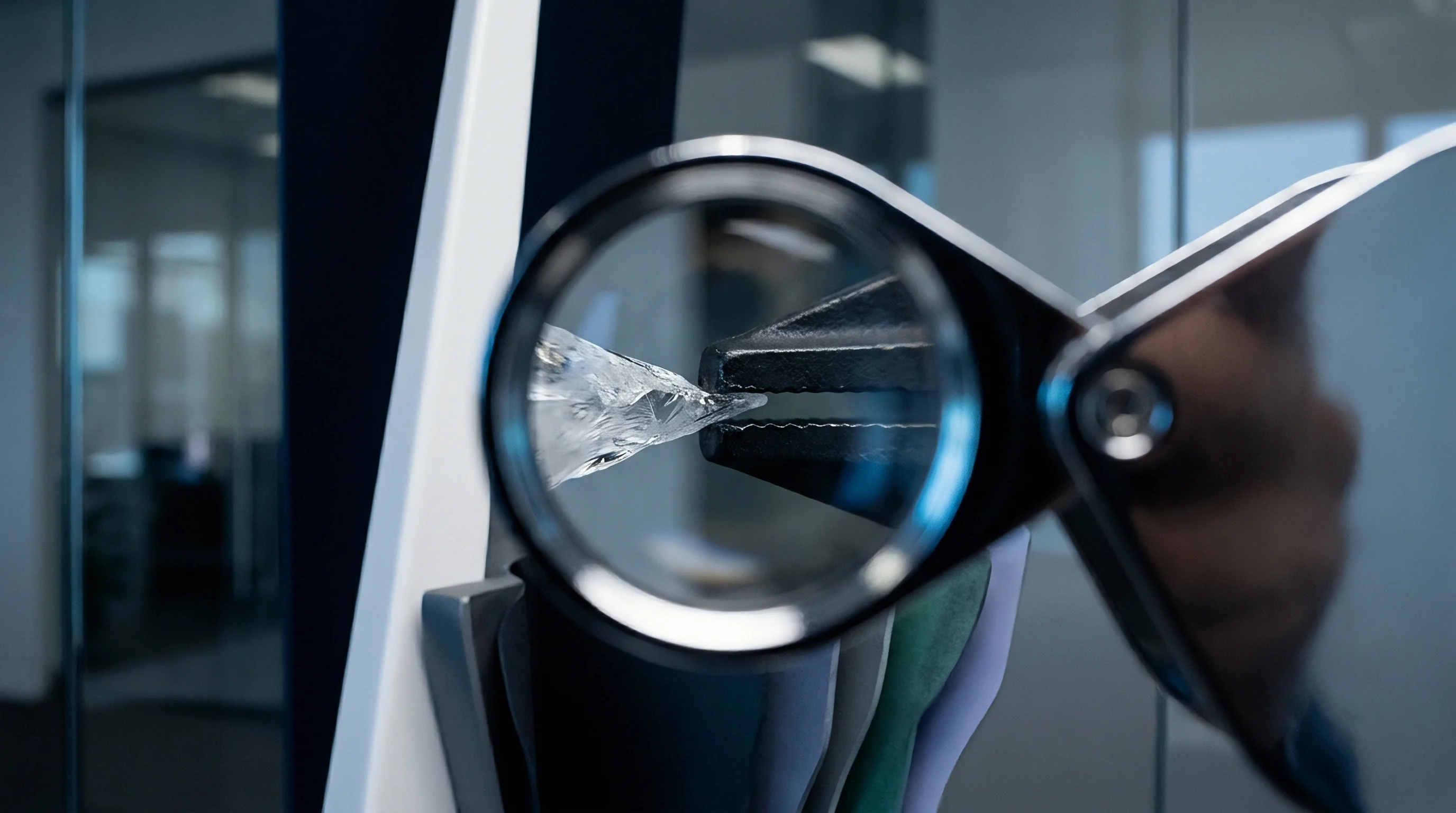
Stainless steel cable dampeners maintain consistent elastic properties from liquid nitrogen temperatures up to three hundred degrees Celsius. Damping comes from sliding friction between individual metallic strands during flexure, while the steel springs resist thermal creep and dissipate kinetic energy. Because their dynamic response stays stable across broad temperature sweeps, wire rope mounts avoid the frequency shifts seen in elastomeric isolators.
Designing wire rope mounts involves calculating forty-five degree shear-compression loading angles. Symmetrical placement around the sensor fixture’s center of gravity prevents rotational acceleration from coupling into linear measurement axes. Pairing wire rope mounts with a mass-loaded sub-plate can bring overall fixture natural frequency down to eight Hertz, delivering over twenty decibels of mechanical attenuation at a two hundred Hertz blade pass frequency.
Selecting isolators without accounting for temperature-driven durometer shifts ultimately introduces uncalibrated sensor offsets and forces costly test re-runs.


Cavity
Sound pressure fields inside sealed metal enclosures form standing waves that act directly on delicate transducers. Stainless steel walls reflect acoustic energy with negligible absorption, creating a reverberant cavity where the high impedance mismatch between air and metal produces sharp, high-Q resonances that amplify fan blade harmonics.
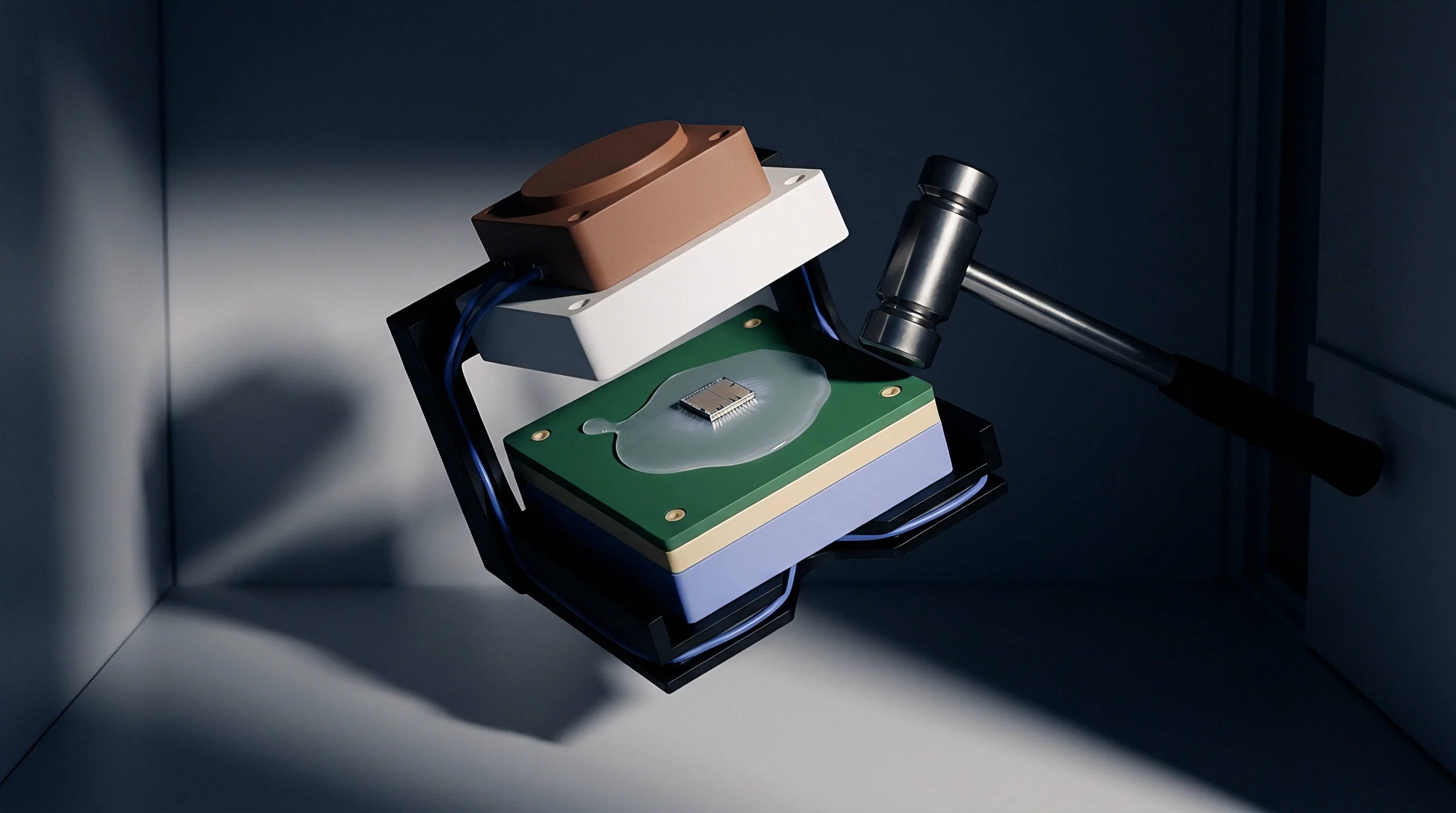
Acoustic Attenuation in Forced Thermal Environments
Acoustic absorbing materials placed in test chambers face tight limits on particulate shedding and outgassing. Standard fiberglass and mineral wool batts release micro-fibers that ruin optical components and bearing surfaces. Closed-cell silicone foams offer reasonable acoustic damping, but their high thermal mass slows down chamber ramp rates.
| Material Class | Max Temp Rating | Outgassing CVCM Rating | Absorption Coefficient at 500 Hz | Thermal Impact |
|---|---|---|---|---|
| Micro-Perforated Aluminum Sheet | 300 degrees C | 0.00 percent | 0.65 | Zero airflow impedance increase |
| Sintered Stainless Steel Mesh | 450 degrees C | 0.00 percent | 0.52 | Minor boundary layer drag |
| Closed-Cell Silicone Foam | 200 degrees C | 0.04 percent | 0.35 | Slight thermal insulation effect |
| Basalt Fiber Textile Baffle | 600 degrees C | 0.01 percent | 0.78 | Moderate airflow restriction |
Micro-perforated panels placed ahead of rigid walls offer fiber-free acoustic absorption. By backing sub-millimeter perforated metal sheets with an air cavity, acoustic pressure waves are converted into viscous friction loss inside the pores. Adjusting perforation ratios and cavity depths allows targeting of specific fan blade pass frequencies without impairing airflow or thermal distribution.
ISO 16063-21 limits background acoustic pressure to forty-five decibels SPL during primary accelerometer calibration procedures.

Can Active Mass Dampers Suppress Fan Harmonics?
Secondary mechanical actuators attached to internal fixture plates inject anti-phase energy directly into vibrating structural nodes. Controlled by filtered feedback signals, electromagnetic voice coil actuators cancel discrete tonal vibrations at the base plate while closed-loop algorithms continuously adjust amplitude and phase as fan speed drifts under shifting thermal loads.
Active damping systems require thermal protection for voice coil magnets and drive electronics. Because neodymium magnets lose performance near their Curie temperature, active dampeners are limited to room-temperature operation unless equipped with liquid cooling lines. When implemented, active systems eliminate low-frequency vibration without requiring soft mounts that sag under heavy payloads.

Stepwise Acoustic Assessment Procedure
Mapping the internal acoustic profile requires measuring standing waves across operating temperature steps. Thermal gradients change the speed of sound in air, causing acoustic cavity resonances to shift as temperature rises.
- Mount tri-axial reference accelerometers on the internal payload plate and place a condenser microphone two centimeters from the sensor location.
- Cycle the chamber temperature across five discrete thermal plateaus while maintaining continuous fan motor operation.
- Record ambient noise and structural acceleration time-series signals at a minimum sample rate of twenty-five kilohertz.
- Compute fast Fourier transforms across five-second time windows to identify blade pass frequency peaks and acoustic cavity standing modes.
- Calculate transmission loss metrics by comparing plenum pressure transducers against sensor location sound pressure levels.
Following IEC 60068-3-5 Annex B guidelines requires test chamber vendors to provide accredited acoustic test reports alongside thermal gradient performance certificates.
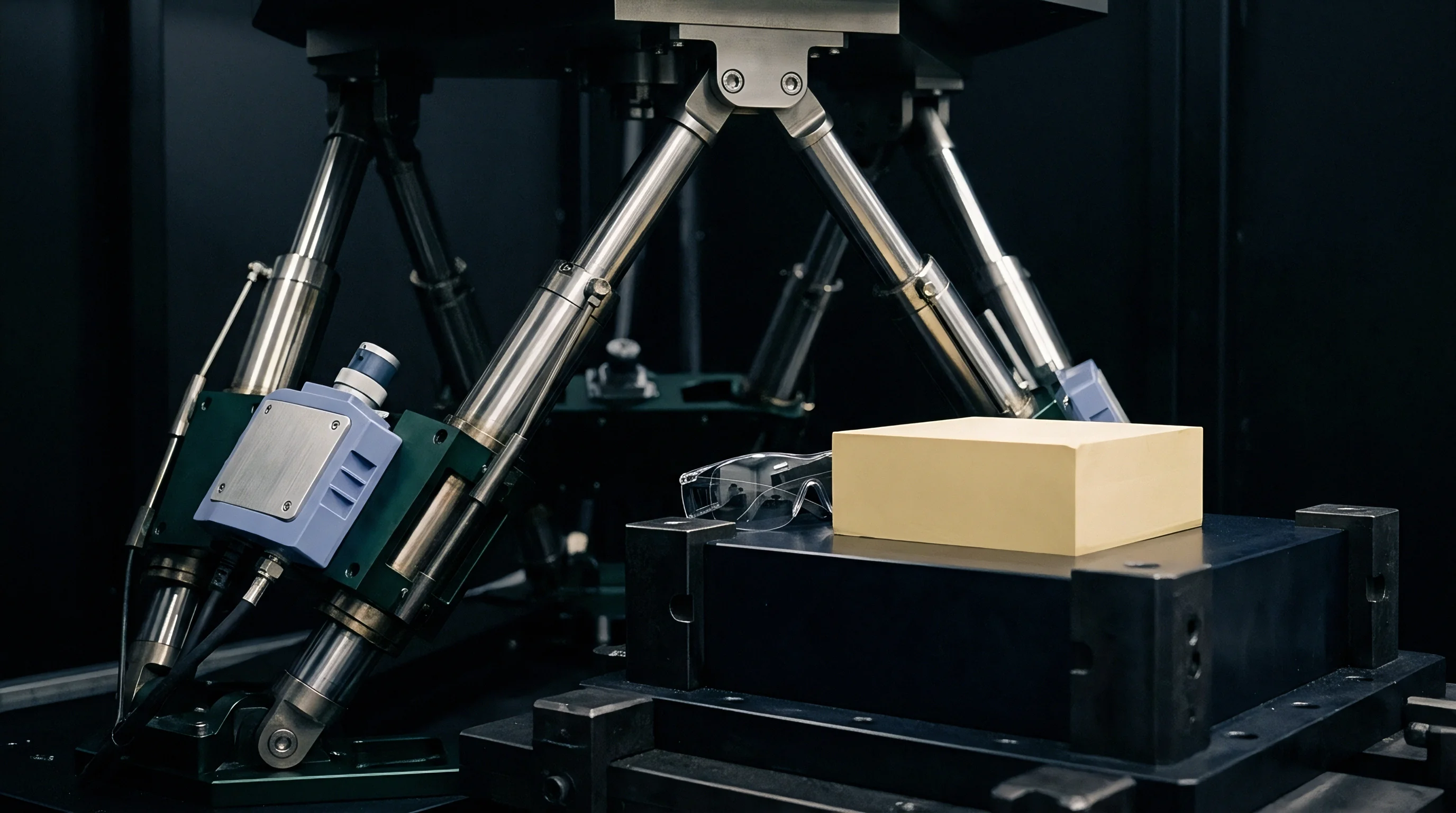

Signal
Filtering residual mechanical noise from digitized transducer data prevents spurious spectral peaks from corrupting baseline noise measurements. Physical isolation and acoustic baffling absorb high-amplitude energy, but subtle tones often remain above micro-g noise floors, making digital processing in the acquisition system the final line of rejection.
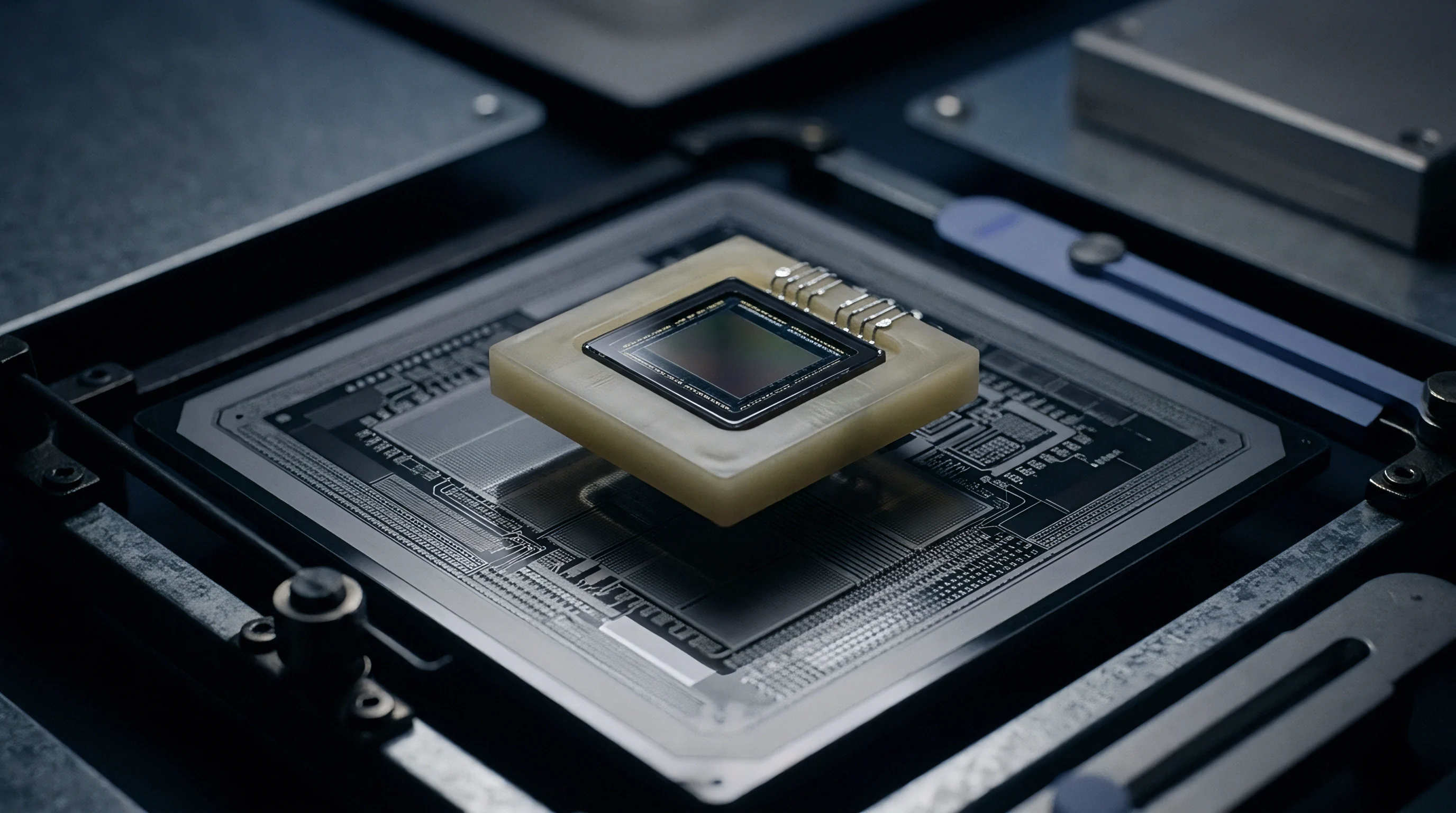
Synchronous Motor Control and Digital Notch Filtering
Phase-locked loops controlling fan speed lock blade pass frequencies into narrow, known bands. Without closed-loop speed control, variable frequency drives drift due to line voltage shifts and temperature-driven changes in air density. Holding motor speed precise allows digital signal processors to place sharp notch filters directly over blade harmonics without clipping adjacent measurement bandwidth.
Cascaded infinite impulse response notch filters offer forty decibels of rejection across a one-Hertz bandwidth. Applying linear-phase finite impulse response filters avoids phase distortion in time-domain step response measurements, maintaining dynamic fidelity during rapid thermal transients.
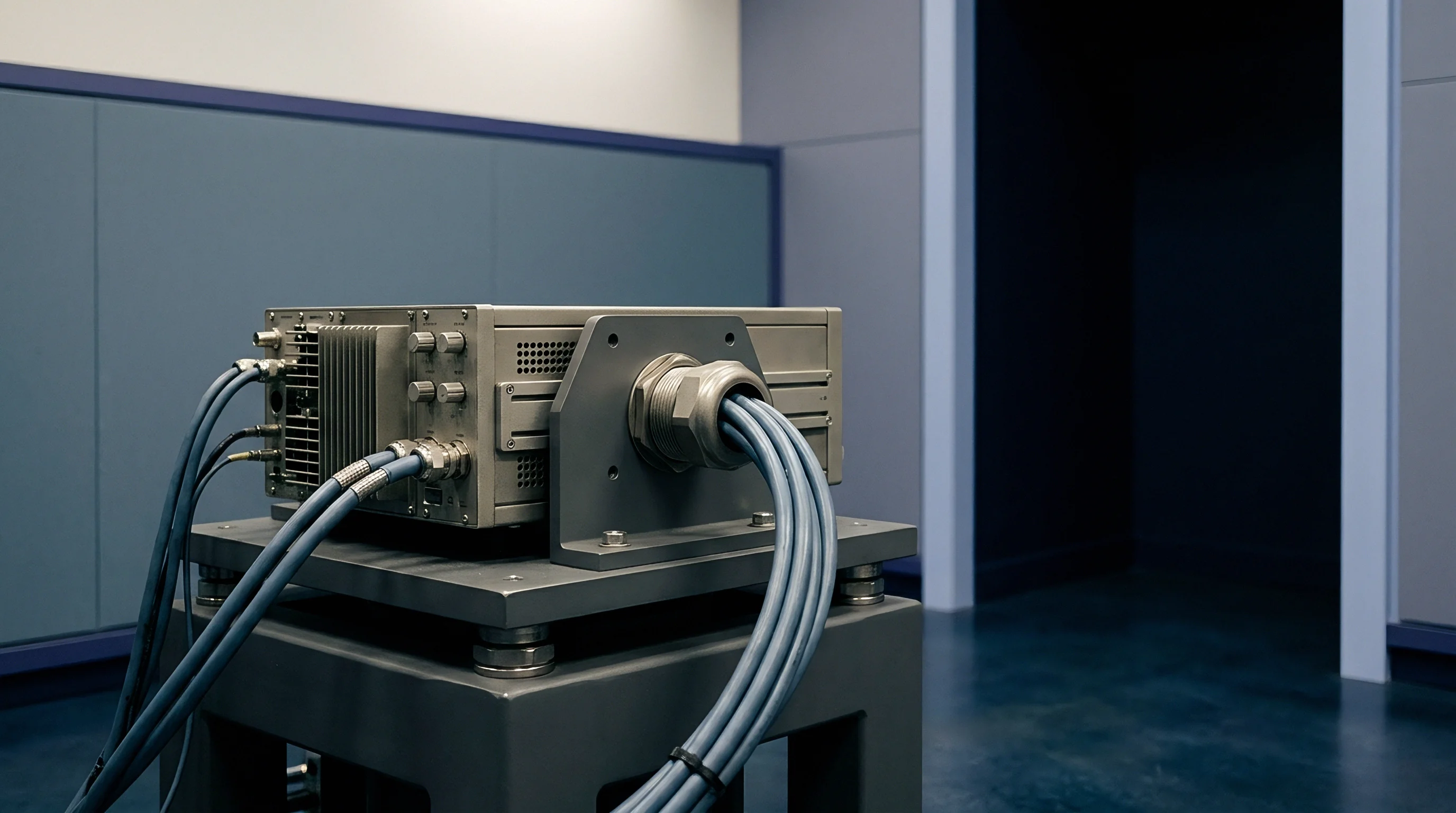
Noise Floor Calculation in Precision MEMS Testing
Evaluating a capacitive micro-accelerometer under thermal testing demonstrates how fan vibration impacts sensor resolution.
Consider a high-precision MEMS accelerometer with a baseline noise floor of one micro-g per root Hertz across a one hundred Hertz bandwidth. Unattenuated fan vibration at a blade pass frequency of two hundred forty Hertz introduces a mechanical acceleration spike of forty micro-g peak at the fixture. Sampling at five hundred Hertz without mechanical decoupling causes this tone to alias into the measurement band, driving total RMS noise from ten micro-g up to forty-one micro-g.
Installing a wire-rope isolator that provides eighteen decibels of mechanical attenuation at two hundred forty Hertz reduces the spike to five micro-g peak. Adding a synchronous digital notch filter with twenty-four decibels of rejection at the blade pass frequency drops the residual tone to zero point three micro-g peak. Together, mechanical and digital filtering restore the effective noise floor to ten point zero five micro-g RMS, preserving measurement integrity.
A twenty-four bit delta-sigma analog to digital converter operating at ten kilosamples per second preserves seventy-eight decibels of dynamic range when fan vibration levels remain under two micro-g RMS.
- Symmetrical Mounting Mass balances inertial forces across the isolator plane to prevent rotational vibration coupling into sensitive axes.
- Flexible Interconnect Pigtails eliminate cable-borne vibration conduction between the fixture plate and chamber feedthrough ports.
- Resonant Frequency Separation ensures isolator natural frequency sits at least a decade below the primary fan blade passing speed.
- Damping Coefficient Verification confirms thermal chamber fixtures maintain energy dissipation properties across full temperature excursion limits.
While digital filtering eliminates sharp tonal spikes, it cannot mitigate broadband acoustic pressure that directly distorts thin sensor diaphragms.

Topology
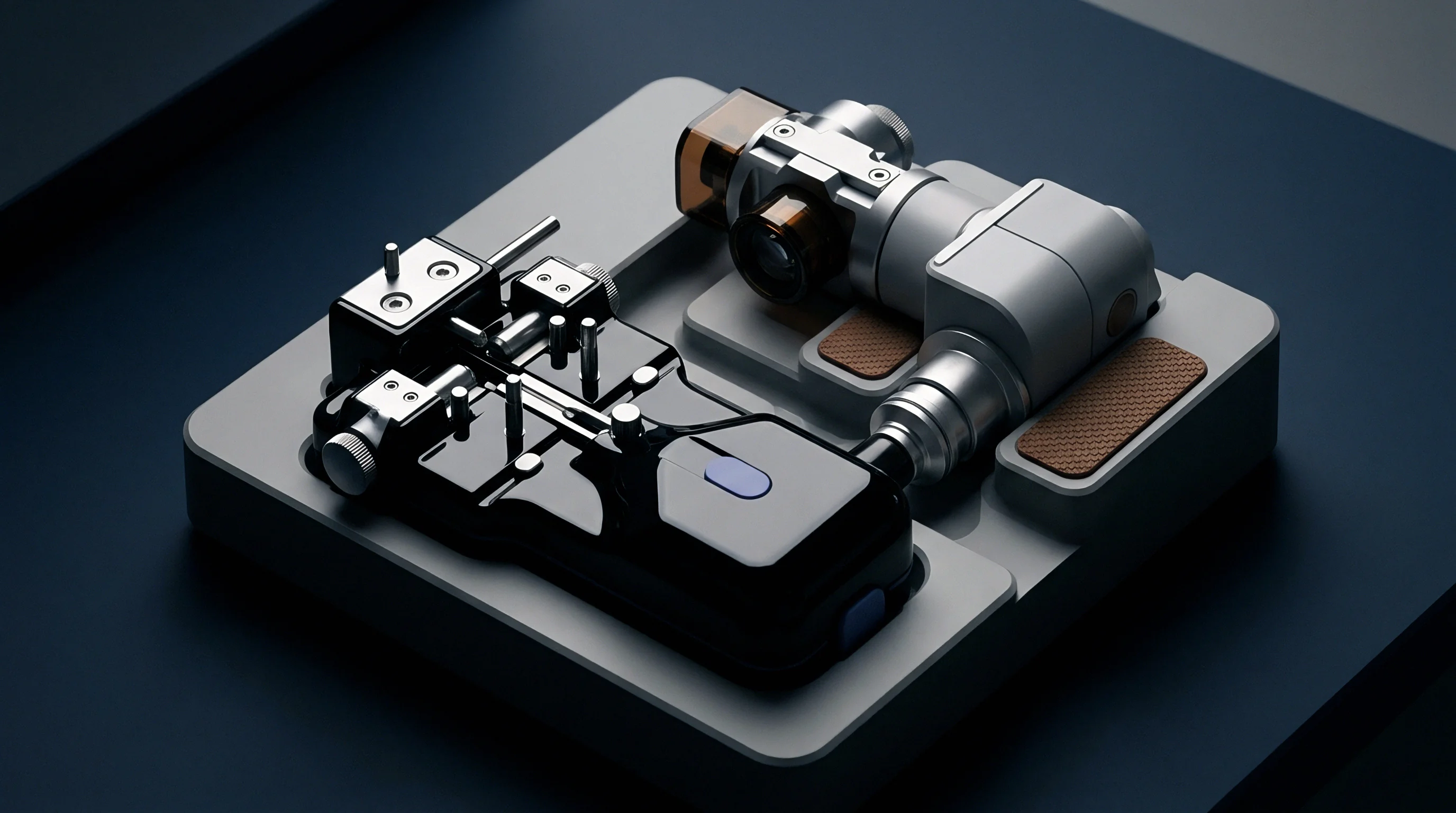
Physically separating air-moving equipment from the sensor evaluation compartment is the most effective defense against acoustic and mechanical noise. Isolating the forced-air drive motor removes the primary path for vibration conduction, making chamber topology the main factor in bench noise performance.
Airflow Routing and Remote Conditioning Units
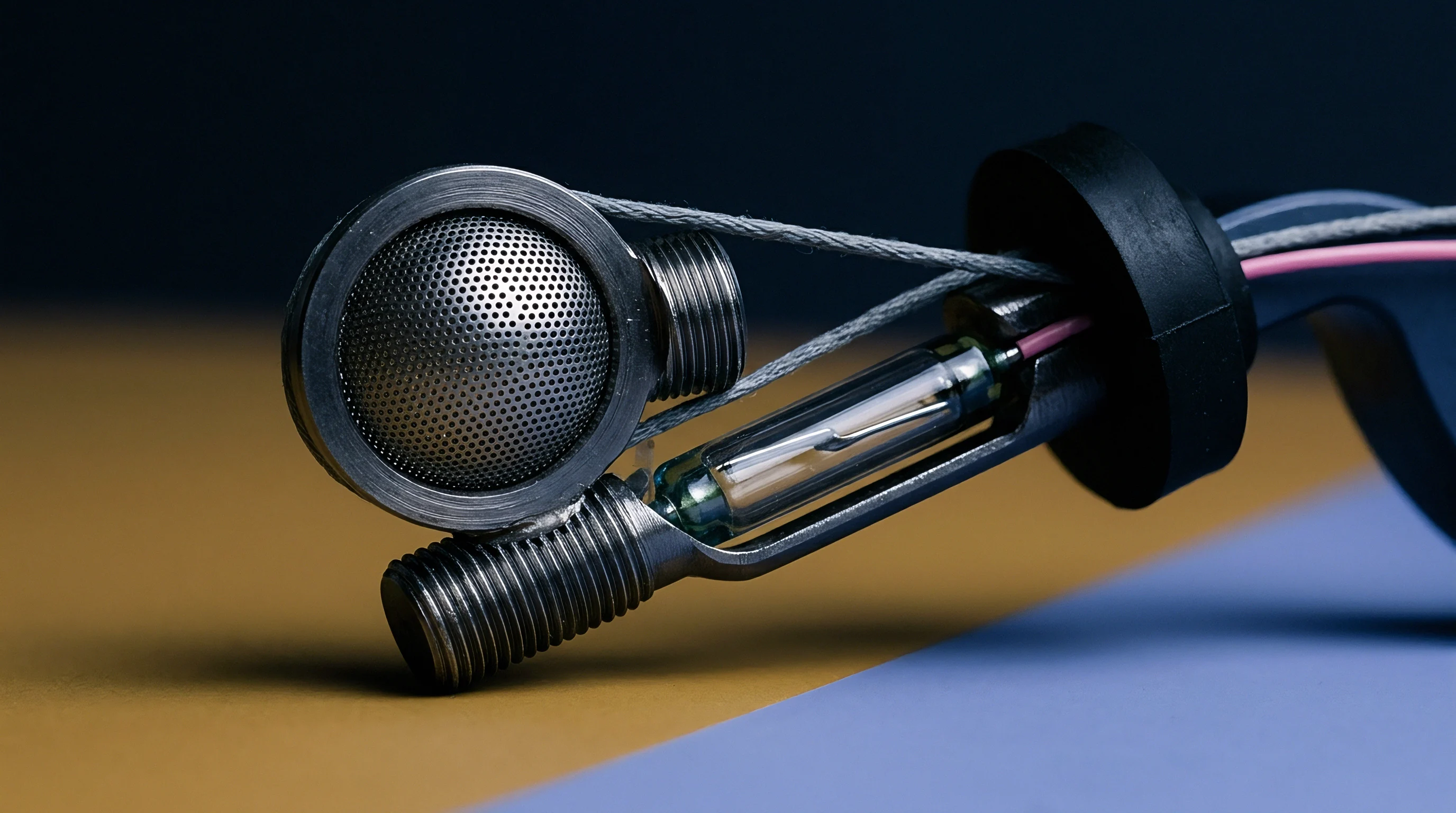
Ducting conditioned air from an external handler through flexible isolation bellows decouples motor dynamics from the testing compartment. Stainless steel interlocked flexible hoses or silicone-coated fiberglass bellows isolate physical vibration while delivering high-velocity air to the test volume.
| Chamber Architecture | Vibration Isolation Level | Acoustic SPL at Payload | Thermal Ramp Rate Impact | Capital Cost Premium |
|---|---|---|---|---|
| Integrated Direct-Drive Blower | Baseline (0 dB) | 68 dBA to 75 dBA | Standard baseline | Base price reference |
| Decoupled Inner Box-in-Box | 18 dB to 24 dB reduction | 48 dBA to 52 dBA | 10 to 15 percent slower | 35 to 45 percent increase |
| Remote Air Handler Ducting | 30 dB to 36 dB reduction | 38 dBA to 42 dBA | 20 to 30 percent slower | 70 to 90 percent increase |
| Conduction Plate with Liquid Loop | Complete mechanical elimination | Under 30 dBA ambient | Depends on chiller capacity | 100 to 140 percent increase |
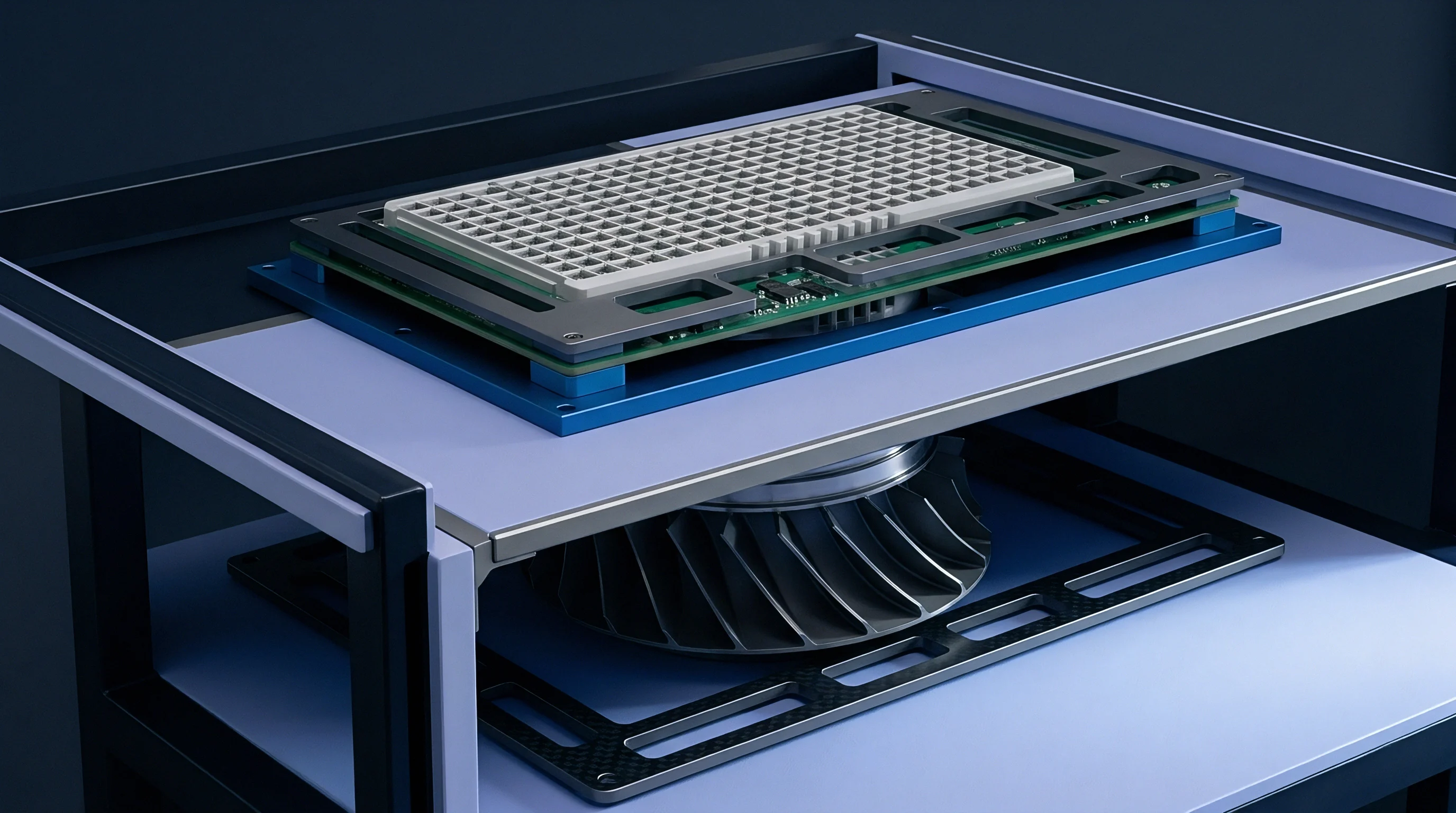
Liquid conduction plates eliminate the need for recirculating air inside the sensor compartment. Pumping temperature-controlled fluid through copper or aluminum cold plates inside a sealed, insulated enclosure achieves rapid heat transfer without mechanical air movement near the test sample.
Decoupling forced air systems through remote ducting trade-offs chamber thermal ramp speed for lower mechanical background noise floors.
Commercial Selection Logic for High Precision Evaluation
Selecting test equipment depends on the ratio between required measurement resolution and the baseline disturbance of standard chambers. Specifying facilities for micro-g accelerometers or ultra-stable optical clocks requires factoring in total landed cost, including custom isolation fixtures and acoustic enclosures. Choosing integrated direct-drive chambers for precision inertial testing often leads to expensive retrofits after unattenuated fan harmonics spoil test data.
Whether active magnetic levitation fixtures can deliver broad-spectrum acoustic and vibration cancellation across extreme thermal ramps without introducing electromagnetic interference into sensor pickup circuits remains an open question.