
Sensor Fusion as a Cheaper Answer than a Better Element
Substituting high-grade physical sensors with multi-element algorithms saves unit cost but adds firmware overhead, thermal drift risks, and qualification expenses.
Substituting high-grade physical sensors with multi-element algorithms saves unit cost but adds firmware overhead, thermal drift risks, and qualification expenses.
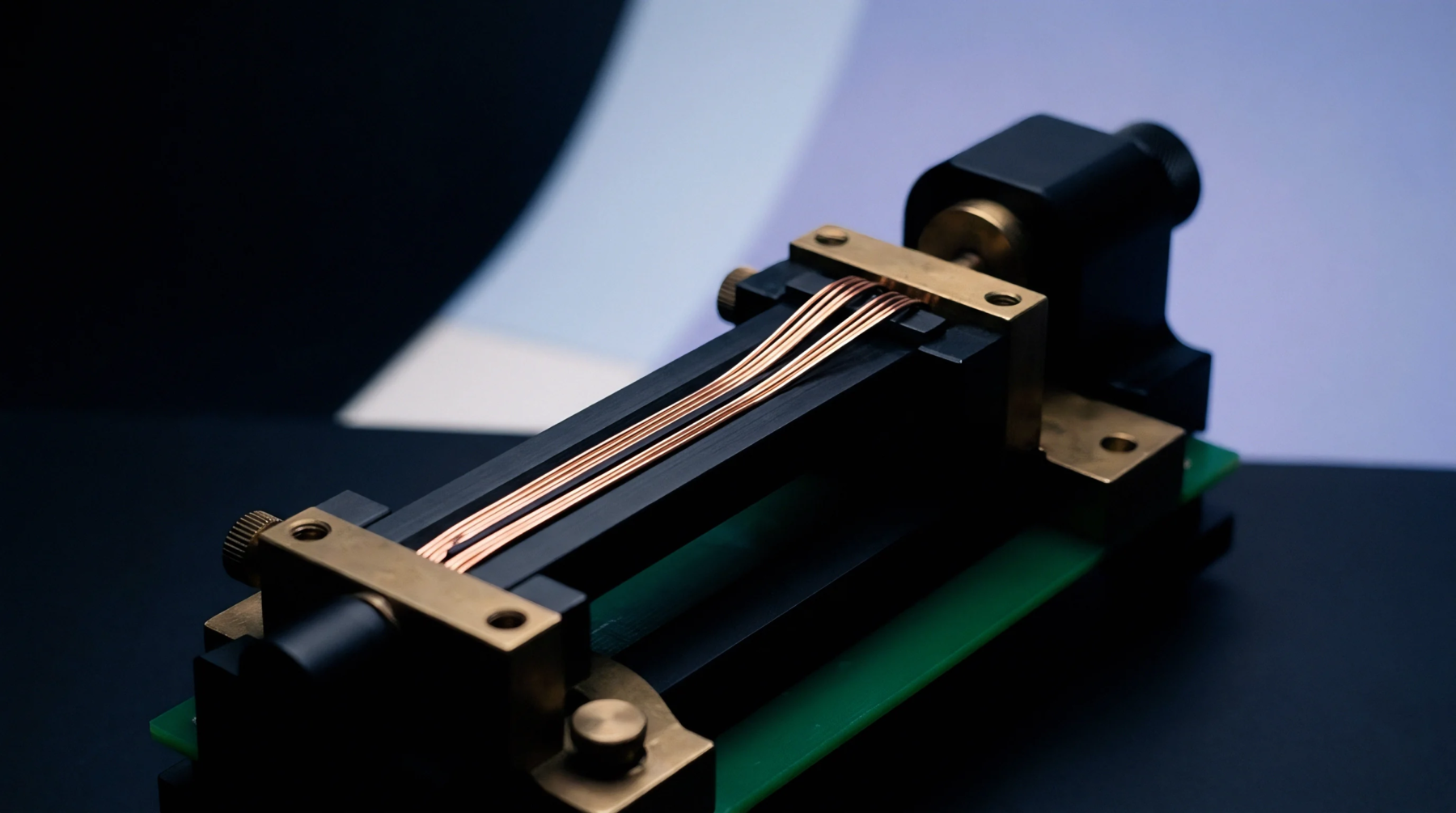
Silicon piezoresistive strain sensitivity depends on boron doping density, requiring constant current excitation or bivariate digital polynomials to suppress thermal span drop.

Variable acceptance sampling under ISO 3951-1 verifies continuous MEMS IMU drift profiles while protecting production lines from latent silicon wafer defects.
Viscoelastic creep in die attach epoxies drives zero offset hysteresis; low-modulus adhesives minimize stress transfer to preserve long-term transducer balance.

Variable sampling verification for high-rate MEMS gyroscopes optimizes lot acceptance by deriving continuous quality indices from dynamic rate table test samples.

Inertial dead reckoning holds only while gyroscope bias instability bounds cubic tilt divergence within allowable spatial position tolerance thresholds.

Rolling shutter inspection lines require pulsed strobe lighting within global overlap windows or native global shutter sensors to eliminate motion shear errors.

Metallic target variation demands Factor 1 inductive sensors to eliminate reduction factors, while polymer and liquid swaps require capacitive heads with active guarding.

Square the quotient of specified noise density over target resolution to establish the equivalent noise bandwidth required for averaging filter design.

Substrate thermal expansion creates packaging shear stress that warps MEMS proof masses, demanding central single-anchor isolation and polynomial offset calibration.
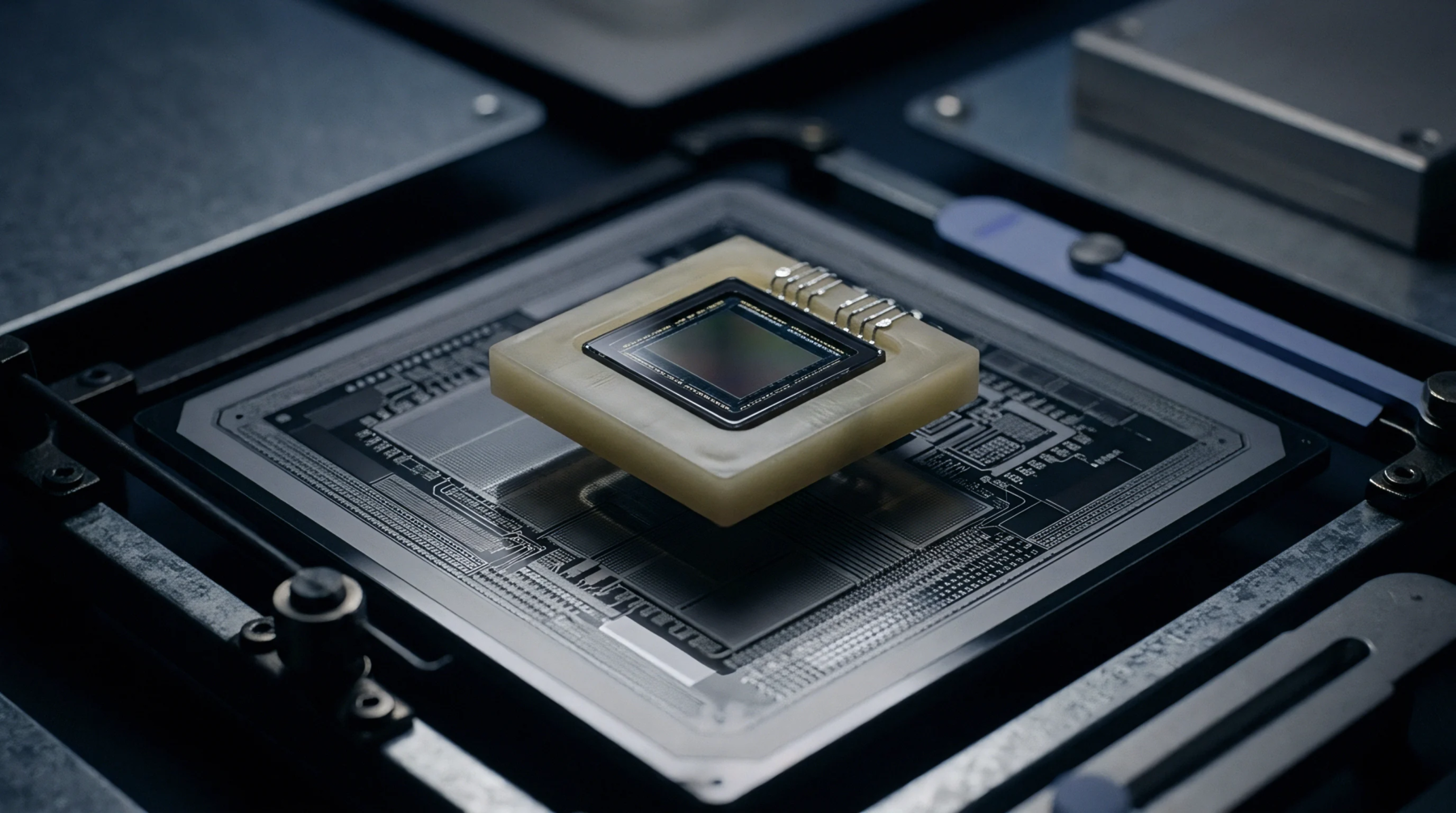
Silicon substrate expansion mismatches create stress across MEMS structures, driving zero-g drift that demands isolated anchors and hysteresis modeling.

Selecting low-modulus die attach adhesives with glass transition temperatures outside operating limits eliminates non-linear MEMS zero-g offset drift.

NDIR sensors provide definitive CO2 accuracy through direct mid-IR light absorption, while low-cost metal oxide films infer CO2 via prone cross-reactive surface chemistry.

Replacing a primary sensor with an alternate physics module requires rebuilding signal conditioning, cross-sensitivity models, and chamber qualification suites

Optimizing piezoresistive sensor wafers requires targeting acceptor doping between 1x10^18 and 3x10^18 cm^-3 to balance gauge factor against thermal drift.

Normalizing digitized bridge and temperature counts before solving polynomial matrix equations eliminates floating point overflow and preserves calibration accuracy.

Static ground alignment accuracy depends on isolating Earth rotation rate from sensor bias instability through multi-position indexing and Allan variance metrics.

Rolling shutter readout delay is mitigated by accelerating column ADC conversion speed, synchronizing pulsed illumination during global reset, or applying IMU-guided real-time digital deskewing.

Target material conductivity and permeability set inductive sensing distance reduction factors, reducing nominal operating range by up to seventy percent.

Dynamic thermal gradient compensation requires multi-node spatial sensing and state-space filtering to eliminate phase-lagged bias shifts during rapid thermal slewing.

Cross-physics sensor retrofits require matching phase delay, thermal drift coefficients, and input filter bounds before changing the transduction element.

Ground alignment error bounds depend on accelerometer turn-on bias for leveling and East gyro bias stability divided by cosine latitude for heading accuracy.

Allan Variance bias stability metrics directly determine discrete Kalman process noise matrix entries to prevent filter divergence under non-stationary drift.

High-frequency multi-coil inductive sensing isolates proximity from target alloy by measuring complex impedance vectors to decouple eddy loss from flux displacement.

Spatial thermal gradients shift MEMS zero rate drift by inducing asymmetric anchor stress, flexure mode coupling, and local frequency splitting.
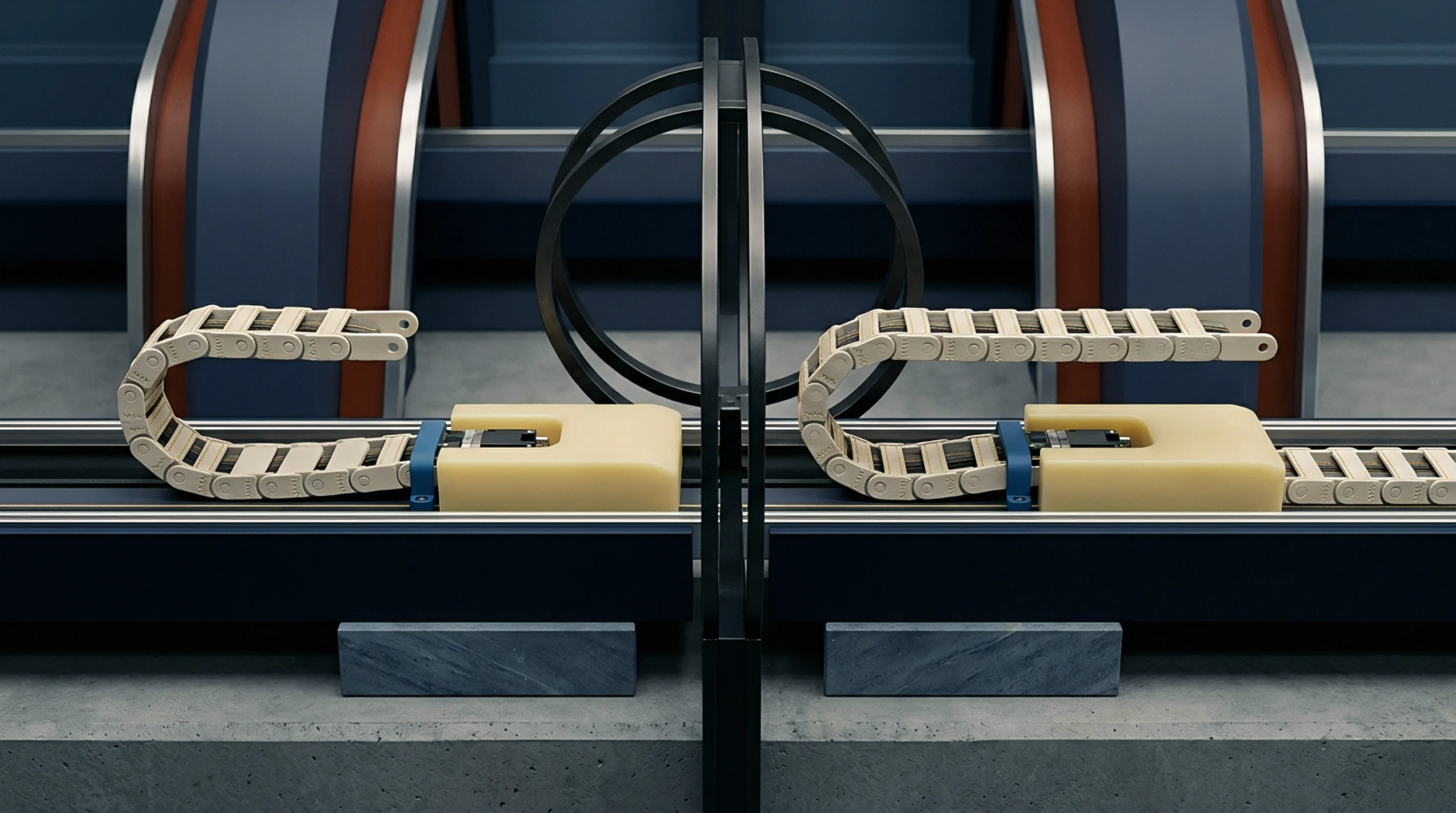
Replacing optical sensors with 316L stainless inductive proximity units eliminates washdown fluid blinding and restores line uptime in CIP zones.

Stationary alignment extracts gravity and Earth rate vectors to initialize pitch, roll, and true north azimuth prior to unguided motion tracking.

Quantify gyro noise coefficients by fitting specific logarithmic slope asymptotes to overlapped Allan deviation curves gathered in thermally stabilized static rigs.

Dynamic thermal gradients induce non-stationary bias drift in tactical sensors; state estimators must augment state vectors with thermal rate terms.

Stationary leveling extracts pitch and roll by isolating the 1g local gravity vector, bounded by accelerometer bias stability and vibration rectification error.
Expertise is a utility, not a secret. sentiention™ publishes its working knowledge as open reference: intelligence layer covering the materials it sources, the markets it enters, and the reference that serves both.