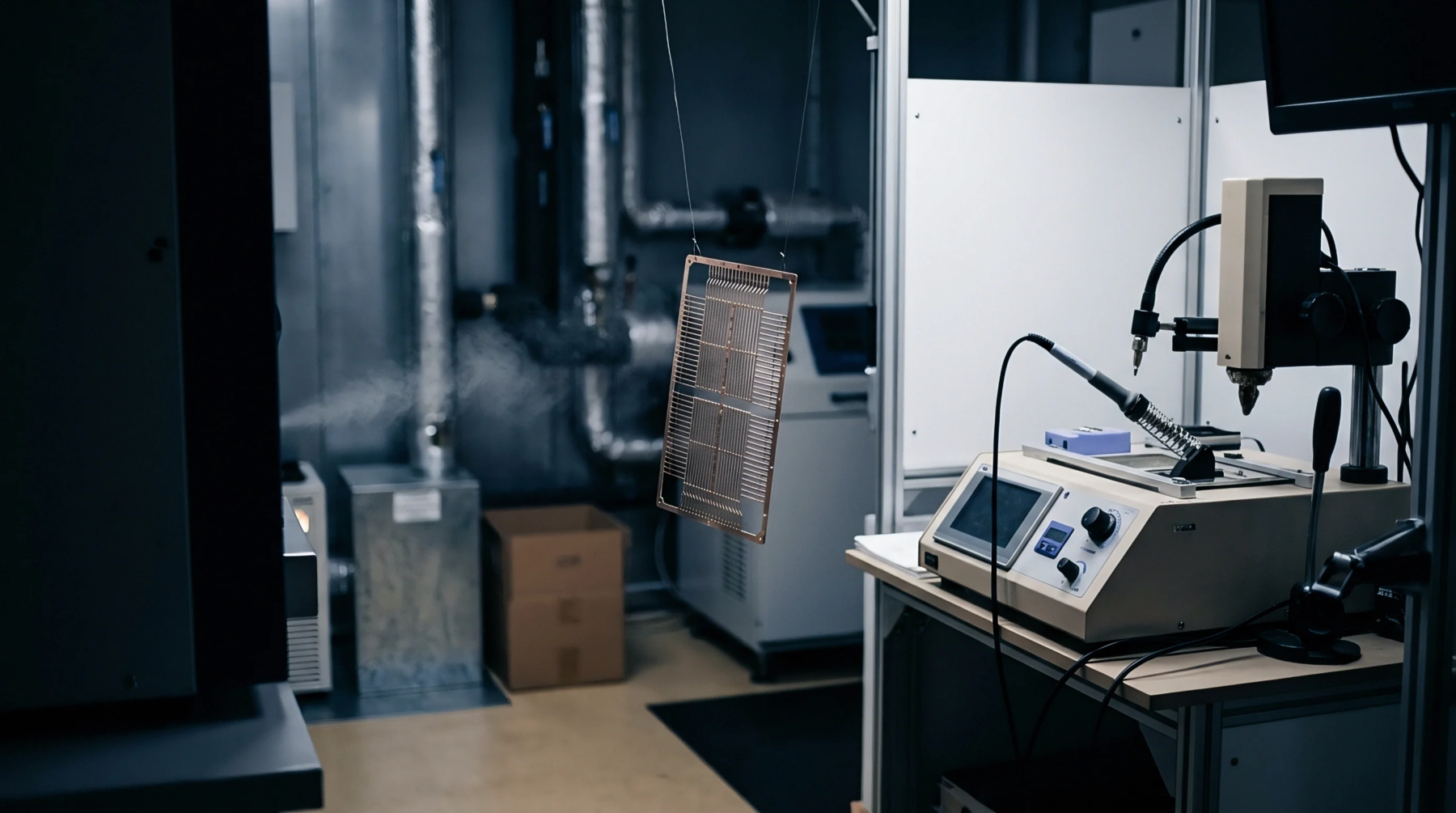
Calibration Curve
A mathematical modeling process evaluates how the sensitivity of a transducer shifts across a range of operating temperatures. Executing scale factor tempco fitting involves calculating coefficients that describe the temperature coefficient of the sensor’s gain or scale factor. In precision current and pressure sensors, this fitting enables the system to maintain a stable gain across fluctuating environmental conditions.
Numerical Method
Calibration data are collected by holding the sensor at several stable temperature steps while applying a known physical input. The measured scale factor at each temperature step is plotted against the temperature to trace the sensitivity curve. A second-order or third-order polynomial equation is fitted to these data points to create a continuous temperature-compensation function.
Environmental Mitigation
Dynamic calculation of the compensated output occurs in real-time using the embedded microcontroller. In field applications, this correction reduces thermal drift to a fraction of its uncompensated value.
Verification Criteria
Quality assurance procedures verify the fit accuracy by measuring the scale factor error at intermediate temperature points not used in the initial fitting. If the fitting error is higher than the specified tolerance, the calibration is repeated or the sensor is rejected. This rigorous validation ensures that the compensated sensors meet their accuracy specifications under all real-world conditions.