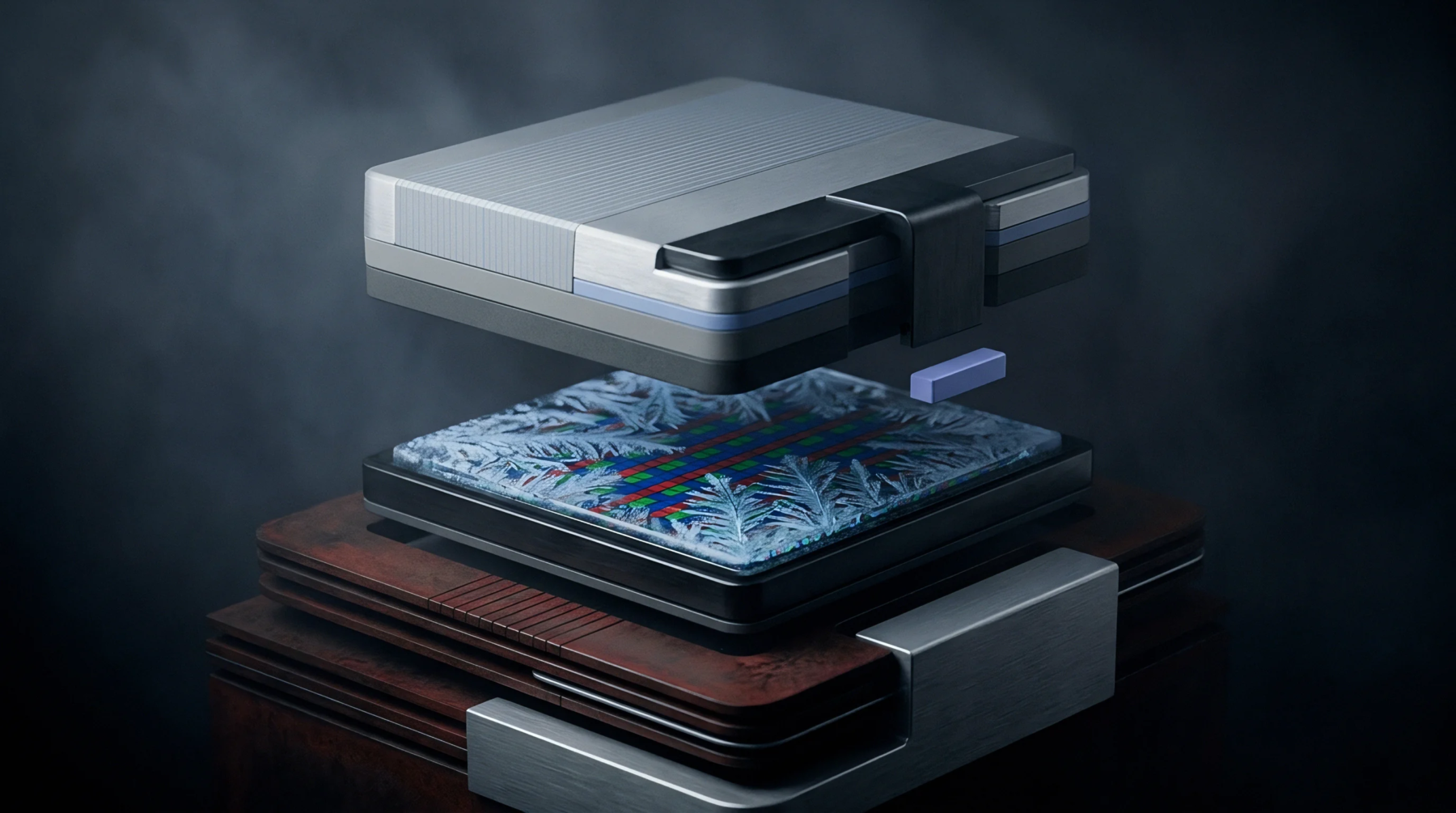
Thermal Enclosure
Nested proportional temperature control circuits isolate sensitive frequency references inside concentric heated chambers to suppress ambient thermal fluctuations. Precision quartz oscillators utilizing dual stage ovenization maintain frequency stability by housing an inner oven inside a regulated outer oven enclosure. The outer chamber absorbs large ambient swings, allowing the inner controller to hold the crystal at its exact zero-temperature-coefficient turnover point.
Power consumption rises during cold start conditions until both thermal loops reach thermal equilibrium.
Temperature Isolation
Thermal resistance bridges between inner and outer shells determine the steady-state heating power requirement. Polyimide standoff structures and vacuum insulation minimize conductive heat transfer across the inner chamber barrier. Vacuum tight sealing prevents convection currents from introducing localized temperature variations across the crystal blank.
Gradient Attenuation
Residual heat flow through electrical connections creates dynamic thermal gradients across the crystal surface. Thermistor sensor placement relative to heating elements determines the loop gain and dynamic response of each thermal control stage. Symmetrical heater trace layouts on polyimide flex circuits minimize spatial temperature imbalances across the resonator package.
Stability Verification
Metrology protocols quantify frequency drift relative to external ambient temperature steps using high-resolution counter instrumentation. Implementation of dual stage ovenization yields short-term Allan deviation values below one part in ten to the twelfth power at one second integration times. Drift testing inside thermal environmental chambers verifies that setpoint variations stay below fractional millikelvin limits across the full operational range from minus twenty to seventy degrees Celsius.
Calibrated platinum resistance thermometers verify outer shell setpoint repeatability before secondary loop tuning begins.