Verification Protocol
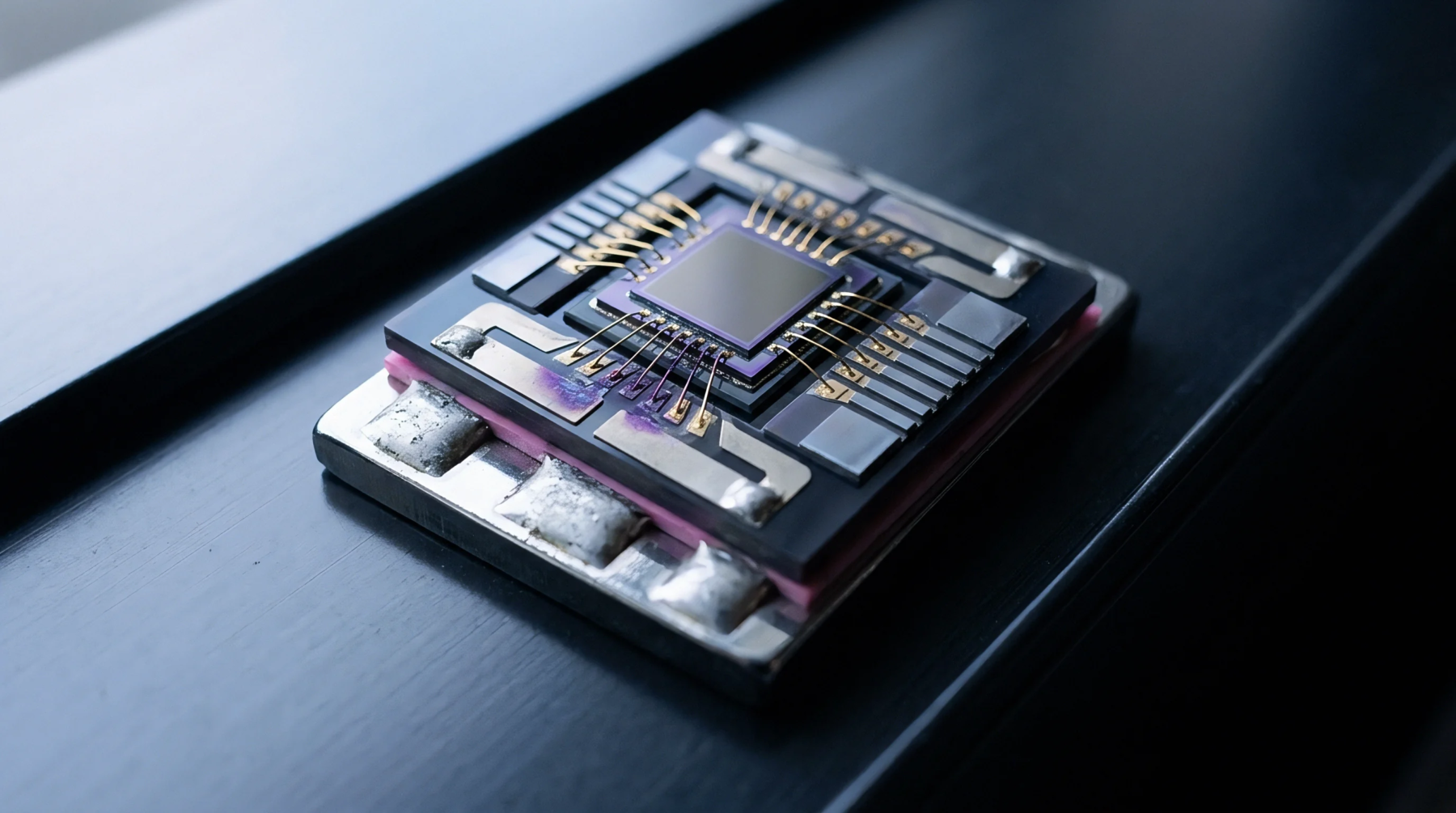
Microelectronic device reliability relies heavily on MIL-STD-883, which functions as a Department of Defense test method standard establishing uniform procedures for microcircuits. Laboratories subject packaged semiconductor components to mechanical shock, constant acceleration, and thermal cycling to expose latent manufacturing defects before field deployment. Environmental screening exposes structural weaknesses in wire bonds and die attach interfaces by imposing extreme mechanical and thermal stress loads.
Test methods within MIL-STD-883 categorize procedures into environmental, mechanical, and electrical tests, alongside general manufacturing controls.
Stress Thresholds
Thermal resistance measurements require precise application of heating power and monitoring of junction temperature changes under controlled ambient conditions. Mechanical vibration sweeps check for structural resonance frequencies that might fracture internal wire bonds during active service. Leak testing detects microscopic seal failures in hermetic packages through radioactive tracer gas or fluorocarbon gross leak detection procedures.
Moisture resistance testing subjects packaged dice to cyclic humidity and temperature variations to detect corrosion mechanisms at metallization layers. Acceptance limits depend upon visual inspection criteria for package marking permanence, lead integrity, and internal metallization defects.
Calibration Drift
Metrological traceability demands that electrical test equipment used for MIL-STD-883 verification undergoes periodic calibration against national standards to limit measurement uncertainty. Voltage and current source accuracy during operating life testing directly affects the calculated failure rate of microelectronic components. Parasitic capacitance in test fixtures introduces errors during high-frequency alternating current parameter measurements, requiring de-embedding techniques to isolate device performance.
Thermal gradients across test boards alter junction temperature readings, which subsequently distorts breakdown voltage measurements and leakage current limits.
System Integration
System integrators apply MIL-STD-883 screening results to calculate component failure rates for avionics and missile guidance systems operating in hostile environments. Qualification data sheets derived from these test methods provide the baseline reliability metrics needed for circuit designers working on long-lifecycle military hardware. Board level assembly processes must preserve the hermetic seal integrity established during initial package screening to prevent moisture ingress over operational lifespans.
Semiconductor manufacturers update internal fabrication controls whenever screening fallout rates exceed specified quality control thresholds.