Polymer Die Attach Viscoelastic Relaxation Dynamics in Precision MEMS Accelerometers
Viscoelastic relaxation in polymer die attach causes time-dependent strain transfer to MEMS proof masses, driving long-term zero-g offset drift.


Creep
Precision capacitive micromachined accelerometers depend on sub-nanometer stability across proof mass gaps. When a silicon sensor die is mounted to a ceramic package or copper leadframe, the structural adhesive acts as both a mechanical anchor and a thermal expansion buffer. Thermal expansion coefficients vary widely among these materials: monocrystalline silicon expands at 2.6 ppm/°C, alumina substrates at 6.5 ppm/°C, and metallic leadframes at 16.5 ppm/°C. High-temperature curing between 120°C and 175°C establishes a stress-free thermal state during assembly, but cooling to ambient operating temperatures induces severe residual shear strains at die margins ~ exceeding 1.5 percent strain in standard 25 μm bondline thicknesses.
Strain dissipation in organic adhesives continues long after initial cooling. Under sustained internal strain, cross-linked polymer networks rearrange at the molecular level, slipping, untangling, and rotating under localized stress to lower strain energy. Internal friction dissipates this energy, shifting stress from high-concentration die corners inward toward central anchor points.
These stress profiles evolve over hundreds of operating hours, gradually altering the physical boundaries of the silicon substrate.
Which Epoxy Formulations Expose High Precision Accelerometers to Thermal Strains?
Formulations with high glass transition temperatures maintain structural stiffness across operating ranges. Epoxies filled with 70 to 80 weight percent conductive silver flakes exhibit distinct dual-stage relaxation dynamics. Below the glass transition region, secondary relaxation governs molecular chain movements, and dynamic mechanical thermal analysis shows a steady decline in storage modulus over extended timeframes.
Stress relaxation rates accelerate near operational thermal limits.
Transducer anchors absorb these shifting forces. In surface micromachined capacitive accelerometers, anchor movement alters differential sensing comb gaps and shifts baseline electrical output. In bulk micromachined piezoresistive units, changing die stress directly alters piezoresistor values.
Over time, these output changes track the decay curves of polymer stress, presenting as zero-g bias drift.
A 25 μm adhesive bondline experiencing 1.5 percent thermal strain undergoes stress relaxation from 45 MPa to 18 MPa over 1,000 hours at 85°C.
Hygro-thermal aging speeds up molecular relaxation. Water entering cross-linked polymer matrices breaks hydrogen bonds between chains, acting as an internal plasticizer that depresses glass transition temperatures by 10°C to 25°C and accelerates relaxation at room temperature. Moisture absorption also triggers isotropic volume swelling, which combines with substrate expansion to alter stress profiles throughout the package assembly.
Unexpected baseline shifts often stem from incomplete polymer cross-linking during post-dispense cure cycles rather than ambient storage humidity.
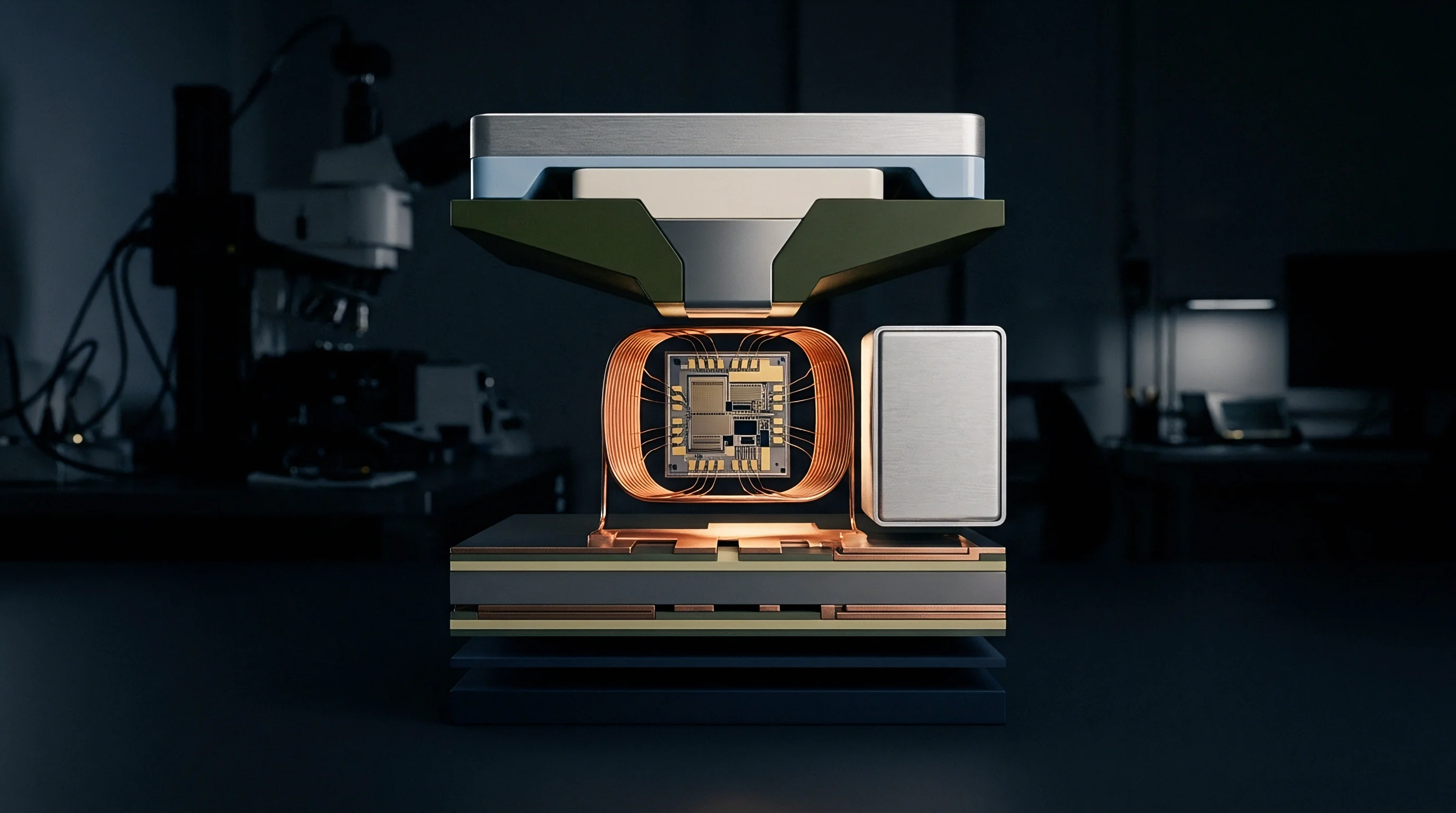
Modulus
Evaluating time-dependent structural responses in cross-linked polymers requires dynamic mechanical modeling. The mechanical behavior combines instantaneous elastic deformation with rate-dependent viscous strain, which constitutive equations capture across operating timeframes. Standard linear solid models combine spring and dashpot elements to represent both immediate elasticity and delayed strain recovery.
Comprehensive dynamic modeling uses Generalized Maxwell representations. Elastic relaxation modulus equations express stress decay under constant strain using Prony series expansions:
E(t) = E_infinity + Sum_i=1^N
The long-term equilibrium modulus E_infinity represents fully relaxed polymer stiffness. Individual spring moduli E_i align with relaxation time constants tau_i, defined by viscous dashpot ratios. Capturing relaxation times that span from seconds to years in high-precision sensor simulations typically requires five to seven discrete Maxwell elements.
Time-Temperature Superposition Principle
Evaluating material relaxation over long operational lifespans relies on accelerated thermal testing. The time-temperature superposition principle equates short-term mechanical behavior at elevated temperatures to long-term response at room temperature. Empirically derived shift factors translate experimental relaxation curves along logarithmic time axes.
Above glass transition thresholds, shift factors follow Williams-Landel-Ferry equations:
log10(a_T) = -C1 (T – T_r) /
Empirical constants C1 and C2 reflect free-volume fraction and expansion parameters, while T_r defines reference temperatures. Below glass transition levels, structural relaxation follows Arrhenius temperature dependencies driven by activation energies:
ln(a_T) = (E_a / R) (1/T – 1/T_r)
Activation energy E_a governs secondary molecular chain motions. Measuring storage and loss moduli using dynamic mechanical analysis across thermal ranges establishes master curves for package simulation.
| Adhesive Chemistries | Glass Transition Tg (°C) | Storage Modulus Below Tg (GPa) | Rubbery Modulus Above Tg (MPa) | Activation Energy Ea (kJ/mol) |
|---|---|---|---|---|
| Silver-Filled Epoxy | 135 to 160 | 6.5 to 9.2 | 150 to 350 | 95 to 130 |
| Soft Silicone Elastomer | -120 to -50 | 0.05 to 0.2 | 1.2 to 4.5 | 35 to 55 |
| Thermoplastic Polyimide | 210 to 260 | 3.1 to 4.8 | 45 to 90 | 140 to 180 |
| Fluorosilicone Hybrid | -80 to -30 | 0.15 to 0.45 | 3.5 to 8.0 | 48 to 68 |
| Test conditions: Dynamic mechanical analysis performed at 1 Hz heating rate 3°C/min under nitrogen atmosphere. | ||||
Substrate selection directly drives overall structural strain. Ceramic carriers closely match the CTE of silicon dies, keeping package stress low. By contrast, printed circuit board mounts introduce substantial thermal expansion mismatch, forcing high strain energy into the adhesive layer.
Choosing a die attach material with a glass transition temperature safely outside the operating thermal window prevents sharp stress relaxation steps during temperature sweeps.
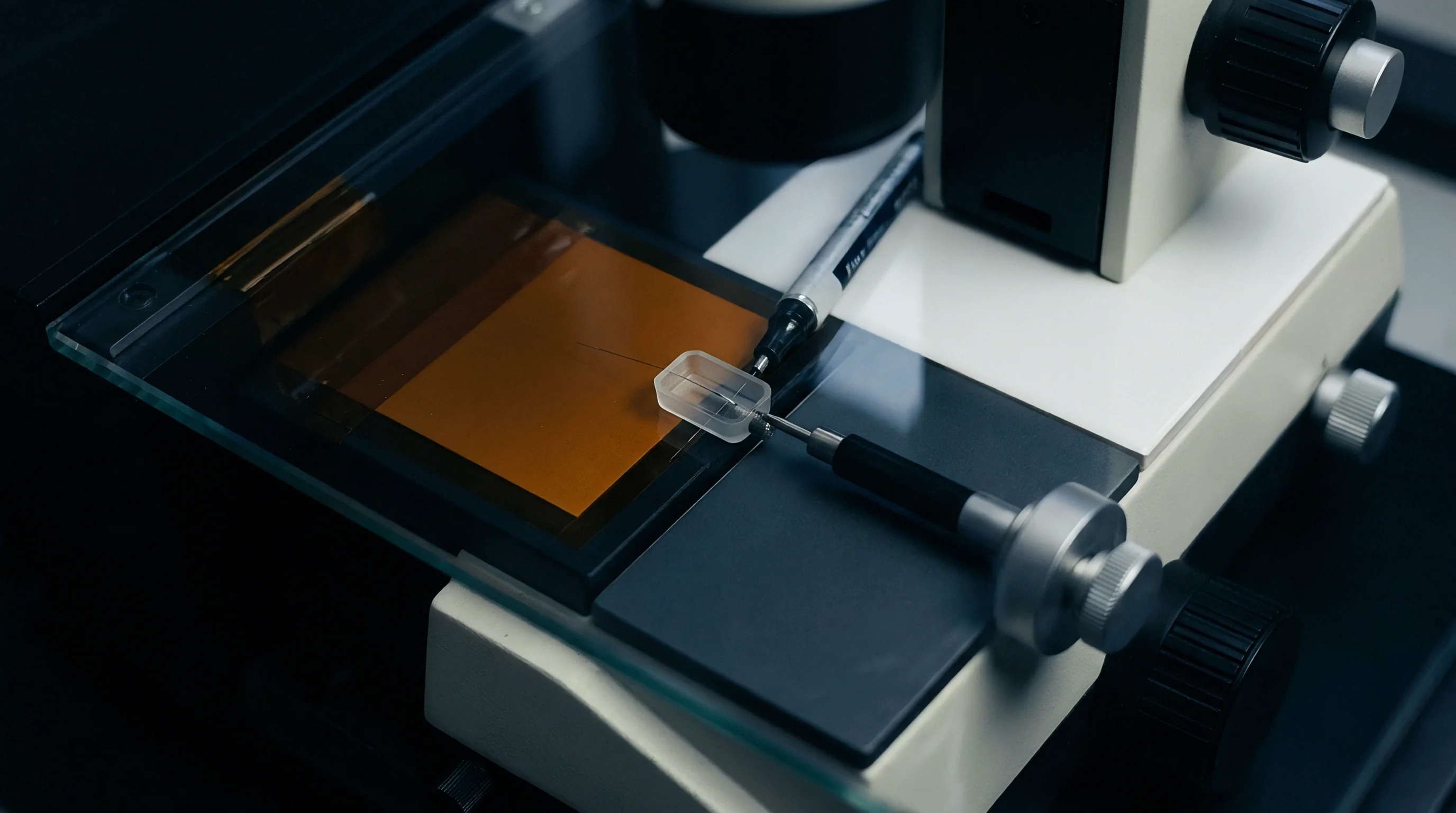
Bias
Transducer performance degrades as strain diffuses into internal sensing structures. Capacitive accelerometers measure acceleration via differential comb fingers suspended above the silicon substrate. Because proof-mass suspension beams are only tens of micrometers wide and a few micrometers thick, microscopic anchor displacements warp the frame and introduce parasitic mechanical forces straight into the flexures.
Structural distortion alters zero-g capacitive balance. Capacitance between stationary and movable fingers depends on gap spacing:
C = epsilon_0 epsilon_r A / d
Sub-nanometer gap shifts driven by stress relaxation produce asymmetric capacitance changes. This imbalance generates false acceleration signals that manifest as zero-g bias drift. In precision navigation sensors, that drift leads to positioning errors that compound over time.
Piezoresistive accelerometers use piezoresistors implanted into flexure beams to sense strain. Transducer output voltage follows Wheatstone bridge balances:
V_out = V_in pi_l sigma_l
Unbalanced longitudinal stress sigma_l from viscoelastic die-attach creep produces proportional baseline offset shifts. Temperature fluctuations alter die stress profiles, causing thermal bias hysteresis across heating and cooling cycles.
MIL-STD-883 Method 1010 Condition B thermal cycling induces unrecoverable baseline offset shifts when attach materials experience phase transitions inside operating windows.
Thermal cycling induces non-monotonic bias shifts. Cooling and heating paths diverge when stress relaxation time constants match operational temperature ramp rates, preventing residual stress fields from returning to baseline and leaving permanent offset errors.
- Differential thermal strain generation occurs as the silicon die, adhesive layer, and ceramic package base contract at different rates during temperature down-sweeps.
- High stress concentration formation develops at outer die corners, exceeding elastic limits and initiating localized viscoelastic flow.
- Time-dependent stress diffusion drives shear stress inward toward central package anchors during extended dwells at thermal extremes.
- Suspension beam deformation alters comb-finger gaps, shifting the rest position of central proof mass assemblies.
- Signal conditioning offsets register physical beam displacement as an apparent acceleration signal, inducing uncorrectable systemic errors.
Uncontrolled stress diffusion across sensor anchor points degrades tactical navigation loops, forcing costly field re-calibrations.
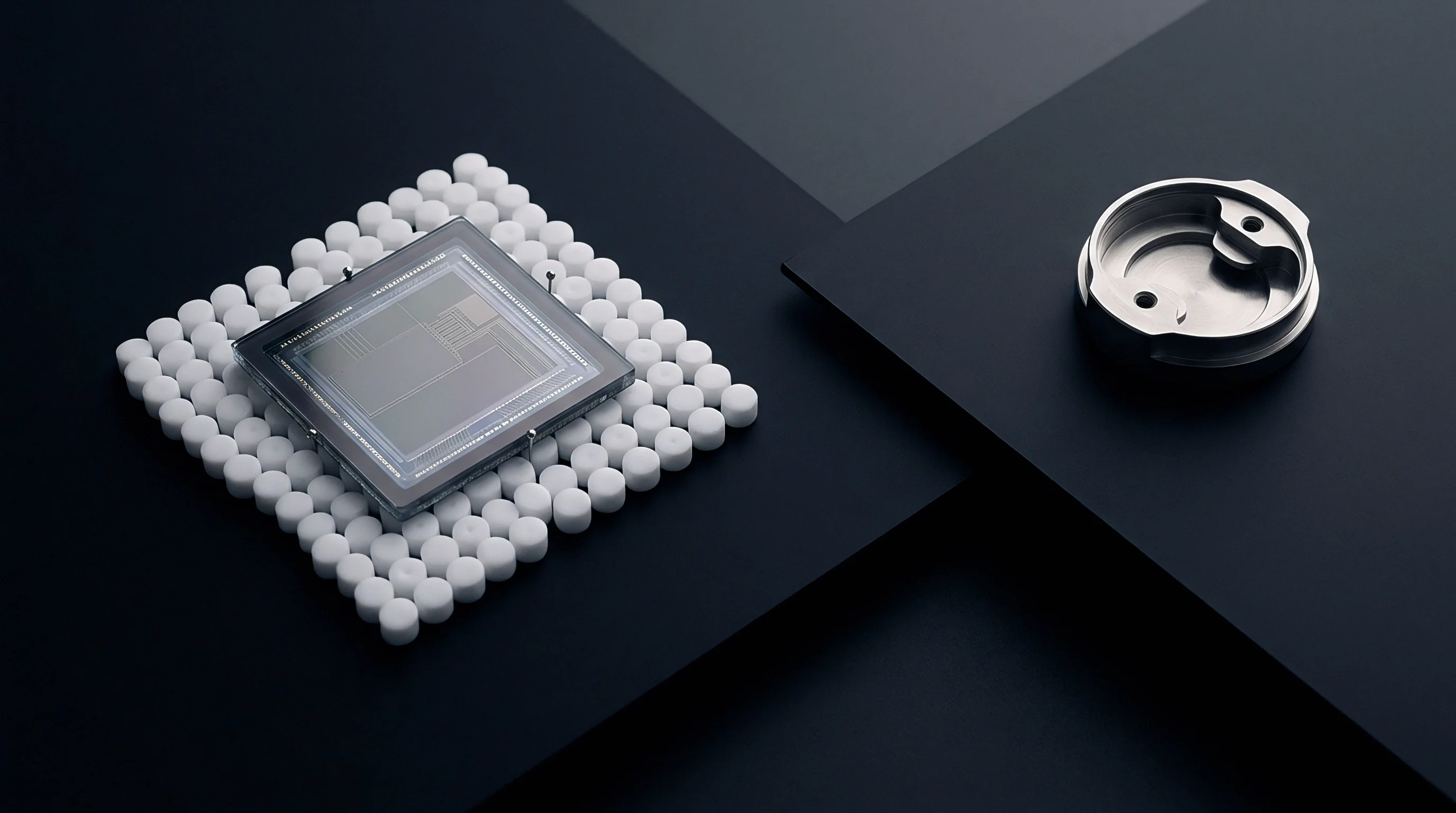

Fillet
Dispense geometry dictates how stress distributes within packaged micro-sensors. Adhesive under the die spreads outward under placement force to form perimeter bondline fillets, defined by bondline thickness, fillet height up die sidewalls, fillet angle, and wet-out distance on the cavity floor. Asymmetric dispense profiles create uneven stress fields across the die, raising its sensitivity to thermal shifts.
Uniform bondline thickness keeps shear stress in check. Thin bondlines under 10 μm steepen shear stress gradients, transferring more strain to proof-mass anchors. Bondlines over 50 μm reduce shear stress but increase die tilting risks during cure.
Thickness variations across the bondline generate bending moments along die diagonals, warping suspension anchors.
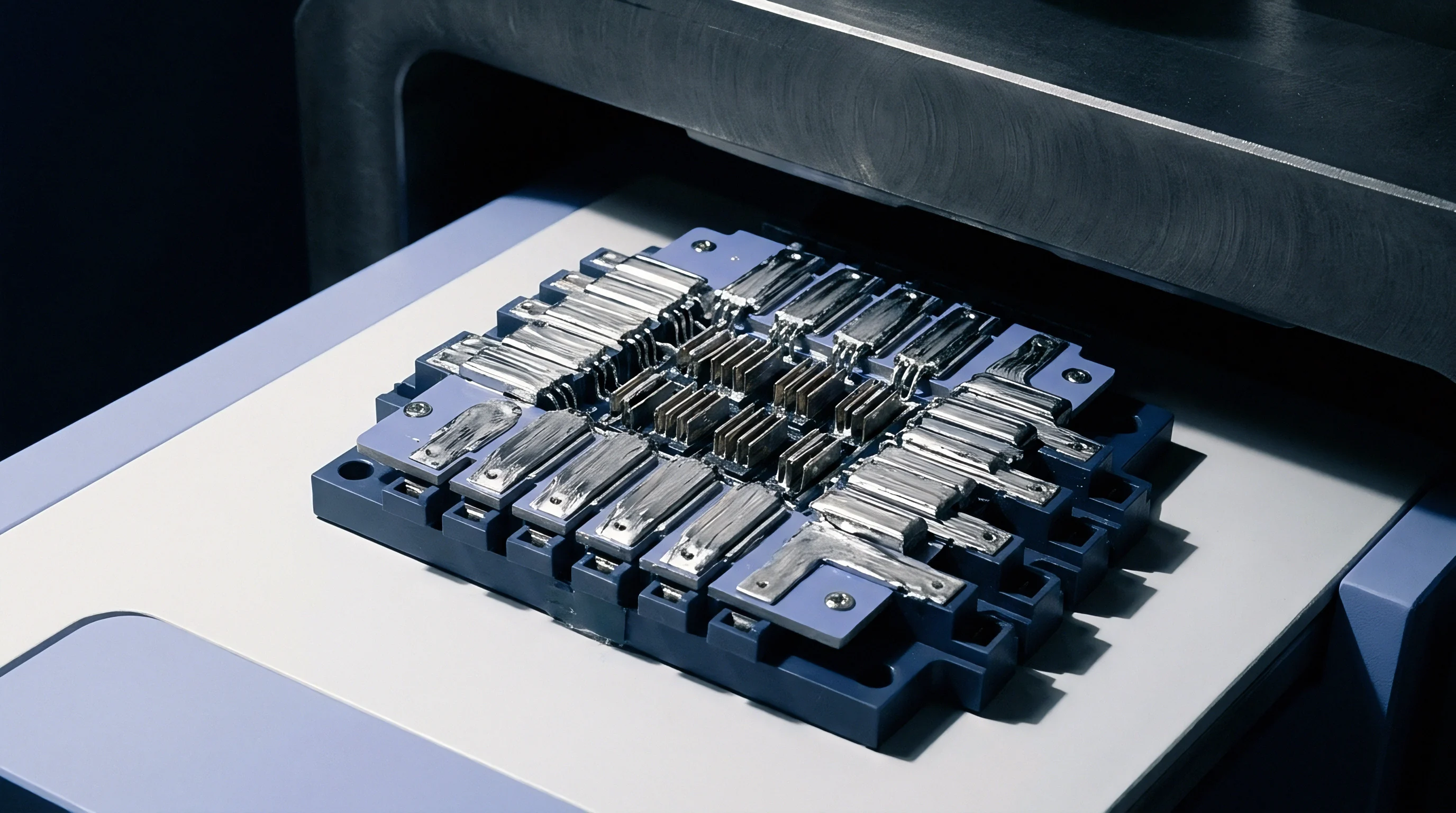
Package Assembly Stress Mitigation Mechanics
Consider a typical 4 mm by 4 mm silicon sensor die mounted in a ceramic leadless chip carrier. Structural choices illustrate the trade-offs between rigid metallic bonds and compliant polymer layers.
Option A uses a silver-filled epoxy bondline 25 μm thick with 75 percent fillet height up the die sidewalls. Thermally induced shear stress reaches 52 MPa at die corners after cooling to -40°C following cure. High fillets lock die edge movement, generating compressive axial stress across the die surface.
Viscoelastic stress relaxation reduces peak corner stress by 40 percent over 72 hours, redistributing internal strain and driving 1.2 mg of zero-g offset drift.
Option B uses a soft silicone adhesive 45 μm thick with a controlled 25 percent fillet height. Its low storage modulus caps peak corner shear stress at 2.8 MPa under identical -40°C conditions, preventing structural proof-mass deformation. Low relaxation energy in silicone creep holds zero-g offset drift below 15 μg over 72 hours.
However, reduced mechanical stiffness lowers shock resistance, increasing suspension displacement under 5,000 g mechanical shock.
| Attach Materials | Bondline Thickness (μm) | Fillet Height (% Die Height) | Peak Shear Stress at -40°C (MPa) | Relaxation Bias Drift (μg) |
|---|---|---|---|---|
| Rigid Silver Epoxy | 15 to 25 | 75 to 100 | 50 to 68 | 800 to 1500 |
| Controlled Epoxyd | 25 to 35 | 25 to 50 | 28 to 38 | 250 to 450 |
| Fluorosilicone Gel | 40 to 60 | 10 to 25 | 1.5 to 4.2 | 10 to 30 |
| AuSn Eutectic Alloy | 3 to 8 | 0 to 10 | 110 to 145 | < 2 |
Voiding within adhesive bondlines disrupts local stress distribution. Voids exceeding 5 percent of total die area impede uniform stress dissipation, while voids directly beneath central anchor points introduce local compliance variations that cause uneven anchor tilt during thermal swings.
MIL-STD-883 Method 2011 Condition D sets bondline symmetry thresholds that limit adhesive rise height, preventing asymmetrical mechanical torques on the package.
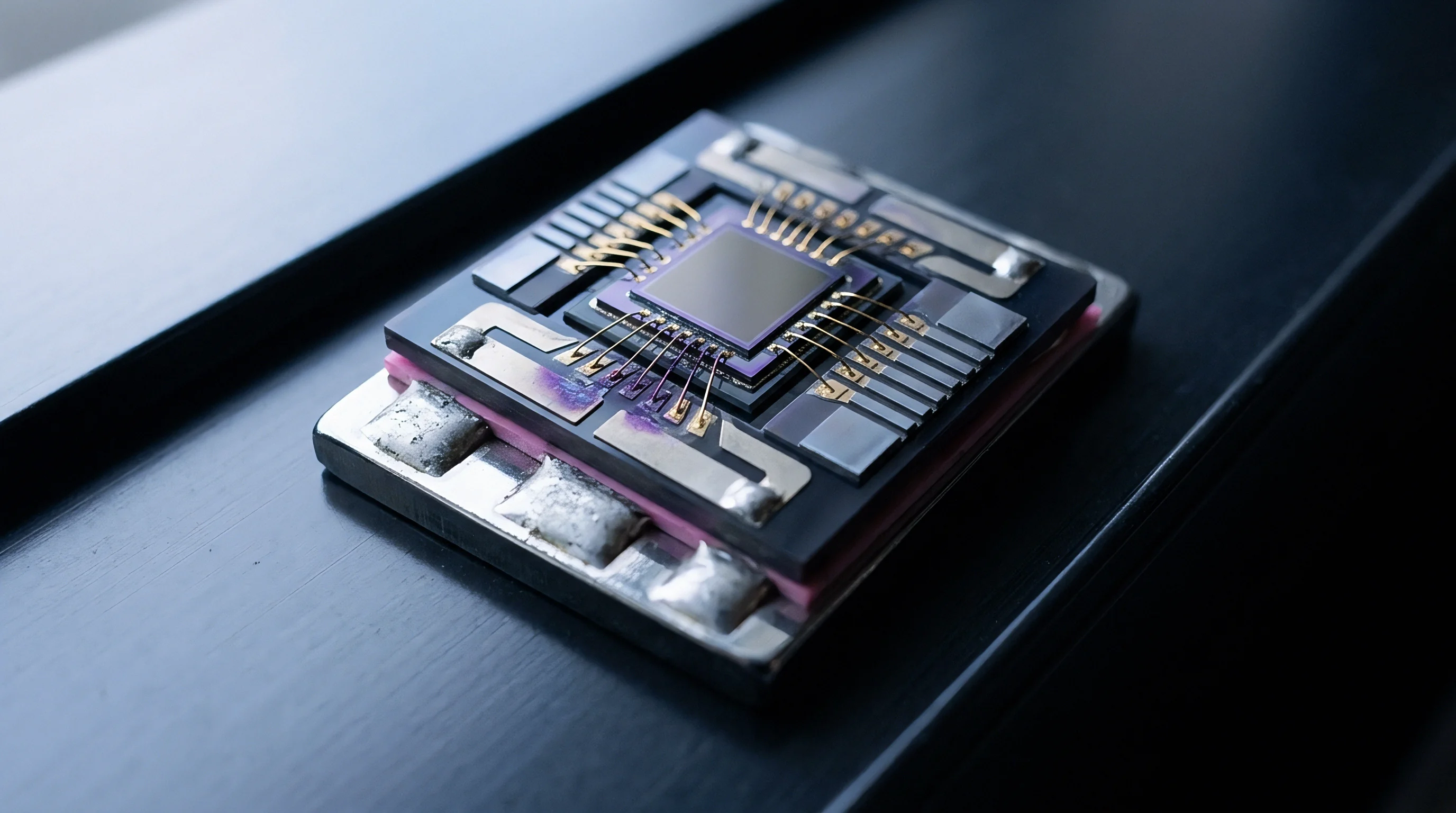
Drift
Verifying long-term drift stability requires specialized environmental testing. Accelerometer qualification isolates viscoelastic relaxation from inorganic drift mechanisms such as silicon creep and package outgassing, relying on long-term thermal soaking paired with periodic precision calibrations.
Allan variance analysis separates white noise from long-term bias instability. Plotting uncompensated zero-g bias output over extended periods produces characteristic log-log curves where the Allan deviation minimum marks the optimum bias instability floor. At long averaging times, viscoelastic stress relaxation appears as positive-slope drift, masking the underlying noise floor.
Mitigating viscoelastic relaxation requires matching package materials, selecting suitable adhesives, and applying post-dispense thermal conditioning. Stress-isolation designs decouple MEMS transducers from external package strain.
Post-cure thermal baking at 150°C for 24 hours accelerates initial polymer cross-linking, reducing subsequent operational stress relaxation by 65 percent.
- Stress-isolation micromachined pedestals minimize mechanical contact area between the sensing die and substrate package base.
- Deep reactive ion etched isolation slots route thermal expansion strain away from sensitive proof-mass flexure anchors.
- Controlled thermal pre-aging bake profiles exhaust fast molecular relaxation modes before final sensor calibration.
- Symmetrical automated adhesive dispensing ensures uniform fillet geometry around the die perimeter.
Eutectic solder bonding offers a rigid alternative to polymer die-attach materials. Gold-tin eutectic alloys form stable metallic bonds with near-zero creep across standard operating ranges, though process temperatures near 300°C and thermal expansion mismatches limit their use on large silicon dies. Silver sinter pastes pair metallic thermal stability with lower processing temperatures, providing a creep-free mounting option for precision inertial sensors.
Silicon substrate pedestals isolate the transducer element from substrate expansion mismatches, keeping long-term zero-offset movement within acceptable noise limits.