Material Specification
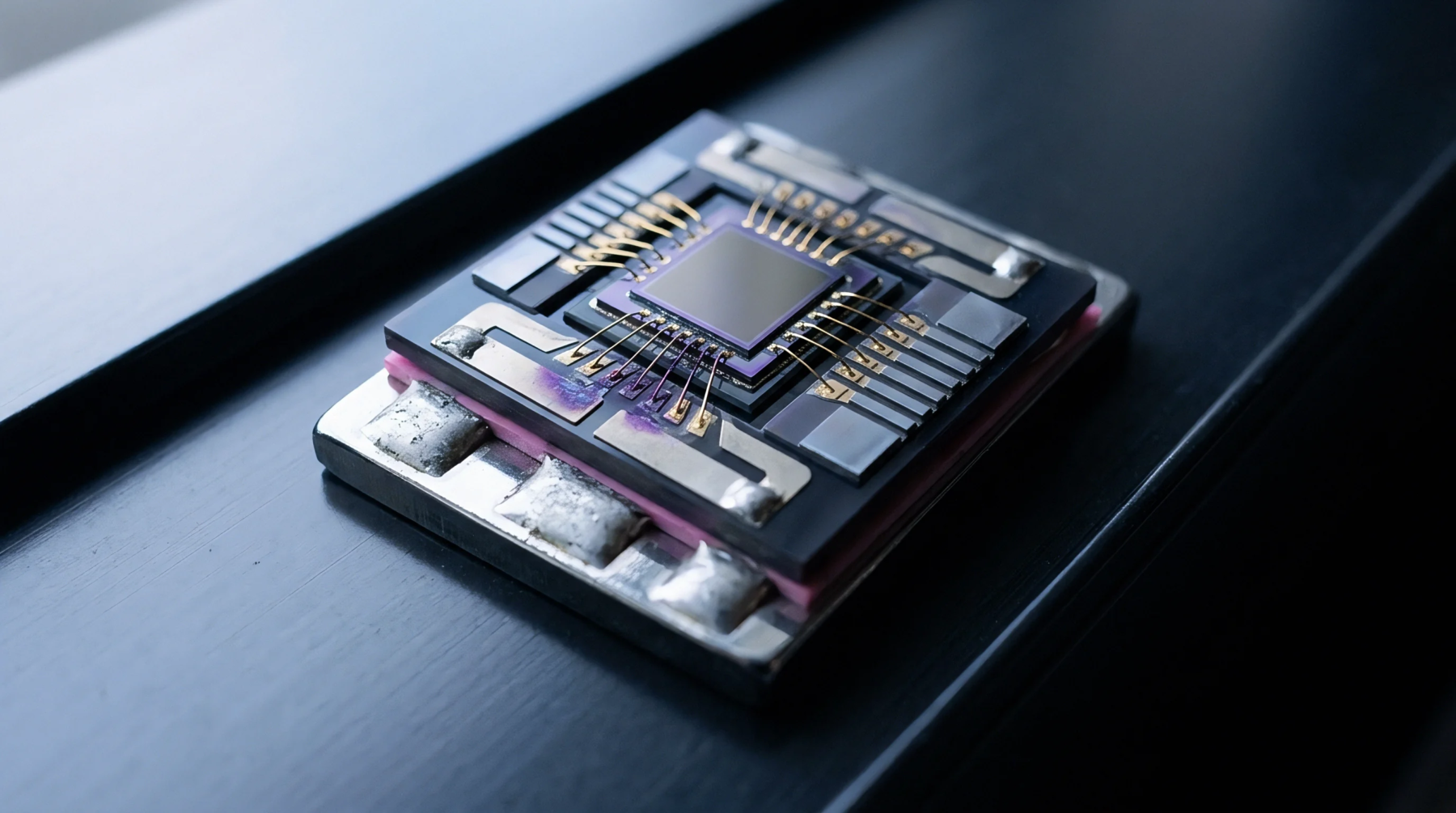
Float-glass borosilicate substrate material provides high thermal resistance and optical clarity for micro-opto-electro-mechanical systems. Engineers specify borofloat 33 for anodic bonding to silicon wafers because its linear coefficient of thermal expansion closely matches that of silicon over the bonding temperature range.
Bonding Performance
Anodic bonding requires mobile sodium ions within the glass matrix to form a hermetic seal at the silicon interface under a high electric field. In borofloat 33, the alkali content enables rapid ion drift at temperatures between three hundred and four hundred degrees Celsius. High chemical purity minimizes interface defects and prevents premature electrical breakdown during the bonding process.
The resulting seal is permanent and chemically inert.
Thermal Properties
Thermal stability is determined by the specific heat capacity and low expansion rate of the material under cycling. When heated, borofloat 33 maintains its dimensional stability and exhibits low thermal gradient stress. This behavior reduces the residual stress in the bonded silicon sensor structures, preserving sensor calibration and reducing drift.
Metrological Quality
Surface flatness and microroughness are verified using white light interferometry before the material is accepted for wafer-level packaging. Standard specifications require a wafer total thickness variation of less than two micrometers. Deviations from this tolerance cause unbonded voids or uneven stress distribution, leading to localized sensitivity shifts in pressure sensors.