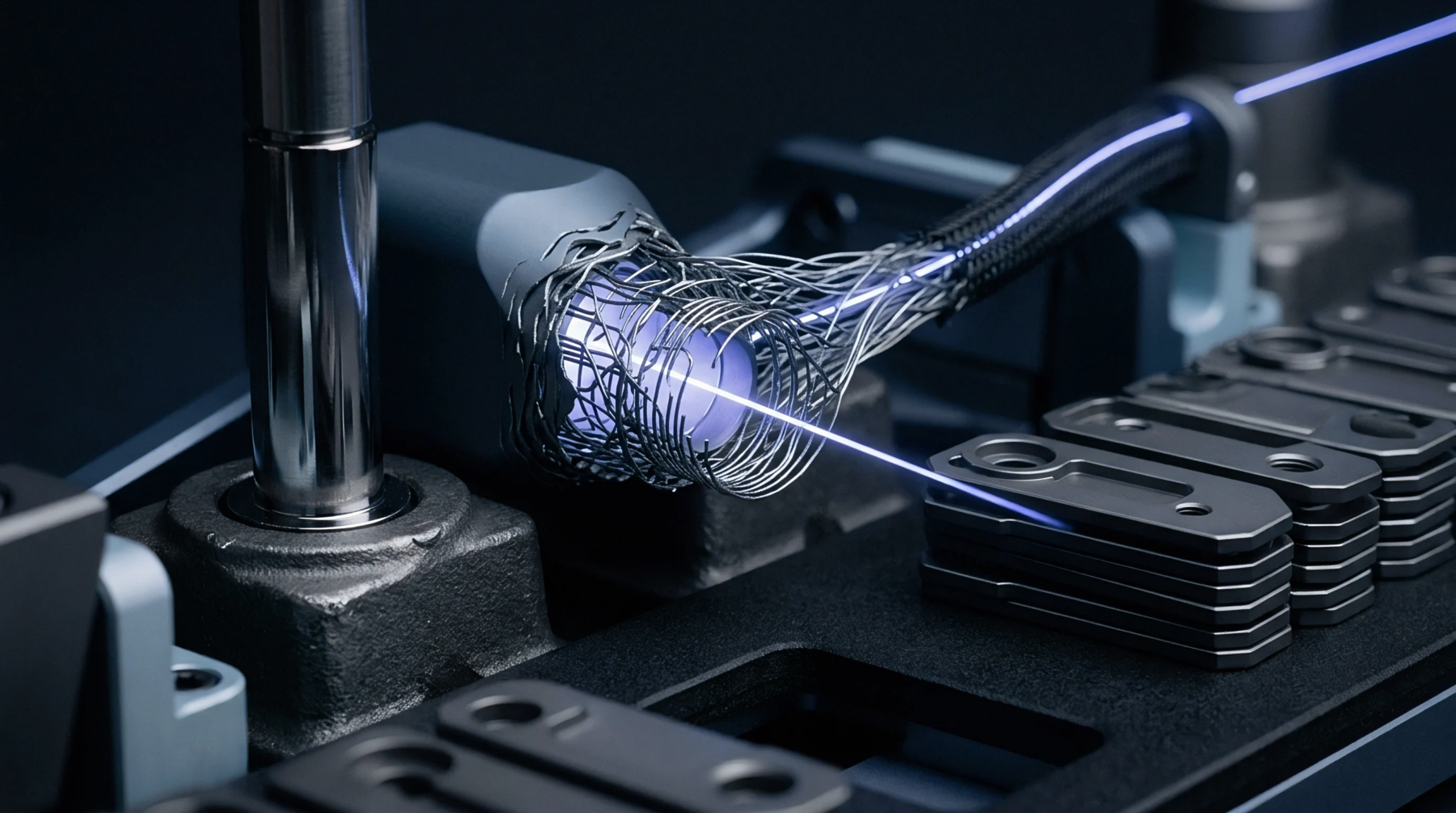
Thermal Interface Material
A thermosetting polymer composition provides the structural bond and conductive path between a semiconductor device and its package substrate or heat sink during the assembly sequence. This die attach adhesive remains in a viscous state during initial application to ensure complete wetting of the contact surfaces before undergoing a crosslinking reaction at elevated temperatures. Once cured, the polymer network forms a stable interface that accommodates mechanical stress from coefficients of thermal expansion mismatches between the silicon chip and the surrounding frame.
Stability hinges on the glass transition temperature of the epoxy or polyimide matrix relative to the maximum operating temperature of the junction.
Application Rheology
Precision dispensing heads deposit the liquid material in a controlled pattern onto the center of the lead frame or die pad before placement of the component occurs. Consistent viscosity levels guarantee that the spread remains within the specified fillet profile boundaries to prevent contamination of the wire bond pads or surrounding circuit features. Vacuum degassing removes entrapped air bubbles that would otherwise cause voids inside the joint and reduce the total heat transfer area.
Voids act as insulators that cause local hot spots by blocking the path of phonon transport. Sensors monitor the downward force and the dwell time of the placement tool to ensure the bond line thickness reaches the target height while maintaining planarity.
Metrological Verification
Qualification of the bond strength proceeds through destructive shear testing where the force required to displace the chip provides a metric for the integrity of the adhesive interface. Standard procedures dictate that the failure must occur within the bulk of the material rather than at the interface between the substrate and the polymer. Laboratories measure the thermal resistance of the assembly at reference conditions to separate the influence of the joint from the conduction path of the package materials.
Interference from moisture absorption causes swelling and chemical degradation of the bond, which results in a measurable drift in performance over repeated thermal cycles. Calibration of the dispensing equipment relies on mass flow measurement to verify that the volume of material deposited per cycle matches the volume required for the geometry of the die.
Operational Boundary
Performance limitations emerge when the modulus of the cured material exceeds the mechanical yield limit of the silicon, a condition that leads to crack propagation during thermal cycling. Manufacturers specify the maximum filler loading by volume to maintain high thermal conductivity while ensuring the material maintains sufficient ductility for stress relief. These additives consist of silver or ceramic particles that enhance the transport properties without compromising the adhesive characteristics of the resin system.
Oxidation of the die pad surface acts as a barrier that prevents proper chemical bonding between the adhesive and the substrate metal, which necessitates clean room protocols to ensure high yield rates. Failure to maintain the correct stoichiometry during the polymerization process results in an undercured resin that lacks chemical resistance and structural integrity. Stable bond lines remain the primary requirement for maintaining signal integrity and thermal efficiency in high density electronic assemblies.