Metrological Protocols for Evaluating Humidity Cross-Sensitivity in Piezoresistive Transducers
Evaluating piezoresistive humidity cross-sensitivity requires isothermal stepped chamber dwells that decouple packaging swelling strain from bridge thermal drift.

Artifact
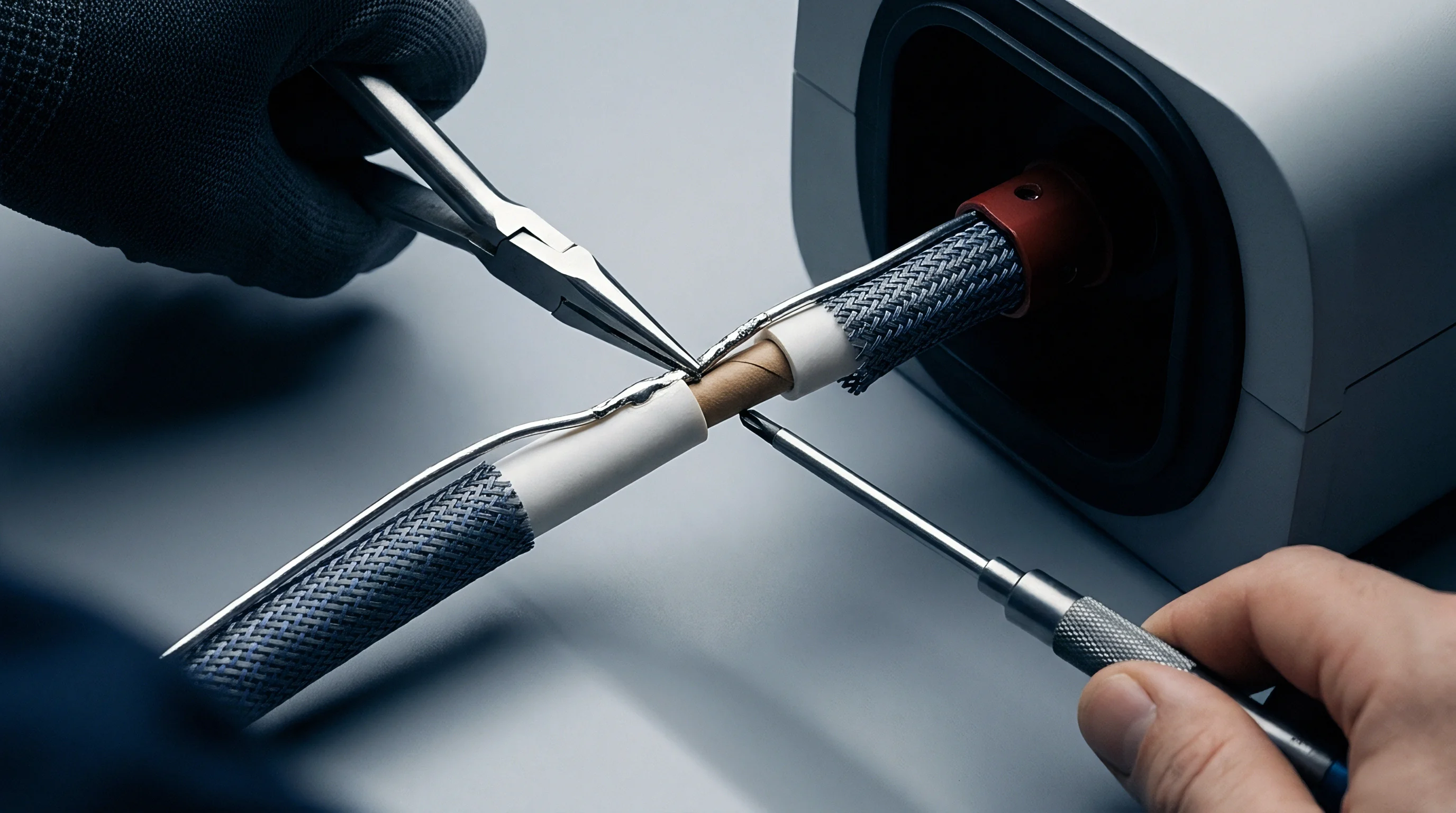
A calibration certificate for a 100-kilopascal piezoresistive pressure transmitter delivered zero-shift data recorded exclusively in bone-dry nitrogen at 23 degrees Celsius. Twelve weeks after line installation in a coastal pumping station, the unpressurized bridge output wandered 1.4 millivolts off nominal span, swamping the guaranteed 0.1 percent accuracy band. Disassembly revealed zero mechanical damage to the silicon diaphragm.
The root mechanism sat in moisture absorption through the silicone potting gel, generating an isotropic swelling pressure that mechanically loaded the micromachined silicon die through its peripheral glass-frit bond.
The core sensor element relies on four p-type piezoresistors diffused into an n-type silicon membrane arranged in a standard Wheatstone bridge. Silicon itself demonstrates zero chemical affinity for water vapor under standard operating temperatures. Moisture cross-sensitivity arises through packaging interactions, adhesive hygro-mechanical strain, dielectric shunting, and ionic contamination across bare bond pads.

Piezoresistive Die Architecture
Micromachined pressure sensors employ thin silicon diaphragms whose thicknesses range from 5 to 50 micrometers depending on full-scale span. When water vapor penetrates the protective silicone gel or silicone oil fill, moisture molecules accumulate at the interface between the silicon dioxide passivation layer and the protective overcoat. Piezoresistors exhibit longitudinal and transverse gauge factors sensitive to localized micro-strain down to parts per billion.
An asymmetric moisture ingress across the surface creates non-uniform mechanical stress fields across the diaphragm edges.
The resulting stress unbalances the resistive bridge independently of pneumatic pressure. In low-range differential transducers measuring below 10 kilopascals, this hygro-mechanically induced stress can exceed the true mechanical deflection produced by operating pressure. Die metallization lines and wire bond interfaces exacerbate this imbalance when exposed to moisture.
Packaging materials transfer hygroscopic stress directly into the sensing diaphragm.
Sorption Induced Volumetric Swelling
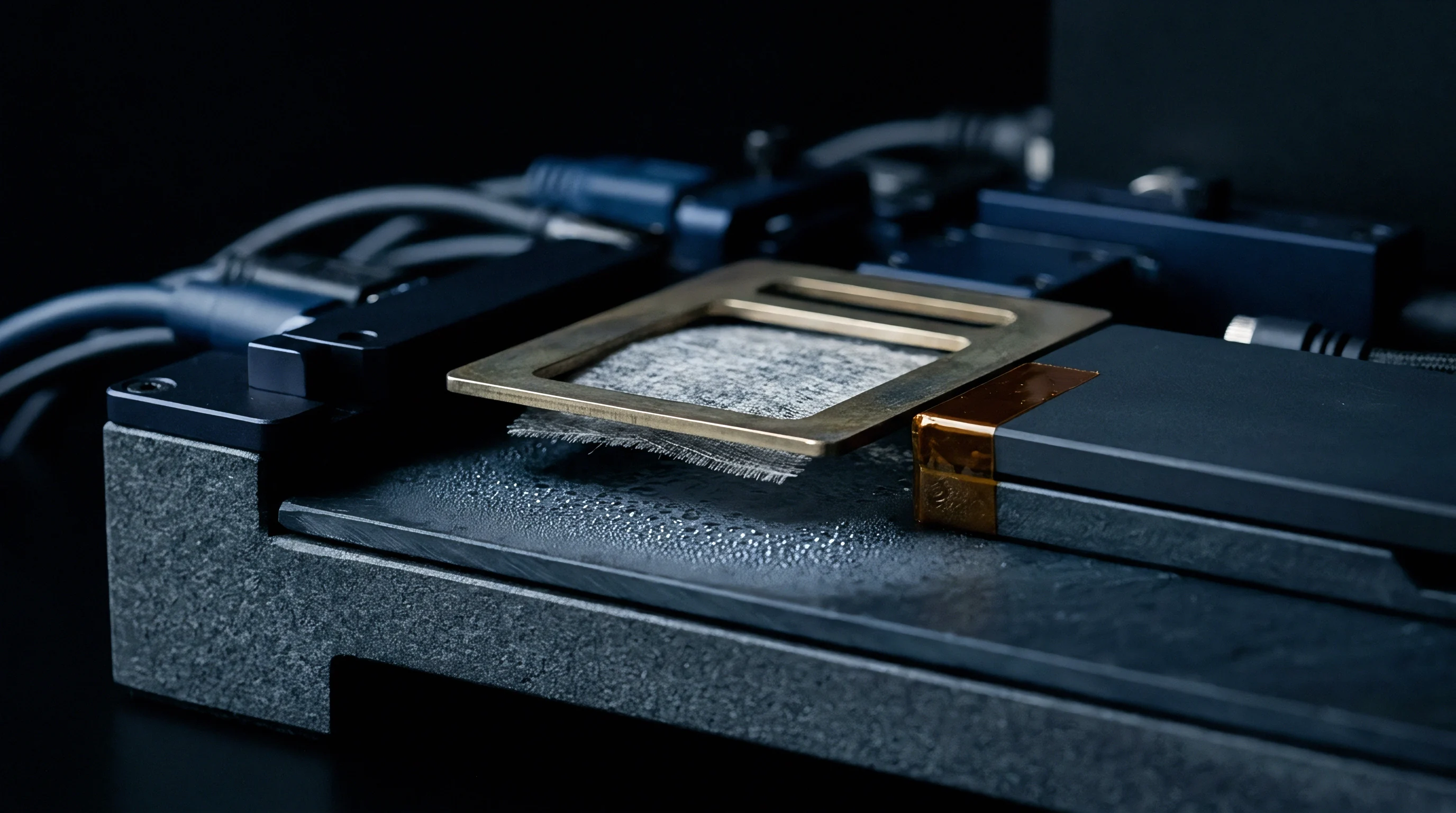
Polymeric adhesives, silicone gels, and transfer-molded epoxy encapsulants absorb ambient moisture following Fickian diffusion pathways. The coefficient of hygroscopic expansion quantifies the mechanical strain generated per unit concentration of absorbed water:
- Hygroscopic bond expansion distorts the silicon-to-header interface when room-temperature vulcanizing adhesives take up atmospheric moisture over hundred-hour operational windows.
- Potting gel displacement exerts localized compressive stress directly on the micromachined piezoresistive tracks, shifting the bridge balance without line pressure present.
- Dielectric surface conduction develops when condensed water molecules react with ionic surface impurities to create parallel leakage paths across Wheatstone bridge arms.
- Passivation charge accumulation generates parasitic inversion layers in n-type silicon substrates, altering effective bridge resistor cross-sectional areas.
Silicone potting formulations exhibit moisture absorption rates between 0.1 and 0.5 percent by weight at 85 percent relative humidity. Epoxies used in sensor headers absorb up to 2.0 percent water by weight, exhibiting volumetric swelling that introduces shear stresses exceeding 5 megapascals at bonded silicon edges. These packaging stresses bend the silicon chip, mimicking positive or negative pressure depending on whether the adhesive lies beneath or surrounding the perimeter of the die.
Suppliers routinely dismiss these baseline drift phenomena as negligible thermal transients easily managed by plant zeroing routines.

Vapor
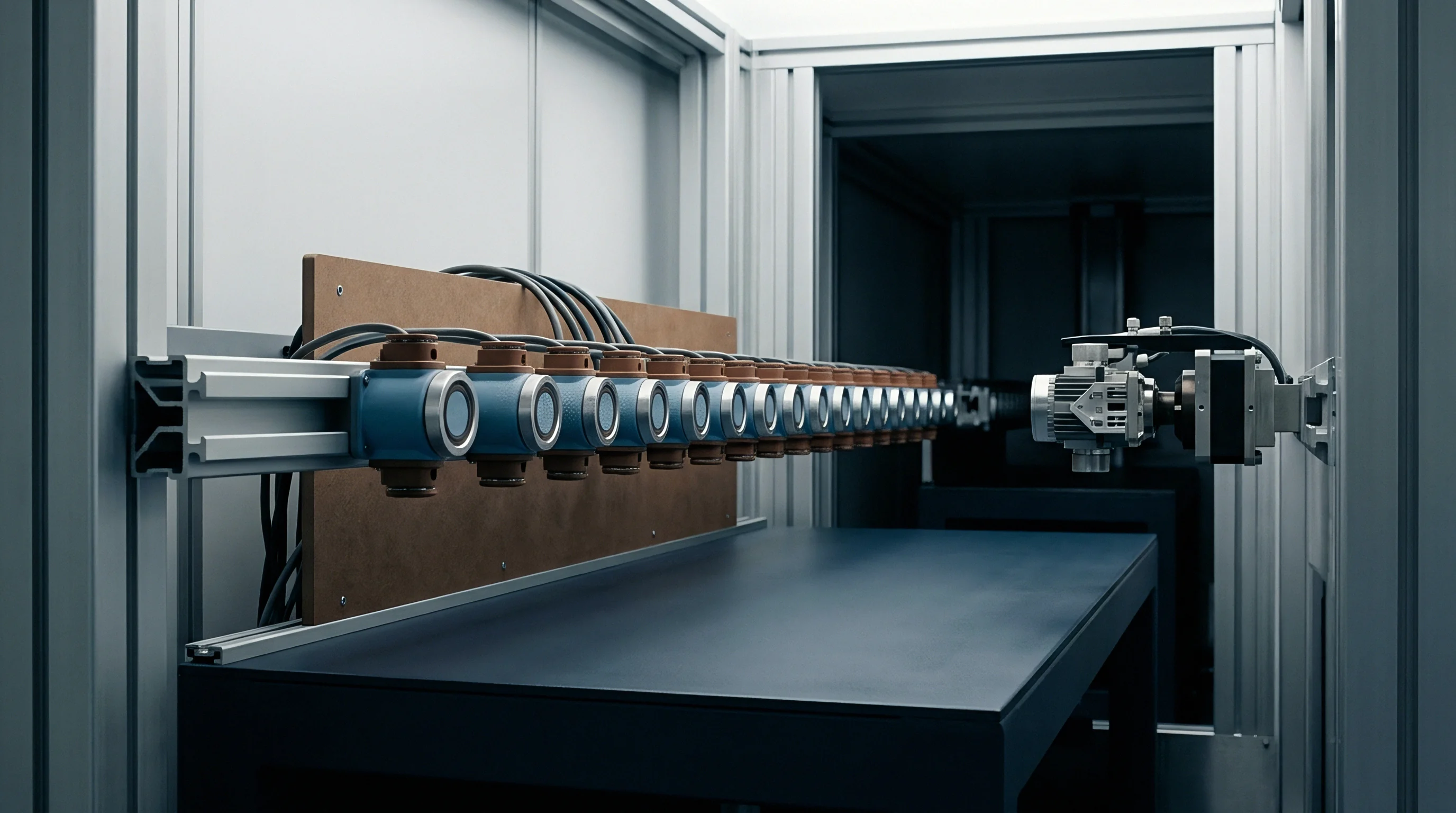
Relative humidity exposure profiles require disciplined chamber control to decouple moisture absorption from simultaneous thermal fluctuations. Atmospheric air carries water in vapor phase according to partial pressures governed by the Clausius-Clapeyron equation. When evaluating piezoresistive devices, relative humidity changes alter the chemical potential gradient driving moisture diffusion into sensor packaging materials.
Diffusion kinetics follow temperature-dependent Arrhenius relationships where activation energy dictates the velocity of moisture penetration through elastomers and passivations. Evaluating cross-sensitivity necessitates isothermal exposure steps held until the sensor output reaches asymptotic stability. Rapid humidity transitions induce transient thermal gradients across the silicon bridge due to latent heat of condensation or evaporation, masking true hygric sensitivity with spurious thermoelectric voltages.

Does Dielectric Polarization Degrade Piezoresistive Bridge Balance?
Water molecules possess a high permanent dipole moment of 1.85 Debye, raising the relative permittivity of dry potting media from 2.7 up to 35 as moisture saturates interfacial voids. In alternating-current bridge excitation topologies, this capacitive shift produces quadrature errors that distort balance demodulation. Direct-current bridge circuits suffer instead from localized surface polarization and electrochemical corrosion along aluminum trace terminations.
Moisture film accumulation on unpassivated silicon surfaces introduces parasitic shunt resistances parallel to the active piezoresistive arms. A shunt resistance of 100 megohms across a 5-kilohm piezoresistor alters bridge balance by 50 parts per million. When relative humidity increases from 10 percent to 90 percent at 40 degrees Celsius, condensed water films carrying ionic trace residues drop surface isolation resistances into the single-digit megohm territory.
Bridge offset wander accelerates rapidly under these conditions.
A 40-millivolt bridge output shifts 180 microvolts when surface leakage drops to 80 megohms under saturated vapor conditions.
Piezoresistive evaluation protocols establish precise soak intervals to ensure the complete sensor assembly reaches hygrometric equilibrium. Typical elastomer equilibrium times exceed 48 hours for standard 2-millimeter potting depths.

Environmental Chamber Soak Profiles
Testing protocols enforce stepped humidity profiles at constant dry-bulb temperatures. Relative humidity steps transition across 10 percent, 30 percent, 50 percent, 70 percent, and 90 percent saturation points. At each plateau, dry-bulb temperature holds within plus or minus 0.05 degrees Celsius to isolate vapor effects from the sensor temperature coefficient of offset.
| Exposure Step (% RH) | Chamber Dew Point (°C) | Minimum Dwell Time (Hours) | Mean Zero Shift (% Span) | Post-Dwell Drift Rate (nV/hr) |
|---|---|---|---|---|
| 10.0 ± 0.5 | -8.8 | 24 | +0.012 | 12 |
| 30.0 ± 0.5 | 5.4 | 24 | +0.038 | 18 |
| 50.0 ± 0.5 | 13.8 | 36 | +0.085 | 24 |
| 70.0 ± 0.5 | 19.2 | 48 | +0.162 | 35 |
| 90.0 ± 0.5 | 23.2 | 72 | +0.285 | 52 |
Stabilization criteria dictate that zero-drift velocity must drop below 0.005 percent of full scale per hour before recording metrological data points. Laboratory personnel verify chamber dew-point stability using calibrated chilled-mirror hygrometers connected directly to the working volume sampling port. Flow rates across the transducer sensing ports remain strictly laminar below 0.1 meters per second to avoid aerodynamic pressure loading on the silicon diaphragm.
Evaluation protocols sequence through rising and falling humidity series to characterize hygroscopic hysteresis:
- Chamber dryout removes residual moisture through a 12-hour purge at 10 percent relative humidity and 25 degrees Celsius.
- Ascending sorption dwell steps upward through 30, 50, 70, and 90 percent relative humidity, pausing at each stage until baseline drift drops below the stabilization threshold.
- Saturation hold maintains 90 percent relative humidity for 72 continuous hours to verify total package saturation.
- Descending desorption dwell steps downward through identical intermediate setpoints to trace the reverse desorption trajectory.
- Final baseline recovery returns the chamber to 10 percent relative humidity to measure non-recoverable zero offset shift.
The descending desorption curve rarely mirrors the ascending sorption path, leaving an open question regarding how much interfacial micro-cracking permanently alters polymer strain transfer over multi-year deployments.

Decoupling
Thermal sensitivity in silicon piezoresistive elements typically ranges between plus 0.1 and plus 0.3 percent of full scale per degree Celsius without external compensation. Because commercial climatic chambers alter temperature slightly while modulating humidity boilers or atomizers, cross-sensitivity evaluations must isolate vapor loading from thermal expansion. True hygric cross-sensitivity represents the change in transducer output caused exclusively by ambient relative humidity under perfectly invariant temperature and applied pressure.
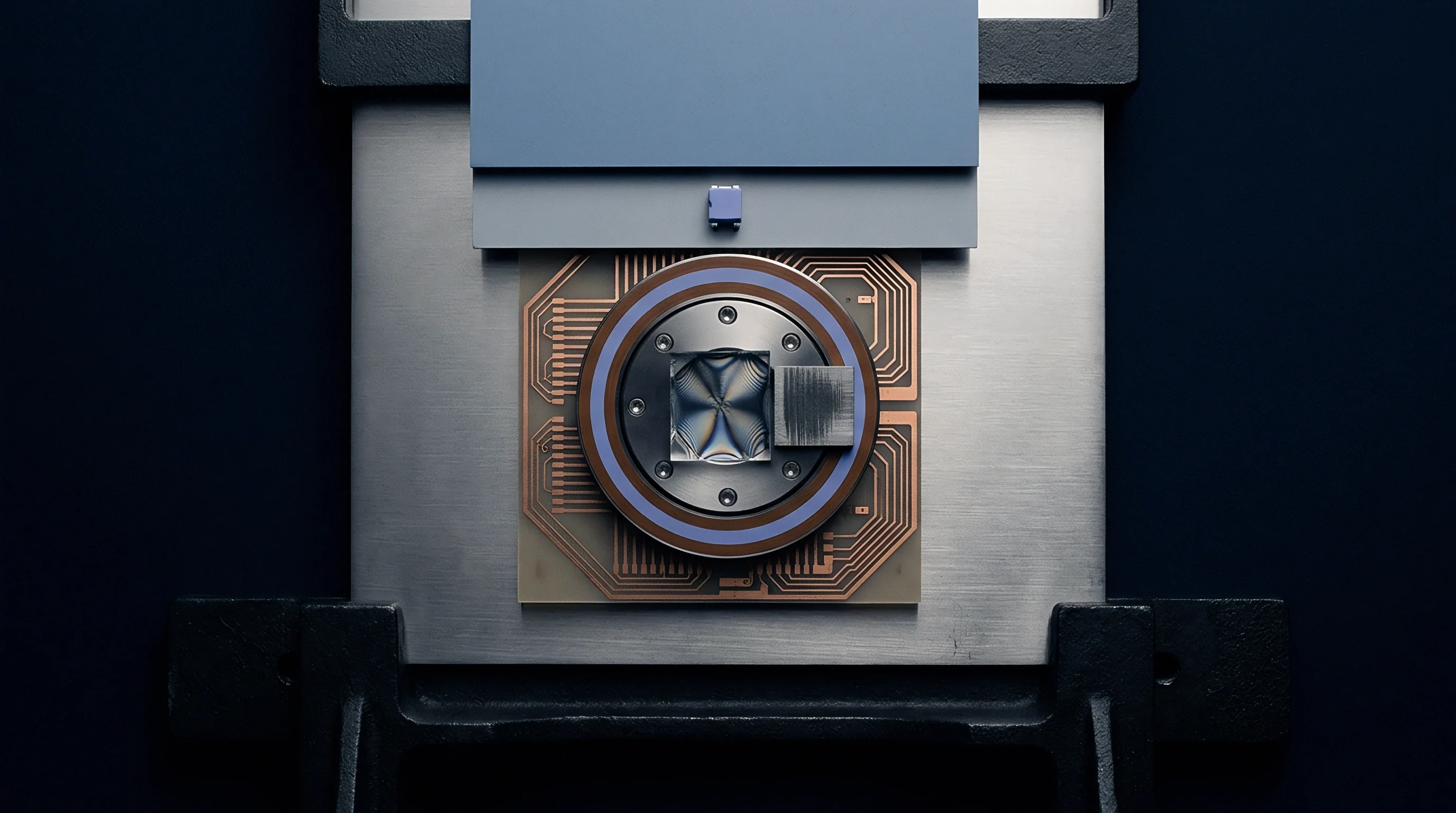
Metrologists apply differential calculation schemes to isolate these coupled phenomena. By equipping the test chamber with a hermetically sealed, dry-nitrogen-purged dummy transducer from the identical manufacturing batch, technicians track underlying thermal offset drift. Subtracting the dry reference output from the test transducer output isolates the hygro-mechanical strain signal.

Is Desorption Hysteresis Quantifiable across Thermal Cycles?
Polymer chains within silicone potting materials reorganize when water molecules disrupt internal hydrogen bonding. During desorption, capillary condensation within microscopic polymer voids retards the exit of water molecules, creating pronounced sorption-desorption hysteresis loops. When thermal cycles occur concurrently with humidity drops, desorption accelerates non-linearly, causing unpredictable zero-point wander across field-deployed units.
Quantifying this behavior demands matrix testing where humidity steps execute across multiple isothermal planes, typically 15, 25, 40, and 55 degrees Celsius. At elevated temperatures, moisture diffusivity increases while adhesive modulus drops, reducing the mechanical stress transferred to the silicon diaphragm even as absolute moisture concentration climbs.
Hygroscopic strain drops as packaging polymers soften under increasing temperature.
Isobaric Dual Parameter Matrix Calibration
Transducer pressure ports receive deadweight-calibrated dry nitrogen gas via heated stainless-steel manifolds while the outer transducer bodies remain immersed in the climatic test volume. Applying pressure increments across the hygrometric cycle reveals whether humidity shifts span sensitivity alongside zero offset.
Span sensitivity shifts occur when moisture absorption alters diaphragm flexural rigidity or dampens piezoresistor response through mechanical constraint. In top-side unisolated transducers where process gas carries relative humidity directly against the silicon diaphragm, surface charge transport modulates effective carrier mobility in p-type diffusion zones. This mechanism modifies the fundamental piezoresistive gauge factor by up to 0.04 percent of reading across an 80 percent humidity swing.
Acceptance testing establishes that unisolated sensor architectures show moisture sensitivity five to eight times greater than isolated oil-filled diaphragms. The oil volume isolates the silicon die from ambient water vapor, displacing the hygroscopic stress interface to outer housing weld joints and silicone cable gland seals.
Calibrating out these effects requires empirical correction algorithms mapped across both relative humidity and ambient temperature dimensions.


Uncertainty
Calculating the combined standard uncertainty of humidity cross-sensitivity measurements follows the Guide to the Expression of Uncertainty in Measurement published in JCGM 100. Metrological evaluation establishes an explicit functional relationship where the output quantity, the humidity cross-sensitivity coefficient, depends on input parameters including differential voltage, excitation supply voltage, pneumatic pressure, chamber relative humidity, and dry-bulb temperature.
Every laboratory input contributes variance to the overall uncertainty budget. Type A evaluations quantify repeatability across multiple sorption cycles. Type B evaluations incorporate reference instrument calibration uncertainties, chamber spatial uniformity, datalogger quantization error, and barometer resolution limits.

Combined Sensitivity Budgets
Evaluation protocols assign specific distribution shapes to each uncertainty contribution. Reference pressure controllers contribute normal distributions defined by accredited calibration certificates. Chamber spatial gradients and temperature cycling fluctuations follow rectangular distributions bounded by chamber manufacturer specifications.
| Uncertainty Component | Source of Evaluation | Standard Uncertainty u(xi) | Probability Distribution | Sensitivity Coefficient ci | Uncertainty Contribution ui(y) (% FS) |
|---|---|---|---|---|---|
| Bridge Output Repeatability | Type A (n=10) | 0.85 µV | Normal | 0.025 % FS/µV | 0.0213 |
| Chamber Relative Humidity | Chilled Mirror / RH Probe | 0.65 % RH | Normal (k=2) | 0.0035 % FS/% RH | 0.0023 |
| Chamber Spatial Humidity Gradient | Chamber Specification | 1.20 % RH | Rectangular | 0.0035 % FS/% RH | 0.0024 |
| Chamber Temperature Uniformity | Pt100 Resistance Array | 0.08 °C | Rectangular | 0.0850 % FS/°C | 0.0039 |
| Reference Line Pressure Control | Piston Gauge Reference | 1.50 Pa | Normal (k=2) | 0.0010 % FS/Pa | 0.0015 |
| Bridge Excitation Voltage Stability | Digital Multimeter Reference | 12.0 µV | Rectangular | 0.0020 % FS/µV | 0.0001 |
| Combined standard uncertainty uc = 0.0221% FS; Expanded uncertainty U (k=2, 95% level of confidence) = 0.0442% FS. | |||||
The budget demonstrates that transducer bridge output repeatability dominates the combined uncertainty calculation. Interfacial adhesive micro-slip and localized moisture pinholes introduce stochastic baseline wandering that prevents tighter measurement bounds.
A laboratory statement of compliance with ISO/IEC 17025 Section 7.8.6 invalidates test results when expanded measurement uncertainty exceeds one-third of the specified tolerance band.
Reference Standards Traceability Limits
Traceability chains for hygrometric evaluation demand unbroken links to primary humidity standards maintained by national metrology institutes. Chilled-mirror condensation hygrometers serve as secondary transfer references within accredited calibration facilities. These instruments achieve dew-point temperature uncertainties of plus or minus 0.10 degrees Celsius, translating to relative humidity uncertainties of plus or minus 0.5 percent at 25 degrees Celsius.
Pressure references applied to the transducers during humidity testing require primary deadweight piston gauges or resonant quartz working standards calibrated with coverage factors of k equals 2. Piston cylinder clearances and floating temperatures must remain strictly isolated from climatic chamber exhausts to prevent thermal expansion of the tungsten carbide piston assemblies.
Acceptance contracts govern uncertainty compliance directly through explicit inspection clauses:
- Guard-banding limits shrink the acceptable customer pass band by the expanded measurement uncertainty to eliminate false acceptance of drifting transducers.
- Environmental envelope specifications state the operational boundary beyond which the manufacturer disclaims all accuracy warranties.
- Recalibration frequency mandates require mandatory zero and span verifications every twelve months for sensors operating continuously above 75 percent relative humidity.
IEC 60770-1 Clause 6.4 dictates that environmental influence evaluations must account for cross-sensitivity interactions explicitly before granting accuracy class designations.


Settlement
Procuring piezoresistive pressure transmitters for humid operating environments demands rigorous contractual definitions of permissible offset wander. Standard vendor catalogs routinely market baseline accuracy figures as low as 0.05 percent of full-scale span. These claims describe performance under controlled laboratory air at 50 percent relative humidity, omitting the severe zero-point shift that follows weeks of exposure to tropical or condensing conditions.
When buyers fail to bind suppliers to humidity cross-sensitivity limits, field warranty disputes stall settlement negotiations. Transducers exhibiting baseline wander exceed process safety trip limits, triggering false emergency shutdowns in industrial chemical lines. Replacing hundreds of drifting units across remote pipeline facilities generates field service costs that exceed initial hardware procurement budgets by orders of magnitude.
Acceptance Tolerance Thresholds
Quality agreements must establish incoming acceptance testing criteria based on empirical 10-to-90 percent humidity screening protocols. A standard commercial piezoresistive transmitter typically drifts 0.25 percent of full-scale span when ambient humidity steps from 20 percent to 85 percent at 30 degrees Celsius. Premium hermetically sealed units featuring glass-to-metal seals and laser-welded stainless-steel isolation diaphragms limit this drift to less than 0.02 percent of full-scale span.
The landed cost for a standard potted industrial transmitter averages 120 dollars per unit in thousand-piece lots. Upgrading to a fully isolated, oil-filled sensor featuring a hermetic header raises the unit procurement price to 285 dollars. The cost differential reflects laser welding processes, high-vacuum silicone oil degasification, and automated zero-temperature compensation across broad humidity envelopes.

Commercial Warranty Exposure Mechanics
Buyers entering long-term sensor supply contracts evaluate warranty terms through the lens of long-term field stability. A purchase order that omits environmental cross-sensitivity leaves the buyer absorbing all removal, bench testing, and reinstallation expenses when field units wander out of tolerance.
Procurement teams protect operating margins by inserting explicit humidity stability clauses into commercial purchasing schedules. These terms define acceptable drift limits over multi-year deployments, specifying financial remedies when lot samples fail incoming climatic screening. Testing a sample lot of five units per shipment inside a calibrated environmental chamber establishes defensible data before signing final receipt manifests.
Overlooking hygrometric screening leaves the operating facility vulnerable to unrecoverable maintenance expenditures, degraded production quality, and recurring transducer replacement cycles.