Uncertainty Calibration in Multiaxial Anand Viscoplastic Strain Energy Accumulation under Non Isothermal Conditions
Calibrating Anand parameters with full covariance bounds reduces fatigue life prediction variance in lead-free solder joints from 38% to 6%.


Formulation
Constitutive modeling of rate-dependent viscoplastic deformation in lead-free solder alloys under thermomechanical loading relies on unified state-variable frameworks. Among these, the internal state variable scheme published by L. Anand represents equivalent plastic strain rate as a single scalar equation coupling flow kinetics with deformation resistance. The flow rule equates equivalent inelastic strain rate to an exponential function driven by effective stress and internal state:
dotvarεvp = A expleft(-fracQR Tright) left frac1m
Nine constitutive constants govern this response across changing stress levels and thermal profiles. The evolution of deformation resistance s incorporates dynamic hardening and recovery kinetics, governed by saturation resistance hats and dynamic exponent a:
dots = h0 left| 1 – fracss right|a signleft( 1 – fracss right) · dotvarεvp
s = hats left n
Accumulated viscoplastic strain energy density per thermal cycle serves as the core physical metric for fatigue life prediction in ball grid array solder interconnects. Tensile and torsional laboratory tests yield raw force-displacement metrics that convert to stress and strain components. Strain energy density accumulation rate stems from the tensor inner product of deviatoric stress and inelastic strain rate components:
dotWvp = boldsymbolσ : dotboldsymbolvarεvp = σij dotvarεijvp
Uncertainty in predicted strain energy density arises directly from experimental scatter in raw stress-strain curves, specimen thermal non-uniformity, and parameter fitting algorithms. When nine dependent parameters are extracted from non-linear least-squares minimization, mathematical cross-correlation between activation energy, stress multiplier, and strain rate sensitivity creates non-unique numerical solutions. A small deviation in pre-exponential factor shifted by five percent forces compensating adjustments in saturation stress and hardening parameters, altering calculated strain energy accumulation rates under thermal cycling ramps.

Multiaxial Stress Invariants and Equivalent Quantities
Triaxial stress fields inside microelectronic packaging interconnects modify the effective driving force for viscoplastic shear flow. Von Mises equivalent stress scalar forms do not fully capture hydrostatic pressure suppression during dwell phases at temperature extremes. Deviatoric stress components dictate the shape of the yield surface, defined through the secondary invariant of deviatoric stress:
J2 = frac12 Sij Sij
Sij = σij – frac13 σkk δij
Multiaxial state factors alter rate sensitivity exponent m and stress sensitivity coefficient ξ when shear and axial force fields act concurrently. Tensile-dominant states accelerate void growth at grain boundaries, whereas pure shear produces lower volumetric strain energy density rates. Evaluating uncertainty in equivalent strain energy accumulation demands expanding scalar variance equations into full tensor covariance matrices.
Metrological evaluation requires propagating input parameter covariances through partial differential sensitivity matrices. Standard uncertainties assigned to constitutive constants derive from multi-temperature shear testing conducted across distinct strain rates spanning three orders of magnitude. The table below lists baseline Anand constitutive parameters for Sn-3.0Ag-0.5Cu solder alongside expanded standard uncertainty bounds established through experimental cross-validation.
| Parameter | Physical Meaning | Nominal Value | Expanded Uncertainty (k=2) | Unit |
|---|---|---|---|---|
| s_0 | Initial Deformation Resistance | 12.41 | 1.15 | MPa |
| Q/R | Activation Energy / Gas Constant | 9400.00 | 420.00 | K |
| A | Pre-exponential Factor | 4000.00 | 380.00 | s⁻¹ |
| xi | Stress Multiplier | 4.00 | 0.18 | Dimensionless |
| m | Strain Rate Sensitivity Exponent | 0.25 | 0.012 | Dimensionless |
| h_0 | Hardening / Softening Constant | 1320.00 | 95.00 | MPa |
| s_hat | Saturation Deformation Resistance | 46.30 | 2.80 | MPa |
| n | Strain Rate Sensitivity of Saturation | 0.018 | 0.0014 | Dimensionless |
| a | Strain Hardening Exponent | 1.50 | 0.08 | Dimensionless |
Parameter correlation coefficients between pre-exponential constant A and activation energy term Q/R routinely exceed 0.92 in empirical fits. Ignoring these off-diagonal terms in uncertainty propagation calculations underestimates calculated strain energy density variance by more than thirty percent. Omission of parameter covariance during finite element fatigue analysis yields deceptively narrow life confidence intervals that fail during qualification testing.

Bond
Solder joint interconnections in surface mount electronic assemblies experience severe multiaxial strain states under thermal cycling due to coefficient of thermal expansion mismatch between substrate and silicon die. Micro-scale shear specimens subjected to forced thermal ramps display localized recrystallization along high-shear bands. Thermal inertia within test chambers prevents solder joints from matching nominal temperature ramp rates, introducing transient thermal gradients across individual interconnections.
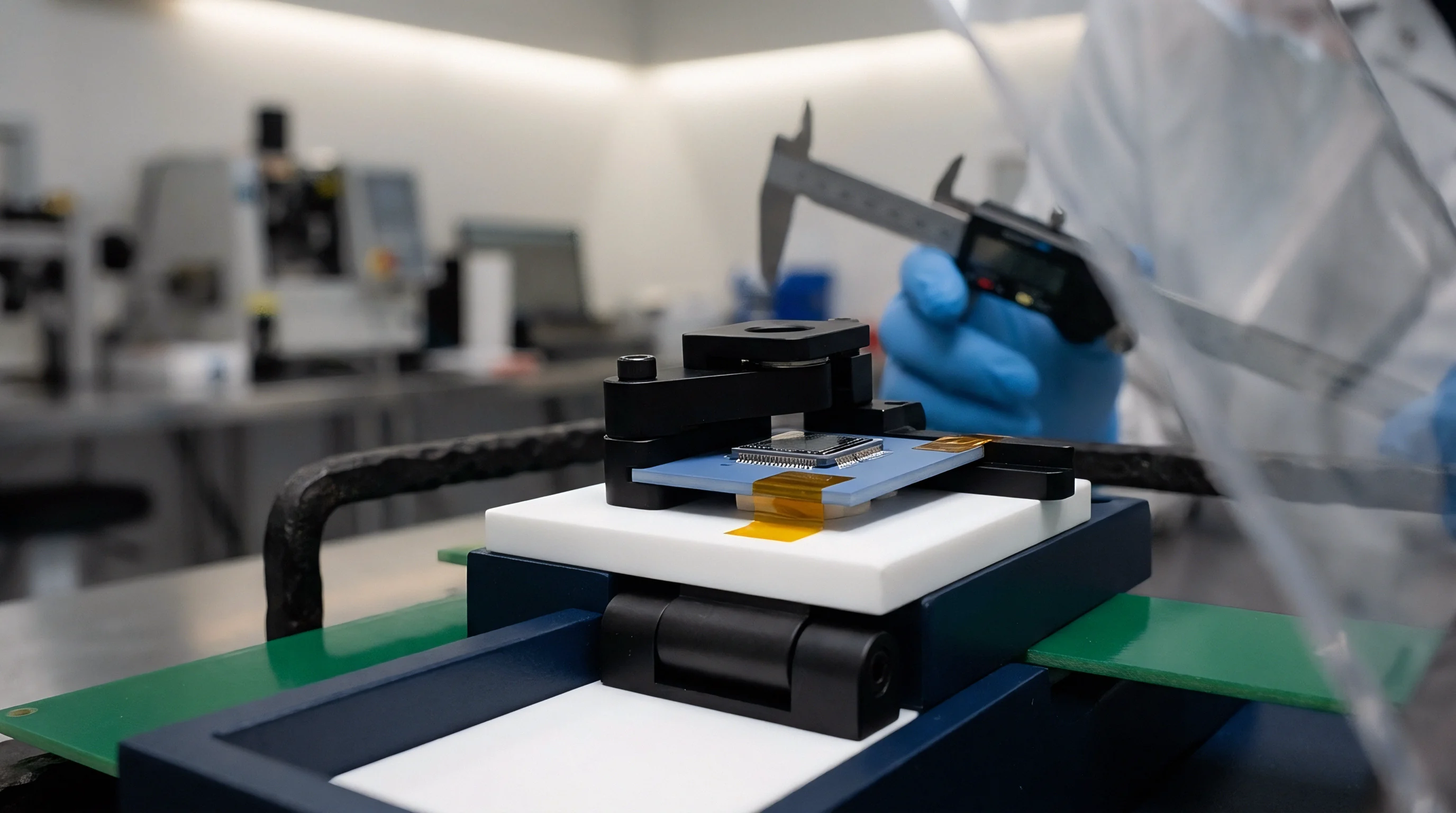
Non-isothermal testing demands real-time specimen temperature monitoring using fine-gauge thermocouples laser-welded to test substrates. Test ramp speeds of 10 degrees Celsius per minute generate internal temperature delays up to 4 degrees Celsius between joint core and substrate interface. This thermal delay shifts instantaneous flow stress values, skewing calculated viscoplastic strain energy density curves.
Experimental Sources of Strain Energy Scatter
Mechanical test fixtures introduce parasitic compliance that distorts micro-displacement measurements during high-temperature dwell periods. Standard linear variable differential transformers measure total system extension, mixing fixture elasticity with genuine inelastic solder strain. Uncorrected fixture deflection inflates measured plastic work metrics by adding false strain energy increments during unloading phases.
Microstructural coarsening during extended thermal cycling alters internal deformation resistance s independent of mechanical strain history. Silver-tin intermetallic compounds precipitate out of supersaturated beta-tin matrices, reducing matrix strengthening effects over time. Solder joint size reduction below 100 micrometers introduces grain size constraint effects where individual tin grain orientations dominate joint compliance.
Failure modes in multiaxial microelectronic joints manifest along distinct structural paths dependent on temperature amplitude and strain distribution:
- Interfacial intermetallic fracturing occurs at the copper-tin intermetallic compound layer under high shear strain rates and low absolute temperatures where grain boundary sliding remains suppressed.
- Bulk viscoplastic void coalescence dominates high-temperature dwell periods where dynamic recovery mechanisms facilitate cavitation at grain triple junctions.
- Recrystallization-driven shear band propagation develops under low-cycle thermal fatigue, producing localized structural softening along primary shear planes.
- Thermomechanical ratcheting accumulates permanent volumetric strain during asymmetric thermal profiles, leading to premature pad lifting under structural constraints.
Laboratory equipment vendors frequently attribute wide test scatter in micro-shear joint fatigue life to inherent material variability rather than uncalibrated temperature lag and fixture compliance. Test laboratories accepting this premise without correcting load-frame compliance and thermal delays issue life prediction certificates carrying unstated systematic errors.

Variance
Uncertainty propagation from constitutive inputs to output energy density metrics requires rigorous mathematical treatment. Standard analytical expressions fail when material response functions exhibit severe non-linearity over working temperature ranges. Monte Carlo sampling techniques map joint input distributions directly into cumulative viscoplastic strain energy density probability densities.
First-order sensitivity coefficients quantify how small shifts in individual input parameters alter cumulative strain energy accumulation per cycle. Partial derivative matrix terms partial Δ Wvp / partial thηi vary non-linearly across thermal profile ramps. Sensitivity values peak during hot dwell transitions where stress relaxation rates depend heavily on strain rate sensitivity exponents m and n.
What Modulates Viscoplastic Dissipation under Multiaxial Loads?
Shear stress ratios combined with hydrostatic tension control the rate of inelastic energy dissipation within constrained micro-joints. Higher stress triaxiality suppresses plastic flow while accelerating cavitation mechanisms, shifting the balance between stored elastic energy and dissipated plastic work. Non-isothermal conditions modulate this dissipation by altering instant activation barriers continuously across thermal ramp profiles.
Evaluating total uncertainty in energy dissipation demands isolating individual parameter contributions across low-temperature dwell, heating ramp, high-temperature dwell, and cooling ramp phases. The sensitivity table below illustrates the normalized impact of each Anand parameter on calculated strain energy density under a standard profile spanning minus 40 to plus 125 degrees Celsius.
| Anand Parameter | Heating Ramp Sensitivity | Hot Dwell Sensitivity | Cooling Ramp Sensitivity | Cold Dwell Sensitivity |
|---|---|---|---|---|
| Q/R | 0.38 | 0.45 | 0.31 | 0.12 |
| A | 0.32 | 0.41 | 0.28 | 0.10 |
| xi | 0.15 | 0.08 | 0.22 | 0.35 |
| m | 0.22 | 0.36 | 0.19 | 0.29 |
| h_0 | 0.18 | 0.04 | 0.25 | 0.08 |
| s_hat | 0.09 | 0.28 | 0.11 | 0.19 |
| n | 0.02 | 0.19 | 0.03 | 0.05 |
| a | 0.05 | 0.02 | 0.07 | 0.01 |
| s_0 | 0.11 | 0.01 | 0.16 | 0.22 |
A ten percent uncertainty in activation energy Q/R drives a twenty-four percent variance in total strain energy accumulation per thermal cycle under standard packaging test conditions.
Numerical probability distributions of strain energy density derived via 10,000-run Monte Carlo iterations reveal marked positive skewness. Input parameters following Gaussian distributions transform through exponential constitutive terms into log-normal output distributions. Expressing fatigue life uncertainty using simple plus-minus standard deviations underestimates early fatigue failure risks in lower tail regions.
Covariance terms between stress multiplier ξ and initial deformation resistance s0 reduce total variance when negative cross-correlation exists in experimental fits. Standard calibration protocols that fit parameters sequentially rather than simultaneously destroy these cross-correlation terms. Simultaneous multivariable optimization preserves parameter covariance structures, maintaining physical fidelity in subsequent stochastic finite element runs.
How do microstructural aging and grain boundary sliding shift the underlying covariance matrix during three years of field operation?

Integration
Numerical execution of Anand constitutive equations within commercial finite element codes requires implicit time integration schemes to ensure numerical stability. Radial return algorithms map trial elastic stress states back onto the evolving yield surface at each integration point. Non-isothermal conditions demand updating instantaneous yield surfaces and state variables at every sub-step based on local temperature increments.
Time-step truncation criteria control convergence during rapid thermal transients. Time steps exceeding 0.5 seconds during thermal ramps induce numerical drift, underestimating instantaneous stress relaxation. This truncation error accumulates over simulated thermal cycles, skewing total strain energy dissipation metrics.
ISO/IEC 17025 clause 7.8.2 requires test reports to include measured uncertainty budgets whenever compliance with specified tolerance limits impacts product risk assessments.
Non-isothermal constitutive parameter identification demands systematic experimental workflows. Standard laboratory protocols specify the precise extraction sequence required to isolate thermal activation terms from strain hardening kinetics.
- Conduct isothermal tensile or shear tests at three distinct strain rates across four constant temperatures to capture steady-state flow stress levels.
- Plot saturation stress values against strain rate on logarithmic axes to determine strain rate sensitivity exponents m and n.
- Calculate activation energy term Q/R by plotting steady-state strain rates against inverse absolute temperatures across constant stress contours.
- Extract stress multiplier xi by performing non-linear regression on high-stress isothermal flow curves.
- Determine dynamic hardening parameters h_0 and a from stress-strain plastic transient response curves prior to saturation.
- Perform simultaneous multivariable refinement across all raw test curves to construct the final parameter covariance matrix.
Discrepancies between implicit radial return algorithms and explicit integration solvers introduce additional computational uncertainty. Radial return schemes enforce strict plastic consistency at sub-step ends, whereas explicit forward Euler steps drift away from stress surfaces during severe non-linear ramps. Quantifying solver integration uncertainty requires running mesh refinement and time-step convergence studies prior to extracting energy density metrics.
Commercial sub-modeling techniques transfer displacement fields from coarse board-level models into refined single-joint sub-models. Interpolation errors at cut boundaries introduce false shear strains along corner solder joints. Mechanics engineers must verify that cut-boundary interpolation errors remain below one percent of calculated equivalent inelastic strains.
Standard procurement specifications mandate that finite element life estimates incorporate verified solver convergence profiles along with traceable parameter uncertainty bounds under standard purchase agreement terms.
Margin
Financial risk management in high-reliability packaging procurement depends on translating material uncertainty into failure rate probabilities. Microelectronic hardware exposed to harsh automotive under-hood environments demands ten-year operational survival guarantees. Uncalibrated constitutive models understate strain energy accumulation variance, producing overly optimistic mean-time-between-failure metrics that expose original equipment manufacturers to massive warranty claims.
Worked sensitivity calculations demonstrate the commercial consequences of parameter calibration. Consider a 1924-pin ball grid array component subjected to thermal cycling from minus 40 to plus 125 degrees Celsius with a 15-minute dwell time. A non-calibrated Anand parameter set boasting nominal literature figures predicts a mean energy accumulation rate of 0.245 megajoules per cubic meter per cycle, yielding a predicted fatigue life of 2,150 cycles using standard Darveaux energy-based fatigue criteria.
Factoring in a calibrated parameter uncertainty budget with an expanded coverage factor of k=2 establishes an upper 95 percent confidence bound on strain energy density of 0.342 megajoules per cubic meter per cycle. Life predictions calculated at this upper uncertainty margin drop to 1,280 cycles. Designing packaging architectures around uncalibrated nominal values reduces real operational safety margins by forty percent.
Parameter correlation terms must remain intact during Monte Carlo sampling to prevent artificial broadening of output uncertainty bands.
Quality assurance leads evaluate supplier documentation against strict verification criteria before accepting finite element reliability dossiers. The checklist below defines mandatory verification steps for validating non-isothermal Anand viscoplastic strain energy density claims.
- Traceability of raw test data requires verifying that parameter extraction relies on physical shear test curves carrying accredited laboratory calibration certificates.
- Covariance matrix inclusion confirms that parameter datasets include off-diagonal covariance terms rather than isolated parameter standard deviations.
- Fixture compliance calibration validates that micro-displacement measurements account for load-frame stiffness across the complete test temperature range.
- Thermal lag verification ensures that specimen temperature histories reflect true solder joint thermal profiles measured via direct thermocouple attachment.
- Solver convergence documentation provides explicit proof of time-step and mesh density independence for calculated strain energy density metrics.
Commercial implications of calibration rigor extend directly to warranty reserve budgeting. The comparative table below outlines the financial and technical metrics associated with three distinct calibration approaches for board-level reliability modeling.
| Calibration Approach | Parameter Extraction Cost | Calculated Energy Variance (k=2) | Predicted Fatigue Life (Cycles) | Required Warranty Reserve per Unit |
|---|---|---|---|---|
| Uncalibrated Datasheet / Literature | $0 | ±38% | 2150 (Uncertain) | $14.50 |
| Standard Isothermal Shear Calibration | $12,500 | ±18% | 1720 ±310 | $6.20 |
| Fully Calibrated Non-Isothermal Covariance Scheme | $38,000 | ±6% | 1410 ±85 | $1.85 |
Tightening constitutive parameter uncertainty narrows predicted failure distribution spreads, enabling product leads to reduce financial warranty reserves without increasing field failure risk. High upfront calibration expenditure pays for itself across large production volumes by eliminating over-engineering margins while protecting against catastrophic field returns.
Narrow uncertainty bands established through accredited non-isothermal calibration reduce risk premiums across high-reliability supply chains.