
Interferometric Gyroscope Optical Fiber Potting Basics
Compliant potting matrices eliminate interstitial voids and stabilize quadrupole fiber geometry to suppress Shupe thermal drift and vibration rectification.
Compliant potting matrices eliminate interstitial voids and stabilize quadrupole fiber geometry to suppress Shupe thermal drift and vibration rectification.
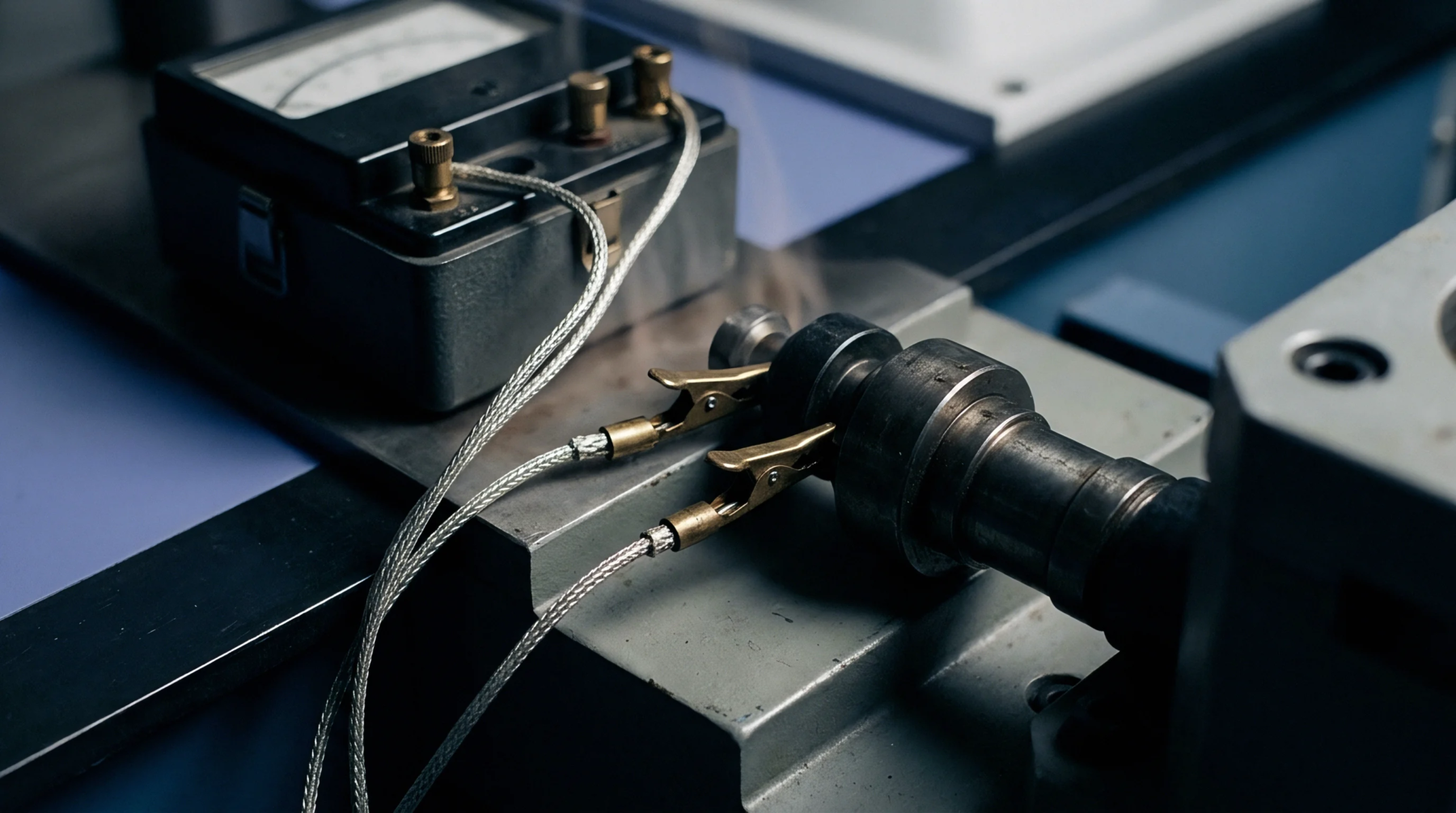
Quadrupolar winding cancels dynamic thermal phase bias in optical coils by matching spatial heat diffusion delays between symmetric fiber counter-propagation loops.

Dynamic thermo-mechanical stress decoupling models eliminate passive rate table soak time by filtering viscoelastic strain history during active thermal ramps.

Non-linear scale factor errors require third-order polynomial modeling to prevent catastrophic velocity and orientation drift in high-dynamic navigation loops.
Extract quantization noise Q from Allan plots by extending the minus-one log-log slope to root three seconds, isolating digital step limits from sensor rate noise.

Shupe effect transient phase errors occur when temporal temperature gradients break optical reciprocity, requiring symmetric winding and thermal modeling.

Allan variance isolates sensor white noise, flicker floor, and random walk by evaluating cluster time variances on an isolated seismic bench.

Closed-loop inertial noise extraction isolates actuator drive noise, quantization limits, and thermal flicker through overlapping Allan variance integration bins.

Dynamic mechanical resonance deforms the optical coil and saturates tracking loops, introducing frequency-dependent timestamp skew under angular vibration.
Tactical IMU thermal bias modeling requires combining static higher-order polynomials with real-time temperature derivative terms to eliminate dynamic lag errors.

Finite element modeling of FOG coil thermoelastic stress vectors requires anisotropic orthotropic material matrices to capture photoelastic birefringence drift.
Dynamic thermal gradients induce structural strain and bias errors that static calibrations miss, requiring real-time state observer algorithms.

Precision Allan variance characterization demands thermal soak chambers featuring sub-millikelvin temperature stability, low vibration, and zero fluid turbulence.
Closed loop inertial sensor Allan variance noise parameters require isolating active rebalance filter artifacts before populating discrete Kalman filter process noise matrices.
Expertise is a utility, not a secret. sentiention™ publishes its working knowledge as open reference: intelligence layer covering the materials it sources, the markets it enters, and the reference that serves both.