Packaging Interface
Viscous polymeric bonding formulations secure semiconductor die back-sides to package leadframes or ceramic substrates while providing mechanical, thermal, and electrical interconnectivity. Specifying polymer die attach establishes the primary physical anchoring mechanism that absorbs thermal expansion stresses and conducts operational heat away from active silicon junctions. Sourcing engineers qualify these materials for microelectronic assembly to prevent mechanical detachment, die cracking, and thermal runaway within encapsulated integrated circuits.
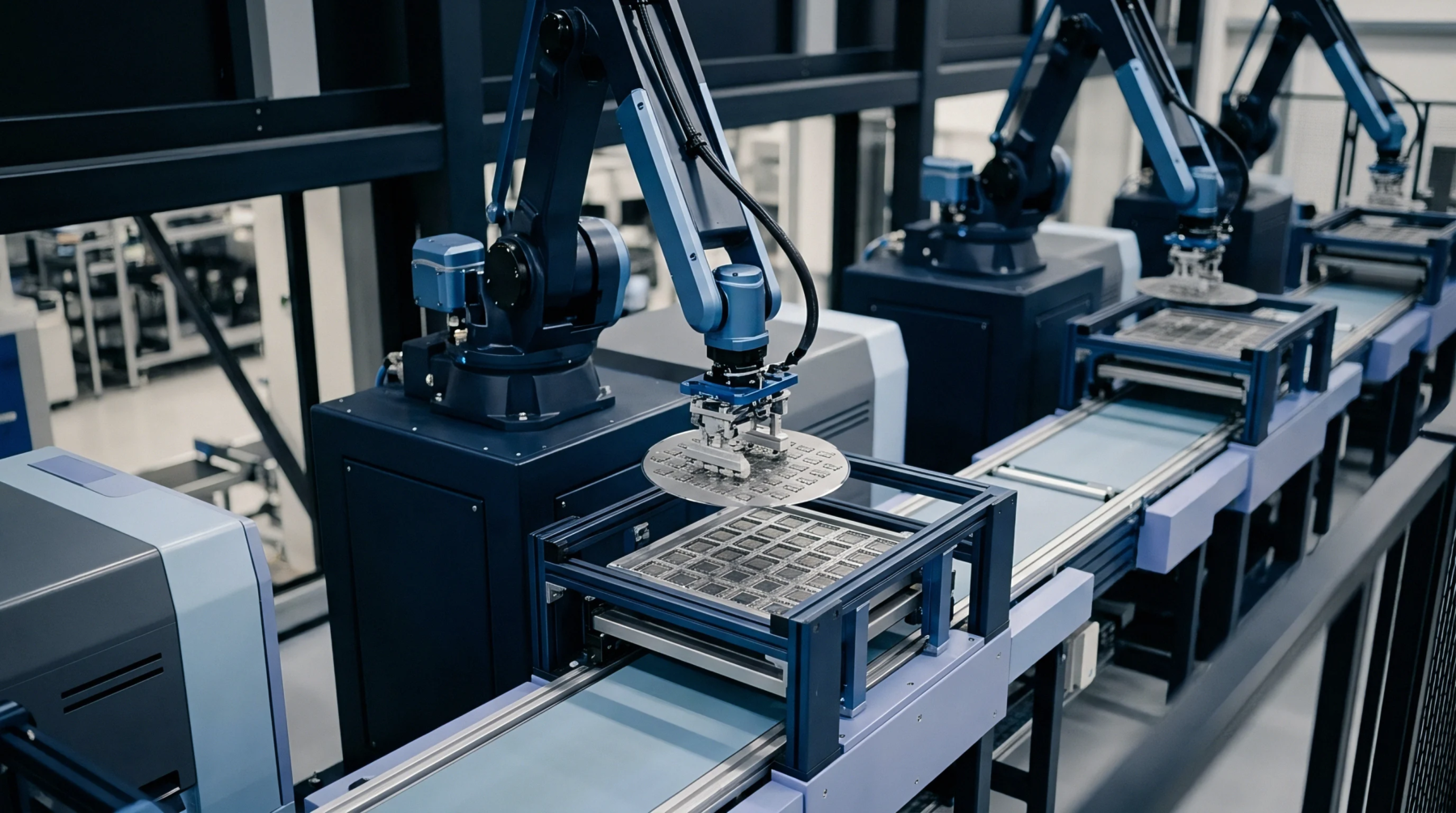
Formulations consist of epoxy, polyimide, or bismaleimide resin bases loaded with silver flakes, copper particles, or boron nitride ceramic fillers to tailor electrical and thermal conductivity. Dispensing machinery utilizes automated needles, pin transfer arrays, or film preforms to apply controlled adhesive volumes onto substrate flags. Material properties become invalid if joint thickness variations, voids, or outgassing contaminants degrade thermal paths or induce die tilt beyond specified optical bounds.
Thermal Evacuation
Heat generated by high-power semiconductor active areas must escape efficiently downward through the die adhesive layer to the heat spreader. Metal-filled polymers provide continuous percolation paths that convey thermal energy across thin bond lines, preventing localized junction overheating. High filler particle packing densities elevate thermal conductivity but increase adhesive paste viscosity, affecting deposition consistency during rapid dispensing operations.
Non-conductive formulations incorporating silicon dioxide or aluminum oxide fillers isolate circuit substrates electrically while maintaining baseline thermal conduction for low-power processing components. Acoustic microscopy scans completed packages to detect internal voids, ensuring that cumulative unbonded contact areas remain below maximum qualification limits. Laser flash analysis measures effective thermal diffusivity across cured material disks to confirm compliance with component thermal models.
Stress Compensation
Silicon chips exhibit substantially lower thermal expansion coefficients than common copper leadframes or organic printed circuit substrates. Polymeric adhesives act as mechanical shock absorbers, deflecting elastically or viscoelastically to relieve interfacial shear stress generated during thermal cycling. Low elastic modulus formulations dissipate differential contraction forces that would otherwise fracture brittle silicon dies or cause packaging warp.
Resin bleeding onto surrounding leadframe surfaces represents a common defect mechanism that impairs subsequent wire bonding processes by coating gold or aluminum fingers with polymeric films. Sourcing specifications mandate rigorous testing of bleeding propensity on polished test coupons, rejecting material lots that exceed allowable migration radiuses. Thermal cycling tests from sub-zero regimes to reflow ceilings expose bonded units to destructive fatigue screening prior to production approval.
Storage Protocols
Premixed polymeric adhesive syringes undergo irreversible chemical reaction if exposure temperatures exceed cryogenic storage thresholds. Freezing compounds at sub-zero temperatures arrests crosslinking kinetics, preserving specified rheological parameters and pot life for manufacturing applications. Production floor qualification tracks syringe thaw times and working lives, discarding materials that exceed cumulative room-temperature exposure budgets.
Incomplete curing cycles yield uncrosslinked volatile fractions that outgas onto optical windows or wire bond interfaces during subsequent package sealing. Dynamic mechanical analysis and differential scanning calorimetry verify crosslinking density across cured production samples. Incoming quality control routines inspect particle size distribution to prevent needle clogging on high-speed dispensing lines.
Documented cure tracking ensures process uniformity across production shifts.