Modeling Non-Linear Thermo-Mechanical Stress Decoupling Time Constants in Automated Rate Table Calibration
Dynamic thermo-mechanical stress decoupling models eliminate passive rate table soak time by filtering viscoelastic strain history during active thermal ramps.
Creep
Automated motion rate tables evaluating tactical- and navigation-grade inertial measurement units run into residual bias drift during high-throughput thermal cycles. Rapid ramps from negative forty degrees Celsius to positive eighty-five degrees Celsius create non-uniform temperature fields across transducer housings, die mounts, and sensing elements. Elastic deformation follows the thermal gradient almost instantly, but interfacial shear strain within structural epoxies, ceramic carriers, and metallic mounting plinths dissipates much more slowly through delayed molecular reorganization.
These delayed mechanical responses produce transient, multi-exponential bias shifts that standard steady-state thermal models fail to capture.
Inertial calibration algorithms traditionally assume instant equilibrium at discrete temperature steps. Yet when a rate table holds a setpoint, internal mechanical strain continues to evolve for hours. Silicon proof mass structures undergo parasitic bending moments while internal stresses relax toward equilibrium.
Ignoring these time constants creates artificial calibration artifacts, forcing software engines to map temporary relaxation responses into permanent scale factor and bias coefficients.
This time-dependent stress field follows non-linear viscoelastic dynamics driven by both instantaneous temperature and its rate of change. Polymer die-attach matrices relax faster near their glass transition temperature; below that threshold, strain energy remains trapped in boundary layers and releases along prolonged exponential curves. Modeling these dynamics requires separating pure structural thermal conduction from mechanical stress dissipation.
Viscoelastic relaxation mechanics cause parasitic bias drift during thermal ramps, degrading rate table calibration accuracy if evaluated before internal mechanical equilibrium occurs.
Physical Mechanisms Driving Non-Linear Stress Relaxation
Mechanical stress inside a packaged inertial transducer stems from coefficient of thermal expansion mismatches between adjacent materials. Silicon exhibits an expansion coefficient near two point six parts per million per Kelvin, oxide ceramics range from six to eight parts per million per Kelvin, and aluminum structural frames exceed twenty-three parts per million per Kelvin. Temperature shifts drive these bonded interfaces into severe shear strain.
Stress relaxation within the assembly proceeds through four distinct physical mechanisms:
- Polymer Chain Slippage occurs within thermosetting die-attach adhesives, where local strain concentrations force cross-linked chains to realign over extended windows of time.
- Solder Alloy Fatigue Creep alters microstructural grain boundaries inside primary solder interconnects, converting high shear stress into low-rate plastic deformation.
- Structural Housing Friction introduces microscopic stick-slip displacements across bolted mechanical interfaces on the rate table mounting plate.
- Out-of-Plane Substrate Warpage exerts continuous, slowly decaying torsional bending forces onto sensitive MEMS suspension beams.
A calibration routine that measures sensor offset during active stress relaxation logs an artificial bias trend. Applying a linear temperature compensation curve to that data leaves uncompensated residuals during field operations. The test engine must therefore track the stress history of the component rather than relying solely on steady-state thermistors embedded in the housing baseplate.
Calibrating high-precision accelerometers and gyroscopes on rate tables without accounting for viscoelastic strain history yields uncompensated bias errors up to forty micro-g or zero point zero five degrees per hour. These errors directly inflate sensor non-repeatability specifications, forcing factory re-calibration cycles that double overall manufacturing costs.
Diffusion
Heat transport through an inertial sensor housing obeys Fourier heat conduction, governed by thermal diffusivity. Here, the thermal time constant reflects material density, specific heat capacity, and geometry, whereas mechanical stress decoupling time constants stem from viscoelastic strain energy dissipation ~ a process tied to internal material friction and polymer chain mobility. Thermal diffusion occurs over tens to hundreds of seconds, while thermo-mechanical stress relaxation stretches from hundreds of seconds to several hours.
Decoupling these time domains requires tracking the phase lag between housing thermistor readings and true mechanical zero-offset stability. During rapid thermal rate table profiling, ambient chamber air changes temperature in minutes, and the sensor core reaches conductive thermal equilibrium shortly thereafter. Internal stress fields, however, continue to adjust long after core temperature sensors register zero thermal flux.
Confounding thermal transport delays with mechanical relaxation delays produces incorrect dynamic state matrices.
| Assembly Layer | Dominant Material | Primary Mechanism | Time Constant Range |
|---|---|---|---|
| External Fixation Frame | Anodized Aluminum 6061-T6 | Thermal Diffusion Conduction | 12 to 45 seconds |
| Hermetic Package Shell | Kovar or Alumina Ceramic | Conductive Heat Transfer | 5 to 20 seconds |
| Die Attach Adhesive | Silver-Filled Epoxy Film | Viscoelastic Creep Relaxation | 180 to 2,400 seconds |
| MEMS Sensing Element | Monocrystalline Silicon | Elastic Thermal Bending | 0.1 to 1.5 seconds |
| Structural Potting | Polyurethane Compound | Volumetric Stress Decoupling | 600 to 7,200 seconds |
Packaging vendors frequently cite thermal stabilization times based solely on external baseplate thermistors. Those metrics reflect thermal heat capacity rather than internal mechanical stress equilibrium, and varying polymer crosslinking further alters relaxation rates. Relying on vendor equilibrium metrics leads directly to premature data sampling during rate table calibration profiles.
A housing thermistor confirming thermal stability within zero point one Kelvin does not indicate that internal die-attach shear stress has fully relaxed.
Separation of Thermal Transients from Mechanical Relaxation
Separating thermal transport from mechanical stress relaxation relies on dual-mode parameter identification. High-frequency thermal stimulation isolates pure heat conduction paths because polymer die mounts act as low-pass mechanical filters. Low-frequency thermal ramps, by contrast, activate viscoelastic creep within the adhesive, exposing the underlying stress decoupling time constants.
Temperature gradients skew proof masses, and measuring sensor bias outputs under differential heating regimes reveals distinct modal signatures. A pure thermal gradient generates bias drift proportional to the instantaneous derivative of temperature with respect to time. A viscoelastic stress state, on the other hand, produces a bias offset proportional to historical strain energy ~ represented mathematically as a convolution of prior thermal rates and exponential decay kernels.
Filter
Modeling non-linear thermo-mechanical stress relaxation mathematically relies on extended state-space formulations. A generalized Prony series represents stress decay as a sum of discrete exponential functions, each assigned a specific relaxation time constant. Because viscoelastic polymers show strong temperature dependence ~ higher temperatures lower viscosity and shorten time constants ~ Arrhenius rate equations are used to scale these relaxation parameters across the operating range.
Linear filters fail during dynamic temperature transitions because stress decay times shift continuously with instantaneous housing temperature. To handle this, the parameter estimation engine uses a state-space formulation where stress states act as unobserved internal variables. The observation equation then maps these stress states alongside classic scale factor and bias terms to predict real-time rate table sensor outputs.
Parameters for the dynamic stress decoupling filter are extracted through an automated rate table calibration sequence:
- Stabilize the sensor unit at an initial temperature setpoint until offset drift falls below the noise floor.
- Apply a steep thermal ramp at a controlled rate of five degrees Celsius per minute toward the target temperature limit.
- Hold the target setpoint temperature while capturing continuous zero-motion sensor outputs at high sample rates.
- Fit a multi-exponential Prony series to the post-ramp bias transient data to extract initial time constants and stress amplitudes.
- Repeat the thermal ramp sequence across varying thermal slewing rates to map temperature-dependent scaling factors.
- Compute activation energies for each relaxation mode using Arrhenius non-linear regression algorithms.
Integrating non-linear stress tracking into the calibration filter produces an optimized dynamic model. The state-space filter updates structural stress states continuously based on thermal sensor history, stripping strain-induced offset errors from rate table calibration data in real time.
For example, if a tactical-grade MEMS gyroscope undergoes a thermal jump from twenty degrees Celsius to sixty degrees Celsius, the observed bias shift contains an instantaneous elastic component of two degrees per hour and a viscoelastic transient of six degrees per hour decaying over a six-hundred-second time constant. Standard static calibration models treat that six degrees per hour drift as static thermal bias, distorting the sensor’s thermal calibration polynomial. The dynamic filter isolates the transient relaxation state, retaining the true underlying thermal bias coefficient of two degrees per hour.
Uncertainty remains regarding how high-frequency mechanical vibration from rate table drive motors interacts with temperature-dependent viscoelastic stress relaxation inside low-durometer encapsulants.
Profile
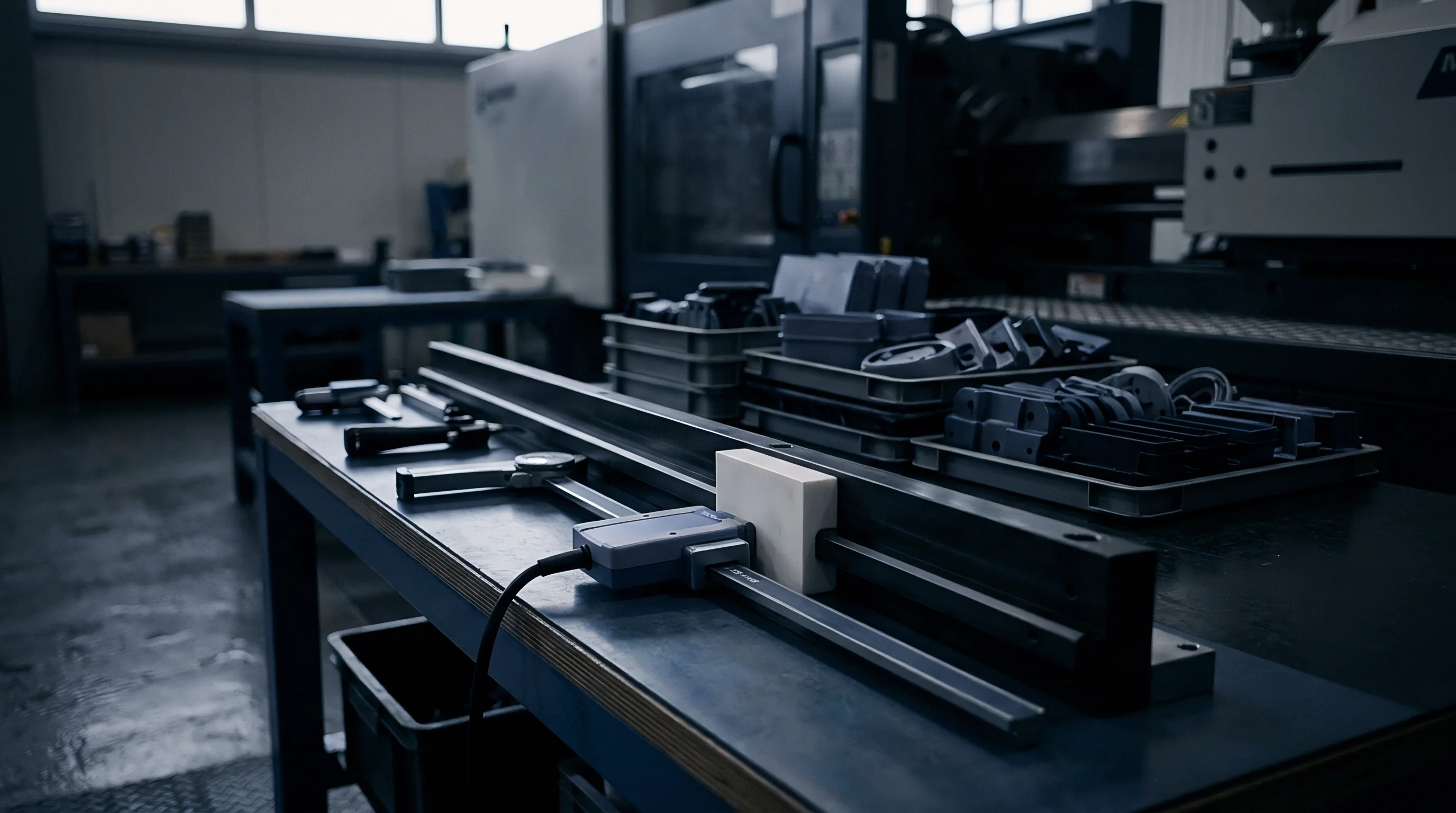
Optimizing automated rate table trajectories requires matching thermal slewing profiles with angular velocity sequences. Traditional calibration routines force prolonged thermal holds at fixed temperatures to ensure full mechanical equilibrium before initiating rotation, consuming tens of hours per sensor batch. Dynamic rate table profiling instead rotates the sensor through calibrated angular rates while temperature ramps continuously, relying on dynamic models to strip out transient thermal stresses.
Motion profile synthesis balances angular velocity step execution with thermal ramp rates. The automated rate table trajectory generates distinct acceleration, constant rate, and thermal slewing phases designed to separate rate-proportional scale factor errors from thermal-stress-induced bias shifts.
IEEE Std 952 defines gyro bias calibration bounds but leaves dynamic stress decoupling profiles during non-equilibrium thermal ramps to the system integrator.
When Does Non-Linear Relaxation Bypass Traditional Thermal Soak?
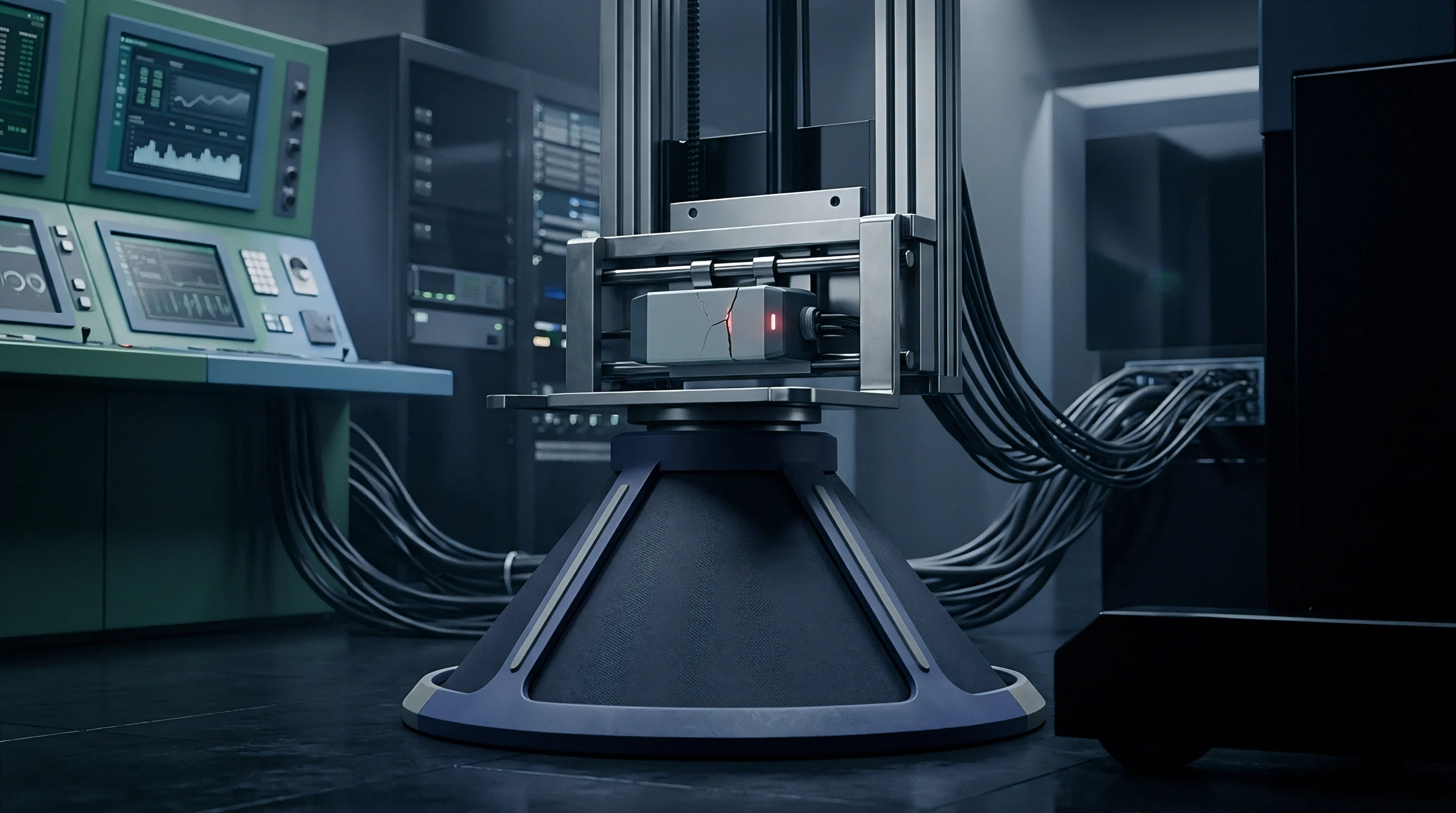
Dynamic stress decoupling algorithms enable rate table testing during continuous thermal transitions, eliminating static thermal holds once activation energy parameters are validated across the operational temperature window. When temperature rates exceed three degrees Celsius per minute, internal stress states become predictable functions of thermal history rather than stochastic noise.
Synthesizing an optimal dynamic rate table profile requires adhering to structured calibration design constraints:
- Thermal Ramp Bounds must keep thermal slew rates within ranges that prevent structural delamination while maximizing stress excitation.
- Angular Velocity Symmetries require mirror-image positive and negative rate steps at each thermal point to isolate scale factor non-linearity from bias decay.
- Frequency Decoupling Rates demand rate table axis oscillations to operate outside the physical time-constant spectrum of polymer stress relaxation modes.
- Continuous State Ingestion ensures thermal baseplate sensor data streams continuously into the dynamic coefficient estimator without buffer drops.
Dynamic profile execution requires strict synchronization between the rate table motion controller and chamber temperature profiling hardware. Misaligning thermal time stamps relative to motion data by as little as fifty milliseconds introduces dynamic scale factor calculation errors exceeding one hundred parts per million.
Thermal ramp rates must never exceed the material transition threshold where polymer adhesive stress response switches from ductile shear relaxation to brittle micro-cracking.
Package
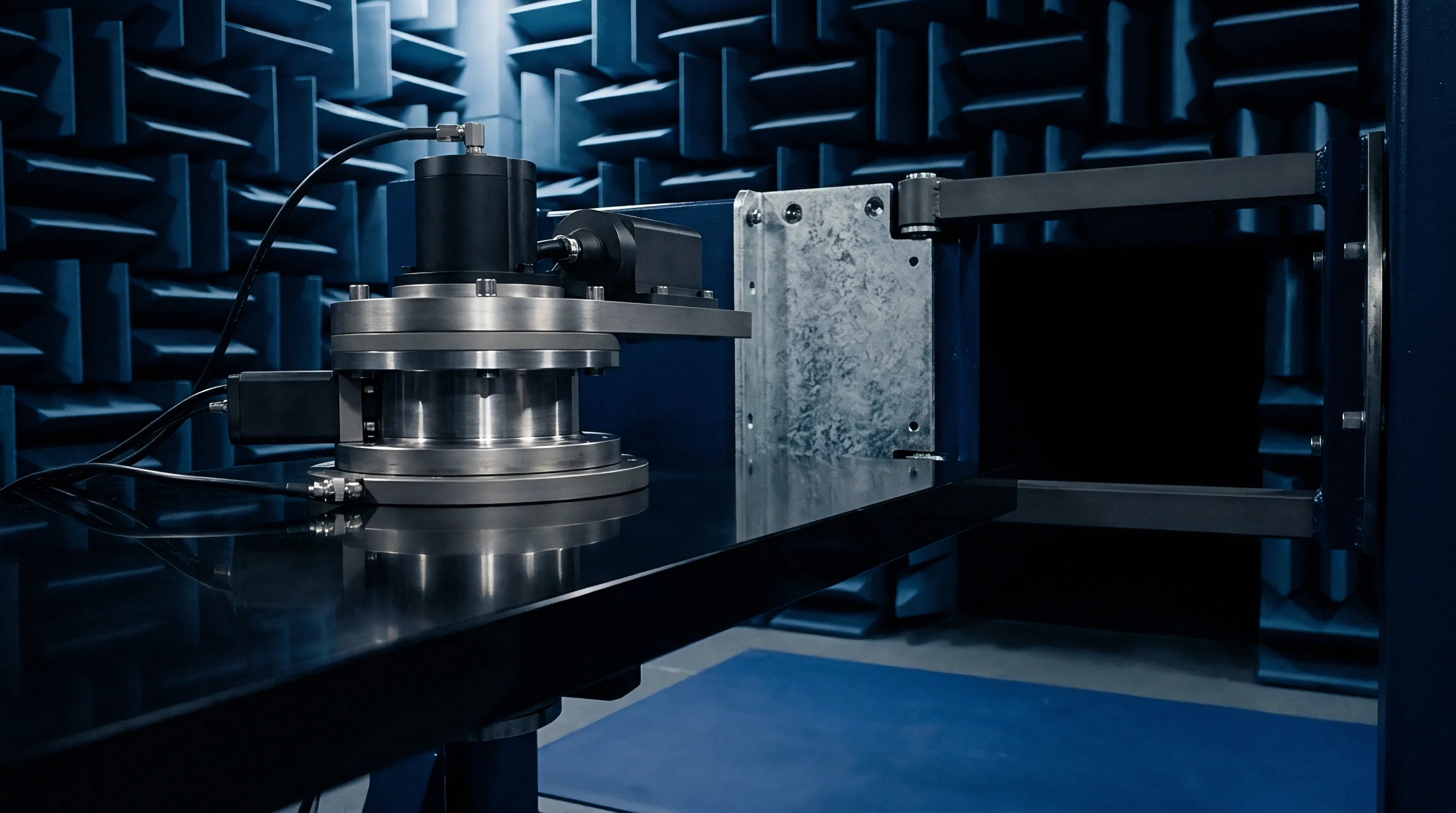
Transducer packaging choices dictate the amplitude and distribution of internal thermo-mechanical stress constants. Hermetic ceramic leadless chip carriers mounted on glass-epoxy circuit boards experience planar bending forces during thermal cycles. By contrast, direct-bonded copper substrates and silicon-on-insulator structures minimize package-induced strain by aligning thermal expansion coefficients across assembly layers ~ yielding shorter relaxation time constants and lower parasitic drift amplitudes.
Die-attach materials dominate viscoelastic relaxation behavior. High-modulus epoxy pastes transfer mounting stresses directly into the sensing element, amplifying bias sensitivity, whereas flexible silicone adhesives reduce stress transmission but increase mechanical compliance, causing alignment shifts under high angular rates. To strike a balance, formulators modify epoxies with silica fillers to match silicon expansion coefficients while maintaining low glass transition temperatures.
Material criteria for low-stress inertial sensor packaging focus on structural stability:
- Glass Transition Temperature selection must place polymer softening points outside the operational temperature range to prevent sudden shifts in relaxation time constants.
- Viscoelastic Loss Factor parameters require high shear damping without inducing long-term permanent mechanical set.
- Bond Line Thickness Uniformity controls strain distribution across the die surface to minimize asymmetric parasitic bending.
- Hygroscopic Expansion Resistance eliminates moisture-induced swelling stresses that alter mechanical decoupling time constants during humidity testing.
Selecting package materials with matched coefficients of thermal expansion reduces thermo-mechanical strain energy, yielding cleaner baseline data during rate table calibration cycles.
Per MIL-STD-883 Method 1010 test conditions, thermal cycling causes microstructural strain hardening in standard lead-free solder joints, permanently shifting baseline stress decoupling time constants after as few as fifty thermal exposures.

Dwell
Automated rate table calibration efficiency determines total manufacturing capacity for high-grade inertial sensors. Static dwell protocols require long thermal hold times to ensure structural stress equilibrium, limiting multi-axis rate table throughput. High capital costs for multi-axis rate tables with integrated environmental chambers make prolonged soak profiles commercially costly.
Implementing non-linear thermo-mechanical stress decoupling models transforms rate table economics. Predictive dynamic models strip transient stress effects during active thermal ramps, cutting required thermal soak times by over seventy percent while maintaining target bias accuracy.
| Parameter Metric | Static Thermal Dwell | Linear Transient Fit | Dynamic Non-Linear Decoupling |
|---|---|---|---|
| Soak Dwell Time per Step | 120 minutes | 35 minutes | 10 minutes |
| Total Calibration Run Time | 18.5 hours | 6.2 hours | 3.1 hours |
| Residual Uncompensated Bias | 12 micro-g | 45 micro-g | 14 micro-g |
| Rate Table Capital Utilization | 1.3 units/day | 3.8 units/day | 7.7 units/day |
| Yield Loss from Stress Artifacts | 4.2 percent | 8.6 percent | 0.8 percent |
Consider an automated rate table installation operating a twelve-channel sensor mounting rig. Capital equipment costs for the multi-axis table and chamber reach five hundred thousand dollars. Amortizing equipment costs over a five-year window under static dwell methods yields a capital expense of thirty-five dollars per calibrated sensor channel.
Adopting non-linear thermo-mechanical dynamic models reduces total calibration cycle time from eighteen point five hours to three point one hours per batch, dropping equipment costs to six dollars per channel while throughput increases by more than five hundred percent.
Integrating predictive non-linear stress models into rate table calibration automation minimizes passive thermal holding periods. Real-time dynamic compensation models transform physical stress relaxation tracking from a throughput bottleneck into a solvable signal processing task, directly expanding sensor production capacity.