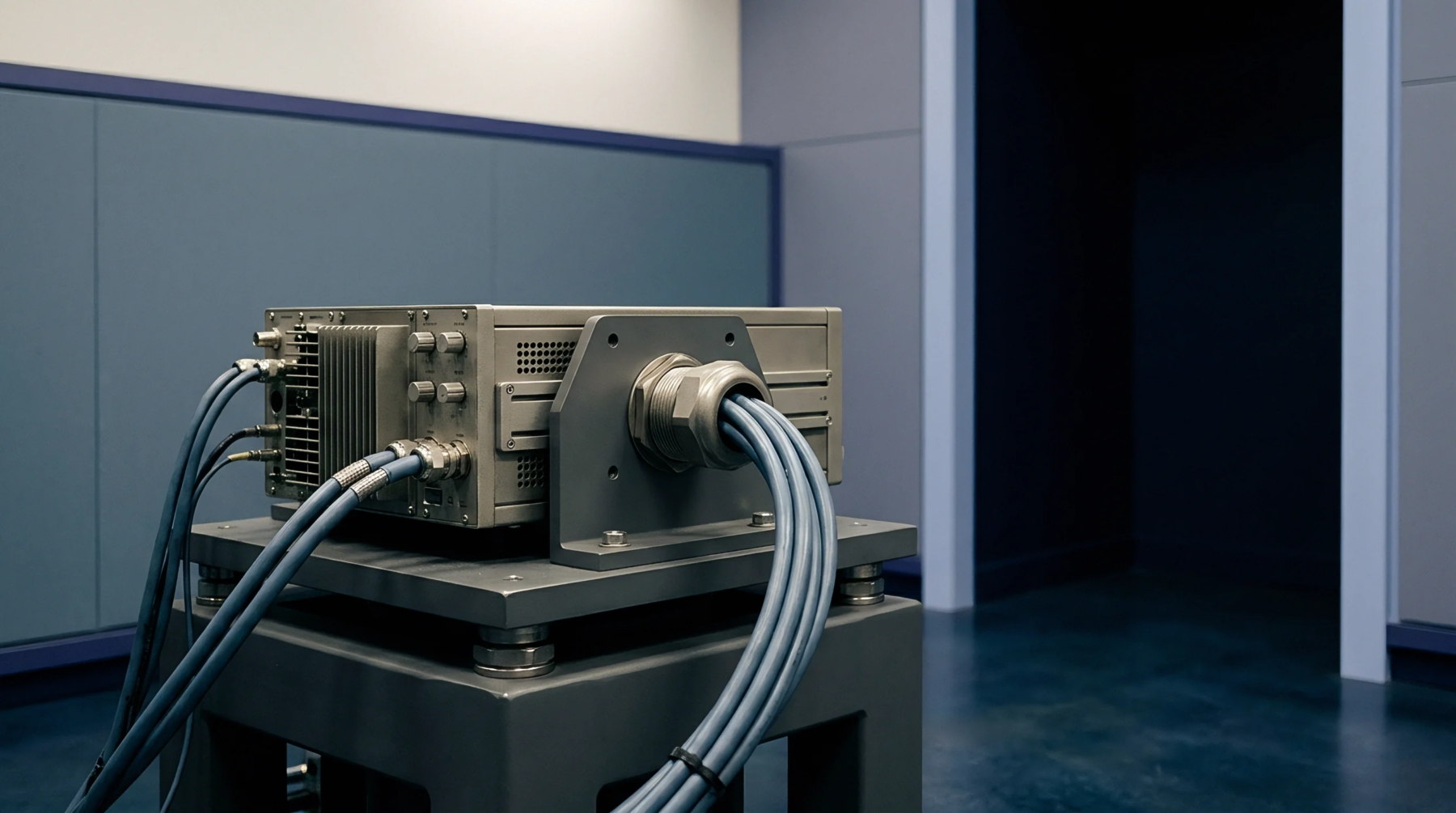
Environmental Validation
Establishing the sensor response at multiple constant temperatures across its operating range allows for the isolation of thermal sensitivity and offset errors. During static thermal calibration, the system remains at each setpoint until all internal components have reached thermal equilibrium. This process creates a reference map that software algorithms use to compensate for the deterministic effects of temperature on the primary measurement.
Procedural Execution
Automated climate chambers transition through a sequence of stable plateaus while a high precision reference thermometer monitors the actual environment. Data points for the static thermal calibration are only recorded once the rate of change in the sensor output falls below a predefined threshold. This ensures that the results represent the steady state behavior of the electronics and the sensing element.
Error Correction
Deviations from the room temperature baseline are used to calculate the thermal sensitivity shift and the zero point offset drift. These parameters are stored in the nonvolatile memory of the device as a lookup table or a set of correction coefficients. Static thermal calibration removes the majority of the repeatable error, leaving only the random noise and the non-repeatable hysteresis.
Application Limit
Dynamic thermal gradients or rapid shocks require different modeling techniques because the static thermal calibration assumes a uniform temperature distribution. The procedure does not account for the lag between the internal sensing element and the external housing during fast transients.