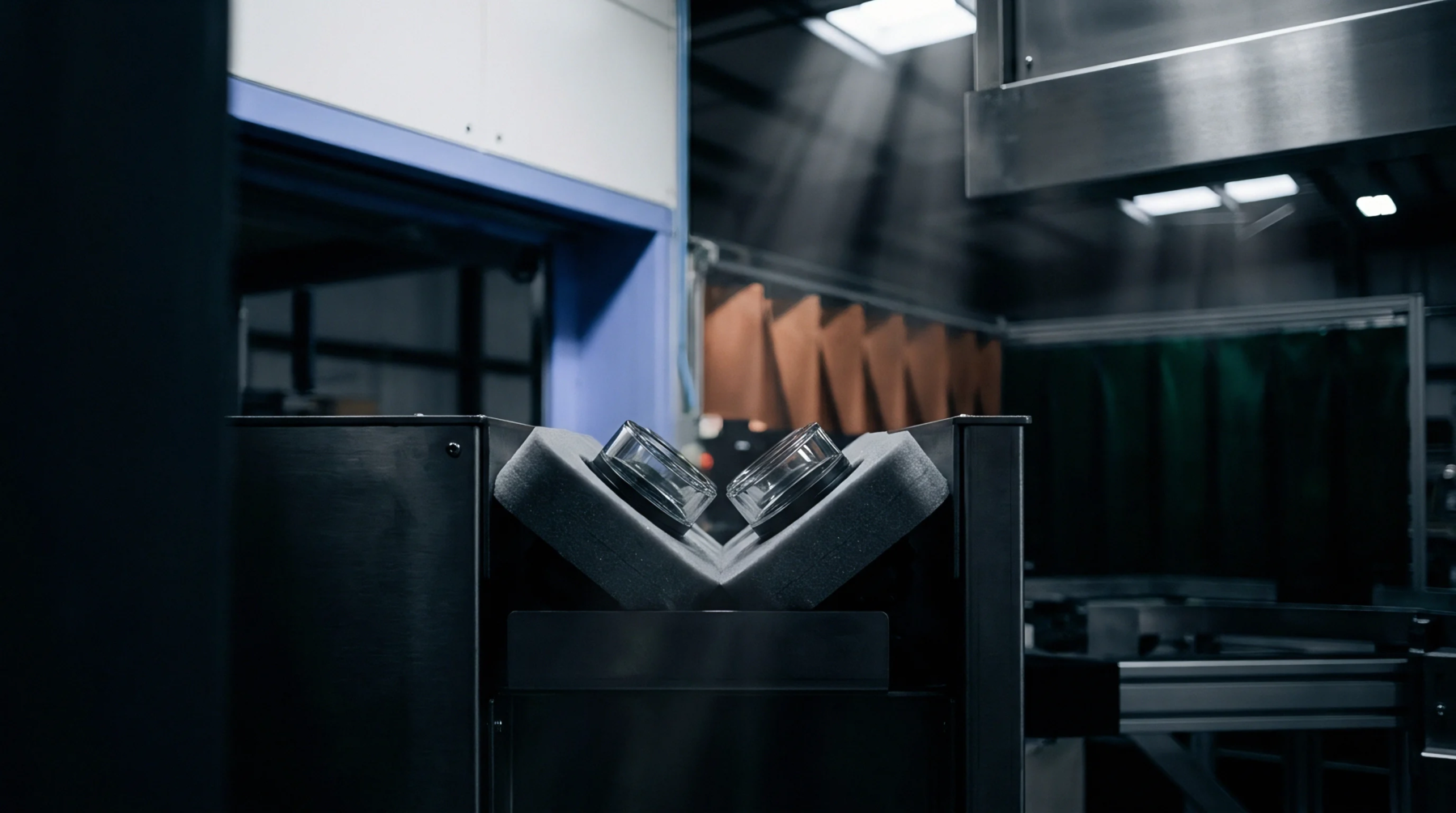
Borosilicate composition
Borosilicate glass with low thermal expansion functions as a primary substrate for laboratory glassware and precision optical components. The corning 7740 material maintains chemical stability across a wide temperature gradient while offering resistance to acidic environments. Standard chemical compositions include approximately eighty percent silica and thirteen percent boron trioxide.
This specific ratio minimizes stress during rapid heating or cooling cycles.
Thermal performance
Designers select this medium for applications where dimensional stability under heat load dictates measurement accuracy. When exposed to high heat flux, the low coefficient of expansion prevents the structural deformation common in standard soda lime glass. A linear expansion coefficient of 32.5 times 10 to the power of negative seven per degree Celsius ensures that physical length varies minimally during calibration shifts.
Instrumentation housings built from this substrate hold their zero point more reliably than those constructed from less inert materials.
Optical transmission
Precise light path calibration relies on the consistent refractive index and high clarity inherent to this glass type. Ultraviolet and visible light signals pass through the substrate with minimal attenuation, permitting reliable sensor readings in spectroscopic equipment. Surface flatness remains consistent after repeated sterilization, which prevents signal noise during frequent cleaning protocols.
Engineers utilize the material to fabricate windows and lenses where high signal throughput at specific wavelengths drives system sensitivity.
Manufacturing tolerance
Fabricators manage potential surface flaws through annealing processes that relieve internal stress developed during the casting stage. Batch uniformity depends on the strict control of impurities during the initial melt phase, as trace metal contamination shifts the electrical conductivity of the glass. Quality verification confirms that the dielectric constant stays within narrow limits to support predictable capacitive sensing configurations.
Final components demonstrate durability through consistent chemical resistance against leaching in prolonged aqueous exposure.