Polymer Matrix
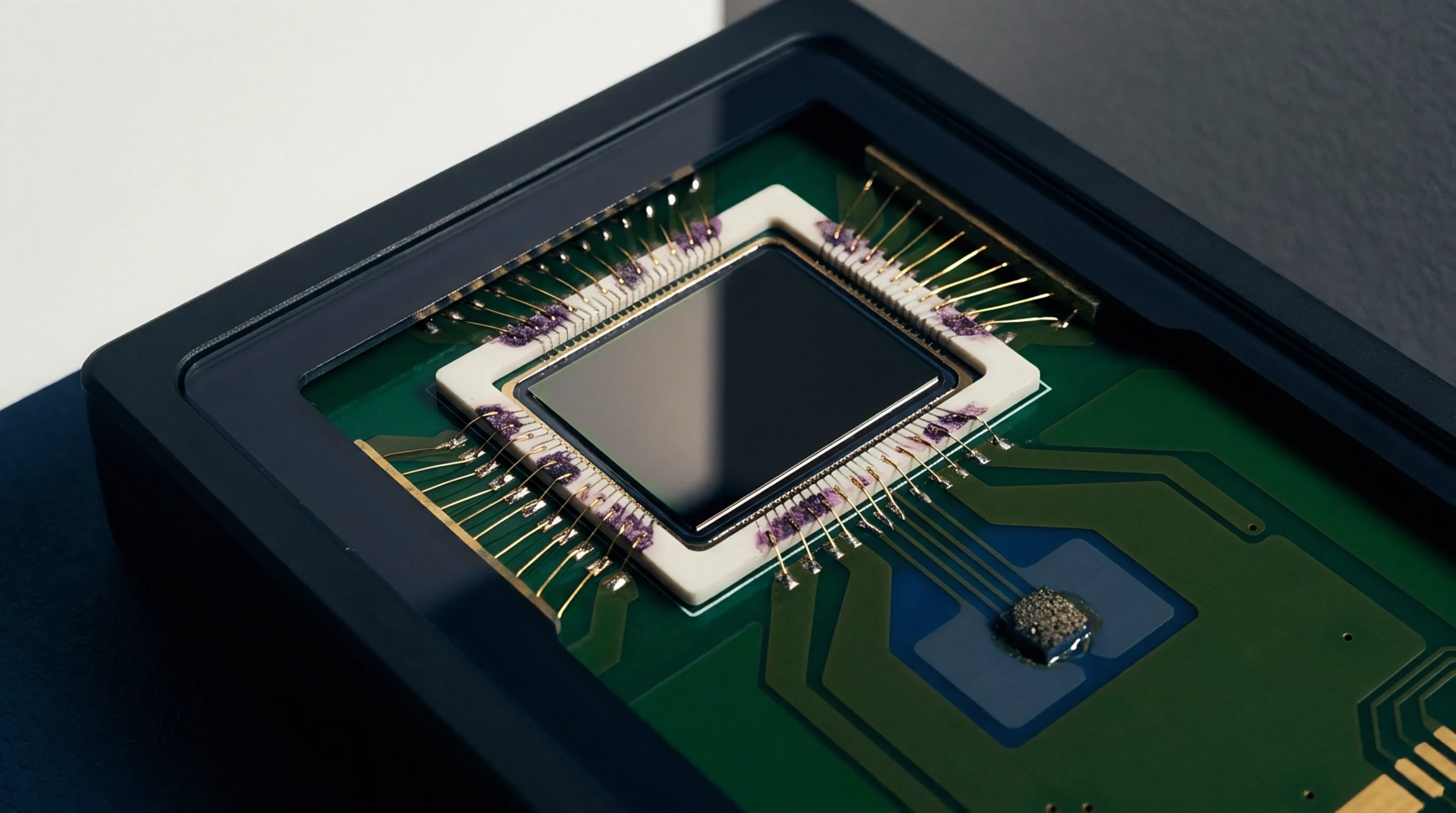
Thermosetting polymer networks encapsulate delicate microelectronic wire bonds and semiconductor dies during high-pressure transfer molding operations. Epoxy mold compound shields active silicon surfaces against moisture ingress, ionic contamination, and mechanical shock throughout the operating lifespan of the packaged device. Silica fillers dispersed uniformly within the resin matrix reduce the coefficient of thermal expansion to match adjacent copper leadframes.
Filler loading levels exceed eighty weight percent in standard formulations to suppress internal thermal stresses during temperature cycling tests. Resin flow behavior during the injection phase depends strictly on preheated pellet viscosity and barrel temperature profiles set by the packaging facility.
Cure Kinetics
Gelation rates govern the transition from viscous liquid to rigid solid inside heated steel cavity molds. Pressures applied during this thermal crosslinking stage typically range between seven and ten megapascals to ensure complete cavity filling before network vitrification arrests material flow. Tooling temperatures maintained near one hundred seventy-five degrees Celsius drive the epoxy resin to full chemical conversion within ninety seconds.
Post-mold bake cycles conducted in nitrogen purge ovens relieve residual stress accumulated during rapid initial cooling phases. Incomplete crosslinking reduces glass transition temperatures below specified thresholds and accelerates moisture diffusion rates through the cured encapsulation body.
Mechanical Shrinkage
Volumetric contraction occurs as epoxy molecules form dense covalent bonds during the primary thermal reaction cycle. Mold shrinkage values measured along the primary flow axis generally fall between two and six tenths of a percent according to standardized ASTM testing methods. Filler particle orientation induced by gate geometry causes directional variation in dimensional stability across the molded body.
Post-cure shrinkage continues slowly at room temperature until the polymer network achieves absolute thermodynamic equilibrium. Dimensional tolerances specified by semiconductor manufacturers dictate maximum allowable shrinkage limits to prevent die shear failure during subsequent board-level surface mounting processes.
Environmental Degradation
Moisture absorption degrades interfacial adhesion between the epoxy encapsulation and internal metallic leadframe surfaces. Thermal stress resistance deteriorates rapidly when absorbed moisture vaporizes violently during high-temperature infrared reflow soldering operations. Delamination boundaries create preferential pathways for corrosive atmospheric ions to reach active circuitry regions.
Mechanical interfacial strength measurements obtained via shear testing quantify the degradation rate under accelerated humidity storage conditions. Halogen-free formulations mitigate corrosion risks by substituting traditional flame retardants with modified metallic hydroxides without compromising overall dielectric breakdown performance.