Metrological Definition
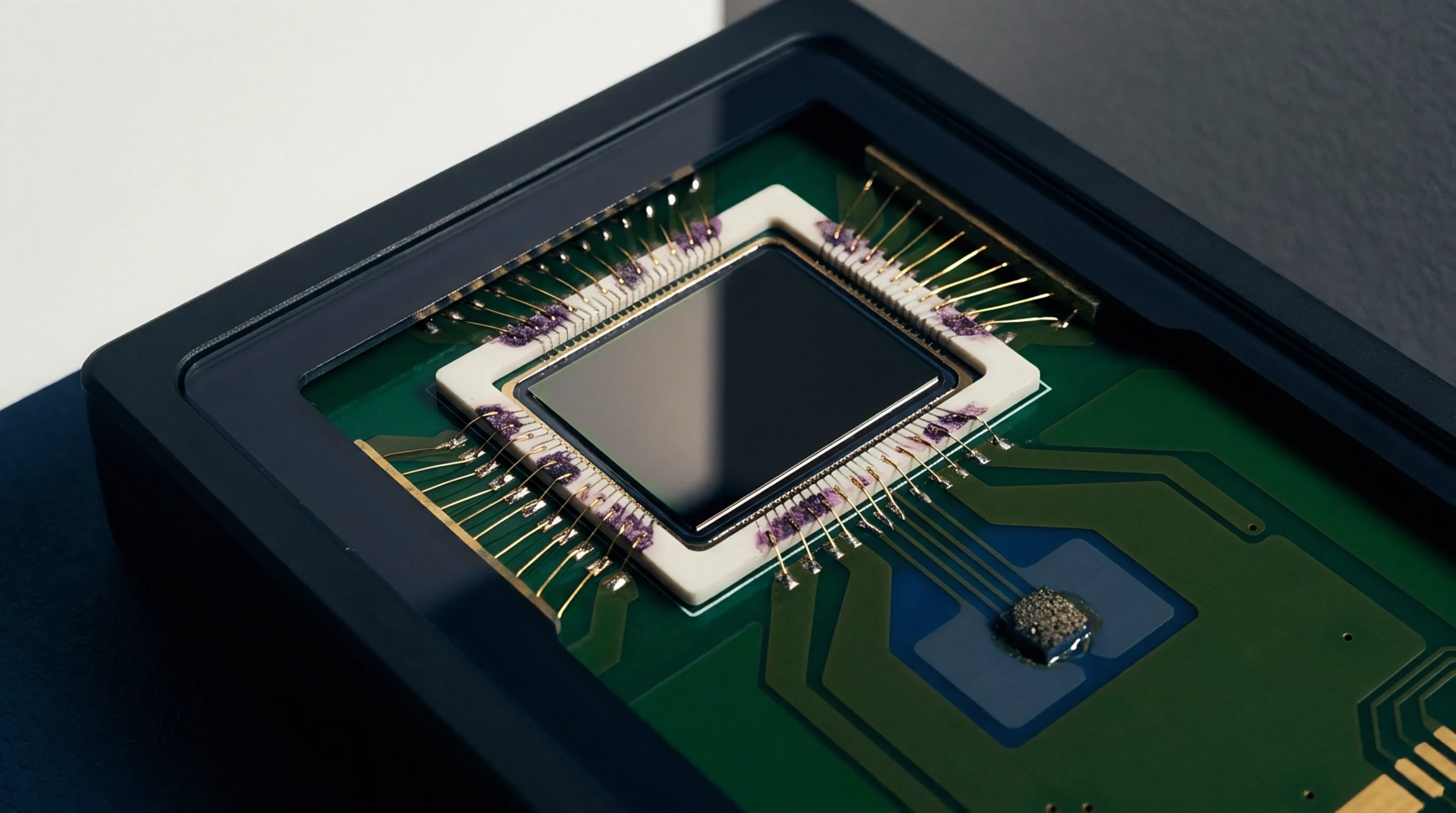
A piezoresistive coefficient is a proportionality constant that links applied mechanical stress to the resulting fractional change in electrical resistance within a transducer material. Semiconductor strain gauges rely on these parameters because crystalline lattices experience band structure alterations under mechanical deformation. Silicon and germanium exhibit exceptionally high values owing to carrier mobility shifts and effective mass variations across crystal orientations.
Manufacturers specify these constants at a reference temperature of twenty degrees Celsius under uniaxial loading conditions. Thermal drift alters the carrier density and mobility, which subsequently degrades the accuracy of the baseline parameter if uncorrected. Calibration routines determine the exact magnitude for a specific batch by comparing electrical output against traceable mechanical loads applied on a dead-weight tester.
Crystallographic Orientation
Crystal direction dictates the magnitude and sign of the parameter across different axes of a silicon wafer. Longitudinal configurations align the applied stress with the current flow vector, whereas transverse arrangements orient the mechanical load perpendicularly to the electrical measurement path. P-type silicon displays a dominant shear coefficient, while n-type materials exhibit large longitudinal values along specific crystallographic axes.
Designers exploit these directional dependencies by orienting sensor diaphragms along preferred crystal planes to maximize bridge output sensitivity. Residual stresses introduced during wafer bonding procedures alter the local lattice symmetry and shift the effective coefficient away from nominal published data sheet values.
Signal Conditioning
Bridge circuits translate the resistance variations governed by these coefficients into measurable voltage outputs suitable for downstream data acquisition hardware. Excitation voltage stability directly influences measurement precision because any drift in the supply rail mimics a resistance shift caused by mechanical strain. Nonlinearity arises at high stress levels when higher-order terms become non-negligible, requiring polynomial compensation algorithms within the digital controller.
Operational amplifiers introduce offset errors and thermal noise that compete with the microvolt signals generated by low-amplitude mechanical inputs. Proper grounding and shielding mitigate electromagnetic interference that otherwise couples into the resistive bridge network during industrial deployment.
Environmental Interference
Temperature fluctuations induce apparent strain through mismatched thermal expansion coefficients between the semiconductor element and the underlying substrate material. Self-heating caused by excessive electrical power dissipation within the gauge creates thermal gradients that alter the local piezoresistive response. Long-term mechanical creep in adhesive bonding layers relaxes the applied stress over time, causing a gradual drift in the output signal despite constant external loading.
Humidity intrusion degrades passivation layers and introduces leakage currents that parallel the resistive elements and invalidate the calibration matrix. Post-installation zero balance checks quantify these environmental offsets and establish the operational limit for the sensing assembly.