Constructing Cryogenic Thermal Shift Master Curves for Structural Epoxy Adhesives under Dynamic Temperature Ramps
Dynamic temperature shifts in cryogenic structural epoxy master curves demand non-isothermal rate correction factors to resolve physical aging relaxation delays.
Equivalence
Validity Limits of Time Temperature Superposition
Standard laboratory protocols construct viscoelastic master curves by applying time-temperature superposition to isothermal frequency sweeps. Isothermal step testing holds a polymer specimen at discrete thermal plateaus until structural equilibrium settles before executing mechanical oscillation sweeps across a defined frequency band. Structural epoxy resins exposed to cryogenic environments beneath their glass transition temperature undergo extreme physical state changes that challenge standard horizontal translation principles.
At temperatures below 150 K, polymer chain segments freeze into fixed structural configurations. Isothermal mechanical spectra measured at discrete cold plateaus fail to capture the structural evolution occurring when an adhesive joint cools dynamically in service.
Dynamic mechanical analysis conducted under steady cooling ramps exposes a continuous shift in relaxation times. When cooling rates exceed 1 K/min, the structural recovery rate of the polymer backbone falls behind the thermal trajectory. The material departs from thermodynamic equilibrium, locking in excess free volume and unrelaxed internal stresses.
Constructing a single master curve using standard Williams-Landel-Ferry shift factors derived from equilibrium isotherms produces severe modulus underestimation at sub-ambient temperatures. The shift factors lose horizontal additivity across the glassy transition range because the underlying physical structure varies continuously with the applied temperature ramp rate.
Standard time-temperature superposition models fail when structural relaxation rates lag behind continuous laboratory cooling speeds.

Thermorheological Complexity across Vitrification Bounds
Thermorheologically simple materials exhibit identical temperature dependence across all spectral relaxation mechanisms, permitting a single horizontal shift factor to align storage and loss modulus spectra. Densely crosslinked structural epoxies violate this operational simplicity when cooled toward cryogenic limits. Primary alpha relaxation mechanisms associated with glass transition vitrification freeze out, while localized secondary beta and gamma relaxations remain active down to liquid nitrogen temperatures.
These distinct molecular mechanisms exhibit unequal activation energies, causing the low-temperature modulus tail to shift at a different rate than the primary glass transition spectrum.
Quantifying thermorheological complexity requires comparing horizontal shift factors generated from storage modulus alignment against shift factors derived from loss modulus peak alignment. Isothermal measurements frequently mask this divergence due to instrument settling times at each thermal dwell step. Dynamic ramp testing reveals the split clearly because continuous temperature variation forces different relaxation modes into simultaneous non-equilibrium transitions.
Master curves constructed without separating primary backbone vitrification from localized side-group relaxations overestimate energy dissipation capacity during rapid cryogenic transients.
| Test Parameter | Isothermal Step Method | Dynamic Temperature Ramp |
|---|---|---|
| Thermal Equilibrium State | Equilibrium established at dwell steps | Non-equilibrium structural relaxation state |
| Test Execution Time | 8 to 14 hours per specimen | 1.5 to 3 hours per specimen |
| Shift Factor Additivity | Strict additivity holds above Tg | Additivity breaks due to structural hysteresis |
| Secondary Relaxation Capture | Discreter steps miss narrow loss peaks | Continuous resolution across sub-Tg transitions |
| Instrument Compliance Drift | Corrected via static dwell calibration | Requires real-time thermal expansion tracking |
Commercial adhesive vendors frequently attribute cryogenic joint debonding to micro-void inclusion or surface preparation defects when static isothermal datasheets fail to predict dynamic ramp stiffness.


Chill
Free Volume Collapse and Physical Aging
Cooling a structural epoxy from room ambient down to cryogenic temperatures dramatically reduces the unoccupied space between polymer chains. Liquid nitrogen immersion or gaseous helium chilling drives the fractional free volume below critical thresholds, arresting long-range molecular motion. During a continuous dynamic cooling ramp, the rapid rate of temperature reduction prevents molecular networks from reaching their equilibrium density state at any instant.
The epoxy enters a non-equilibrium glassy regime where structural relaxation continues over operational time scales, a phenomenon known as physical aging.
Physical aging alters the mechanical response of the adhesive as a function of thermal history and elapsed time at cryogenic temperatures. As the polymer matrix continuously contracts toward an equilibrium state, the yield stress increases while the ultimate tensile elongation drops. Dynamic master curves constructed from transient temperature ramps must isolate thermal contraction effects from time-dependent structural relaxation.
Failure to separate physical aging dynamics leads to invalid predictions of crack propagation thresholds and impact resistance in cryogenic structural bonds.
- Thermal expansion mismatch strain induces high localized shear stresses along rigid metal substrate interfaces during continuous chill down ramps.
- Sub-Tg structural embrittlement reduces fracture toughness when secondary molecular relaxations freeze out below 120 K.
- Transient internal stress build occurs when non-uniform temperature gradients develop across thick adhesive bond lines.
- Free volume trapping maintains elevated enthalpy states that release localized heat during subsequent micro-yielding events.

Non Equilibrium Glassy States under Transient Cooling
The thermal history of a structural adhesive layer determines its precise glassy state and density at 77 K. Rapid chilling rates shift the effective glass transition temperature upward, trapping higher free volume than slow cooling protocols. The non-equilibrium state alters the apparent activation energy of the material, causing time-temperature shift factors to depend explicitly on the cooling ramp rate. Dynamic mechanical analyzer data collected during a 5 K/min cooling ramp yields a stiffer response than data gathered during a 0.5 K/min ramp at identical sub-ambient temperatures.
Measuring this shift rate dependency demands rigorous experimental control over sample thermal mass and heat transfer pathways. Aluminum or titanium dummy substrates placed inside the test chamber provide local temperature sensing directly at the bond line. Extrapolating glassy modulus data without accounting for cooling-rate-induced density variances introduces systematic errors into finite element stress models applied to space payload structures or superconducting magnet supports.
A cooling rate increase from 0.5 K/min to 5 K/min shifts the apparent vitrification temperature upward by 4.2 K in bisphenol-A epoxy systems.
Rapid thermal transitions lock excess energy into the molecular network, ensuring that cryogenic modulus stability depends on the specific cooling path taken.

Ramp
Non Isothermal Shift Factor Formulations
Mathematical construction of valid cryogenic master curves requires modified shift factor models that incorporate cooling rate terms alongside absolute temperature terms. Standard Williams-Landel-Ferry expressions apply exclusively above the glass transition temperature under equilibrium conditions. Below Tg, modified Arrhenius formulations incorporate the Tool-Narayanaswamy-Moynihan phenomenological model.
This approach divides the temperature dependence of relaxation times into an explicit thermal term and a structural state term governed by effective fictive temperature.
The total horizontal shift factor combines equilibrium thermal acceleration with non-equilibrium structural recovery kinetics. The governing relation for the horizontal shift factor aT under a dynamic cooling rate dotT takes the explicit structural form:
ln aT(T, Tf) = fracx Δ HR left( frac1T – frac1Tref right) + frac(1-x) Δ HR left( frac1Tf – frac1Tref right)
Here, Δ H represents the activation energy for structural relaxation, x is the non-linearity parameter ranging between zero and one, R is the universal gas constant, and Tf is the fictive temperature tracking non-equilibrium structural state evolution during the dynamic cooling ramp.
Density and Temperature Dependent Vertical Corrections
Horizontal translation alone cannot align mechanical loss spectra measured across dynamic temperature sweeps. Thermal expansion and density changes alter the instantaneous concentration of entropy-elastic network chains per unit volume. Vertical shift factors bT correct the raw modulus magnitude before horizontal shifting takes place.
The vertical shift factor accounts for absolute density variation and absolute temperature changes according to the relationship:
bT(T) = fracρ(Tref) · Trefρ(T) · T
Where ρ(T) is the temperature-dependent density of the cured epoxy matrix. At cryogenic temperatures, density increases non-linearly, while thermal expansion coefficients drop toward zero near 4 K. Neglecting vertical corrections undercounts low-temperature storage modulus magnitudes by up to seven percent in densely filled structural adhesives.
- Run thermal expansion tests via dilatometry from 293 K down to 77 K to capture the non-linear density curve of the cured adhesive.
- Execute multi-frequency dynamic mechanical sweeps during a controlled 2 K/min cooling ramp, collecting storage and loss modulus spectra across 0.1 Hz to 100 Hz.
- Apply vertical shift factor corrections to raw storage and loss modulus curves to compensate for temperature-induced volume changes.
- Calculate the evolving fictive temperature profile across the cooling ramp using enthalpy relaxation data obtained from differential scanning calorimetry.
- Determine activation energy and non-linearity parameters by fitting vertical-corrected spectral data to the Tool-Narayanaswamy-Moynihan horizontal shift model.
- Superimpose corrected frequency sweeps horizontally against a chosen reference temperature to form the unified cryogenic viscoelastic master curve.
Applying standard isothermal shift values to dynamic dynamic cooling profiles overestimates stress relaxation capacity, leading to severe under-prediction of cryogenic interfacial shear stress and unexpected joint failure.
Shift

Transducer Compliance and Thermal Lag Calibration
High-precision mechanical testing at cryogenic temperatures introduces significant instrument compliance and thermal sensing errors. As the test frame drives a specimen down to liquid nitrogen temperatures, the load cell, extension rods, and specimen clamps freeze, altering their stiffness properties. The raw displacement reported by the instrument linear variable differential transformer includes elastic deformation of the testing rig itself.
Under high-modulus cryogenic conditions, machine compliance can account for up to forty percent of the total measured sample strain.
Thermal lag between the controlling chamber thermocouple and the internal core of the epoxy test specimen creates artificial shift factor distortion. During a dynamic cooling ramp of 5 K/min, the center of a 3 mm thick adhesive specimen can lag chamber temperature readings by up to 12 K. Calibrating thermal lag demands inserting a fine-wire type T thermocouple directly into a calibration dummy specimen. Real-time temperature correction offset tables must align mechanical data points with actual specimen internal temperature rather than chamber setpoints.
ASTM E1640 mandates compliance calibration across the full operational temperature envelope to prevent instrument frame deflection from corrupting measured glass transition loss peaks.

How Do Dynamic Temperature Rates Alter Shift Factor Calibration?
Varying the dynamic thermal ramp rate alters both the magnitude and slope of horizontal shift curves constructed across the sub-ambient regime. Higher ramp rates decrease available time for structural relaxation at any given thermal step, artificially shifting the apparent glass transition to higher temperatures. Calibration protocols must isolate true material viscoelastic response from rate-dependent thermal lag and non-equilibrium structural effects.
A comprehensive calibration matrix requires evaluating specimens across at least three distinct dynamic cooling rates combined with multi-frequency excitation. Comparing shift factor curves generated across different ramp rates exposes instrument thermal lag when curves fail to converge after fictive temperature correction. Accurate master curve construction depends on eliminating instrument artifacts before solving for non-linear relaxation parameters.
| Uncertainty Source | Standard Uncertainty | Probability Distribution | Sensitivity Coefficient | Uncertainty Contribution |
|---|---|---|---|---|
| Specimen Core Thermal Lag | 1.8 K | Rectangular | 0.045 log(aT)/K | 0.081 log units |
| Frame Machine Compliance | 0.003 mm/kN | Normal | 12.4 MPa/mm | 0.037 GPa |
| Phase Angle Calibration | 0.08 degrees | Normal | 0.012 tan(delta)/deg | 0.001 tan delta |
| Specimen Dimension Tolerances | 0.015 mm | Rectangular | 1.85 GPa/mm | 0.028 GPa |
| Load Cell Thermal Drift | 0.45 N | Normal | 0.008 GPa/N | 0.004 GPa |
| Methods note: Combined expanded uncertainty calculated with coverage factor k=2, corresponding to a 95 percent confidence level under ISO/IEC Guide 98-3 guidelines. | ||||
The exact threshold where physical aging overshadows linear viscoelastic behavior during rapid transient cooling remains an active open question in cryogenic structural polymer research.


Ductility

Secondary Relaxations and Sub Glassy Absorptions
Cryogenic ductility in structural epoxy adhesives relies almost entirely on localized secondary mechanical relaxations operating deep inside the glassy state. Primary alpha transitions freeze completely below 200 K, rendering the main polymer backbone rigid. Secondary beta relaxations, occurring typically between 170 K and 220 K, originate from localized motions of the diphenylolpropane groups and glycidyl ether crosslink segments.
Gamma relaxations, remaining active down to 100 K, stem from aliphatic amine monomer motions and localized moisture complexing.
Dynamic dynamic temperature ramp master curves must resolve these secondary absorption peaks with high phase-angle sensitivity. Standard frequency sweeps conducted at coarse thermal steps often pass over narrow beta relaxation bands entirely. Dynamic continuous cooling ramps capture these subtle damping peaks, allowing engineers to calculate activation energies specific to sub-Tg ductile transitions.
Adhesives possessing prominent beta relaxation peaks retain superior impact resistance and thermal shock durability when subjected to dynamic chilling down to 77 K.
Secondary mechanical loss peaks below 180 K govern localized micro-yielding and prevent catastrophic brittle cleavage in cryogenic structural bonds.
Cryogenic Strain Rate Sensitivity
Sub-ambient mechanical behavior exhibits severe strain rate sensitivity as operating temperatures approach absolute zero. High dynamic strain rates compress the available time for localized secondary relaxations to dissipate mechanical energy. When an adhesive joint experiences rapid dynamic loading alongside dynamic temperature drops, the effective ductility drops precipitously, precipitating brittle cleavage failures.
Constructing master curves across a wide frequency spectrum permits conversion of frequency-dependent dynamic data into equivalent high-strain-rate time domain properties. Strain rate conversion models employ the fundamental equivalence between high excitation frequency and rapid mechanical loading rates. Correct calibration of cryogenic shift curves ensures accurate mapping of high-rate stress-strain responses, enabling reliable impact assessment for aerospace structures exposed to thermal shock and dynamic vibration.
- Verify dynamic mechanical analyzer force limits across the entire temperature span to prevent transducer saturation during high-stiffness sub-Tg sweeps.
- Confirm linear viscoelastic range boundaries by executing strain sweeps at the coldest target operational temperature prior to dynamic ramp testing.
- Incorporate vertical density factor corrections into loss factor calculations to avoid artificial broadening of secondary relaxation peaks.
- Validate shift factors against low-temperature crack lap shear tests conducted at matching dynamic cooling rates to ensure microstructural fidelity.
According to ISO 6721-11 clause 6.3, valid master curve generation requires verifying linear viscoelastic boundaries at both temperature extremes to ensure strain amplitudes do not induce non-linear structural damage.
Valuation
Financial Exposure of Unverified Shift Master Curves
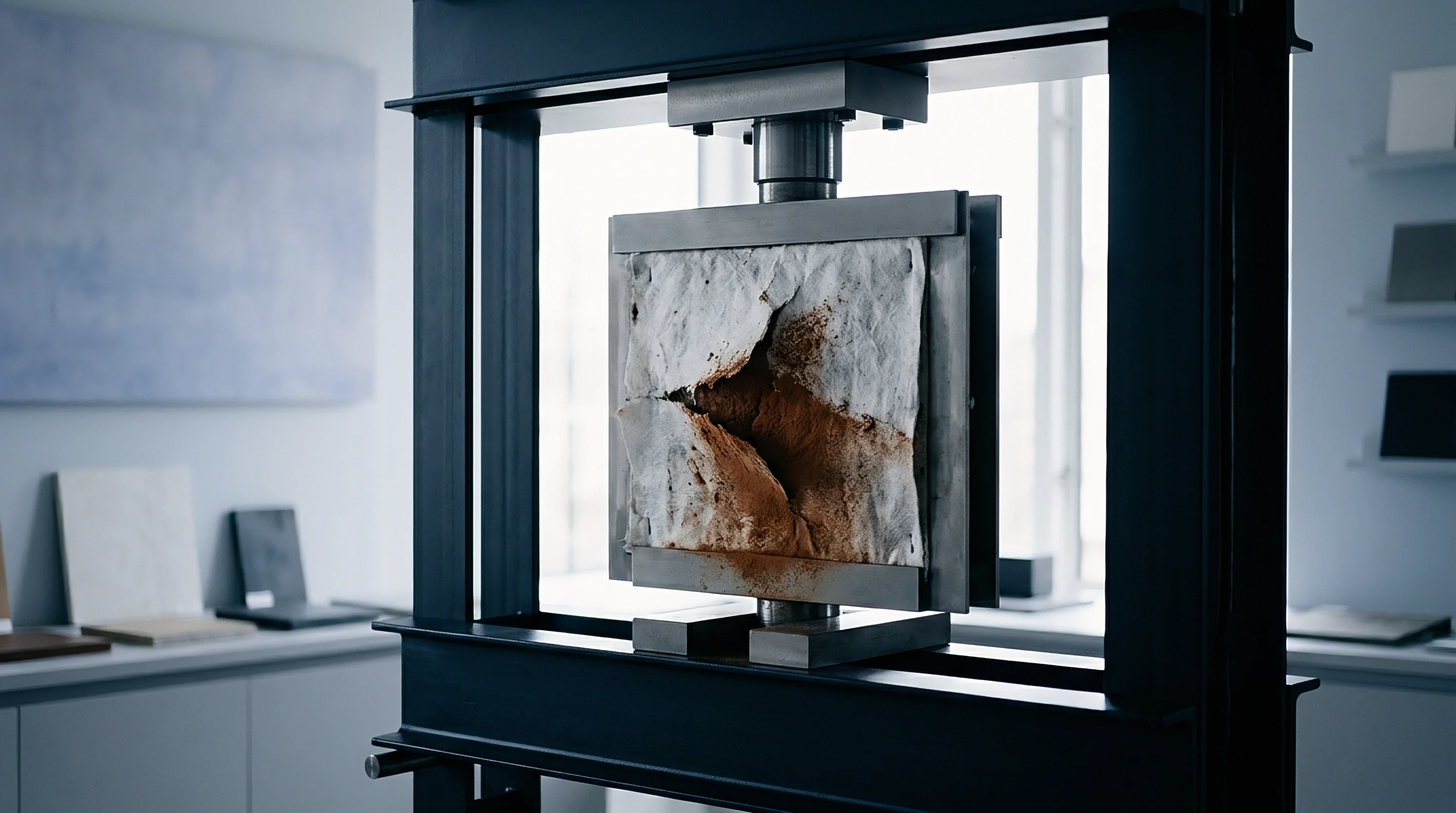
Specifying structural epoxy adhesives for cryogenic space launch vehicles, liquid hydrogen storage tanks, or quantum computing platforms involves substantial financial capital and safety margins. Utilizing basic supplier datasheets based on room-temperature extrapolation or static isothermal testing introduces hidden structural risk. If a master curve underpredicts cryogenic elastic modulus by fifteen percent, actual thermal contraction stresses will exceed predicted bond line shear capacities, opening seam leaks or causing structural debonding during tank chilling cycles.
The financial impact of a cryogenic joint failure extends beyond component replacement costs. Launch delays in aerospace applications incur facility stand-down penalties running into millions of dollars per day. Grounding an entire flight fleet to re-qualify an unverified adhesive bond line drains engineering resources and damages corporate standing.
Investing in certified non-isothermal master curve construction during initial material qualification mitigates catastrophic downstream warranty exposures.

Testing Yield and Calibration Cost Tradeoffs
Selecting an appropriate material qualification protocol requires balancing testing budget allocations against acceptable engineering uncertainty margins. Standard static isothermal DMA testing costs significantly less per sample batch but yields low confidence when applied to dynamic cooling operations. Full non-isothermal master curve construction incorporating thermal lag calibration and fictive temperature modeling demands higher up-front laboratory expenditure but reduces required safety factors in final joint design.
Refining mechanical safety factors allows structural engineers to reduce total adhesive bond mass and substrate flange thickness. In aerospace payload applications, saving structural weight translates directly into increased commercial payload capacity. The up-front cost of rigorous cryogenic calibration and non-isothermal master curve construction yields a net positive return across the lifecycle of lightweight structural hardware.
| Qualification Approach | Initial Test Cost per Resin Lot | Uncertainty Margin on Cryogenic Modulus | Design Safety Factor Required | Financial Risk Exposure Rating |
|---|---|---|---|---|
| Standard Isothermal DMA Extrapolation | Low Base Level | Plus or Minus 28 Percent | 2.5 to 3.0 | High Warranty Exposure |
| Empirical Dynamic Ramp Sweep | Moderate Level | Plus or Minus 14 Percent | 1.8 to 2.2 | Moderate Risk Level |
| Full Non-Isothermal TNM Viscoelastic Master Curve | High Base Level | Plus or Minus 4 Percent | 1.2 to 1.4 | Minimal Residual Exposure |
Precise calibration data transforms uncertain material assumptions into predictable design parameters, establishing definitive financial value for high-precision metrology in cryogenic structural engineering.