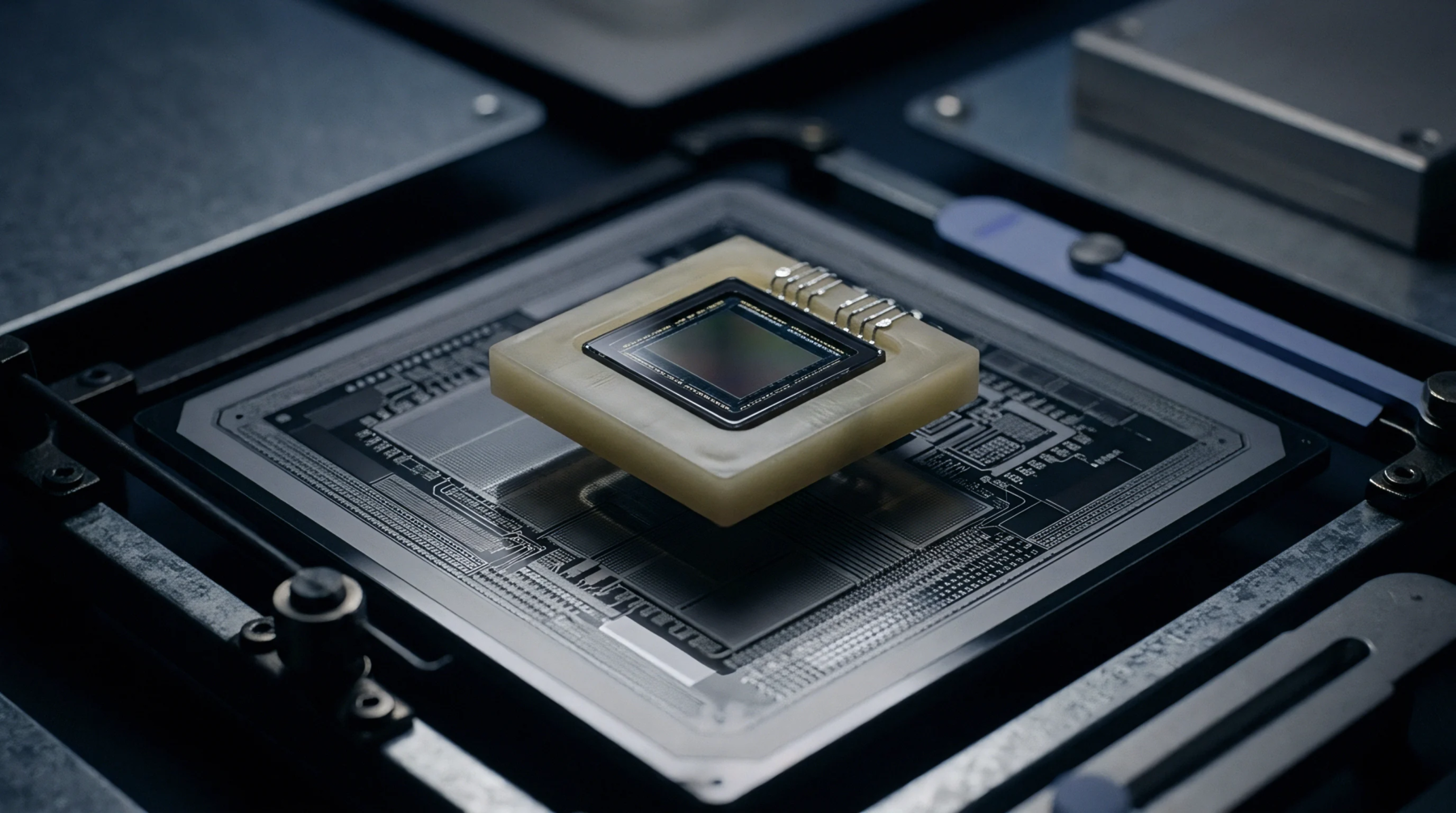
Encapsulation Material
Polymeric liquid used to fill the gap between a semiconductor chip and its substrate. This capillary underfill material provides structural support and protects the electrical connections from mechanical stress. The fluid is drawn into the space by surface tension forces during the assembly process.
Material Flow
Viscosity and contact angle determine how quickly the liquid moves through the narrow gap. The capillary underfill process requires precise control of the substrate temperature to maintain the correct flow characteristics. If the material moves too slowly, it may cure before the gap is completely filled.
Curing Cycle
Heat is applied to harden the polymer and create a permanent bond between the components. The capillary underfill must reach a specific temperature for a set duration to achieve its full mechanical strength. Once the cycle is complete, the material provides a rigid structure that resists thermal expansion.
Stress Distribution
Mechanical loads are shared across the entire surface of the chip rather than being concentrated on the solder balls. By using capillary underfill, the manufacturer reduces the risk of fatigue failure in the interconnects. This reinforcement is especially important for large chips that experience significant thermal cycling.
Final inspection using X-ray imaging confirms that the material is free of voids and bubbles.