Thermal Expansion
Dimensional variance under temperature change is a fundamental physical property of solid materials. The abbreviation cte stands for the coefficient of thermal expansion, which quantifies the fractional change in length per degree of temperature change. This property defines how a material behaves during thermal cycling in packaged semiconductor assemblies.
Material Interface
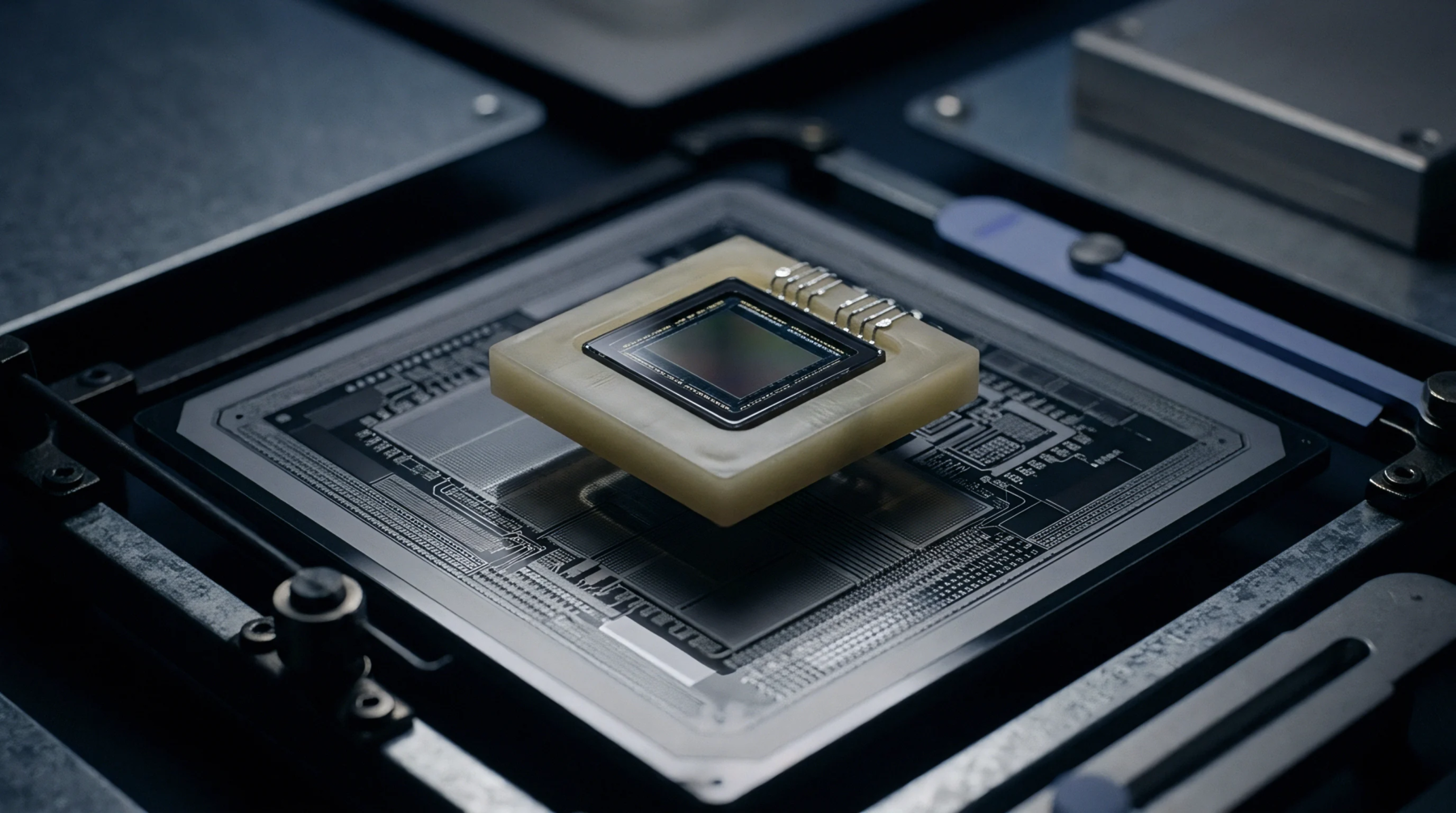
Mismatch at the boundary between dissimilar materials creates mechanical stresses that threaten assembly lifetime. When a silicon die with a low cte of approximately three parts per million per degree Celsius is mounted to an organic substrate with a coefficient of seventeen, temperature fluctuations force both materials to expand at different rates. This differential expansion generates shear stresses at the solder joints.
These stresses can lead to fatigue, cracking, and eventual electrical failures under repeated thermal cycling. Choosing substrate materials that closely match the expansion rate of silicon minimizes this mechanical stress and extends the lifetime of the electronic assembly.
Strain Profile
Finite element analyses map the distribution of strain across the packaging interfaces to locate potential fracture regions. The highest concentration of stress is typically found at the corners of the silicon die, where the distance from the neutral point is greatest. Reducing the mismatch between the die and substrate cte lowers this localized strain.
Packaging designers often select specialized materials like ceramic substrates to reduce this gradient.
Packaging Reliability
Reliability testing uses accelerated thermal cycling to evaluate the integrity of the board assembly over time. Standard profiles swing between forty degrees below zero and one hundred and twenty-five degrees Celsius to simulate years of field operation. If the materials are poorly matched, the joint failure rate increases rapidly.
Underfill adhesives are deposited to distribute this cte mismatch stress across the entire die area, protecting the primary interconnects from premature shear failure.