Encapsulation Technique
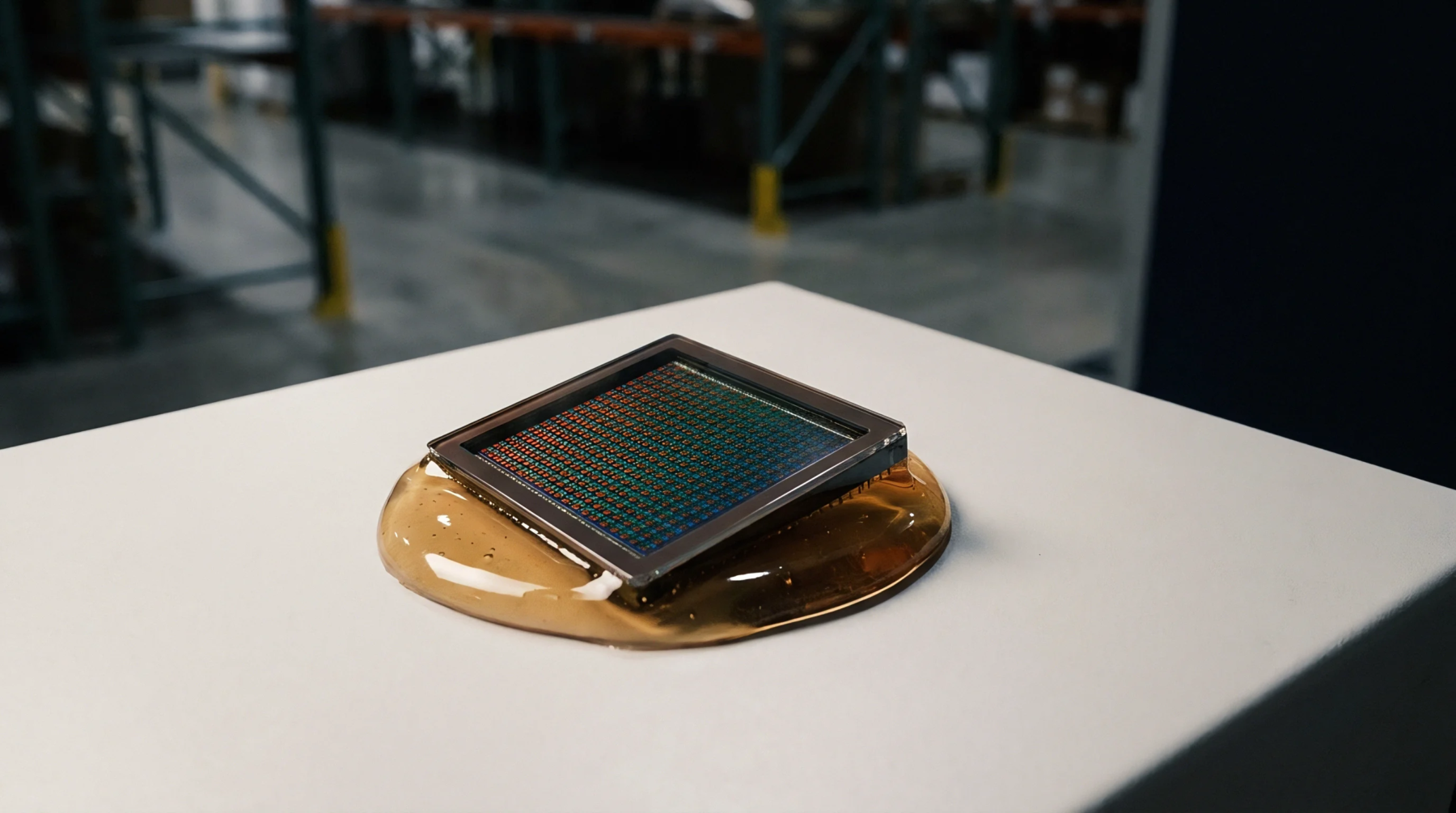
Thermoset polymer forming utilizes a hydraulic plunger to force preheated compound through runner systems into enclosed cavity tooling. Industrial execution of transfer molding dominates the protective packaging of integrated circuit chips, discrete semiconductors, and wound coil components. The method applies specifically to reactive materials like epoxy molding compounds, silicones, and phenolics that undergo chemical crosslinking under heat and pressure.
The terminology ceases to apply once processes process non-reactive thermoplastic melts through continuous screw plasticizing units.
Flow Kinetics
Solidified resin pellets drop into a heated transfer pot, softening into a low-viscosity liquid mass under combined conductive and mechanical heating. A motorized or hydraulic plunger descends at controlled velocities, displacing the fluid through runner paths and restrictive gates into the tool cavities. Mold clamping forces must exceed the internal hydraulic pressure generated within cavities to prevent compound escaping along parting lines.
Cavity air evacuates through micro-venting channels ahead of the advancing resin front, eliminating gas entrapment and internal structural voids.
Tooling Governance
Sourcing tooling for transfer lines requires tight machining tolerances on chase inserts, runner profiles, and gate clearances. Plunger position sensors, linear optical encoders, and internal cavity pressure transducers require traceable calibration to preserve shot-to-shot consistency. Tool wear caused by abrasive fused silica fillers steadily enlarges gate dimensions, altering shear heating profiles and filling balances over time.
Hard chromium plating or physical vapor deposition coatings mitigate steel cavity abrasion across continuous production runs.
Packaging Quality
Plunger speed profiles must be optimized to prevent wire sweep, which occurs when fluid shear forces bend microelectronic gold or copper interconnections. Clamping pressure calibration eliminates flash formation along leadframe fingers, which otherwise causes automated optical inspection rejections. Post-mold cure cycles follow the primary molding process to complete chemical crosslinking and stabilize the mechanical properties of the package.
Production sign-off requires dimensional confirmation of final package outlines alongside acoustic microscopy inspection to confirm void-free encapsulation.