End of Life Notices That Take One Package and Spare Another
When component vendors end leaded packages, identical active silicon dies often survive in surface-mount forms that demand revised land patterns and thermal layouts.
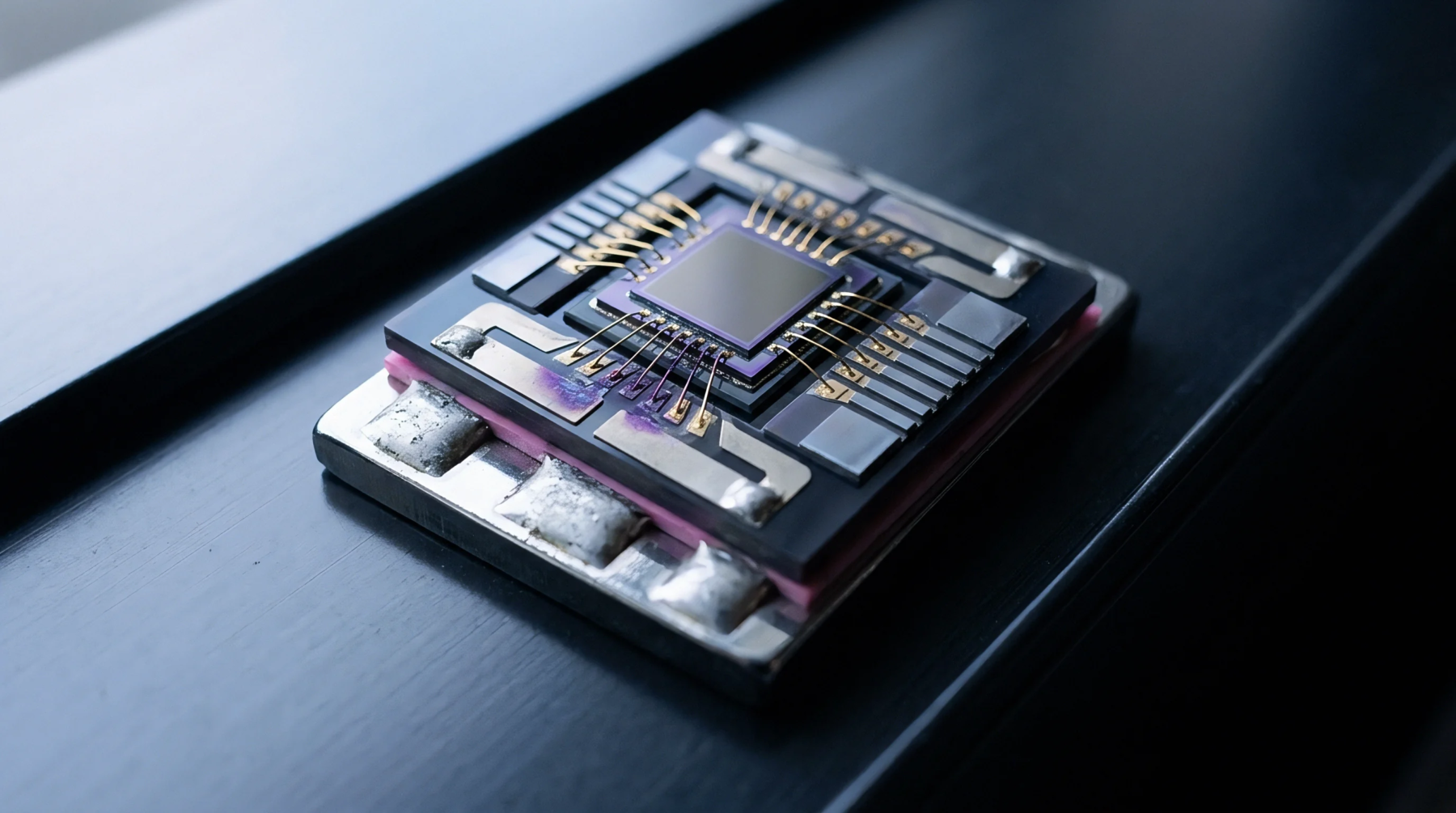
Adhesive materials act as a structural interface that anchors semiconductor packages to printed circuit boards through the solidification of liquid formulations. An underfill resin compensates for the differential thermal expansion between the silicon die and the carrier substrate by distributing mechanical load across the entire connection array. This chemical medium remains liquid during deposition to ensure consistent flow into the gap beneath the component.
Once cured via thermal cycles, the material gains the rigidity required to mitigate fatigue from operational temperature swings. The boundary for this application exists at the interface where the substance fails to wet the surface properly or traps air pockets during the initial dispensing phase.
Precision in application determines the yield of the assembly process because inaccurate volume leads to overflows or voiding within the package gap. The material travels through a fine needle or jetting system to establish a fillet around the component perimeter. Capillary force draws the underfill resin into the restricted space between the chip and board.
Fluid viscosity governs the rate of migration, requiring strict temperature control of the dispensing environment to prevent premature gelation. Surface tension dictates the contact angle of the meniscus against the solder balls. Deviation from established flow parameters results in uneven fillet geometry that causes stress concentration rather than distribution.
Sensor feedback loop integration manages the dispense head position to ensure the target mass reaches the exact coordinate for proper coverage.
Chemical crosslinking happens inside a convection oven or infrared tunnel where heat initiates the hardening sequence of the polymer matrix. An underfill resin develops structural strength proportional to the density of the molecular bonds formed during this transition from liquid to solid. Excessive heat leads to degradation or internal gas generation that produces voids within the bulk of the adhesive.
Insufficient dwell time leaves the material in a semi-elastic state that fails to protect the interconnects from cyclic strain. Thermocouple monitors verify the peak temperature profile against the manufacturer specification to maintain consistency across batch runs. Deviations from the prescribed time and temperature curve alter the final modulus of the material.
Metrological assessment of the finished bond requires acoustic microscopy to detect internal discontinuities or air inclusions that compromise structural integrity. An underfill resin shows high impedance to ultrasound when voids exist within the cross-section. Cross-sectional analysis provides a destructive confirmation of the wetting area at the solder ball contact points.
Calibration of the ultrasonic equipment against known reference samples establishes the threshold for acceptable material distribution. Mechanical shear tests quantify the force required to detach the component to validate the bonding performance under standardized conditions. The modulus of the hardened compound provides a direct measurement of the ability of the material to resist deformation under thermal load.
When component vendors end leaded packages, identical active silicon dies often survive in surface-mount forms that demand revised land patterns and thermal layouts.
Expertise is a utility, not a secret. sentiention™ publishes its working knowledge as open reference: intelligence layer covering the materials it sources, the markets it enters, and the reference that serves both.