Material Property
Viscoelastic material behavior governs how a solid substance deforms when subjected to loads applied at different velocities. In electronic packaging, the strain rate sensitivity of a solder alloy dictates how much its yield strength increases as the speed of mechanical loading rises.
Physical Mechanism
Microstructural deformation mechanisms like grain boundary sliding and dislocation climb require time to occur, meaning that a rapid load restricts these microstructural relaxation pathways. When a printed circuit board experiences a rapid impact, the high deformation speed prevents the tin grains from deforming plastically, which elevates the flow stress of the solder joint. This force increase shifts the failure location from the ductile solder bulk directly to the brittle intermetallic interface, which increases the likelihood of a sudden electrical open circuit.
Measurement Method
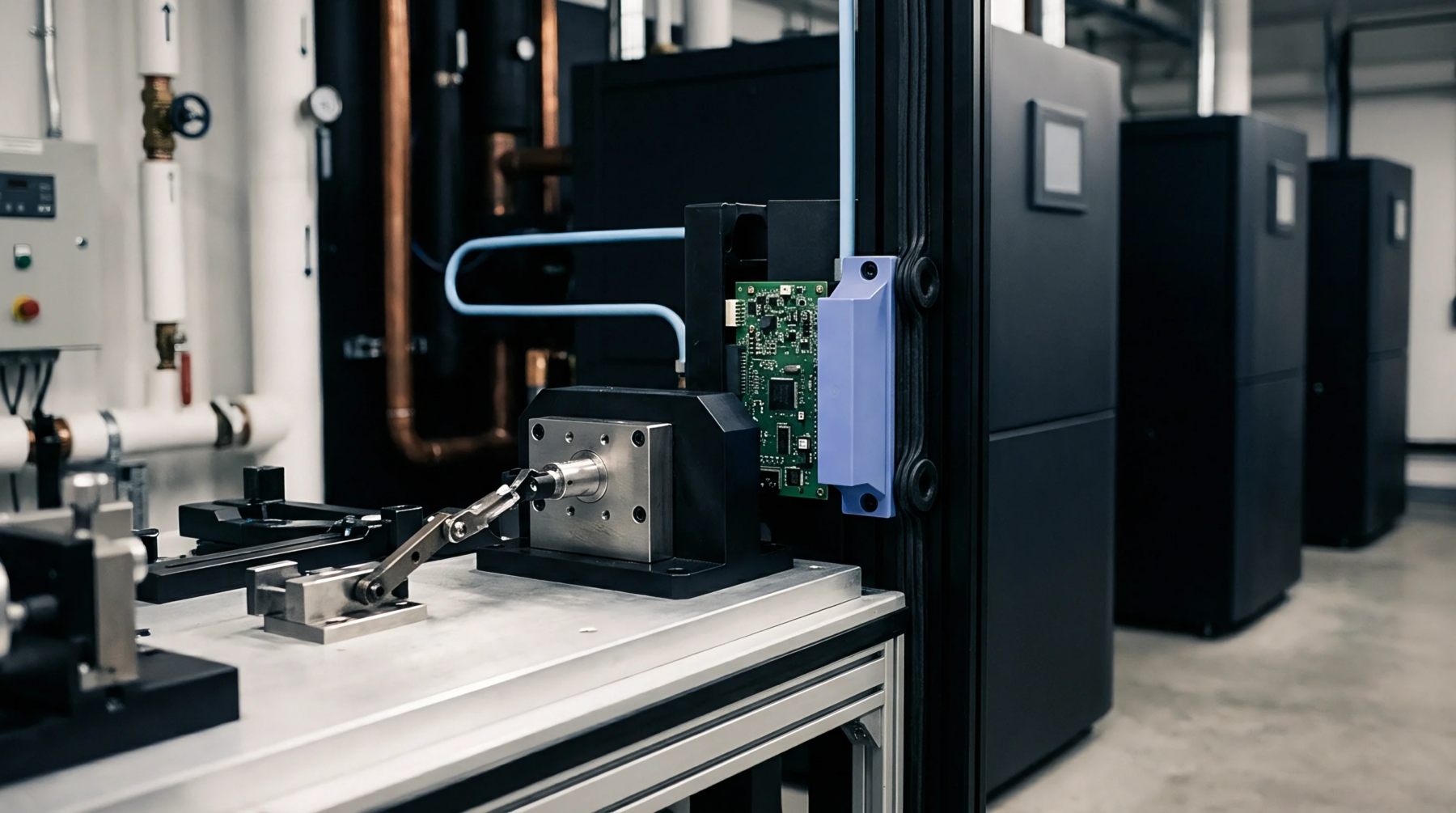
Testing laboratories evaluate this sensitivity by conducting tensile or compression tests across a wide range of crosshead speeds using high-speed servo-hydraulic test frames. Instrumentation for these tests includes high-frequency piezo-electric load cells and laser doppler extensometers to capture the transient force and displacement during microsecond-scale events. By plotting the yield strength against the logarithm of the strain rate, engineers calculate the sensitivity exponent, which represents the slope of the resulting curve.
Calibration Consequence
Numerical models used for drop-test simulations must incorporate these dynamic material properties to prevent underestimating the stress on delicate component interfaces. If a model assumes static material properties for solder, it will under-predict the forces transmitted to the copper pads during a high-speed drop event. Standardizing these dynamic measurements requires precise thermal control of the test specimen, since temperature is the primary factor that alters the rate-dependent behavior of polymers and solders alike.