Sensor Design
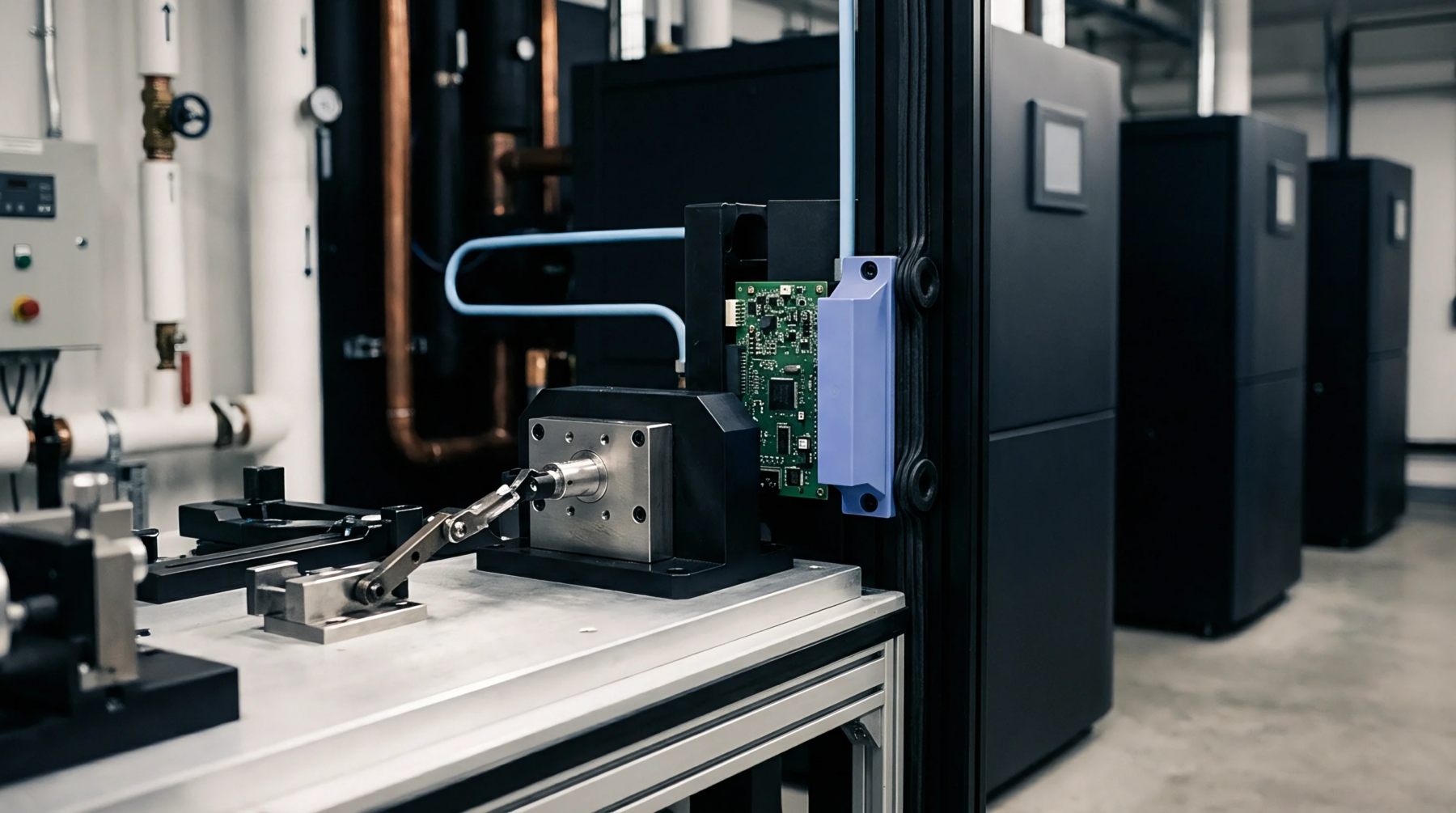
Multi-directional strain measurement requires a multi-sensor arrangement capable of capturing the full surface deformation state at a single point. A triaxial strain rosette accomplishes this by integrating three independent, closely spaced strain gauges oriented at specific angles on a single flexible substrate.
Algebraic Conversion
Applying strain rosette equations converts the three measured normal strain values into the maximum and minimum principal strains, along with the angle of the principal axis. In a forty-five degree rectangular rosette, the three gauges measure strains along the horizontal, diagonal, and vertical axes, which are then combined using trigonometric identities. These calculated strains are critical for comparing experimental board-level measurements with the strain limit envelopes defined by industrial manufacturing standards.
Calibration Step
Circuit design and sensor installation require careful balancing of the Wheatstone bridge circuits connected to each of the three channels to eliminate zero-point offset before testing. After bonding the sensor to the circuit board with cyanoacrylate adhesive, the technician applies a known static load to verify that all three channels react proportionally and return to zero upon unloading. Thermal output calibration must also be performed, since temperature changes generate apparent strain due to the different coefficients of thermal expansion of the board material and the foil gauge.
Measurement Limitation
Physical size represents the primary constraint of this sensor type because the three individual gauges cannot occupy the exact same spatial point on the board surface. The measured strain represents an average over the entire footprint of the rosette, which can lead to underestimating the peak strain in areas with very high strain gradients, such as directly adjacent to a solder pad. Selecting a smaller rosette footprint minimizes this spatial averaging error, though it increases the complexity of manual positioning and wire attachment.