
Real-Time Dynamic Thermal Gradient Compensation in Tactical Inertial Navigation
Real-time thermal gradient compensation eliminates tactical IMU transient bias drift by coupling multi-point structural temperature sensing with state observers.
Real-time thermal gradient compensation eliminates tactical IMU transient bias drift by coupling multi-point structural temperature sensing with state observers.

Viscoelastic optical path drift in glass ceramic spools is predicted by coupling stretched exponential coating relaxation with photoelastic strain optic tensors.

Quadrupolar winding cancels thermal bias drift by pairing symmetric optical fiber lengths equidistant from the coil center within identical radial layers.
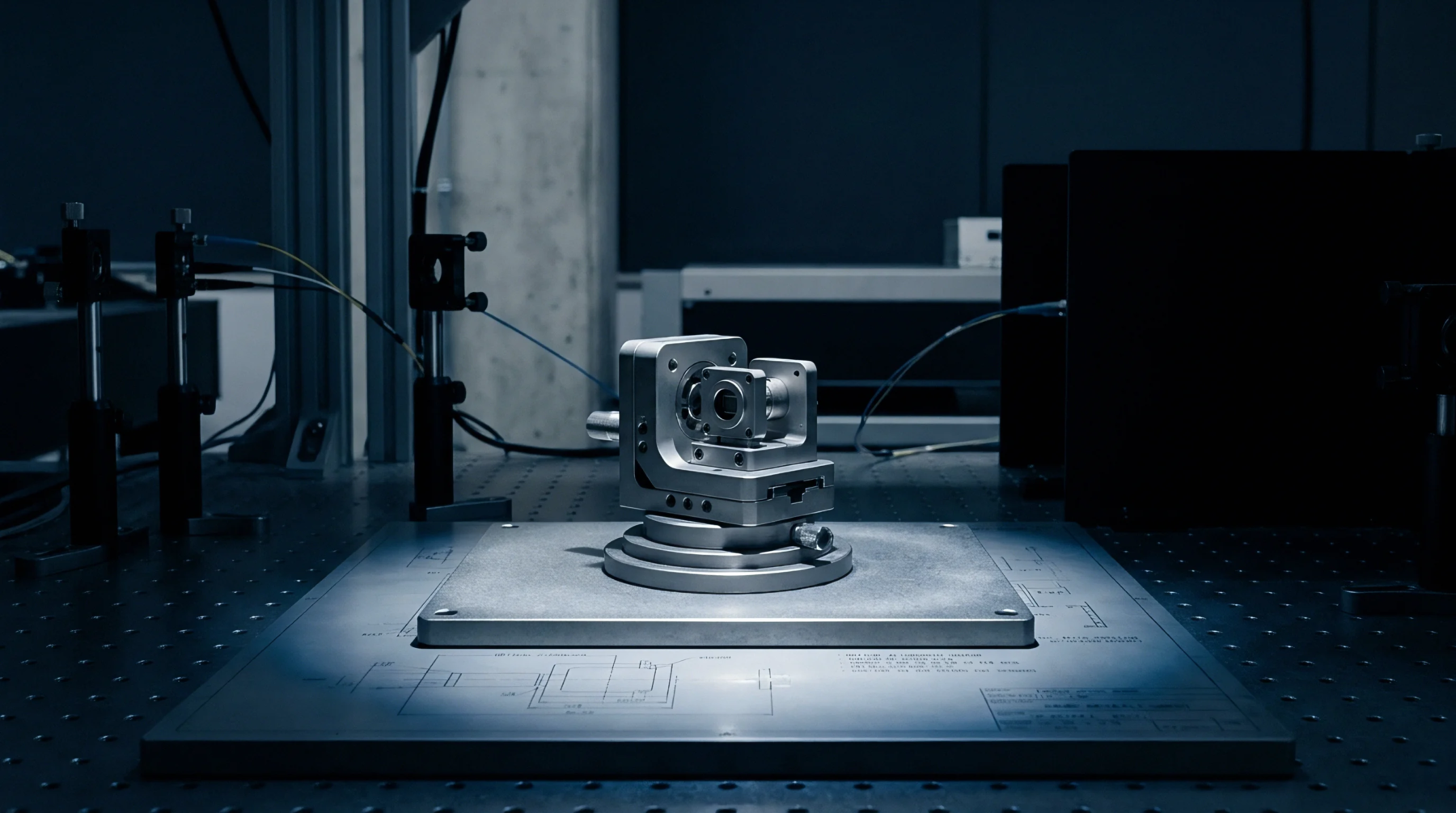
Symmetric quadrupolar winding and matched potting resins isolate fiber optic gyroscope coils from rate errors induced by dynamic environmental thermal gradients.

Symmetrical quadrupolar winding combined with compliant low-Tg potting mitigates thermal Shupe drift and microbend attenuation in 80 µm fiber coils.
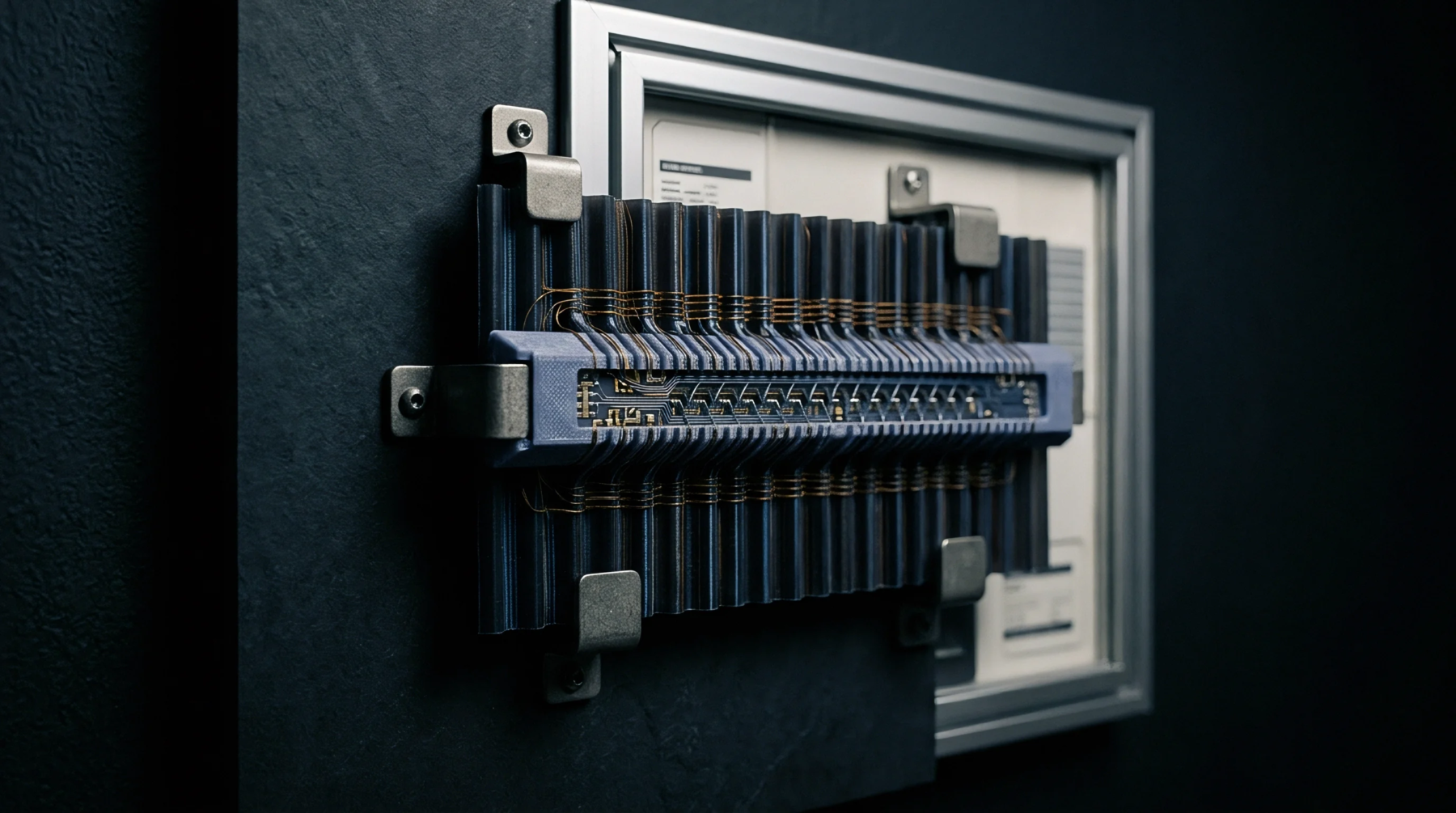
Coupled finite-element thermo-optic stress modeling quantifies photoelastic index shifts in quadrupolar FOG coils to suppress thermal drift.

Potting elastomers with storage modulus below five megapascals across operating temperatures prevent asymmetric stress from degrading tactical gyro bias stability.
Finite element transient strain modeling predicts internal coil viscoelastic phase delays, suppressing tactical optical gyro thermal hysteresis below 0.01 deg/h.
Polymeric potting stress relaxation in quadrupolar FOG spools causes asymmetric spatial optical path shifts that drive long term bias drift.

Dynamic thermal gradient bias in PM fiber coils stems from asymmetric path delay and demands quadrupolar winding paired with multi-point state compensation.

Overlapping Allan variance reduces bias instability estimation uncertainty in tactical fiber gyroscopes by expanding effective degrees of freedom without extending test time.
Dynamic mechanical resonance deforms the optical coil and saturates tracking loops, introducing frequency-dependent timestamp skew under angular vibration.
Quadrupolar winding cancels symmetric thermal gradients, leaving elasto-optic drift manageable via compliant potting and multi-point sensor compensation.
Minimizing thermal sensitivity in reduced diameter optical coils demands quadrupolar winding symmetry matched with soft elastomeric potting to prevent Shupe effect bias drift.
Finite element modeling of FOG coil thermoelastic stress vectors requires anisotropic orthotropic material matrices to capture photoelastic birefringence drift.
Select low-modulus addition-cure silicones with sub-minus 100 Celsius glass transitions to decouple thermal stress from quadrupolar gyroscope fiber coils.

Quadrupolar winding cancels thermal Shupe non-reciprocity by spatially pairing symmetric fiber segments equidistant from the coil center.

Mitigating thermal Shupe bias in tactical fiber gyros requires quadrupolar winding symmetry paired with soft silicone potting and FIR derivative firmware filtering.
Expertise is a utility, not a secret. sentiention™ publishes its working knowledge as open reference: intelligence layer covering the materials it sources, the markets it enters, and the reference that serves both.