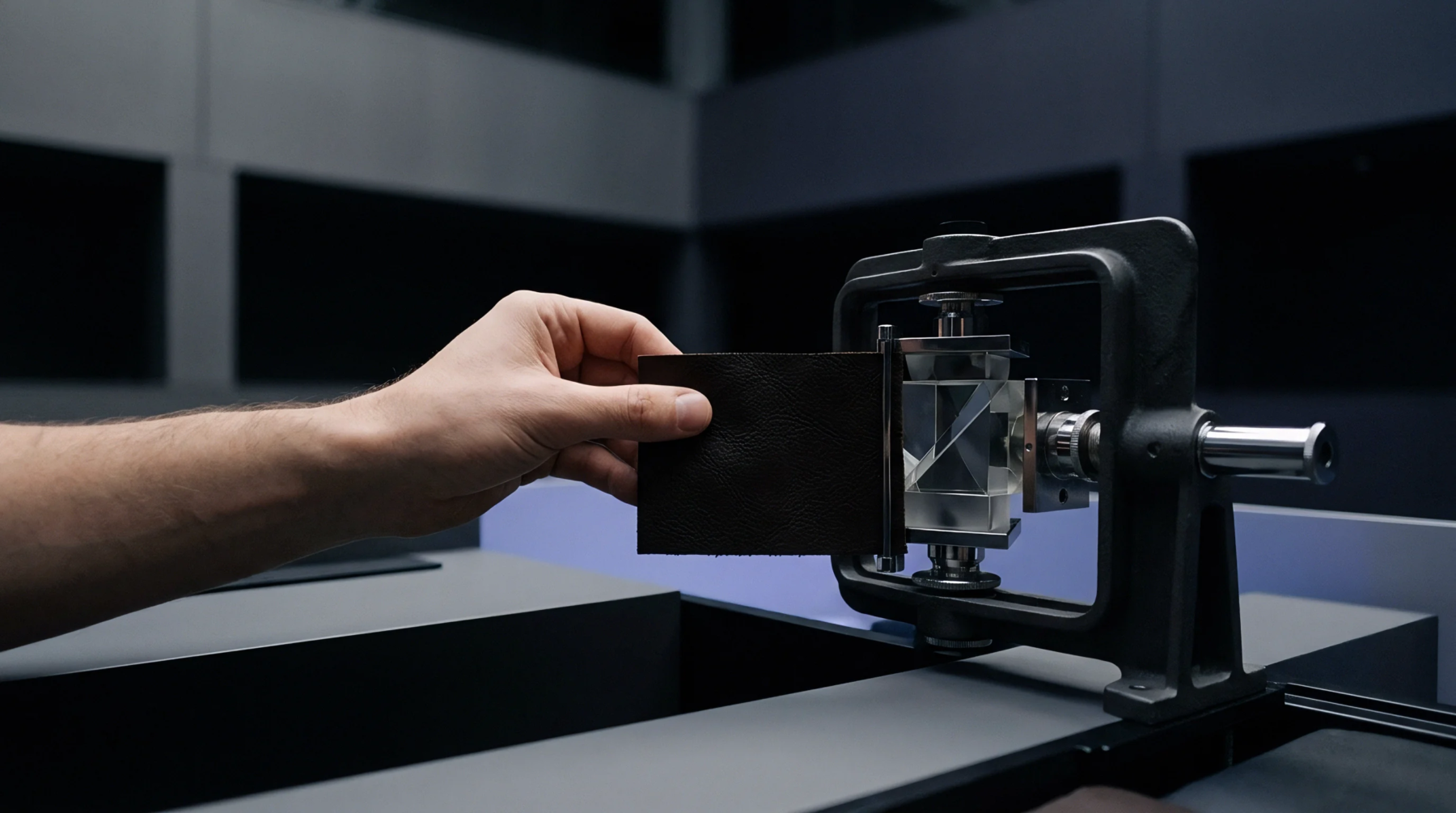
Optical Sensitivity
Refractive index variation in transparent media occurs when temperature shifts alter the physical density and electronic polarizability of a material. The thermo-optic coefficient quantifies this relationship by defining the change in refractive index per unit of temperature change. Engineers determine this value through interferometric measurement or prism coupling techniques across a controlled thermal range.
Precise characterization remains necessary for applications involving high power lasers or rapid signal switching where local heat accumulation alters beam path stability.
Thermal Calibration
External heat sources create gradients that induce spatial variations in refractive index across an optical component. Material characterization labs rely on standardized heater stages to apply uniform temperature steps while measuring phase shifts through monochromatic probing. Sensors experience index drift when environmental control fails to isolate the internal optical path from ambient temperature cycles.
Manufacturers publish this parameter as a characteristic constant for glasses and crystals because internal molecular transitions scale linearly with kinetic energy within common operating intervals.
Material Performance
Performance limits for photonic integrated circuits depend on the magnitude of this coefficient during steady state operation. High values allow for efficient thermal tuning of phase shifters within arrayed waveguide gratings or Mach Zehnder interferometers. Low values provide a defense against thermal crosstalk in densely packed optical circuits.
Designers select substrate materials with specific refractive index stability to minimize the total phase error introduced by fluctuating heat loads.
Measurement Accuracy
Metrology laboratories verify the stability of optical glass by observing the interference pattern shift as temperature varies in a climate chamber. Precision requires that the light source maintains a stable wavelength to isolate index fluctuations from dispersive effects. Calibration certificates account for the expansion coefficient of the mounting hardware because mechanical strain influences the measured refractive index alongside pure thermal effects.
Systematic errors arise when the thermal sensor proximity to the optical sample remains insufficient to capture the true average temperature of the medium during data acquisition. Optical components containing dopants exhibit altered stability compared to pure silica substrates.