Decoupling Viscoelastic Relaxation from Hygroscopic Baseline Shift in Silicon Transducers
Separating sensor baseline drift demands isolating Fickian moisture diffusion kinetics from polymer stress relaxation using differential topology and state filtering.


Swell
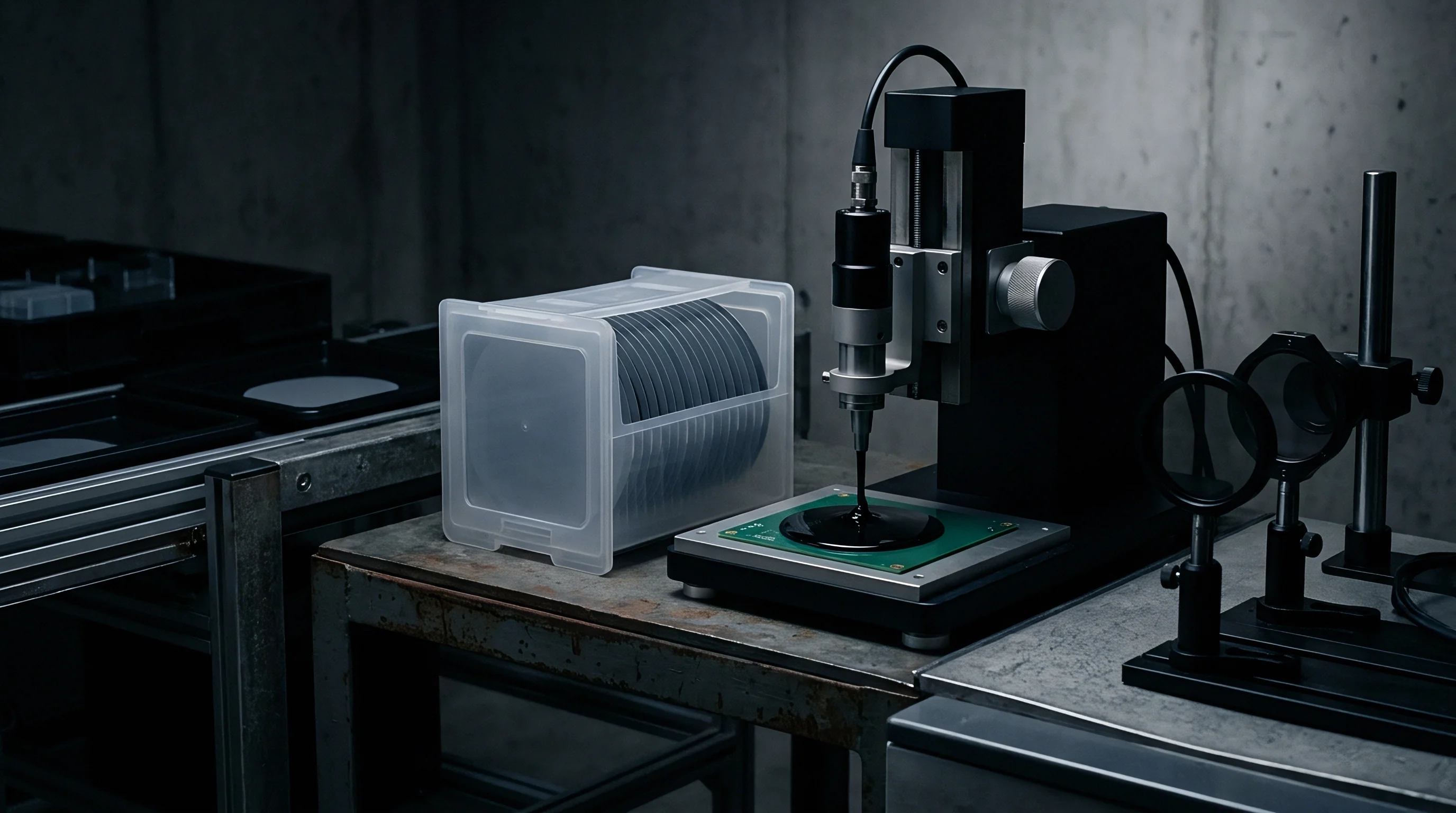
Organic polymers in microelectromechanical packaging absorb ambient moisture while relaxing residual stresses from high-temperature curing. As water molecules penetrate an epoxy die-attach or silicone encapsulant, volumetric swelling induces localized mechanical strain along the silicon chip perimeter. This hygroscopic expansion alters the stress field across the sensing element, shifting zero-pressure baseline voltage over extended operation.
At the same time, viscoelastic materials in the package undergo slow structural relaxation under static internal strain, introducing a second drift vector that decays logarithmically over time.
Piezoresistive pressure transducers rely on microscopic strain gauges implanted in a micromachined silicon diaphragm. Longitudinal and transverse piezoresistive coefficients translate local deformation into resistance changes across a Wheatstone bridge. Applied pressure deflects the diaphragm, but packaging-induced strain enters that same resistance output path, making it difficult to isolate fluid pressure signals from structural package deformation in humid environments.
Hygroscopic swelling kinetics depend on the moisture capacity of polymer coatings, die-attach adhesives, and substrate materials. Water molecules disrupt secondary hydrogen bonds in the polymer matrix, increasing free volume and expanding bulk material dimensions. This thrust acts directly against the perimeter of the silicon substrate.
Because silicon piezoresistors respond to stress regardless of its origin, hygroscopic expansion manifests as zero-point baseline drift that mimics an authentic pressure signal.
- Piezoresistive Bridge Asymmetry Differential moisture ingress across asymmetric epoxy fillets creates non-uniform strain gradients across bridge resistors, producing an uncompensated zero-offset voltage shift.
- Capacitive Gap Distortion Volumetric expansion of gel encapsulants deflects fixed sense electrodes in variable-capacitance pressure cells, corrupting low-pressure readings.
- Hysteresis Memory Effects Irreversible polymer matrix rearrangement during humidity cycling leaves permanent baseline offsets after returning to dry conditions.
- Interfacial Delamination Creep Microscopic debonding along the silicon-epoxy interface alters stress redistribution pathways, accelerating time-dependent drift under static loads.
High-rigidity die-attach materials transfer package stress directly to the micro-diaphragm, whereas compliant polymers trade immediate stress for long-term creep.
Capacitive MEMS sensors experience interference through two distinct mechanisms. Moisture variations in silicone gel encapsulants alter the bulk dielectric constant within the sensing cavity. At the same time, hygroscopic expansion of the package substrate distorts the anchor points of fixed electrode plates.
Combined, these effects shift baseline zero-load capacitance and alter the transducer’s linear scale factor.
Uncorrected baseline offset drives environmental drift in field instruments, forcing premature recalibration and triggering false out-of-tolerance alarms in critical process monitors.

Kinetics
Time-dependent baseline shifts follow distinct mathematical functions governed by water diffusion through packaging media and molecular chain realignment in polymer networks. Fickian diffusion models dictate the rate of moisture transport through organic materials. Water concentration within an encapsulating gel or die-attach adhesive evolves according to Fick’s second law, exhibiting a square-root dependence on time during initial absorption.
Viscoelastic strain relaxation inside polymeric materials exhibits a different temporal signature. Under continuous mechanical stress induced by assembly thermal mismatch, cross-linked polymer networks undergo chain segment reorientation. This relaxation follows the Kohlrausch-Williams-Watts stretched exponential model, expressed as a decaying function with a characteristic relaxation time constant and a fractional exponent between zero and one.
Separating these phenomena requires evaluating their distinct temperature acceleration profiles. Moisture diffusion constants obey Arrhenius kinetics, where the diffusion coefficient increases exponentially with absolute temperature based on an activation energy barrier typically between 0.35 eV and 0.50 eV for electronic-grade epoxies. Higher temperatures accelerate moisture transport into the package core without changing ultimate equilibrium moisture capacity.
Piezoresistive baseline offset drift remains under 0.04 percent of full-scale output across 1,000 hours of continuous exposure at 85 percent relative humidity and 85 degrees Celsius when isolated by glass-frit bonds.
Viscoelastic relaxation shifts dramatically as operating temperatures approach the glass transition temperature of the polymer. Near this threshold, the material moves from glassy rigidity to rubbery compliance following non-linear Williams-Landel-Ferry kinetics. The effective relaxation time constant contracts by orders of magnitude over narrow temperature spans, causing rapid decay of residual assembly stresses before stabilizing at a lower baseline strain level.
Superimposing Fickian diffusion kinetics and stretched exponential relaxation creates complex drift trajectories. A step change in environmental relative humidity alongside a thermal jump produces an immediate thermo-elastic response, a medium-term Fickian diffusion transient, and a long-term viscoelastic stress relaxation tail. Disentangling these components requires tracking the mathematical derivative of the baseline voltage trajectory over time.
Long-term zero drift is often attributed to ambient atmospheric variations, though secondary thermal equilibrium can obscure internal polymer stress redistribution.

Topology
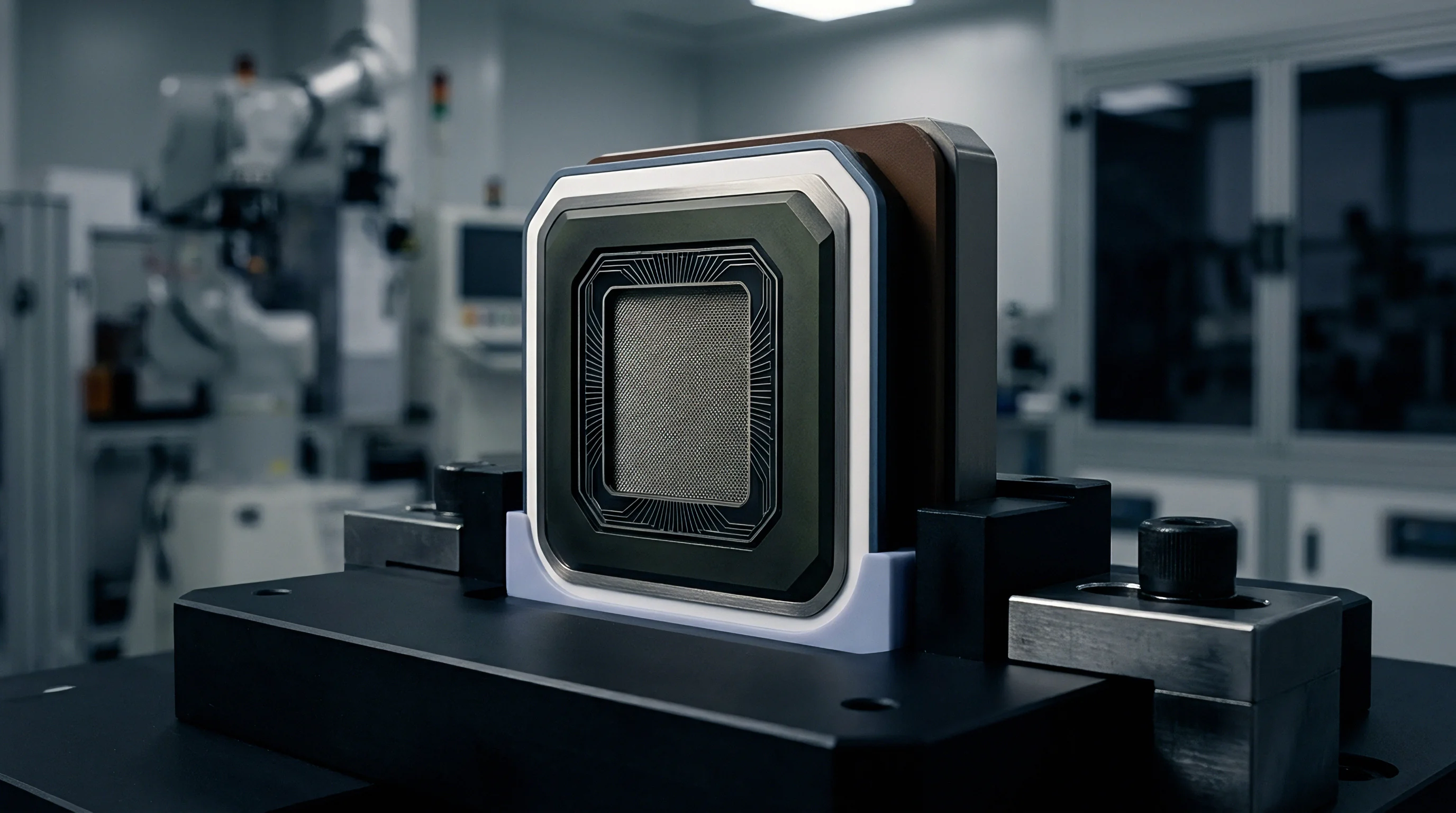
Isolating environmental forces relies on structural layout choices, material selection, and differential transducer designs. Eliminating organic polymers from the mechanical load path removes hygroscopic expansion and viscoelastic creep from the sensor baseline equation. Silicon-on-insulator micromachining enables direct silicon-to-silicon or silicon-to-glass anodic bonding, replacing flexible epoxy die-attach layers with rigid inorganic interfaces.
What Signal Signatures Separate Moisture from Creep?
Frequency-domain analysis and transient step-response profiling distinguish moisture-induced baseline shifts from viscoelastic stress decay. Hygroscopic transients exhibit diffusion delay times proportional to the square of encapsulant thickness, showing up as low-pass filtered baseline fluctuations that track environmental humidity cycles. Viscoelastic decay appears as a monotonic, irreversible shift following thermal assembly steps, showing zero correlation with short-term relative humidity fluctuations.
At standard operating temperatures, single-crystal silicon displays no measurable mechanical creep or viscoelastic relaxation. All observed viscoelastic drift originates within packaging materials, substrate mounts, or metallic interconnect layers. High-purity single-crystal silicon diaphragms maintain structural elasticity up to several hundred degrees Celsius, rendering the bare MEMS element immune to intrinsic time-dependent deformation.
| Interconnect Architecture | Viscoelastic Drift Rate (% FS / kHr) | Hygroscopic Baseline Sensitivity | Maximum Operating Temperature (°C) | Relative Unit Cost Factor |
|---|---|---|---|---|
Anodic bonding fuses single-crystal silicon directly to borosilicate glass wafers at elevated temperatures under strong electric fields. The resulting sodium-depleted electrostatic bond creates an atom-level inorganic joint with minimal thermal expansion mismatch. Transducers constructed using glass-frit wafer bonding or anodic sealing retain mechanical stability across decades of operation, bypassing the baseline degradation typical of polymer-bonded assemblies.
- Hermetic Glass Bond Integrity Glass-frit bonding eliminates moisture ingress through the die base, restricting environmental shifts to thermal expansion mismatch.
- Metallic Eutectic Compliance Gold-tin solder die-attach prevents viscoelastic creep under continuous pressure, though higher stiffness increases raw thermal stress sensitivity.
- Symmetric Diaphragm Geometry Backside-etched silicon structures cancel out planar strain components, rendering piezoresistive bridges insensitive to uniform moisture swelling in outer housing rings.
- Fluorosilicone Gel Barrier Hydrophobic oil gel coatings impede liquid water contact while maintaining mechanical compliance for low-pressure sensing diaphragms.
Silicon piezoresistors detect volumetric matrix expansion through the same piezoresistive coefficients that register applied mechanical pressure.
Differential topologies place secondary unexposed Wheatstone bridge elements or reference capacitors on non-deforming regions of the silicon chip. These reference elements experience identical package strain, moisture ingress, and thermal conditions without registering applied fluid pressure. Subtracting the reference signal from the primary sensing output cancels out common-mode packaging strain and hygroscopic baseline shifts.
Whether atomic-layer deposition of aluminum oxide coatings over polymer gels can completely block water diffusion without introducing thin-film strain hysteresis remains actively debated.

Extraction
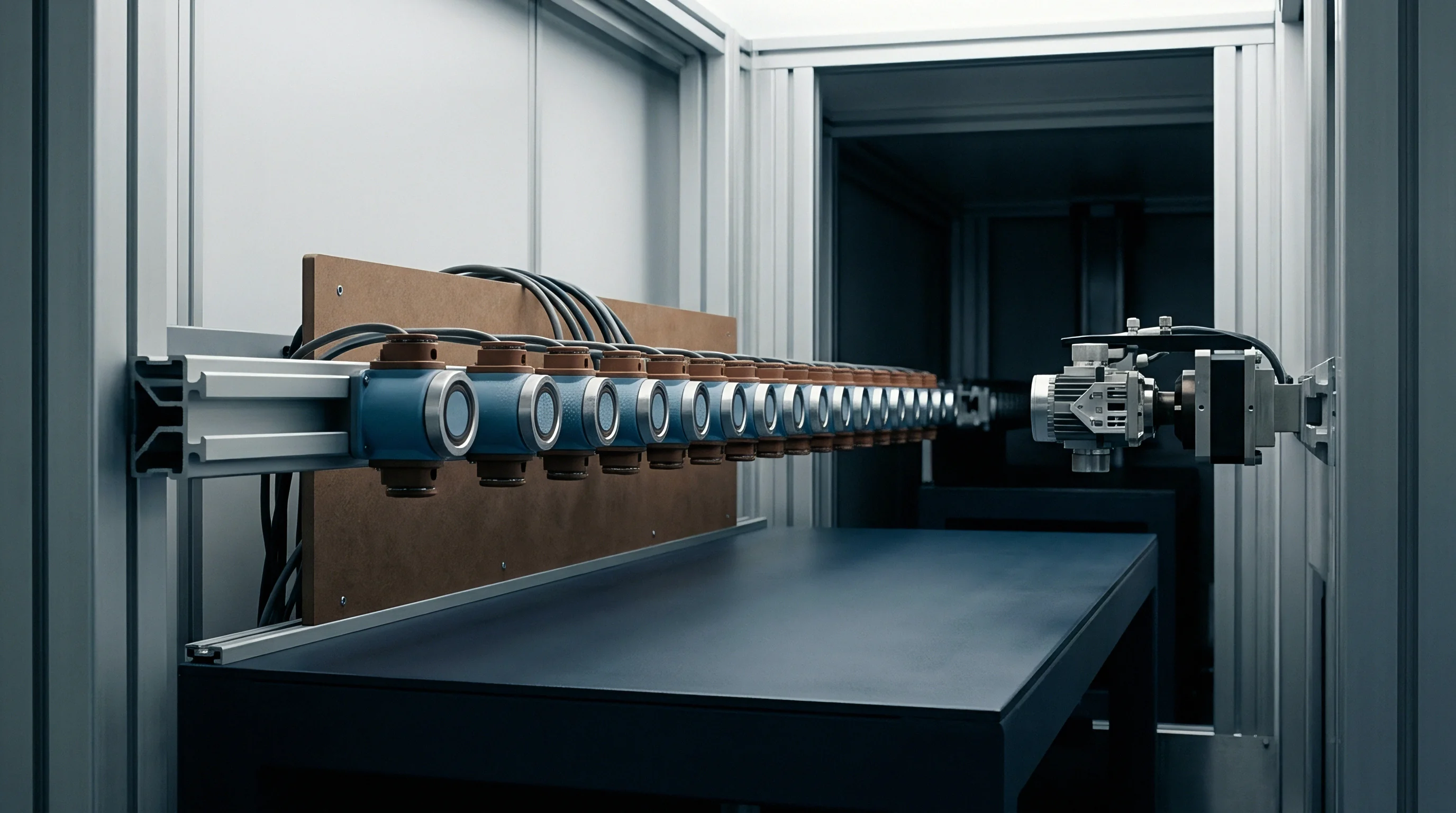
Disentangling moisture diffusion from stress relaxation relies on specialized bench characterization routines and multi-state digital signal processing algorithms. Isolating each mechanism in testing requires strict environmental controls. Operating the transducer inside a dry nitrogen atmosphere removes moisture diffusion variables, allowing precise measurement of viscoelastic relaxation trajectories following step thermal jumps or mechanical load cycles.

Environmental Bench Step Testing
Establishing pure hygroscopic sensitivity parameters requires stepping relative humidity levels at constant ambient temperatures. Enclosing the sensor inside an environmental test chamber compliant with IEC 60068-2-78 procedures enables fast relative humidity transitions while maintaining temperature stability within 0.1 degrees Celsius. Observing output voltage immediately following an RH step reveals the characteristic square-root time dependency of Fickian diffusion into the package gel.
| Test Profile Identifier | Temperature Band (°C) | Relative Humidity (%) | Dwell Duration (Hours) | Target Kinetic Parameter |
|---|---|---|---|---|
| Methods Note: All test profiles mandate real-time 24-bit ADC continuous data acquisition at 1 Hz sampling frequency with low-noise instrumentation amplifiers. | ||||
Mathematical separation of drift mechanisms relies on digital signal processing algorithms embedded within downstream sensor interface ASICs. A dual-state Kalman filter models internal package moisture concentration and viscoelastic strain relaxation as unobserved state variables, continuously estimating their magnitude from real-time ambient temperature and humidity readings.

State Space Decoupling Algorithms
Digital filtering algorithms subtract calculated environmental drift vectors from raw transducer output in real time. The firmware compensation architecture maintains a continuous history of temperature and relative humidity exposure to evaluate the time integrals governing moisture transport and viscoelastic memory decay. This approach recovers transducer accuracy without requiring costly physical alterations to high-volume packaging production lines.
- Place the unencapsulated die inside a dry nitrogen chamber at constant room temperature for 72 hours to achieve full mechanical stress equilibrium.
- Apply a step change in relative humidity from 10 percent to 85 percent while maintaining zero differential pressure, logging bridge output every second to isolate the moisture diffusion constant.
- Subject the sensor to a full-scale mechanical pressure pulse in a dry environment, recording the decaying voltage trajectory over 168 hours to extract viscoelastic relaxation parameters.
- Program matrix compensation coefficients into the signal-conditioning ASIC memory, combining real-time humidity readings from an auxiliary sensor with time-series state filters.
Compliance with IEC 60068-2-78 test condition Cab mandates continuous electrical bias during damp heat exposure to expose moisture-induced parasitic current paths before final package qualification.
Incorporating AEC-Q103-002 section 4.3 baseline drift validation into procurement contracts forces suppliers to certify zero-offset stability under simultaneous thermal and humidity stress rather than relying on dry room-temperature specifications.
Yield
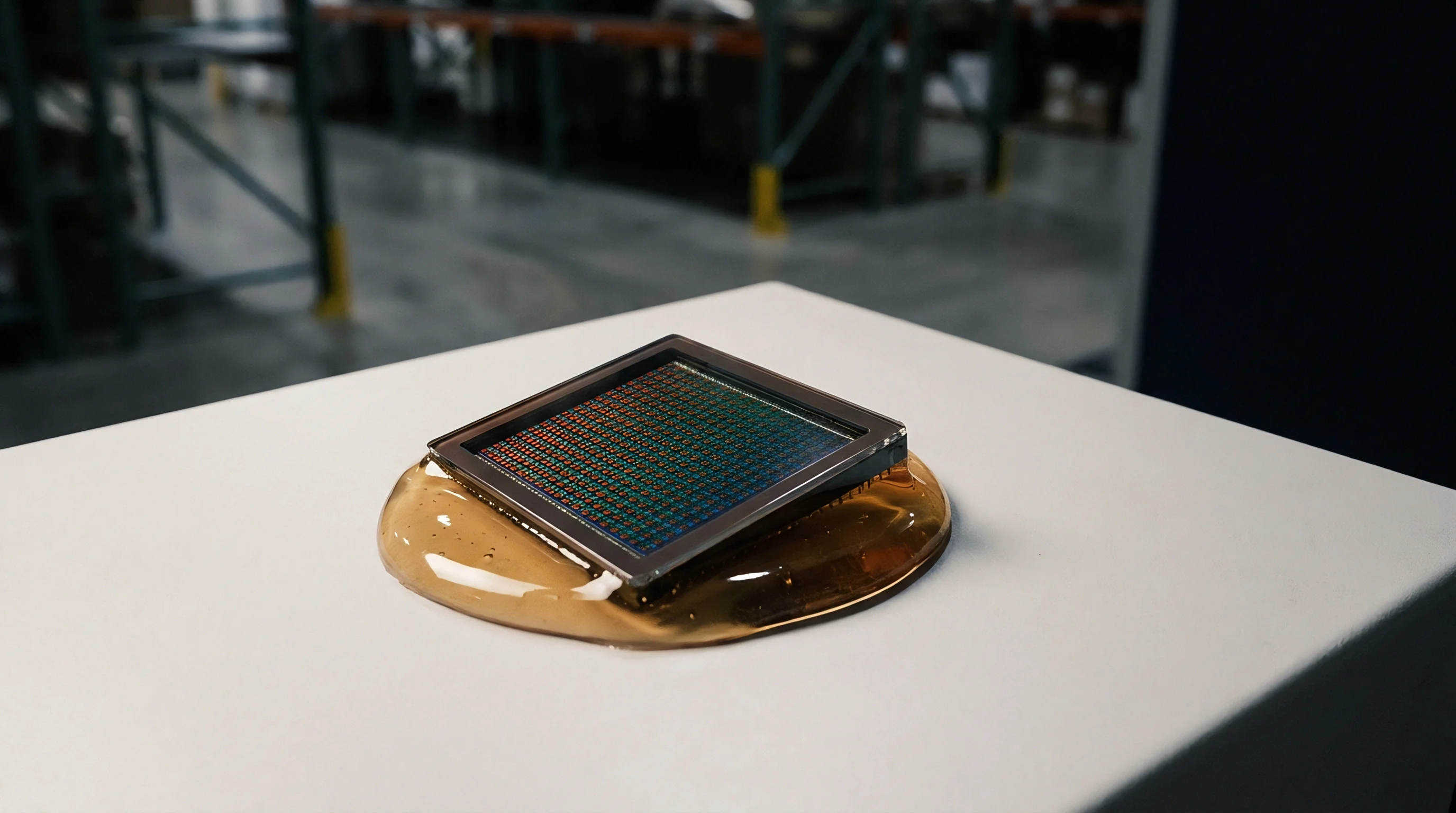
Commercial viability in precision silicon sensing depends on balancing high-integrity inorganic packaging against the volume economics of plastic-molded MEMS modules. Standard plastic packages using organic epoxy die-attach adhesives deliver lower component costs but introduce long-term baseline instability. High-reliability automotive and medical applications frequently transition to ceramic leadless chip carriers or metallic headers to prevent field failures from hygroscopic zero shift.
Transitioning from organic packaging to gold-tin eutectic solder die-attach inside a hermetically sealed ceramic cavity increases initial bill-of-materials costs, but metallic headers show negligible moisture uptake and dramatically reduce post-sale recalibration liabilities. Sourcing managers must evaluate total lifecycle expenses rather than focusing strictly on initial unit pricing when specifying transducers for harsh environments.
Wafer-level hermetic packaging provides a high-volume alternative for cost-sensitive markets. Bonded silicon cap wafers with glass-frit or metallic eutectic perimeter seals encapsulate sensing micro-diaphragms at the wafer stage prior to dicing. Requiring strict temperature audits during foundry qualification, wafer-level sealing isolates critical transducer structures inside hermetic micro-cavities before exposure to ambient assembly lines, combining high-density wafer fabrication economics with the drift resistance of inorganic packaging.
Specifying inorganic bonding for zero-drift applications eliminates long-term field returns for calibration, even when initial landed component costs exceed standard plastic packaging allowances.