Bonding Rheology
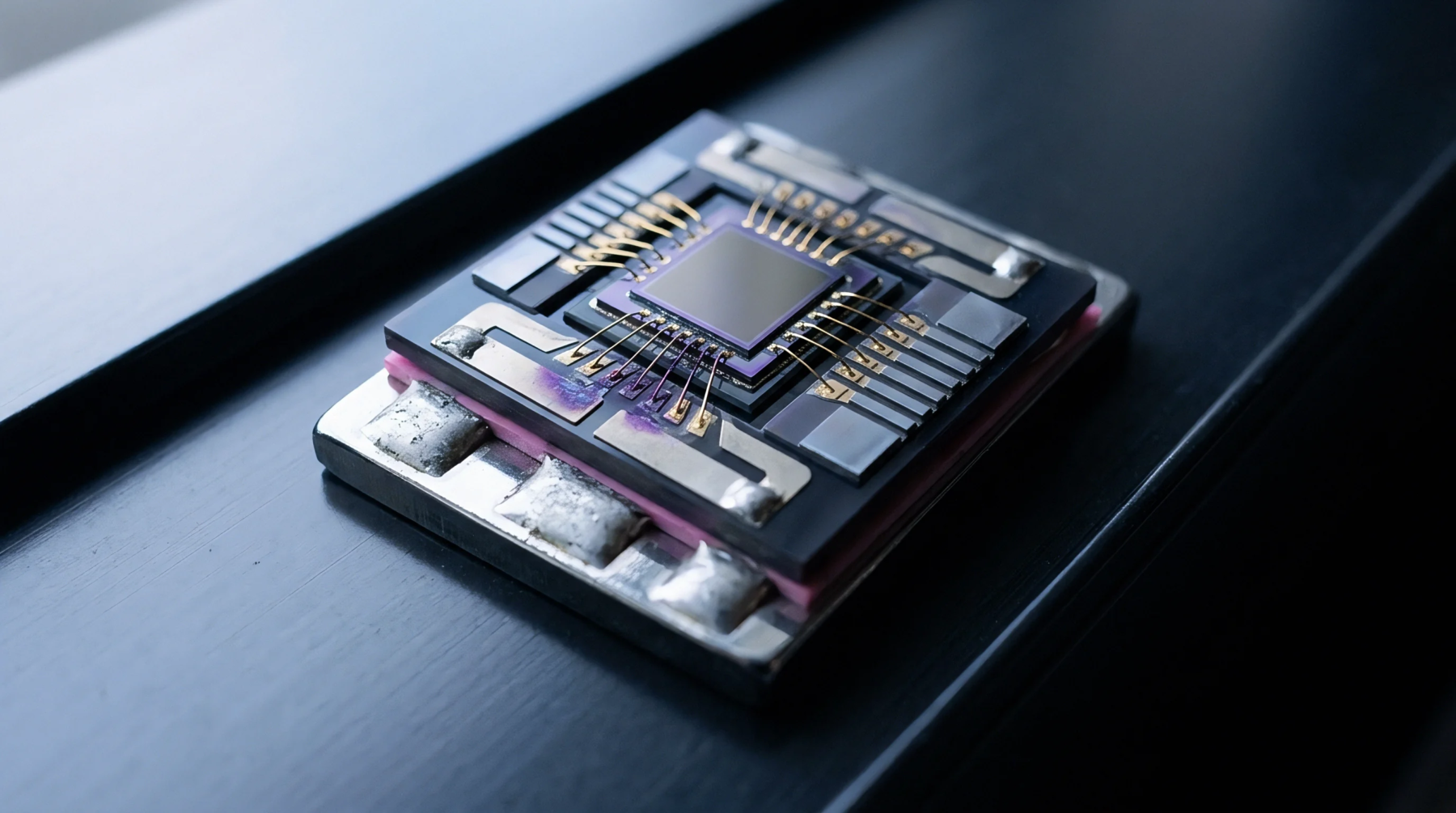
Polymer formulations used for semiconductor component retention establish mechanical continuity between silicon dice and metallic substrates through controlled viscoelastic transitions. Epoxy matrices filled with silver flakes govern die attach adhesives during thermal compression stages. Viscosity curves dictate dispensing reliability under high speed automated placement heads.
Shear thinning behavior allows fluid deposition through fine gauge dispensing needles without tailing. Thermal stress relaxation depends on crosslinking density achieved during the final cure profile. Thermal gravimetric analysis measures weight loss profiles up to three hundred degrees Celsius to quantify volatile organic compound emissions.
Void formation beneath the silicon area undermines thermal dissipation paths and generates localized hot spots.
Thermal Resistance
Conduction efficiency relies upon low interfacial thermal boundary impedance across the polymer layer. Filler loading percentages dictate thermal conductivity values specified in watts per meter kelvin by manufacturers. Silver flake sedimentation during storage alters bulk conductivity figures across production lots.
Substrate warpage introduces bondline thickness variations that distort thermal performance calculations. Acoustic microscopy detects delamination boundaries after thermal shock cycling tests.
Adhesion Mechanics
Interfacial bond strength withstands mechanical shear forces exerted during wire bonding and subsequent package encapsulation. Surface energy disparities between noble metallization finishes and epoxy resins cause wetting failures if cleaning protocols fail. Moisture absorption softens the polymer network and triggers adhesive failure modes during solder reflow processing.
Tensile strength measurements establish baseline performance parameters against military and industrial standards. Thermal mechanical analysis tracks glass transition temperatures where polymer expansion coefficients shift abruptly.
Curing Kinetics
Polymerization rates depend on activation energies supplied by thermal convection ovens or inline infrared heaters. Differential scanning calorimetry measures heat flow to verify complete cure progression and residual enthalpy. Exothermic peaks require strict temperature ramp rate limitations to prevent void generation from rapid solvent vaporization.
Shelf life expiration causes premature crosslinking that increases dispensing pressure beyond safe limits for fragile semiconductor dice. Polymer network stability governs long term reliability under continuous operational loads.