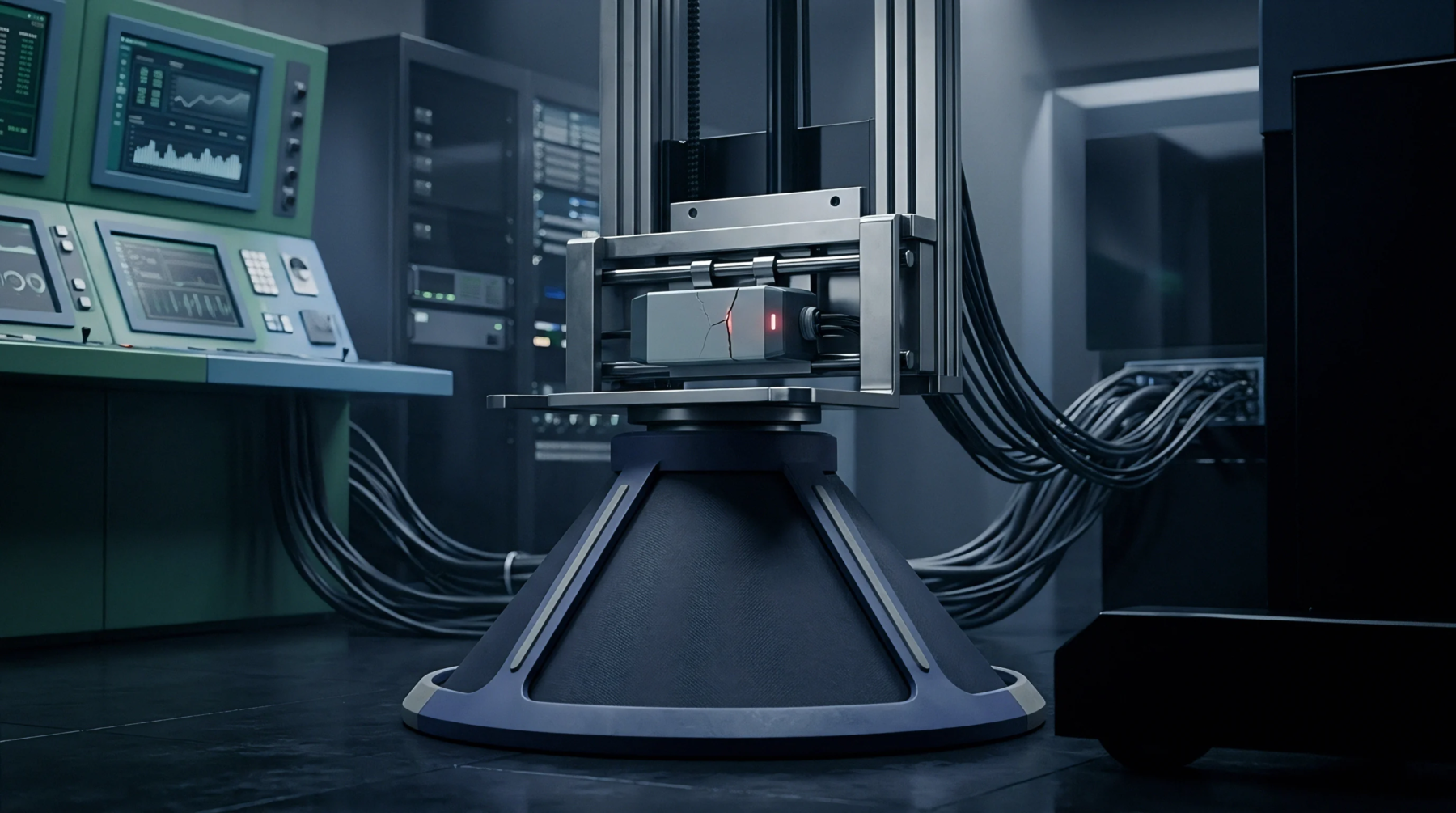
Thermal Sensitivity
Fractional variation in unforced transducer baseline output per degree of ambient thermal deviation quantifies the inherent temperature sensitivity of a measurement channel. In inertial and pressure instrument sourcing, temperature coefficient of bias defines the linear rate at which a sensor zero-input reading shifts across changes in operating temperature. Specifications express this metric in microvolts per degree Celsius, or milligrams per degree Celsius for accelerometers.
High-performance acquisition systems demand minimal baseline shift to ensure that environmental thermal swings do not obscure small measurand signals.
Error Propagation
Uncompensated thermal shifts accumulate into major integration errors when sensor signals undergo mathematical integration over time. In navigation filters, an uncontrolled temperature coefficient of bias causes velocity estimates to drift linearly and position calculations to diverge quadratically. Unstable thermal baselines degrade measurement accuracy even when scale factor calibrations remain accurate.
Environmental Characterization
Qualification laboratories measure baseline output stability by mounting sensors inside automated environmental chambers across full operational thermal spans. Test procedures stabilize device temperatures at discrete setpoints to record steady-state bias voltages before sweeping at controlled thermal ramp rates. During this characterization, the temperature coefficient of bias is computed across designated temperature intervals using linear regression fitting.
Hysteresis loops often emerge between rising and falling thermal sweeps due to internal thermal gradients and packaging stress relaxation. Reference platinum resistance thermometers provide traceable temperature measurements throughout the testing cycle. Sourcing contracts specify allowable bounds for both mean thermal slopes and maximum thermal hysteresis loops.
Model Compensation
Digital signal processors mitigate baseline shifts by applying polynomial correction algorithms calibrated from factory test data. Residual error after compensating the temperature coefficient of bias defines the ultimate thermal noise floor for high-precision field instruments.